upworthy
Add Upworthy to your Google News feed.
Google News Button
Popular

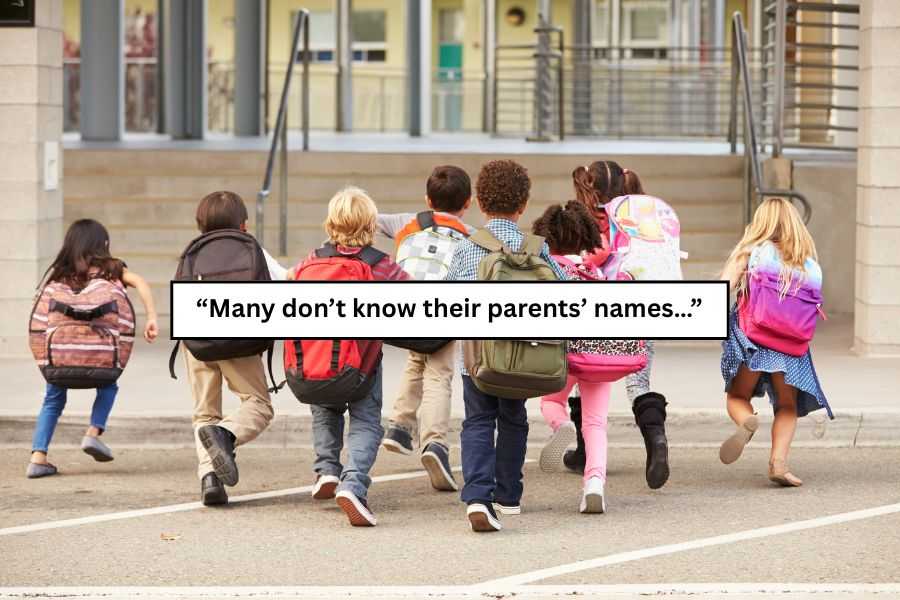
'Your kids do not come first': Texas dad's controversial parenting opinions stir up debate

'Your kids do not come first': Texas dad's controversial parenting opinions stir up debate
via Unsplash

Matt Martin, 28, of Dallas, Texas has created a bit of a stir on the internet for writing a piece on marriage published by Love What Matters. Martin is a performer who wrote, directed, and starred in a 2016 version of "Little Mermaid" and wrote 2018's "Inhumane" starring Michelle Money.

In his piece, the father of young twin boys, stresses that a marriage is between two people (possibly three) and that children should not come first. Martin starts the article by claiming that a marriage is between two people and God and that their relationship should take precedence over all others.


"My Aunt Steph, one of the smartest, most blunt people I know, told me before I got married, 'People say you marry the family too. That's not true. Your marriage is between you two.' I'm not saying your family isn't important. I value my family a lot (not as much as my wife does, but still…). You need them to lean on when life gets hard and to lift you guys up, but I didn't marry her mom and she didn't marry my dad. We had to learn to go to each other first when life threw us curveballs, instead of instinctually going to our parents. We're a family now, and that family comes first."

Martin believes that being married and having children shouldn't prevent you from achieving your personal goals. In fact, our partners are here to support us in achieving them.

Personally, I think this is a very important point in a relationship. If your spouse is a hindrance to you achieving your personal goals instead of a source of support, there may be serious troubles in your relationship.

Our pastor told us in a pre-marital counseling session, that as a couple we'd have goals, and as individuals we would have goals. To succeed as a couple, we would both tackle those goals. Sometimes I would be the captain (like when tackling mine) and sometimes Sara would be. But we'd both be working towards that goal. That's the beauty of marriage. You've got this life partner to raise you up. Like Kim and Kanye.


This is the part that has people talking:

A big humongous monstrosity of a lesson I've learned that I PRAY that all of you will strongly take into consideration, is that your kids do not come first. Our kids are sooo important and are the future and all that fun jazz, but what's best for them is a beautiful example of two people who love each other (and God). Another great thing for them to know is that they are not the center of the universe. Sorry if you're reading this in the future, Jack and Cam and any other children we may have had, but you're not the center of my universe. Sometimes I've wanted you to be really badly, but that's not going to do you any favors, and it won't do me any favors when you leave home (please leave home). You can't put your spouse on the back burner for eighteen years and then say 'Oh, hey, you can be my number one again.'

Here, Martin makes an important point about parenting. He believes that raising children who believe they are the center of the universe is bad for them in the long run. It's true. Children who are raised thinking they should be catered to are going to learn some very hard lessons when they become an adult.

When parents cater to a child's every whim it leads to a sense of entitlement that, as an adult, can result in depression and poor relationships.

The piece stirred up a passionate discussion on the Batdad Facebook page where some agreed that marriage should be the primary relationship in a family, while others think that a child's needs come first.

Some believe that putting your marriage first creates a better environment where children can thrive.

"A marriage needs to come first. An unstable home is detrimental to children's psychological and emotional wellbeing. My spouse and I will make our children wait for our attention of we are having a discussion that is important … I prioritize my marriage and my children flourish and thrive because of it," — Natalie

"I feel like you should put yourself first before your kids. If you aren't in a good place, it will reflect onto everything else," — Christine

While others believe that adults should put their needs second to those of their kids.

"Sanctimonious at best.... my wife and I have always put our children first.... we have love and mutual respect for each other and that will never change! But raising our children will always be a priority because it's a job that transcends anything else.... if you're married to someone who insists that they are a priority over the children you both brought into this world.... is basically selfish ... self absorbed and self centered!" — Jeff

"My kids will always be first. My husband is an adult who can take care of himself and who understands when my kids need me. We still make time to watch movies together and be with each other," — Olivia

You can read Martin's entire piece at Love What Matters.

Once a refugee seeking safety in the U.S., Anita Omary is using what she learned to help others thrive.
Pictured here: Anita Omary; her son, Osman; and Omary’s close friends
True

In March 2023, after months of preparation and paperwork, Anita Omary arrived in the United States from her native Afghanistan to build a better life. Once she arrived in Connecticut, however, the experience was anything but easy.

“When I first arrived, everything felt so strange—the weather, the environment, the people,” Omary recalled. Omary had not only left behind her extended family and friends in Afghanistan, she left her career managing child protective cases and supporting refugee communities behind as well. Even more challenging, Anita was five months pregnant at the time, and because her husband was unable to obtain a travel visa, she found herself having to navigate a new language, a different culture, and an unfamiliar country entirely on her own.


“I went through a period of deep disappointment and depression, where I wasn’t able to do much for myself,” Omary said.

Then something incredible happened: Omary met a woman who would become her close friend, offering support that would change her experience as a refugee—and ultimately the trajectory of her entire life.

Understanding the journey

Like Anita Omary, tens of thousands of people come to the United States each year seeking safety from war, political violence, religious persecution, and other threats. Yet escaping danger, unfortunately, is only the first challenge. Once here, immigrant and refugee families must deal with the loss of displacement, while at the same time facing language barriers, adapting to a new culture, and sometimes even facing social stigma and anti-immigrant biases.

Welcoming immigrant and refugee neighbors strengthens the nation and benefits everyone—and according to Anita Omary, small, simple acts of human kindness can make the greatest difference in helping them feel safe, valued, and truly at home.

A warm welcome

Dee and Omary's son, Osman

Anita Omary was receiving prenatal checkups at a woman’s health center in West Haven when she met Dee, a nurse.

“She immediately recognized that I was new, and that I was struggling,” Omary said. “From that moment on, she became my support system.”

Dee started checking in on Omary throughout her pregnancy, both inside the clinic and out.

“She would call me and ask am I okay, am I eating, am I healthy,” Omary said. “She helped me with things I didn’t even realize I needed, like getting an air conditioner for my small, hot room.”

Soon, Dee was helping Omary apply for jobs and taking her on driving lessons every weekend. With her help, Omary landed a job, passed her road test on the first attempt, and even enrolled at the University of New Haven to pursue her master’s degree. Dee and Omary became like family. After Omary’s son, Osman, was born, Dee spent five days in the hospital at her side, bringing her halal food and brushing her hair in the same way Omary’s mother used to. When Omary’s postpartum pain became too great for her to lift Osman’s car seat, Dee accompanied her to his doctor’s appointments and carried the baby for her.

“Her support truly changed my life,” Omary said. “Her motivation, compassion, and support gave me hope. It gave me a sense of stability and confidence. I didn’t feel alone, because of her.”

More than that, the experience gave Omary a new resolve to help other people.

“That experience has deeply shaped the way I give back,” she said. “I want to be that source of encouragement and support for others that my friend was for me.”

Extending the welcome

Omary and Dee at the Martin Luther King, Jr. Vision Awards ceremony at the University of New Haven.

Omary is now flourishing. She currently works as a career development specialist as she continues her Master’s degree. She also, as a member of the Refugee Storytellers Collective, helps advocate for refugee and immigrant families by connecting them with resources—and teaches local communities how to best welcome newcomers.

“Welcoming new families today has many challenges,” Omary said. “One major barrier is access to English classes. Many newcomers, especially those who have just arrived, often put their names on long wait lists and for months there are no available spots.” For women with children, the lack of available childcare makes attending English classes, or working outside the home, especially difficult.

Omary stresses that sometimes small, everyday acts of kindness can make the biggest difference to immigrant and refugee families.

“Welcome is not about big gestures, but about small, consistent acts of care that remind you that you belong,” Omary said. Receiving a compliment on her dress or her son from a stranger in the grocery store was incredibly uplifting during her early days as a newcomer, and Omary remembers how even the smallest gestures of kindness gave her hope that she could thrive and build a new life here.

“I built my new life, but I didn’t do it alone,” Omary said. “Community and kindness were my greatest strengths.”

Are you in? Click here to join the Refugee Advocacy Lab and sign the #WeWillWelcome pledge and complete one small act of welcome in your community. Together, with small, meaningful steps, we can build communities where everyone feels safe.

This article is part of Upworthy’s “The Threads Between U.S.” series that highlights what we have in common thanks to the generous support from the Levi Strauss Foundation, whose grantmaking is committed to creating a culture of belonging.

Joy

Thomas Jefferson coined a hip and funny phrase for abrupt goodbyes that still holds up today

A great phrase for when you've just gotta leave without explanation.

thomas jefferson, goodbye, name is haines, woman waving, us history

Thomas Jefferson and a woman waving.

"Irish goodbye" is a term for when someone slips out of an event without telling anyone, avoiding the awkwardness of announcing their departure. (Though the Irish didn't necessarily invent the phenomenon.) But what do we call it when someone decides to turn tail and leave a situation immediately, without any explanation at all? These days, there doesn't seem to be a name for a sudden, unexpected exit. Back in the 1800s, however, there was one, courtesy of the third president, Thomas Jefferson.

The phrase: "My name is Haines."


This may sound a bit strange, but it all stems from an unusual interaction Jefferson had while in office with a member of the opposition party. According to Monticello.org, The Weekly Picayune originally published the story in New Orleans on February 17, 1840.

The story behind "My name is Haines"

In 1805, during his second term as president, Jefferson was riding near Monticello, his Virginia residence, when he struck up a conversation with another man on the road. Amusingly, the man had no idea who he was speaking to, and as a rank-and-file member of the Federalist Party, which opposed Jefferson's Democratic-Republican Party, he had plenty of harsh words for the president.

monticello, thomas jefferson, jefferson house, virginia, famous houses Thomas Jefferson's Monticello.via Martin Falbisoner/Wikimedia Commons


The Weekly Picayune wrote:

"Haines took particular pains to abuse Mr. Jefferson; called him all kinds of hard names, ran down every measure of his administration, poked the non-intercourse and embargo acts at him as most outrageous and ruinous, ridiculed his gun-boat system as preposterous and nonsensical, opposed his purchase of Louisiana as a wild scheme — in short, took up every leading feature of the politics of the day, and descanted upon them and their originator with the greatest bitterness."

Jefferson simply listened, neither in the mood to argue nor to reveal his identity. When the two arrived at Jefferson's home, the president invited the man inside for refreshments. At one point, the visitor asked the president for his name. Here is how it was reported in The Weekly Picayune:

"Jefferson," said the President, blandly.

"The [devil]! What, Thomas Jefferson?"

"Yes sir, Thomas Jefferson."

"President Thomas Jefferson?" continued the astonished Federalist.

"The same," rejoined Mr. Jefferson.

"Well, my name is Haines!" and putting spurs to his horse, he was out of hearing instantly.

jefferson memorial, tidal basin, washington d.c., historical monuments, american history The Jefferson Memorial in Washington, D.C.via Joe Ravi/Wikimedia Commons

Why did Haines ride off so quickly?

There are many reasons Haines may have decided to bail on the president so abruptly. He was likely embarrassed after bad-mouthing the president to his face and may not have wanted to risk any reprisal for his harsh words. And as someone who harbored deep ill will toward the president, he probably had no interest in entertaining his company. Regardless, "My name is Haines" became a popular phrase after appearing in The Weekly Picayune , and it was used whenever someone wanted to leave a situation suddenly and without explanation.

The phrase would be used until around the Civil War, but by the beginning of the 20th century, it, too, had said goodbye. It faded away rather than vanishing in an instant, as Mr. Haines famously did.

Health

Acclaimed leadership expert shares a simple hack that turns self-doubt into a huge asset

The "spotlight effect" stops people in their tracks, but it doesn't have to.

spotlight effect, imposter syndrome, shade zahrai, behaviorial therapy, mind hack

A woman sits at a desk, overwhelmed and frustrated.

Quite often, people receive a promotion, praise, or a new assignment at work and feel imposter syndrome when the stakes suddenly rise. They may feel like frauds or flukes, even though their past accomplishments are exactly what got them there. There is a feeling of being seen, paired with a fear of being "found out." If this sounds familiar, a leadership and behavioral expert has a tip to "take the spotlight off yourself and turn it into a flashlight."

Dr. Shadé Zahrai went on TikTok to advise people experiencing imposter syndrome through what's known as the "spotlight effect." To put it briefly, the spotlight effect is a mental bias that causes people to vastly overestimate how much others notice, judge, or remember them. It can make someone feel as if they are under a spotlight, anxious that others are watching closely and ready to call them out.


The truth, according to Zahrai and other experts, is that most people are too preoccupied with their own lives to notice, remember, or care enough to audit someone else. While that realization can be a relief, it still may not be enough on its own to offset imposter syndrome.

@shadezahrai

If you feel like a fraud and imposter, this is why – and what to do about it. My book is out in just three days! If you order it now you get thousands of dollars of bonuses - but you have to order it before Jan 20!

Zahrai said people can flip the thought and energy of the spotlight away from their identity and aim it like a flashlight at the problem itself to find a solution. The internal narrative of "I don't know what I'm doing and I'm going to be exposed" becomes "This is the issue I'm concerned about. What do I need to do or learn to address it?" It takes "I'm a fraud" and flips it into "Why do I feel like a fraud?"

"Confidence doesn't require you to know everything in advance,” said Zahrai. "It just requires you to trust yourself enough to stay in the room, ask the question, and figure things out as you go."

@aliabdaal

Have you ever heard of the spotlight effect?

Behavioral specialists weigh in

Other behavioral experts and therapists who spoke to Upworthy shared what they would recommend to someone experiencing the spotlight effect.

"So much of anxiety is perception of how others perceive you and what they're thinking about you," said licensed therapist Cristina Billingsley. "Being that [the spotlight effect] is a common occurrence for people, I remind clients there's comfort in knowing you're not alone. Reminding ourselves that this theory has been tested and research shows that people overestimate how much people are actually thinking about or noticing them. Next time you're spiraling about this, ask yourself 'Yeah....and?' Does it matter in the long run...today, tomorrow, next week? Does this person's opinion truly matter to me? Would I judge someone or be this critical about them?"

@wellwithraele

Remember this for your next social interaction or conversation 💬 #wellwithraele #socialskills #perspective

Some experts agreed that the spotlight effect pivot Zahrai recommended could be used to one's personal advantage.

"Reframe the spotlight effect as a flashlight moment, turning the fear of failure and making mistakes into an opportunity to showcase your zone of genius so that others can learn from you," said Dr. Angela Chen, a clinical psychologist. "Take repeated action, as it will allow your brain to rewire the spotlight effect through exposure and extinction learning. Consistent and repeated exposure through taking steps toward what matters to you and what kind of person you strive to be allows your brain to create and strengthen new, non-threatening neural pathways."

Other experts did not think Zahrai's flashlight pivot was an effective way to eliminate the spotlight effect altogether.

"The approach of turning a spotlight into a flashlight treats the issue as attention-based instead of deep-rooted," said licensed psychotherapist Doriel Jacov. "This might work in the short-term but it doesn't address the cause of the anxiety. Many with imposter syndrome have internalized a harsh inner critic. If you simply redirect your attention, it doesn't get rid of that internalization. It might offer some temporary relief, but the inner critic will find its way back to you."

Jacov added, "Second, since the spotlight effect is fueled by negative self-perception, when you turn it into a flashlight, you might turn that negative perception outward. This leaves you judgmental and highly critical of others, which can have negative relational impacts. You may find yourself consciously or unconsciously devaluing others."

Jacov did agree with Chen that frequent exposure can help people navigate their emotions and offset the impact of the spotlight effect.

"The biggest advice I have is to put yourself in situations that elicit the spotlight," concluded Jacov. "The more you expose yourself to those feelings and that type of environment, the more you'll be able to learn that you're emotionally safe. You'll learn that no one thinks of you in the way you think of yourself."

baby names, dog names, golden retriever, name shame, cvs, funny, funny tiktok, funny dog videos, names
@sarahwithscrubs/TikTok, used with permission

Honestly, most of us would have reacted this way.

It started like any ordinary pharmacy errand. A Michigan woman named Sarah was waiting at CVS to pick up a prescription for her “son.” When another woman waiting in line overheard the name of her “son,” she apparently couldn’t help but let out an unsolicited opinion.

“You’ll really name your son anything, huh?” the woman said with a sigh.


The name in question? Whiskey.

baby names, dog names, golden retriever, name shame, cvs, funny, funny tiktok, funny dog videos, names At least it wasn't Bubbles. Photo credit: Canva

Now, if you’re picturing a tiny human in a onesie named after your dad’s favorite Friday-night drink, and feeling a little baffled in the process, don’t worry. So was everyone else.

Except Whiskey isn’t a little boy. He’s a red golden retriever.

Yep. Sarah’s “son” is of the four-legged variety, currently undergoing cancer treatments and racking up a pharmacy bill that could rival a small country’s GDP. She and her husband get his prescriptions filled at their local CVS because (fun fact) many human and animal meds are the same, just at different doses.

baby names, dog names, golden retriever, name shame, cvs, funny, funny tiktok, funny dog videos, names You just know there's a person named Whiskey out there getting a kick out of this. media4.giphy.com

As Sarah explained to Newsweek, this strategy saves them a few bucks, but can certainly lead to some incredible misunderstandings.

In her TikTok video, which has now been watched over 3 million times, Sarah retold this CVS name-shaming incident, and viewers collectively lost it.

@sarahwithscrubs I should’ve thrown in I was picking up his cancer meds too lol 🤭😂 #fyp #foryoupage #storytime #dogs #smallcreator ♬ original sound - sarah renee

One commenter shared, “I was shaming you too until you said dog!” Another wrote, “I mean, Whiskey is a horrible name for a child 😂 But for a dog? Okay lol.”

However, a few folks came to Sarah’s defense. One person noted, “There are women named Brandi—what’s wrong with Whiskey?” Another admitted, “in my 49 years I didn't know CVS filled pet meds!"

It’s the kind of mix-up that reminds us how funny life can be when the human and animal worlds collide. Because let’s face it: Whiskey the dog? Adorable. Whiskey the toddler? Maybe… less so. It might be a mostly unspoken rule, but a rule nonetheless.

As for what became of that misunderstanding, Sarah shared that when the other woman called Whiskey a "horrible" name for a child to grow up with that could lead to getting bullied in school, Sarah quipped back with "Well, he's a dog. So I don't think so." Upon that realization, Sarah told Newsweek that she “apologized very nicely” once she learned that Whiskey was, in fact, a dog.

As Sarah put it, the stranger “just left in a hurry, probably to think about her actions later.”

Meanwhile, TikTok is still chuckling, and celebrating one very good boy with a name that fits him perfectly.

Moral of the story: some names are meant for baby humans, like Zach or Emma. Others are for the fur babies who greet you at the door with a wagging tail and oodles of love…like Whiskey. 🐾🥃

This article originally appeared last year

Parenting

Mom stepped away from the bath for 3 seconds. Then her toddler said 5 words that made her sprint right back.

She was gone for three seconds, but in the world of toddlers, that is apparently enough time to hold a full religious ceremony.

Beth Moore Instagram, toddler baptize bathtub, funny parenting moments, bath time toddler viral, mom bath time scare, toddler funny kids viral video, parenting Instagram 2026, bath safety toddlers, close call parenting, funny toddler stories
Canva

Young siblings taking a bath

Every parent has a moment where they think: this is the one. This is how it ends. For Beth Moore, a mom of young children who shares her parenting life on Instagram as @bethgracemoore, that moment came during an otherwise ordinary bath time.

She was bathing two of her kids together when she realized, mid-bath, that she had forgotten the towels. The linen closet was maybe five feet away. She made the call. "Before you come after me, I know that you were never supposed to step away from young children in the bathtub," she said in the video, which she posted on January 6, 2026. "But at this point in time, I was home alone, I needed to walk the five feet for literally three seconds."


Those three seconds were all her three-year-old needed.

From the hallway, she heard her son's voice, clear and confident: "I'm going to baptize her in the name of the Father, the Son, and the Holy Spirit." Moore dropped everything. "You can imagine my horror," she said.

She ran back to find... her son solemnly dunking his doll underwater, over and over, presiding over a perfectly reverent tub baptism. Her younger child, sitting nearby, was watching the whole ceremony play out with complete calm. "She is just sitting there and she's just watching the whole thing happen," Moore said.

Beth Moore Instagram, toddler baptize bathtub, funny parenting moments, bath time toddler viral, mom bath time scare, toddler funny kids viral video, parenting Instagram 2026, bath safety toddlers, close call parenting, funny toddler stories Gif of baby being baptizedgiphy

"So moral of the story is don't forget the towels," she concluded.

The video has pulled in over 45,800 views on Instagram, and the comment section is full of parents who felt this in their bones. "Mine got on the bed and fell down doing a flip, it was so scary! She was fine, but it happened in seconds!" wrote @byandreahusic. "This is hilarious but also so sweet," added @lauras.lifejoy. "Why couldn't God have made children move slower, because my goodness, do they do those things so fast?" said @laura.hagerbaumer.

Beth Moore Instagram, toddler baptize bathtub, funny parenting moments, bath time toddler viral, mom bath time scare, toddler funny kids viral video, parenting Instagram 2026, bath safety toddlers, close call parenting, funny toddler stories Woman gives toddler a bath Canva

Worth noting: Moore's fear, while it turned out to be beautifully misplaced, is rooted in something real. The American Academy of Pediatrics advises that children under 6 should never be left unattended in the bathtub, and the Consumer Product Safety Commission has noted that bathtub drownings can happen quickly and silently, even in just a couple of inches of water. The CPSC's specific guidance states that if you must leave, you should take the child with you. As Moore herself acknowledged, she knew the rule. She made a judgment call, and this time it worked out in the most wholesome way possible.

But the reason this video keeps getting shared isn't really about bath safety, or even about the perfectly executed toddler baptism. It's about that specific kind of parenting terror that arrives before your brain has had a chance to work out what's actually happening. The lurch in the stomach. The sprint down the hall. The absolutely unexpected relief.

"There is nothing that can prepare you for the heart attacks that you will experience while raising toddlers," Moore said at the top of the video.

Forty-five thousand parents nodded.

You can follow @bethgracemoore on Instagram for more parenting content.


@doctor.bing

Lesser known risk factors of drowning that everyone needs to know #brain #neurology #brainhealth #neurologist #drowning #water #safety #pool

This article originally appeared earlier this year.

Jesse Jackson Sesame Street
Sesame Street/YouTube

Jesse Jackson talks to children on Sesame Street

Sesame Street is a national treasure. And when civil rights icon Jesse Jackson wanted send an uplifting and empowering message to children, he knew exactly where to go.

I think we can all agree on that. Sesame Street invented the idea that television could teach children, not just entertain them. It taught kids letters and numbers and introduced them to talented and famous people, from Savion Glover to Kofi Annan.


But the curriculum on the Street was always bigger than counting and Weimaraners. From very early on, its creators showed the world as they dreamed it could be. Black people, white people, and furry blue monsters lived in the same neighborhood. At a time when people with Down Syndrome were regularly institutionalized, Jason Kingsley was a frequent guest. Moms breastfed their babies in public, and all anyone had to say about it was, "That's nice." The whole neighborhood knew enough sign language that they could talk with Linda. They welcomed a new neighbor with a song about how happy they were to have a new friend.

The most important message Sesame Street sent to its millions of young viewers was this: You matter. You are an important person. You are valuable.

In 1971, a young Jesse Jackson stood on the steps of 123 Sesame Street and got a bunch of kids to chant "I Am — Somebody," a poem by civil rights activist Rev. William Holmes Borders Sr.

These kids chant a message that we should give to every kid on earth.

Did I say kid? I mean human.

I may be poor. But I am Somebody!
I may be young. But I am Somebody!
I may make a mistake. But I am Somebody!
I must be respected, protected, never rejected.
I am God's child.
I am Somebody!

So say it loud. And pass it to someone who needs a reminder that they are Somebody.


- YouTube www.youtube.com


P.S. Are you dying to learn a thousand wonderful facts about Sesame Street's origin story? I highly recommend "Street Gang: The Complete History of Sesame Street" by Michael Davis. I'll never watch the show the same way again.

This article originally appeared 11 years ago.