There are no hard-set rules for how a man should approach a woman in public if he finds her attractive. When considering whether to introduce himself, many questions run through a guy’s head. Is this an appropriate place to approach her? What should I say? Should I ask her for her number? How will I know if she’s interested?
To make things even more complicated, it’s hard to know the social norms in 2024 regarding picking up on someone. Some women may feel it’s always inappropriate for a stranger to approach them and make small talk, while others may welcome the attention.
How to approach women in public
To help single men navigate the tricky waters of being single in 2024, a group of women shared the “best ways to approach” them without coming off as creepy. The women shared many great tips, but they mostly came down to a central point: be friendly and don’t make it sexual. Then, after shooting your shot, listen to her responses and watch her body language to see if she’s interested. If not, kindly leave her alone.
In March 2023, after months of preparation and paperwork, Anita Omary arrived in the United States from her native Afghanistan to build a better life. Once she arrived in Connecticut, however, the experience was anything but easy.
“When I first arrived, everything felt so strange—the weather, the environment, the people,” Omary recalled. Omary had not only left behind her extended family and friends in Afghanistan, she left her career managing child protective cases and supporting refugee communities behind as well. Even more challenging, Anita was five months pregnant at the time, and because her husband was unable to obtain a travel visa, she found herself having to navigate a new language, a different culture, and an unfamiliar country entirely on her own.
“I went through a period of deep disappointment and depression, where I wasn’t able to do much for myself,” Omary said.
Then something incredible happened: Omary met a woman who would become her close friend, offering support that would change her experience as a refugee—and ultimately the trajectory of her entire life.
Understanding the journey
Like Anita Omary, tens of thousands of people come to the United States each year seeking safety from war, political violence, religious persecution, and other threats. Yet escaping danger, unfortunately, is only the first challenge. Once here, immigrant and refugee families must deal with the loss of displacement, while at the same time facing language barriers, adapting to a new culture, and sometimes even facing social stigma and anti-immigrant biases.
Welcoming immigrant and refugee neighbors strengthens the nation and benefits everyone—and according to Anita Omary, small, simple acts of human kindness can make the greatest difference in helping them feel safe, valued, and truly at home.
A warm welcome
Dee and Omary's son, Osman
Anita Omary was receiving prenatal checkups at a woman’s health center in West Haven when she met Dee, a nurse.
“She immediately recognized that I was new, and that I was struggling,” Omary said. “From that moment on, she became my support system.”
Dee started checking in on Omary throughout her pregnancy, both inside the clinic and out.
“She would call me and ask am I okay, am I eating, am I healthy,” Omary said. “She helped me with things I didn’t even realize I needed, like getting an air conditioner for my small, hot room.”
Soon, Dee was helping Omary apply for jobs and taking her on driving lessons every weekend. With her help, Omary landed a job, passed her road test on the first attempt, and even enrolled at the University of New Haven to pursue her master’s degree. Dee and Omary became like family. After Omary’s son, Osman, was born, Dee spent five days in the hospital at her side, bringing her halal food and brushing her hair in the same way Omary’s mother used to. When Omary’s postpartum pain became too great for her to lift Osman’s car seat, Dee accompanied her to his doctor’s appointments and carried the baby for her.
“Her support truly changed my life,” Omary said. “Her motivation, compassion, and support gave me hope. It gave me a sense of stability and confidence. I didn’t feel alone, because of her.”
More than that, the experience gave Omary a new resolve to help other people.
“That experience has deeply shaped the way I give back,” she said. “I want to be that source of encouragement and support for others that my friend was for me.”
Extending the welcome
Omary and Dee at the Martin Luther King, Jr. Vision Awards ceremony at the University of New Haven.
Omary is now flourishing. She currently works as a career development specialist as she continues her Master’s degree. She also, as a member of the Refugee Storytellers Collective, helps advocate for refugee and immigrant families by connecting them with resources—and teaches local communities how to best welcome newcomers.
“Welcoming new families today has many challenges,” Omary said. “One major barrier is access to English classes. Many newcomers, especially those who have just arrived, often put their names on long wait lists and for months there are no available spots.” For women with children, the lack of available childcare makes attending English classes, or working outside the home, especially difficult.
Omary stresses that sometimes small, everyday acts of kindness can make the biggest difference to immigrant and refugee families.
“Welcome is not about big gestures, but about small, consistent acts of care that remind you that you belong,” Omary said. Receiving a compliment on her dress or her son from a stranger in the grocery store was incredibly uplifting during her early days as a newcomer, and Omary remembers how even the smallest gestures of kindness gave her hope that she could thrive and build a new life here.
“I built my new life, but I didn’t do it alone,” Omary said. “Community and kindness were my greatest strengths.”
Are you in? Click here to join the Refugee Advocacy Lab and sign the #WeWillWelcome pledge and complete one small act of welcome in your community. Together, with small, meaningful steps, we can build communities where everyone feels safe.
This article is part of Upworthy’s “The Threads Between U.S.” series that highlights what we have in common thanks to the generous support from the Levi Strauss Foundation, whose grantmaking is committed to creating a culture of belonging.
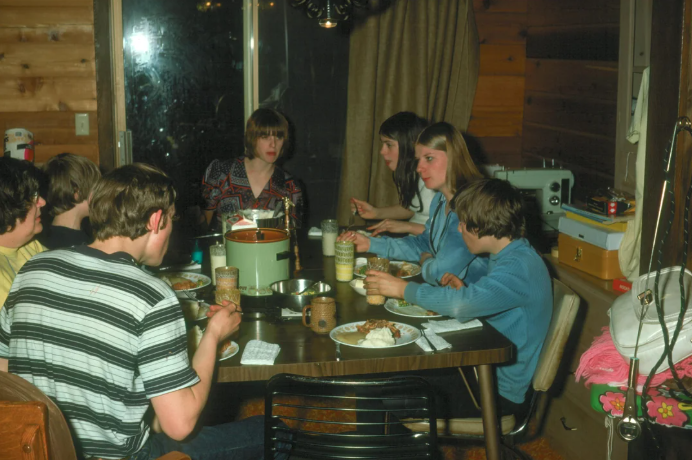
Generation X (those born between 1965-1980) grew up eating classic Americana meals. During the 1970s, comfort meals like tuna casserole and salmon roquettes were popular meals.
Gen X also grew up eating some pretty unhinged (but all the more yummy) sandwiches. These meals are steeped in childhood nostalgia.
And to this day, Gen Xers are still fond of their favorite dishes they grew up eating. Together, they discussed on Reddit their most-loved home-cooked dishes that they still whip up, starting with sloppy joes.
Here are 17 iconic Gen X comfort meals to keep in mind the next time you make dinner:
“Breakfast. We will have a ‘breakfast for dinner’ at least a couple times a month. Yum!” – fadeanddecayed, KddKc
“Pizza bread! My mom would cut Italian bread into pieces, put butter and garlic salt on them, then pour some spaghetti sauce on them, cover with mozzarella cheese, and broil for like ten or fifteen minutes. Super easy and quick to make and so tasty. I’m sure my mom loved that I was so into something that took roughly zero effort for her to make.” – hornybutired
“Grilled cheese and soup.” – reincarnateme
“Meat loaf. I use 2 pounds ground beef, replace bread crumbs with minute rice, add 1 pkg beef soup flavoring, chop an entire onion for it, and mix BBQ sauce into mixture. Oh, important: do not overmix! Place all ingredients into bowl, then mix quickly 10 or 12 swirls of a large spoon. Grease loaf pan, carefully place mixture in, pat down & bake about an hour. (Extra info: for even better flavor, mix the night before, pat into loaf pan, cover with plastic, put into fridge overnight. Remove from fridge about an hour before baking. BE SURE TO REMOVE PLASTIC WRAP! [Esp. If in Pyrex glass loaf pan])” – jehardt, AbbyM1968
“White guy tacos.” – najing_ftw
“Skillet dinner. Kielbasa, bell pepper, onion, spuds in a cast iron pan. One dish. Easy peasy.” – UnimportantOutcome67
“Chicken pot pie or chicken ala king.” – sattersnaps
“Fried catfish, greens, and red beans and rice.” – User Unknown
“Shepherds pie, technically cottage pie if it’s ground beef. Homemade enchiladas, usually made as a layered casserole instead because I don’t have time to roll them. Pork chops with mashed potatoes and veggies.” – XerTrekker
“Fried rice with chicken or pork leftovers.” – AlternativeResort181
“Hot hamburgers: hamburger patty open face on Texas toast thickness bread, cover with fries then cover that with brown gravy. Wife’s variation is hamburger patty over rice with brown gravy.” – EnricoMatassaEsq
“Stuffed peppers. I make it much more easily by cooking it all in one large frying pan ‘deconstructed’. Sauté onions garlic and ground beef, add cut up peppers, tomatoes or tomato sauce, sometimes a little spinach, then add separately cooked rice, salt and pepper and serve. It comes together pretty quickly and tastes just as good as stuffing and baking peppers in the oven.” – Affectionate-Map2583
“Macaroni and cheese with cut up hot dogs. Seriously, that’s what I ate tonight.” – Dazzling-Walrus9673
“Homemade Stroganoff casserole. Ridiculously easy to make. Ingredients:
1.25-1.5 lbs. Ground Beef 1 each of large white onion, green pepper, and red pepper 1 can mushroom pieces, drained and rinsed 12 oz. Bag of wide egg noodles 1 can cream of mushroom soup 16 oz. Sour cream Worcestershire Sauce Louisiana Hot Sauce White or Black Pepper Panko bread crumbs
To Make: Preheat oven to 360 degrees. Worcestershire, hot sauce, garlic powder, and pepper are all to taste, depending on how much flavor and punch you want it to have. Cook noodles per instructions. Drain. Peel and slice onion (not diced), core and cut peppers into strips Brown meat, onions and peppers along with liberal amount of Worcestershire; garlic, pepper, and hot sauce. Add mushrooms. Cook until meat is fully brown, onions are translucent and peppers are tender. Drain. Combine drained meat, etc. with whole can of soup, half of the sour cream. Gradually add noodles into the mix. Add sour cream as needed to maintain consistency. Add Worcestershire, hot sauce, and pepper to taste. Dump into large, deep Corning dish or whatever. Cover too with bread crumbs. Cover and bake for forty minutes.” – CynfullyDelicious
This article originally appeared last year. It has been updated.
The Super Bowl LX halftime show was one for the ages, both for its record-breaking four billion social media views after the first 24 hours and for the chatter and debate it sparked. Puerto Rican music star Bad Bunny performing the official halftime show entirely in Spanish highlighted the complexities of defining “American identity,” a reality the artist addressed directly as he paraded flags from countries across North, Central, and South America and shouted out their names in a call for unity.
While heated controversy around the show swirled in the United States, our neighbors to the north had a hilarious reaction to it. Like the sweet, unassuming kid who stays out of middle school drama but still yearns to be included, some Canadian viewers found themselves tickled by Bad Bunny’s shoutout and embraced their Latinized identity.
“It’s Canadá until further notice!” one TikToker wrote.
https://www.tiktok.com/t/ZThuKMuKK/
Social media users are sharing where they’re from in “Canadá,” using Bad Bunny’s Spanish accent with a sense of pride to name their country, province, city, and sometimes even their neighborhood. Some add “mi gente latino,” meaning “my people,” in reference to the broader Latino community, which is particularly endearing as commenters from Spanish-speaking countries refer to their Canadian brothers and sisters as “snow Latinos.”
It’s all in good fun, of course. One of the remarkable things about Bad Bunny’s show is how distinctly and deliberately it broke down barriers while still honoring individual countries as part of a greater whole. Canadians putting on a Spanish accent and referring to themselves as Latinos might normally raise some eyebrows, but in the context of the current moment, it reads simply as a celebration of cross-cultural and cross-continental connection.
Canadians are sharing that they’re from British Colommmbiaaaaa, Juancouver (or Van-Cuba), Saskatchejuan, Montreyál, Alberto, and other Latinized versions of their homeland. Some have dubbed themselves “Sorta Ricans,” while Peruvians are calling Canadians their cousins because the two countries’ flags are so similar. In the comments, Canada is being embraced by the broader Americas with open arms, with messages like “Welcome winter latinas,” “Canadá is invited to the Quinceañera,” and “Welcome to La Familia.”
As one person wrote, “The whole point of this performance was to UNITE people and that’s exactly what happened.”
Indeed, to come out and boldly assert that American identity can be viewed in a broader sense, accompanied by the message “THE ONLY THING MORE POWERFUL THAN HATE IS LOVE” displayed in plain English, was a powerful statement. Holding up a football that read “GOD BLESS AMERICA” while defining America not only as the U.S. but as the collective lands and nations of the Americas was a bold choice, and one clearly intended to be unifying and inclusive.
Even a Brazilian comedian shared how much it meant for his home country to be included in that collective, saying that Brazil sometimes feels a bit on the outside in South America because it speaks Portuguese rather than Spanish:
https://www.tiktok.com/t/ZThHVQ5FF/
The celebration of every nation in the comments is beautiful to see. The feeling of being connected to one another through our shared humanity and proximity, despite geographical and cultural differences, was felt by people of all ages, races, and nationalities.
https://www.tiktok.com/t/ZThHs9pvT/
So many people from around the world felt the message loud and clear: we are one human family, and diversity doesn’t have to mean disunity. Questions of geopolitics and immigration policy remain and will, of course, continue to be debated, but they often overshadow the bigger-picture reality that lines on a map, political ideologies, and cultural prejudices are all things humans made up.
International relations may not be that simple, but what the Super Bowl halftime show demonstrated, in a powerfully creative way, is that we as individuals can choose to see ourselves differently by expanding our circle of “we” until we see “them” as “us.”
It’s a tale as old as time: tension caused by generational differences. From Baby Boomers to the up-and-coming Gen Alpha, every generation seems to have a little bit of beef with the others—especially Gen Z.
Gen Z has claimed that Boomers are “angry”. And Gen Zers are no longer subscribing to work burnout culture that Millennials did. And now, Gen Z has decided to come for Gen X.
One brave…or naive Gen Zer decided to declare that Gen X is “the worst generation” seemingly unprompted. But a Millennial quickly put them in their place.
In a stitched video, Millennial Laura High gave a succinct cliff’s notes version of why it’s best to not speak negative thoughts on Gen X aloud.
“I love Gen X. We all love Gen X…we all love Gen X,” she said before bringing the camera close enough to whisper. “Okay here’s the thing, you do not seem to understand who Gen X is, okay? Gen X is Boomers if they knew how to turn a document into a PDF, okay. They do not Karen out. They get quiet and they get revenge.”
High then shared the secret kept by her generation: “we do not summon the latchkey kids unless it’s our literal only last resort.” She advised the unknowing Gen Zer to go to the edge of the woods to leave offerings to appease any Gen Xers that would likely be offended by the video.
Gen Z and Millennials respond
Commenters agreed with her sentiment.
“There is a reason millennials leave Gen X alone, and they learned it the hard way. My fellow Gen Z’s will learn soon… very soon,” one commenter said..
“Elder Gen Z raised by two Gen X parents. I do NOT back the younger half of Gen Z on this. I’m running into the woods on their behalf and leaving Ferris Bueller for my dad and a DQ blizzard for my mom,” another echoed.
“Last thing she will hear from the woods, Red Rover Red Rover, we call Karen Hashtag over,” said a third.
“If you’ve never played Red Rover with Gen Xers, just know you were lucky to have your head still attached to your shoulders after the game was over. There were no tears allowed and no telling your parents, they were gone anyway. In short: Gen Xers are ruthless, and it’s best not to cross them. Seriously.”
Gen X responds
A happyu00a0Gen X couple have patience for younger generations, like Gen Z. Photo credit: Canva
Thankfully, Gen Xers are also open to peace offerings (and humor). Here are a few of their suggestions:
“I will accept ding dongs (in original foil) and a VHS of ‘the last star fighter’ I will also except a mix tape if it include at mix of metal, new wave, and Yaz.”
“We will also accept any of the original Star Wars trilogy, Star Trek 2, Raiders, or Die Hard…though John Hughes films will likely will be the safest choice.”
“As an Elder Gen X (1971) I accept offerings of ice cold Boone’s Farm and those little chocolate donuts in the plastic sleeve. Laura, you’re safe. Gen Z? Run.”
“We will also allow The Neverending Story .”
Moral of the story: tread lightly Gen Z. Tread very lightly. If you hear someone clinking together empty glass Coke bottles outside your door, do not come out and play. It’s a trap.
This article originally appeared two years ago. It has been updated.
Getting a first job is undoubtedly one of the most drastic steps that teenagers make into full-blown adulthood. It can be a shock to the system doing hard work outside of a school environment, having a boss instead of a teacher, and having real money on the line. However, one thing all adults remember fondly is the time they opened their very first paycheck, and all that hard work (at least for a moment) felt worth it.
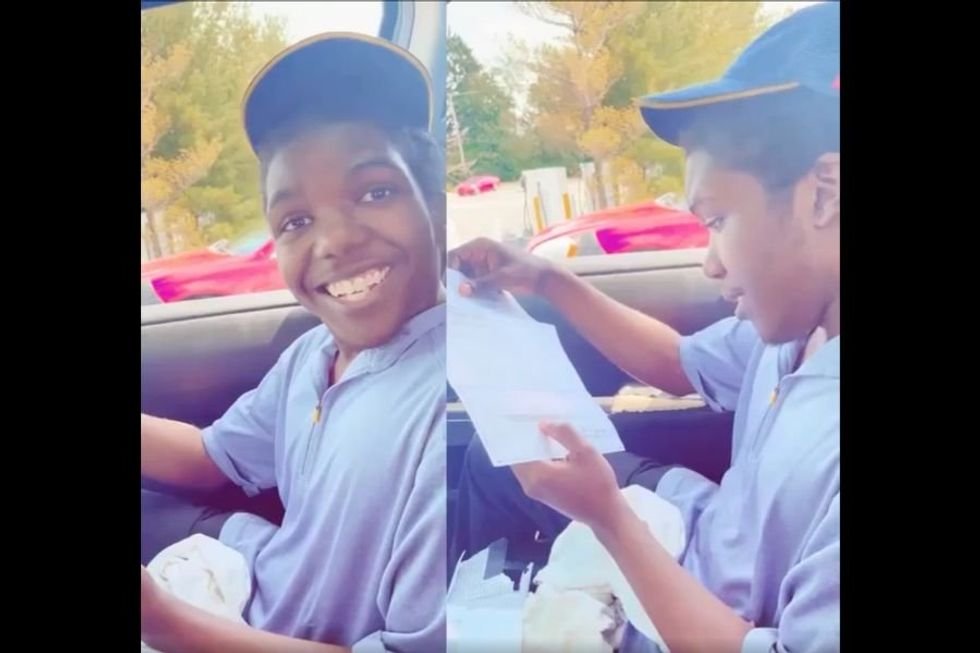
One mom recently captured one of those moments on video as her teen son opened his first paycheck from his job at McDonald’s. The video shared on Reddit shows a teen in a McDonald’s hat sitting in the passenger seat of a car opening an envelope that contained his paycheck.
His mom said it should be “200-and something” dollars, and after a hilariously long struggle to open the envelope (Gen Z have rarely, if ever, snail mailed, so no judgment), he looks over the check stub to get the full picture.
“That’s $283,” he says in astonishment. To his credit, he asks “After tax, what’s that?” not realizing that the amount of the check is the after-tax take home amount. It may not sound like much to adults, but it’s likely the most money this teenager has ever truly been able to call his. And he earned every penny. His smile and laughter says it all.
“Let’s take it to the bank, then!” Heck yeah, kid.
People in the comments are fondly remembering their own first paychecks
Many viral videos of first paycheck reveals include complaints about how much is taken out in taxes, so it’s refreshing to see this young man’s joy at his after-tax pay. It was a beautiful moment to capture on film, as most of us remember that feeling of empowerment that came with our own first real paychecks.
People in the comments are feeling the nostalgia:
“I remember that feeling – pretty sweet to see money you earned yourself. Feels good earning your own cash.”
“God that first paycheck felt so unreal. I will never forget you ace hardware.”
“I remember my first paycheck was for like $300 after two weeks of being a counselor and I felt RICH. I immediately spent it all on a guitar that I still have 20 years later.”
“I remember mine – from my first proper job. £64.29 in a little brown packet with holes in it to see the cash inside. 1980. “
“My first “paycheck” was like $65, I was so proud. I took my mom to pizzeria to treat her and she was very very touched.”
“Man… I remember my first paycheck… 23 years ago now. For two weeks of what limited hours I could work being 14 years old… that baby was $96.19! HO-LY smokes was I on cloud 9. Cashed it right there at work and bought myself a bag of Skittles. It was a good day.”
“No matter how much we earn later in life, that very first pay check is everything!”
“Man, I swear I had to watch this video like 20 times. There is hope for the future of America, love this kid!!!!
Ah, to be young and unencumbered by adult expenses. Part of what makes this endearing is the innocence of it. As a teen, he’s not worried about affording a mortgage or groceries or diapers or retirement savings. His elation over making $283 is adorable because he’s just starting down the path of adulthood. Soon enough, that paycheck will seem small, but he’s not there yet.
Such is the “first paycheck joy,” that TikTok is rife with adorable videos of young people opening their first paychecks after working their first real jobs.
When you’re a kid, money is kind of an abstract concept. Maybe you get a small allowance or get paid a few bucks for odd jobs, and opening a birthday card with some cash in it is exciting. It’s not until you’re fully into the working world for a while that the regular flow of money and what it means for your life really sinks in.
It’s not until you’re a fully independent adult that you really grasp how relative your feelings about your paycheck can be. There’s a big difference between being a 16-year-old getting your first paycheck and being a 30-year-old trying to raise a family on wages that don’t cover all your needs. Things like cost-of-living and inflation start to actually mean something as you get older and experience their impact. You might find that you can make a lot more money and yet feel poorer than ever as expenses pile up into adulthood.
Don’t we all wish we could go back to the hopeful, happy days of making our first real chunk of money before all of those grown-up concerns arose? That simple sense of pride in having worked hard and earned something. The excitement of being able to pay for something you want yourself. The sense of freedom that comes with those early earnings. We see and feel all of that in this teen’s bright smile, and it’s glorious.
He’ll have plenty of time to learn, in the very near future, the importance of budgeting, saving, and smart spending. And luckily, he’ll have plenty of resources in the modern media and social media landscape to learn from; far more than his parents ever had:
He may not realize how different he might feel opening his paychecks down the road, but there’s no need to tell him yet. He’ll find out soon enough, as we all have, so let’s just let him enjoy this moment of bliss. He’s earned it.
This article originally appeared two years ago. It has been updated.
When curling became an official Olympic sport in 1998, it was met with a fair amount of curiosity and confusion, at least among people outside Canada, Scotland, and the Scandinavian countries where it has long been a winter sport tradition. Without an explanation of what’s happening, curling can look downright bizarre: large stones sliding across the ice toward a target, while people vigorously sweep the ice in front of them as the person who threw the stone yells unintelligibly.
It’s not obvious what skills are required for curling just by watching, which initially led people to poke fun at the event. More recent Olympic Games, however, have seen interest in curling grow as people find the sport strangely riveting. Now, curling has reached even greater heights of popularity, as evidenced by satirical curling-at-home videos popping up on social media.
Many of them use a combo of a Roomba and a Swiffer, which works perfectly:
No one knows the exact origins of curling, but there is evidence of the sport (or something like it) being played by monks on frozen lakes and ponds in Scotland in the 16th century. Farmers would join in curling games during the winter months, and as the sport evolved through the 1800s, it became more organized. Rules were formalized, and people began traveling to watch and participate in competitions held outdoors in large Scottish cities. The Scots eventually took the sport with them to other countries, and by the 1900s, curling had transformed from a Scottish outdoor pastime into an international, mostly indoor sport.
How does curling work as a sport?
Curling is played by two teams of four, with each team aiming to get its eight stones closest to the center of a target called a “house.” Teams alternate “throwing” their stones, which really means gliding them along the ice. Sweepers brush the ice to help guide the stones, while the team captain, or “skip,” gives directions, often by yelling, to place the stones where they want them to go.
After all 16 stones are thrown, the team with a stone closest to the center of the house scores one point for each of its stones that landed inside the house. The other team does not score at all in that round, called an “end.” There are eight or 10 ends per game, depending on the event, and the team with the most points after all the ends have been played is the winner.
Here’s a visual explainer that goes through the basics:
Fun facts about curling
Tara Peterson of the USA Curling National Team shared some interesting facts about curling with Columbia Sportswear:
Modern curling stones are made of granite that comes from only two places: a quarry in Wales and an uninhabited island off the coast of Scotland called Ailsa Craig.
Curling is called curling because of the way the stone curves depending on how it’s spun, but exactly how that happens is still a bit of a scientific mystery. Curling stones actually move in the opposite direction of what the turn would normally dictate according to physics.
Despite the yelling, curling is considered a polite “gentleman’s” sport, with traditional etiquette rules observed before and after the game.
Though it may not be immediately obvious, you have to be in pretty good shape to curl. Throwing a 42-pound stone, even on ice, isn’t as easy as it looks, and the person throwing it must remain crouched close to the ground for long periods. Sweeping also requires arm strength and cardiovascular endurance.
Curling requiresu00a0more athleticism than it first appears. Photo credit: Canva
Curlers wear two different shoes, one designed for gripping the ice and the other for sliding. The slider sole is made of Teflon or stainless steel, while the grippy sole is made of rubber.
Curling is called the “roaring game,” which might sound odd, but the sound of the stones gliding over the ice is apparently much louder in person than it sounds on TV.
Every sport is more fun to watch when you actually know what you’re seeing, and curling is no exception. If you’re wondering who to watch, Canada has traditionally dominated the sport, though Sweden trails by only two medals in total Olympic curling medals. And if you’re curious how Scotland fares as the original home of the sport, its curlers compete under Great Britain’s flag.
These trendy words are here today, and will likely be gone tomorrow. And language lovers on Reddit shared their favorite old-fashioned words that have gone nearly extinct in English today (and many they wish would make a comeback).
“Overmorrow. It means ‘the day after tomorrow’.” – TheGloveMan
“I remember the word ‘grody’ from the 90s. It meant gross or yucky.” – Glittering_Age_5591
“Comely (meaning beautiful) and homely (meaning ugly).” oddwithoutend, Suspicious_Art9118
“Rolodex. There was something great about those. My own was a desk model with a lockable closing cover. Something about the tangibleness, the physicality and the control. Having the different kinds of cards and card covers, hearing them click when you spun it. I was sad to let it go.” Matsunosuperfan, BASerx8
“Bitchin’ (meaning excellent).” – fox3actual
“Yellow pages.” – Matsunosuperfan
“Copacetic.” – Matsunosuperfan
“Lunting: walking while smoking a pipe.” – RainbowWarrior73
Wouldn’t it be a dilly idea to bring back these 1900s slang words!? Which one fractured you the most ? Let us know in the comments and catch up on episodes of Otherwords with @Dr. Erica Brozovsky on the Stoired YouTube channel! #slang#english#language#linguistics#history#vintage @PBS
“Only a ‘square’ would remember things like that.” – EighthGreen
“‘Cattywampus’ also sometimes known as ‘catawampus’. A cool word that you don’t hear much anymore.” – Dead_Is_Better
“I use finagle and my high school students think I’m so weird. I’m 47. This word is normal.” – MLAheading
“Handsome (when describing a woman). One day when we were talking, my mother (born 1930s) referred to the late Queen Mary (as in the wife of King George V) as a ‘handsome woman.’ We tend to see photos of Queen Mary in her later years, but earlier photos show that she was quite beautiful. However, I believe my mother’s comment was about more than just her beauty, and included her overall effect. Queen Mary always seemed to be tall, composed and imposing.” Odd-Scheme6535, Popular-Solution7697
“Maybe not extinct but it’s meaning completely obliterated: nonplussed.” – LeFreeke
“Oblige. Rarely hear it except in old westerns.” – ReadySetGO0
“Druthers.” – Embarrassed_Wrap8421
“Bogart. Monopolizing something that’s meant to be shared.” – CoderJoe1
“Bumbershoot.” – kelariy
“Ne’er-do-well. From the early 20th century, basically some who never-does -well, implying a slacker or underachiever. Although people never said it even when I was growing up, I still think it’s a cool word.” – fabgwenn
“Niggardly. Meaning cheap or skimpy when it comes to giving. Someone said it during a press event once and some people thought it meant something racist. No one has ever used that word since.” – wawa2022
“Whippersnapper – a young and inexperienced person considered to be presumptuous or overconfident. I’ve heard people on TV say it, (maybe Dennis the Menace, or some other 50s show). I heard a 90 yo woman say it IRL and I laughed so hard.” – JazzFan1998
“Forsooth.” – fingermagnets459
“Xeroxing a document.” – C-ute-Thulu
“Blatherskite.” – Biff_Bufflington
“I don’t seem to hear penultimate much anymore.” – TakeMetoLallybroch
“I’m quite fond of the word slubberdegullion, meaning ‘dirty scoundrel’. I use it frequently when I talk to my senior, who is a rather clean upstanding citizen. We laugh and then he tells me to get back to work.” – r-pics-sux
“Frippery, at least in American English (think it’s used in France for thrift shops?)” – KobayashiWaifu
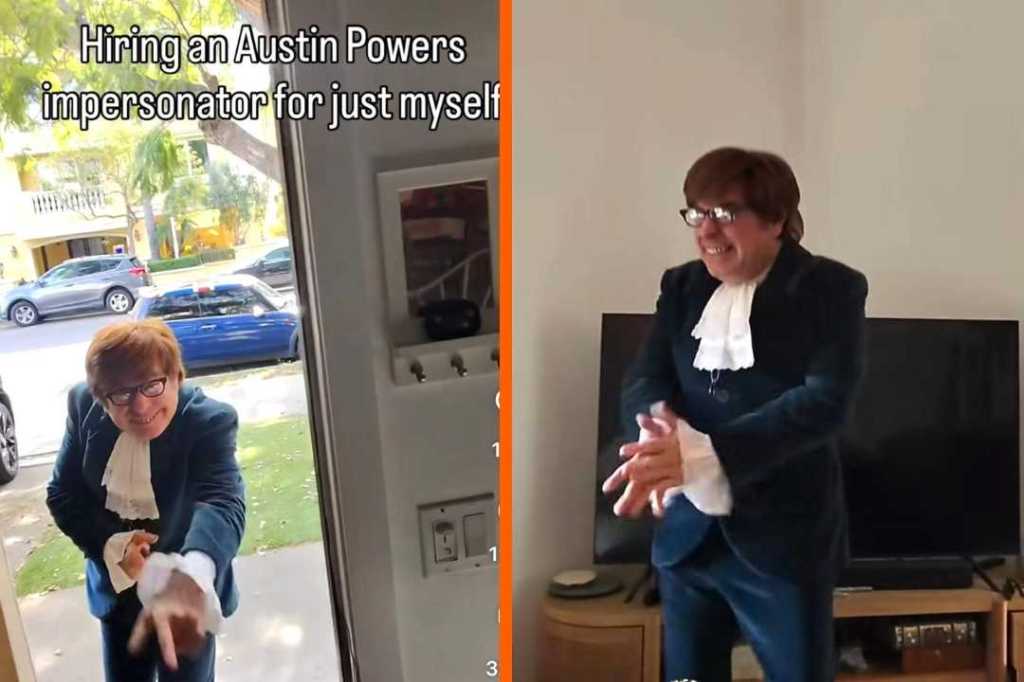
It was groovy, baby. Chase Hofer woke up one day and decided to hire an Austin Powers impersonator to just, well, come over. And that he did, creating a brilliantly funny and equally awkward exchange between two guys just hanging in an apartment. (Albeit one of them was dressed head to toe as the infamous English ladies’ man.)
For those unfamiliar with the Austin Powers franchise, comedian Mike Myers created and played the character in a series of three films directed by Jay Roach. The gist was that Powers is a British international spy who loved crushed velvet suits and “shagging” and wasn’t ashamed of either. The purposely cringe-heavy dialogue created hours of fun, and the ’60s spy satire was blatant.
In the clip, Hofer opens the door to find “Austin Powers” (as played by actual impersonator Richard Halpern) dressed in his trademark blue velour suit, frilly white shirt, and thick black glasses. They shake hands, and Halpern immediately says, “You must be Chase, baby! What a grip you have. You must live alone!” They laugh uproariously.
Halpern asks, “So what do you want me to do? Like what I would do at a party?” He then begins laughing maniacally, pacing and yelling out some of his catchphrases—most notably, “Oh, BEHAVE.” After turning to his smartphone, he remembers a line that would only work if looking at a woman’s chest area: “Oh, you make a lovely couple.” This lands awkwardly, as he tries to explain that it’s a “boobie” reference. Hofer assures him he got it, though it’s a “different time.”
From there, the awkwardness just gets better. Halpern is now lounging on the couch. Hofer asks, “Did you watch the Super Bowl?” He answers, “Oh yeah, yeah sure I did.” Hofer follows this up with, “Are you more of a soccer guy since… U.K.?” He yells, “Soccer, I don’t even know her!” Hofer attempts to feign a laugh, but it putters out pretty quickly.
The room is incredibly quiet for a bit, followed by a little more forced banter. The clip ends with the two of them watching a rap performance on TV in complete silence.
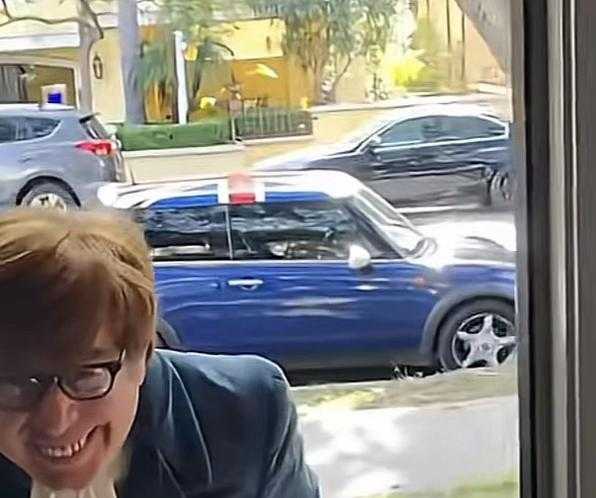
The comments on both Hofer’s TikTok and Instagram page are also truly observant and funny. One points out the commitment to the bit: “Dude has the car and everything.”
Another jokes, “When the Austin Powers impersonator thinks YOU’RE the weirdo.”
On Instagram, a person references the rap performance they’re watching, noting, “The 2016 XXL freshman cypher at the end is pure gold. PURE GOLD.”
Upworthy had a chance to chat with Hofer, who shares how the idea sparked. “I came up with the idea after doing it with a magician! The magician was a friend of mine. So I thought it would be great to do it with this Austin Powers impersonator that my friends have worked with.”
Said aforementioned impersonator has been playing Austin Powers for ages. “Austin was played by this man on Instagram known as ‘Austin Powers Impersonator.’ He’s been doing this professionally for more than 25 years.”
(Note: On Richard Halpern’s Instagram page, he lets it be known that he’s L.A.-based and “ready for YOUR event.”)
We asked if Halpern had been given a heads up. “Basically, I gave him the rundown that it’d just be us two, and then I rolled non-stop for 30 minutes. So it was basically all improv.”
As for Myers himself, Hofer is a fan. “I have not met Mike Myers! Big fan though. I felt like I was watching him a couple of days ago!”
As popular as this clip has become, some wonder if this cringe humor would be too much for younger generations. On the Reddit thread, “Does Generation Z enjoy the Austin Powers movies or find them offensive and outdated?” the OP writes, “I recently watched Austin Powers with my nephew. He found half of it funny, but the other half he didn’t really get. Some jokes he thought were racist and not funny. This made me wonder, Gen Z, do you like these movies, or do you find them offensive and outdated?”
The OP adds, “Personally, I found these movies really funny. I love that Mike Myers has the laugh-per-minute dialed up in these movies. There’s constant jokes… nonstop jokes. Definitely some of the jokes lost their luster from when I was 19 years old. But the jokes are still there.”
This thread received nearly 3,000 comments. One Redditor wasn’t bothered at all, noting that being offensive is the POINT. “That seems funny to me because Austin Powers is a direct parody of the old Bond movies, so the overt sexual and offensive jokes are part of the satire.”
Another points out that it’s all relative, writing, “The weird thing is that despite Austin being a complete and total horndog, he’s also weirdly more respectful than a lot of characters at the time or since. There’s a scene in one of the movies (I can’t remember which one) where the female co-lead is finally willing to sleep with him after he’s been unsuccessfully hitting on her most of the movie, and he respectfully turns her down because she’s drunk as a skunk and he has the decency to not take advantage of someone who’s inebriated and thus can’t consent.”
Perhaps Dr. Evil (also played by Myers in the Austin Powers films) said it best when he pointed out in Austin Powers: International Man of Mystery: “I’ve been frozen for thirty years, okay?”
Movies are all about magic. They tell stories that amplify and elaborate on the mundane bits of everyday life—leaving viewers questioning if things they see on the big screen are really real, or just portrayed that way.
For non-Americans enjoying American films, the movies can give them some pretty whacky ideas about what American culture is really like. But sometimes, how America is portrayed in the movies is actually spot-on.
People on Reddit discussed the things they’ve seen in American movies that actually are legitimate. From diners to the ‘burbs to Greek life and more, these are 28 things that really exist in America—and not just the movies.
People
“Cowboys. I mean I knew they were real and that some people dressed like the Hollywood version of cowboys but I did not realize it was still a present day job and that people still dress that way to do it.” – Cougarette99
“Firefighters coming to help bring down a cat from a tree. I was visiting relatives one summer and one of the house cats climbed a tree and wouldn’t come down. I came up with the idea of calling the fire department, thinking they’d laugh me off and hang up, but sure enough, they came with a truck, ladders, gear, everything, and helped bring the cat down successfully.” – mrcmnt
“Baggers in the grocery store. And door greeters in completely normal supermarkets.” – interesseret
“‘More coffee, hon?’ On a visit to the US, driving through Nevada or Utah we stopped at a diner and as we were entering I joked around saying something like ‘if the waitress is wearing an apron and calls me honey I’ll lose my sh*t’. Was. Not. Disappointed.” – Jaimebgdb, Urik88
Places
“The way suburbia looks. I’m American and sent a picture of the street my home is on to a German friend and he was like ‘it looks like a movie set’.” – NewAnything8221
“Waiting all day in the DMV. Even when I had to do car stuff in the person, I was never anywhere for an entire day sorting it out.” – ocelotrevs
“Going into a bar for a drink, and sitting at the bar, by yourself. Chatting to the bartender. Chatting to the random person next to you. I always thought that was something put in TV shows just so they could make up a reason for someone to chat to the bartender, or pour out their woes, or whatever. People don’t sit by themselves at the bar anywhere else. I tried it in Australia and got weird looks.” – the_rain_keeps_comin
“Diners and breakfast tradition? Don’t know if I should call it like that but I would see in movies how diners would be a tradition to go at breakfast and it’s really like that, those diners are busy!!” – ainacct
Things
“The over-the-top Halloween parties where everyone took a large amount of effort to dress up. Yep that is accurate.” – dion_o
“The length of a CVS receipt.” – OptimistPrime527
“The insane medical advertisements with a million side effects said in rapid fire at the end. We visited my husband bestie in 2019, when we were watching something on tv while eating dinner we saw our first one. Genuinely turned to him like ‘that’s satire, right?’” – Myhandsarecold11
“Red Solo Cups. I thought they were just a Hollywood prop used to hide alcohol brands or signify ‘party scene.’ I went to a college party in Ohio and they were literally everywhere. I was shook.” – Unlikely_Praline9442
Schools
“The fraternity/sorority scene in college. I was an international student at UT Austin and it was a crazy realization that the movie depictions of college life is actually underwhelming. I witnessed shit that could not be legally portrayed in movies. You people are crazy.” – lucas14qr
“The yellow school buses that have a flip out stop sign.” – MudMonyet22
“Prom culture. The king/queen stuff.” – kyubeyt
“lol I’m American from the CA coast and while we had high school football, I thought that it being a huge deal was only in movies/tv. Then I moved to Georgia and later Texas. Hahaha omg. Wow. I was wrong lol.” – TakeMeBackToCA831
“I am an American who lived overseas for many years, and had many friends on social media when I returned home. I posted a photo of Chinese food takeout in those white square boxes and had dozens of my friends from overseas react in surprise- they thought it was only something they did in movies.” – Kateseesu
“‘Have a nice day’ everywhere all the time and blueberry muffins.” – AlfredLuan
“The free refill at restaurants.” – craftlover221b
New York City
“All the smoke/steam coming out the vents on the road in New York in the movies.” – curious__curiosity
“I got off a bus in New York and a newspaper blew past me. I could imagine the camera panning up from my shoes…” – JunkoKumaki
“I got off a bus in New York and a dude came up to me, opened his jacket, and tried to sell me one of many ‘Rolexes’ he had hanging inside his coat. I legit thought that was strictly a movie thing, and I’m American!” – Ataru13
“And constant police/ambulance sounds. I thought it’s bullshit until I came to live here. Now my daughters say the street noise is calming :).” – romario77
“Manhattan. I remember my first trip and was like ‘Oh my God this is all fucking real’.” – fenton7
Nature
“Fireflies are pretty wild, you sure do just have swarms of glowing bugs.” – WehingSounds
“Tumbleweeds. I was actually flabbergasted when I went to visit the US and people were casually talking about tumbleweeds. I thought they were just a thing in cartoons.” – PlanetoidVesta
“I’m an American, an Alabamian. I made friends with a guy at work who is Russian. He was new to the country, so we’d invite him to come over and eat with us all the time. One summer afternoon, we were sitting on our back deck drinking beer and a hummingbird whizzed past his ear. Alex totally freaked out. I had to point out our hummingbird feeder to him. He sat there the entire day just mesmerized by the things. They really are magical when you stop to think about them.” – AnybodySeeMyKeys
“Skunks! I genuinely thought they were a mythical creature of cartoon origins. Why? I don’t know. I guess I thought they were implausible, like unicorns. They don’t exist in Europe, so I only knew of them from cartoons, and from sitcom jokes. I made assumptions about their existence that went unchallenged until I was 27.” – difractional