This grandma heard kids would be going lunch-less. So she went to a pub and cooked up a storm.
Phyllis Shaughnessy was dismayed when she learned the local meal program for low-income students would be cut for the summer. Shaughnessy is a retired postmaster and a part-time substitute teacher in Copalis Beach, Washington. From her experience working with children, she would know that there are 15,000 kids and teens living below the poverty line…
Phyllis Shaughnessy was dismayed when she learned the local meal program for low-income students would be cut for the summer.
Shaughnessy is a retired postmaster and a part-time substitute teacher in Copalis Beach, Washington. From her experience working with children, she would know that there are 15,000 kids and teens living below the poverty line in Grays Harbor County, where her town is located.
During the school year, low-income students can get their lunches through free or discounted meal programs at school.
But this year, the North Beach School District was forced to cut summer meals when the U.S. Department of Agriculture (USDA) made a change to their grant requiring the meals be served in a single location — a nearly impossible task in a region with a spread out rural population.
Realizing that local low-income families couldn’t afford to fill this gap, Shaughnessy decided to fill the gap herself.
Shaughnessy acquired a caterer’s license and began bringing lunches to kids who were affected by the summer lunch program cut. She called the program “Green Lantern Lunches” after Green Lantern Pub in Copalis Beach, whose owners offered the pub’s kitchen to prepare meals.
The pub does other cool stuff too, like host Harley-Davidson weekends:
Maybe they could deliver lunches? Green Lantern Pub/Facebook, used with permission.
Every morning, Shaughnessy and a handful of volunteers delivered lunches to more than 200 low-income children. 90 of those lunches were delivered by Shaughnessy herself.
Parents told reporters for USA Today how much their children enjoy seeing Shaughnessy each morning. The kids have come to anticipate the sight of her navy blue car with the custom-made “Green Lantern Lunches” signs on its doors.
All GIFS via USA Today/YouTube.
In USA Today’s video, Shaughnessy says she doesn’t just do it to give the children food, she does it for the human connection it brings, for “love and hope”.
“They need to know that somebody cares,” she says.
As of August, Shaughnessy and other volunteers reported delivering 6,851 meals. A recent feature on the show “The Real” put an updated estimate at 10,000 meals. That’s amazing.
The program is now looking to purchase school supplies and provide the kids with meals on weekends and holidays.
They have set up a GoFundMe page to raise funds to keep their awesome program going.
I’m from Seattle and my mom and I have taken trips to Copalis Beach since I was a little kid. I remember driving past Green Lantern Tavern with its vibrant green walls and trim (and finally going in for a drink after I’d turned 21). This area gave me a lot of happy memories, and I wish its residents all the best.
Cheers to Phyllis Shaughnessy and her team, for all the happy memories you’re giving to your community’s kids.
You can check out this video for more on Green Lantern Lunches:
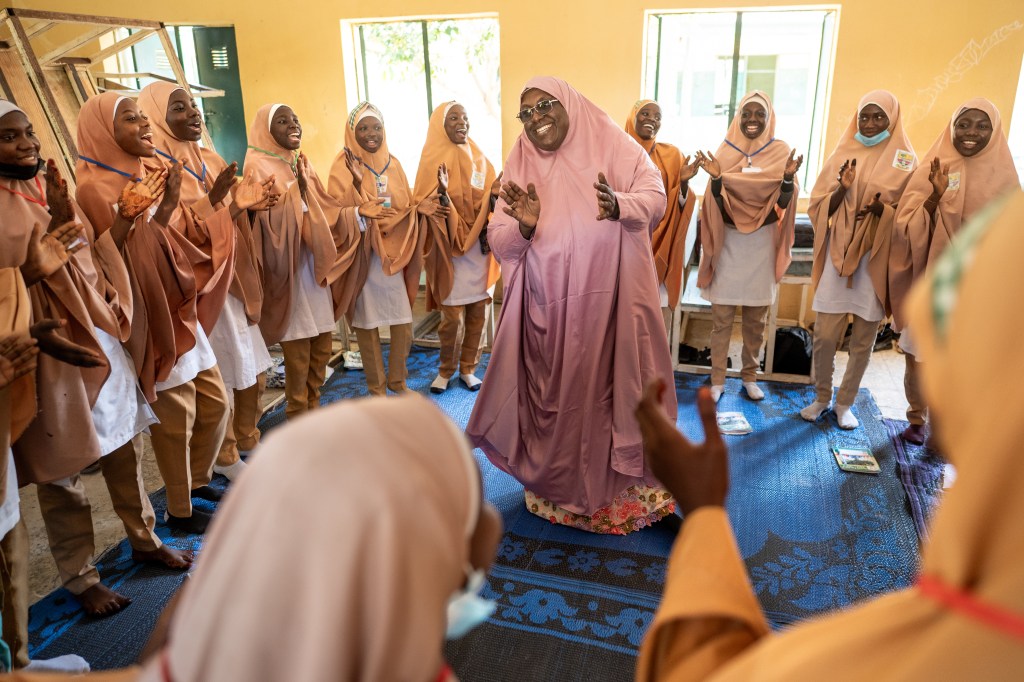
In a small village in Pwani, a district on Tanzania’s coast, a massive dance party is coming to a close. For the past two hours, locals have paraded through the village streets, singing and beating ngombe drums; now, in a large clearing, a woman named Sheilla motions for everyone to sit facing a large projector screen. A film premiere is about to begin.
It’s an unusual way to kick off a film about gender bias, inequality, early marriage, and other barriers that prevent girls from accessing education in Tanzania. But in Pwani and beyond, local organizations supported by Malala Fund and funded by Pura are finding creative, culturally relevant ways like this one to capture people’s interest.
The film ends and Sheilla, the Communications and Partnership Lead for Media for Development and Advocacy (MEDEA), stands in front of the crowd once again, asking the audience to reflect: What did you think about the film? How did it relate to your own experience? What can we learn?
Sheilla explains that, once the community sees the film, “It brings out conversations within themselves, reflective conversations.” The resonance and immediate action create a ripple effect of change.
MEDEA Screening Audience in Tanzania. Captured by James Roh for Pura
Across Tanzania, gender-based violence often forces adolescent girls out of the classroom. This and other barriers — including child marriage, poverty, conflict, and discrimination — prevent girls from completing their education around the world.
Sheilla and her team are using film and radio programs to address the challenges girls face in their communities. MEDEA’s ultimate goal is to affirm education as a fundamental right for everyone, and to ensure that every member of a community understands how girls’ education contributes to a stronger whole and how to be an ally for their sisters, daughters, granddaughters, friends, nieces, and girlfriends.
Sheilla’s story is one of many that inspired Heart on Fire, a new fragrance from the Pura x Malala Fund Collection that blends the warm, earthy spices of Tanzania with a playful, joyful twist. Here’s how Pura is using scent as a tool to connect the world and inspire action.
A partnership focused on local impact, on a global mission
Pura, a fragrance company that recognizes education as both freedom and a human right, has partnered with Malala Fund since 2022. In order to defend every girl’s right to access and complete 12 years of education, Malala Fund partners with local organizations in countries where the educational barriers are the greatest. They invest in locally-led solutions because they know that those who are closest to the problems are best equipped to solve and build durable solutions, like MEDEA, which works with communities to challenge discrimination against girls and change beliefs about their education.
But local initiatives can thrive and scale more powerfully with global support, which is why Pura is using their own superpower, the power of scent, to connect people around the world with the women and girls in these local communities.
The Pura x Malala Fund Collection incorporates ingredients naturally found in Tanzania, Nigeria, Pakistan, and Brazil: countries where Malala Fund operates to address systemic education barriers. Eight percent of net revenue from the Pura x Malala Fund Collection will be donated to Malala Fund directly, but beyond financial support, the Collection is also a love letter to each unique community, blending notes like lemon, jasmine, cedarwood, and clove to transport people, ignite their senses, and help them draw inspiration and hope from the global movement for girls’ education. Through scent, people can connect to the courage, joy, and tenacity of girls and local leaders, all while uniting in a shared commitment to education: the belief that supporting girls’ rights in one community benefits all of us, everywhere.
You’ve already met Sheilla. Now see how Naiara and Mama Habiba are building unique solutions to ensure every girl can learn freely and dare to dream.
Naiara Leite is reimagining what’s possible in Brazil
Julia with Odara in Brazil. Captured by Luisa Dorr for Pura
In Brazil, where pear trees and coconut plantations cover the Northeastern Coast, girls like ten-year-old Julia experience a different kind of educational barrier than girls in Tanzania. Too often, racial discrimination contributes to high dropout rates among Black, quilombola and Indigenous girls in the country.
“In the logic of Brazilian society, Black people don’t need to study,” says Naiara Leite, Executive Coordinator of Odara, a women-led organization and Malala Fund partner. Bahia, the state where Odara is based, was once one of the largest slave-receiving territories in the Americas, and because of that history, deeply-ingrained, anti-Black prejudice is still widespread. “Our role and the image constructed around us is one of manual labor,” Naiara says.
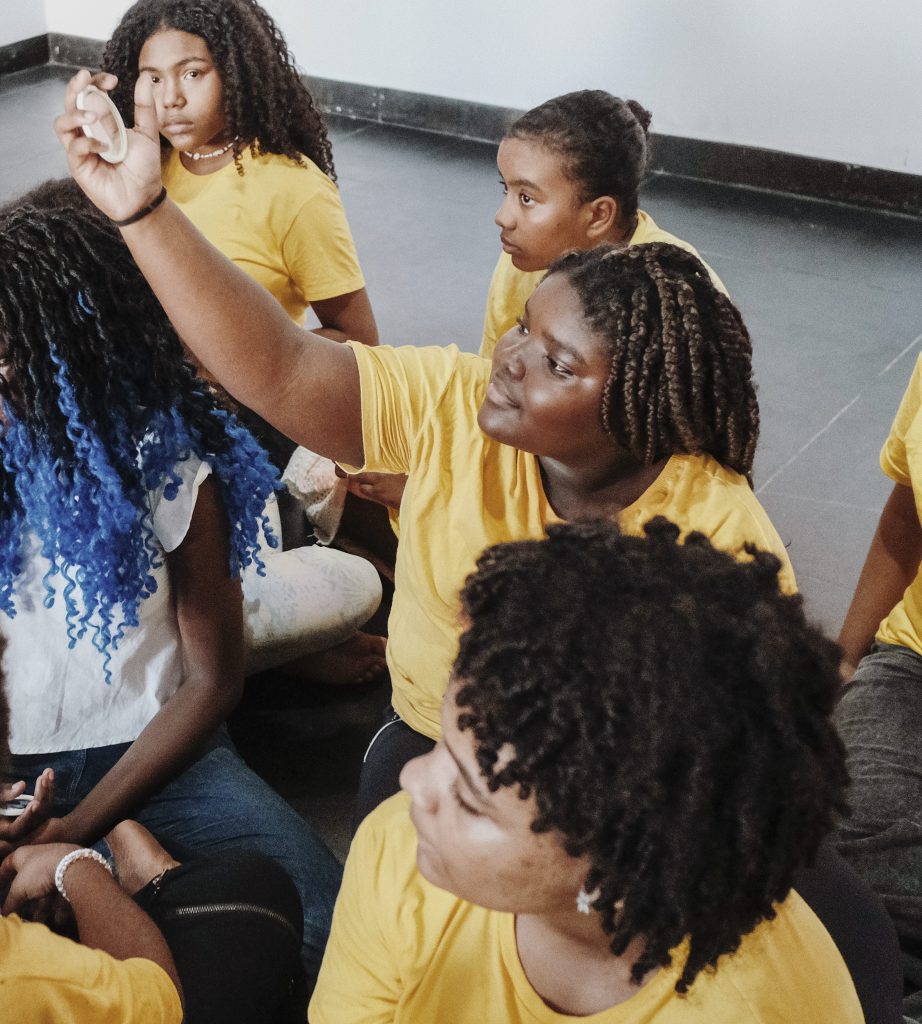
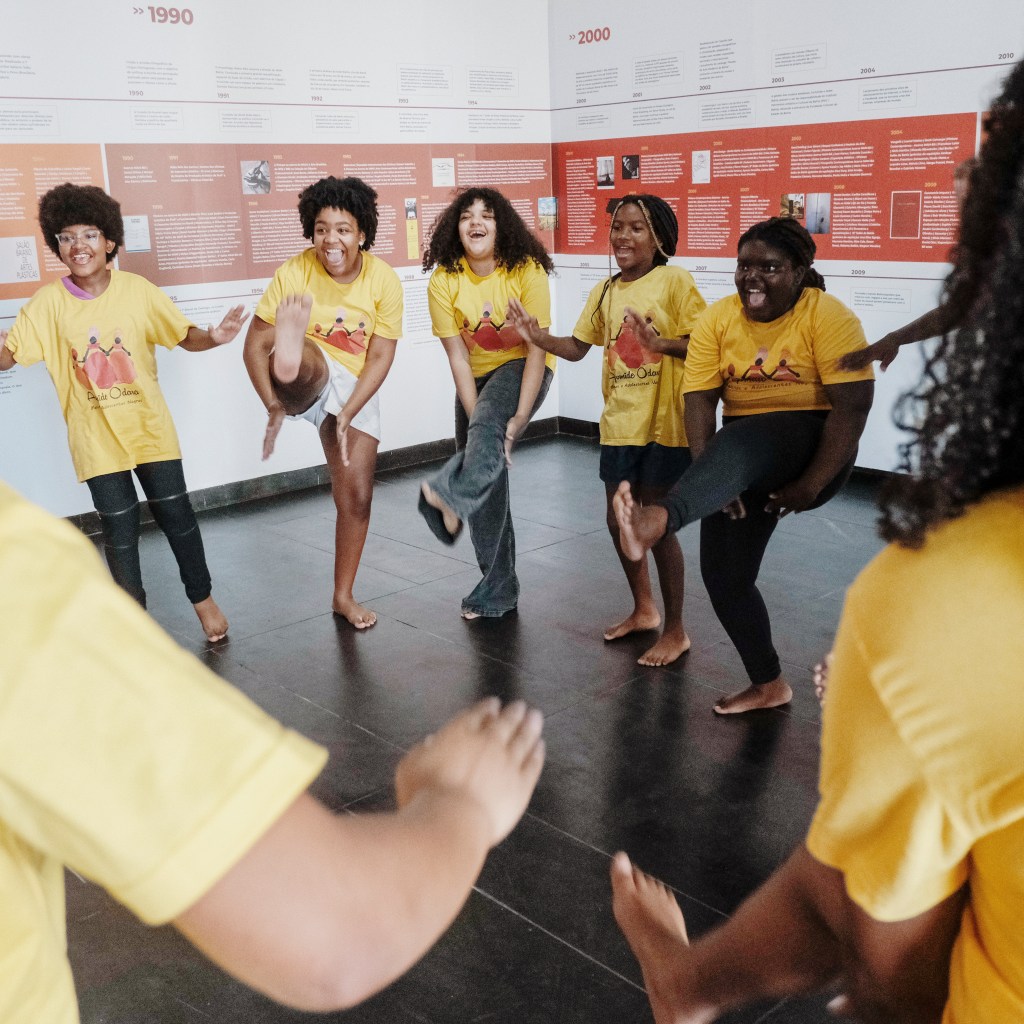
But education can change that. In 2020, with assistance from a Malala Fund grant, Odara launched its first initiative for improving school completion rates among Black, quilombola, and Indigenous girls: “Ayomidê Odara”. The young girls mentored under the program, including Julia, are known as the Ayomidês. And like the Pura x Malala Fund Collection’s Brazil: Breath of Courage scent, the Ayomidês are fierce, determined, and bursting with energy.
Ayomidês with Odara in Brazil. Captured by Luisa Dorr for Pura
Ayomidês take part in weekly educational sessions where they explore subjects like education and ethnic-racial relations. The girls are encouraged to find their own voices by producing Instagram lives, social media videos, and by participating in public panels. Already, the Ayomidês are rewriting the narrative on what’s possible for Afro-Brazilian girls to achieve. One of the earliest Ayomidês, a young woman named Debora, is now a communications intern. Another former Ayomidê, Francine, works at UNICEF, helping train the next generation of adolescent leaders. And Julia has already set her sights on becoming a math teacher or a model.
“These are generations of Black women who did not have access to a school,” Naiara says. “These are generations of Black women robbed daily of their dreams. And we’re telling them that they could be the generation in their family to write a new story.”
Mama Habiba is reframing the conversation in Nigeria
Centre for Girls' Education, Nigeria. Captured by James Roh for Pura
In Mama Habiba’s home country of Nigeria, the scents of starfruit, ylang ylang and pineapple, all incorporated into the Pura x Malala Collection’s “Nigeria: Hope for Tomorrow,” can be found throughout the vibrant markets. Like these native scents, Mama Habiba says that the Nigerian girls are also bright and passionate, but too often they are forced to leave school long before their potential fully blooms.
“Some of these schools are very far, and there is an issue of quality, too,” Mama Habiba says. “Most parents find out when their children are in school, the girls are not learning. So why allow them to continue?”
When girls drop out of secondary school, marriage is often the alternative. In Nigeria, one in three girls is married before the age of 18. When this happens, girls are unable to fulfill their potential, and their families and communities lose out on the social, health and economic benefits.
Completing secondary school delays marriage, and according to UNESCO, educated girls become women who raise healthier children, lift their families out of poverty and contribute to more peaceful, resilient communities.
Centre for Girls’ Education, Nigeria. Captured by James Roh for Pura
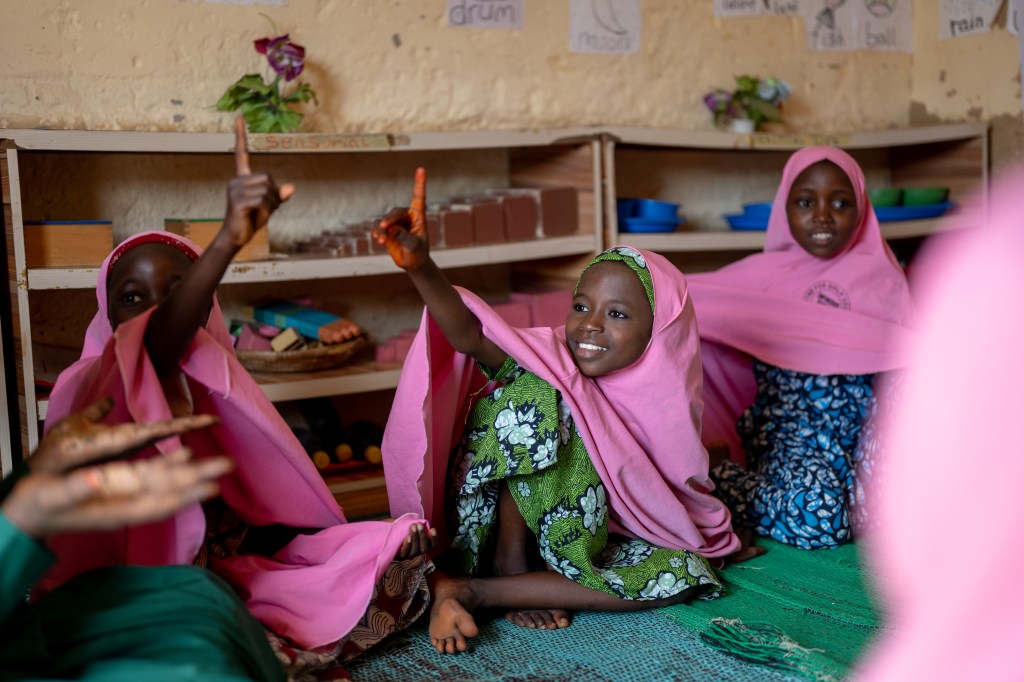
To encourage young girls to stay in school, the Centre for Girls’ Education, a nonprofit in Nigeria founded by Mama Habiba and supported by Malala Fund and Pura, has pioneered an initiative that’s similar to the Ayomidê workshops in Brazil: safe spaces. Here, girls meet regularly to learn literacy, numeracy, and other issues like reproductive health. These safe spaces also provide an opportunity for the girls to role-play and learn to advocate for themselves, develop their self-image, and practice conversations with others about their values, education being one of them. In safe spaces, Mama Habiba says, girls start to understand “who she is, and that she is a girl who has value. She has the right to negotiate with her parents on what she really feels or wants.”
“When girls are educated, they can unlock so many opportunities,” Mama Habiba says. “It will help the economy of the country. It will boost so many opportunities for the country. If they are given the opportunity, I think the sky is not the limit. It is the starting point for every girl.”
From parades, film screenings to safe spaces and educational programs, girls and local leaders are working hard to strengthen the quality, safety and accessibility of education and overcome systemic challenges. They are encouraging courageous behavior and reminding us all that education is freedom.
Experience the Pura x Malala Fund Collection here, and connect with the stories of real girls leading change across the globe.
There’s a great line in Who Framed Roger Rabbit?, where the sultry Jessica Rabbit is asked why she loves her husband, Roger, a manic comedian with a penchant for mischief, who’s half her size. Her answer: “He makes me laugh.”
Although that may seem like an exaggeration, there’s a lot of truth to Jessica’s perspective; heterosexual women consistently rank sense of humor as one of the most attractive traits that a man can have. Heterosexual men also find women with a sense of humor attractive, but to a lesser extent.
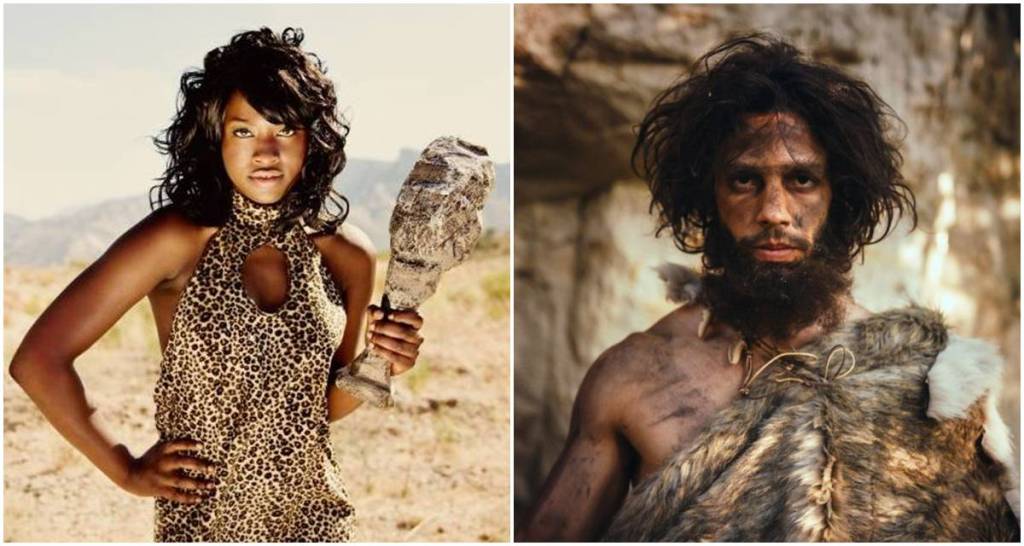
A new research paper by Wayne State University linguist Ljiljana Progovac suggests that when it comes to human evolution, the phrase “survival of the fittest” could be replaced by “survival of the wittiest.” Her research shows that in the caveman era, humans shifted from a might-makes-right tribal culture, where physically dominant people had the most opportunities to reproduce, to one where a sense of humor was the sexiest trait you could have.
Why did cavedwellers find a sense of humor sexy?
The big changes came when early humans realized that inter-tribal violence did more harm than good. Therefore, being a physical threat was out of style as it was more advantageous to be “groupish.” Those who could cooperate within their tribe to ensure they could compete with other tribes then started getting all the action.
Even though early humans treated those in their tribe with greater civility, within this friendly society, those who were verbally fluent became dominant and more attractive to potential mates.
“From the very first moment that our ancestors started combining two words together, those combinations opened up a new kind of competition. Not physical. Verbal,” the Science Blog writes. “The ability to coin a devastating nickname, to skewer a rival with a phrase, to make the tribe laugh at someone else’s expense; these skills, she argues, were subject to sexual selection just as surely as the peacock’s tail or the bowerbird’s elaborate stick construction.”
It seems that even though language developed over a hundred thousand years ago, things haven’t changed all that much since.
Progovac posits that early humans could insult one another or express their sense of humor by using simple two-word verb-noun compounds such as “killjoy” or “pickpocket.” According to the author, people who knew how to throw around those compounds in clever ways had higher reproductive fitness than those who weren’t as adept. The children born to witty individuals could then go on to create even more complicated grammatical rules to show off their wit. This, in turn, led to the evolution of more complex languages.
Progovac’s paper also notes that, on one hand, being quick-witted is an advantage when it comes to sexual selection, while those who aren’t as funny are less likely to be selected.
“In addition to positive selection due to superior language skills and eloquence, it is also important to acknowledge the role of negative selection with respect to these skills, as even minor language disturbances or ‘disorders’ can have a detrimental effect on selection,” Progovac writes. “Especially damning seem to be insults that directly refer to such skills, such as dim-witted, half-witted, f**kwit, slow, and dull, indicating the value that is still placed on wit and quick-wittedness. This suggests that quick-wittedness plays a role both in positive and negative selection in humans, even today.”
This study is a wonderful example of two inspiring ideas. The first is that even if you aren’t genetically blessed with traditionally great looks, a sense of humor can go a long way towards helping you find a romantic partner. Second, humans evolved an incredible sense of humor because it was better to make fun of each other than to beat them with a club.
In a time when inflation is forcing people to make their dollars go as far as possible, an Instagram video by Jose Rojas shows how a little creativity can help families stretch their food budget a long way. In the video, Rojas nearly does the impossible: he makes a tasty, healthy meal for two for exactly $1.
Rojas is the creator of Beyond Food Market, which teaches people in underserved communities and food deserts how to make affordable, nutritious meals. Roajs was inspired to help his community after he lost 90 pounds and kept it off. “Because food did so much for me. It changed my life. It transformed my life. I’m like, I gotta share this,” Rojas said.
Rojas makes a really smart move when buying the ingredients for his meal by weighing exactly what he needs, so he doesn’t pay for what he doesn’t need. He purchased a medium russet potato, a small tomato, and a small onion for just $0.65 at the Jimenez Fresh Market on Belmont Ave. in Chicago. He also got a break because the cashier threw in the serrano pepper for free.
Sometimes, making your dollar stretch means going to more than one store (we’ll forget the cost of gas right now). Rojas remembered seeing that pinto beans were just $0.69 a pound at his local Jewel Osco, and he bought half a pound for $0.35, bringing the total cost of his meal to $1.
Rojas’ bill at Jimenez and Jewel Osco. Credit: BeyondFoodMarket (used with permission)
How to cook Rojas’ simple $1 recipe
½ lb pinto beans
1 medium russet potato
1 small tomato
1 small onion
1 serrano pepper
Total cost: $1.00
To cook the meal, Rojas used a pressure cooker, soaking beans in water along with chunks of the potato cut about 1/2” thick. While the beans and potatoes cooked, he made pico de gallo by mixing tomatoes, onions, and serrano pepper. (Is he cheating by including the pepper that he should have paid for? That’s for you to decide.)
The final dish was delicious-looking and could be marketed as a Southwest Burrito Bowl or a Vegan Mexican Bowl if you bought it at a Chipotle-style restaurant. The meal is healthy, too. “The recipe was very simple and inspired by the way many of our families have cooked for generations,” Rojas told Upworthy.
This $1 meal is:
High protein
Extremely high in fiber
Loaded with potassium, iron, and vitamins
100% gluten-free & plant-based
Made from real, whole ingredients
The video has gone viral across multiple platforms, and the response has been overwhelmingly positive. “The best reaction has been people telling me that the video reminded them of how their parents or grandparents used to cook during tough times. Others have said the video gave them hope that they can still cook something warm and nourishing even when money is tight,” Rojas told Upworthy.
Ultimately, Rojas’ desire to help people everywhere change their eating habits is a natural extension of his lived experience. “I learned to be resourceful from my upbringing and life experiences. I grew up in a working-class family, and later in life, I had to completely change the way I ate to improve my health,” he told Upworthy. “I ended up losing 90 pounds by going gluten-free and focusing on simple, whole foods like beans, vegetables, and traditional ingredients. Those experiences taught me that good food doesn’t have to be expensive.”
As we know, baby name trends are constantly changing. One generation’s Barbara is another generation’s Bethany. But it doesn’t make it any less odd when you suddenly realize that your very own name has suddenly made it into the “old and unhip” pile. And for many of us 80s babies…that time is now. In a…
As we know, baby name trends are constantly changing. One generation’s Barbara is another generation’s Bethany. But it doesn’t make it any less odd when you suddenly realize that your very own name has suddenly made it into the “old and unhip” pile. And for many of us 80s babies…that time is now.
In a now-viral TikTok post, baby name consultant Colleen Slagen went through the top 100 girl names from 1986 to find which ones “did not age well” and were no longer ranked top 1,000 today. Such a descent from popularity would mark them as what she calls “timestamp names.” Spoiler alert: what might be even more surprising than the names now considered old school are the names that are still going strong.
The fall of the house of ‘Heather’
The first name that Slagen says is “officially out” is Heather. That’s right, not even cult movie fame could help it keep its ranking.
Other extinct names include Erica, Courtney, Lindsay, Tara, Crystal, Shannon, Brandy and Dana. Tiffany, Brittany and Casey are also heading very much in that direction.
“My name is Brandy. The Gen Z hostess at Olive Garden told me that she’d never heard my name before and it was so unique,” one viewer wrote.
However, Andrea ranks “surprisingly high,” and Jessica, Ashley and Stephanie have survived…so far.
Gobsmacked, one person asked “How is Stephanie still in there? I don’t think I’ve met a Stephanie younger than myself at 34.”
But the biggest holdout still belongs to Jennifer. “She was a top 100 name all the way up until 2008. Round of applause for Jennifer,” Slagen says in the clip.
If your name has found its way into relic of a bygone era status, fret not. Slagen, whose name also ranks out of the top 1000, assures it just means “we are creatures of the 80s.” Of course, while we still have baby names that become incredibly common for extended periods of time (looking at you, little Liam and Olivia), the real contemporary trend is going for uniqueness. As an article in The Atlantic notes, for most of American history families tended to name their children after a previous family member, with the goal of blending in, rather than standing out. But now, things have changed.
Recently, Kelley Cole went viral on TikTok for a video in which she shared the names that Gen Z teens think are now officially for “old ladies,” which they read right out of a classroom from 1985. “I was told my name was an old lady’s name by the teenagers on the adolescent unit I was working on,” she begins her video. “I was surprised, so the subject came up of what names are old lady names versus young names.”
Laura Wattenberg, the founder of Namerology, told the outlet that “Parents are thinking about naming kids more like how companies think about naming products, which is a kind of competitive marketplace where you need to be able to get attention to succeed.”
But again, even with a keen eye on individualism, patterns pop up. “The same thing we see in fashion trend cycles, we see in names,” Jessie Paquette, another professional baby namer, told Vox. “We’re seeing Eleanor, Maude, Edith—cool-girl grandma names.”
So who knows…give it time (or maybe just a pop song) and one of these 80s names could make a comeback.
This article originally appeared last year. It has been updated.
Luke Thompson has achieved heartthrob status as Benedict Bridgerton, the free-spirited, second-born son of the noble family featured in the popular Bridgerton television series. The show’s fourth season focuses on Benedict’s Cinderella-esque love story with a servant named Sophie, played by Yerin Ha.
In an interview promoting season four, Thompson and Ha read questions from Bridgerton fans. One person asked Thompson, who grew up in France and speaks fluent French, to share his favorite French phrase.
We can’t think of a better French teacher! 🇫🇷 Luke Thompson revealed what his favourite French phrase is and taught Yerin the language of love in the process! Watch the FULL video of Yerin Ha and Luke Thompson texting fans at the link in our bio. 🔗 Part 1 of ‘Bridgerton’ season 4 is streaming NOW on @Netflix. #LukeThompson#YerinHa#Bridgerton#French#BenedictBridgerton @Yerin Ha
“My favorite French phrase is probably…Oh! ‘Un ange passe,’” he said.
Ha asked what it meant, and Thompson helped her decipher it. Un = a/an. Ange = angel. Passe = pass(es). In English, “Un ange passe” means “An angel passes.”
“What it means is, when you’re having a conversation, or like just in a group, it’s a nice way of expressing awkward silence,” Thompson explained. “But it’s just those moments where like, just, there’s a bit of a lull and no one says anything. And you say, ‘Un ange passe.’”
“You say, ‘An angel passes,’” Ha said. “That’s really nice.”
It is nice. And it appears to be a glaring omission from the English language, since people in the comments shared that they have similar phrases for awkward silences in their cultures:
“OMG we say the same thing in Arabic!”
“We say the same in Portuguese… ‘passou um anjo’ ☺️”
“In Spanish we say that, at least in Chile ‘pasó un angel or ‘un angel pasó.’”
“In Spanish we say the same thing!! México 🇲🇽”
“In Philippines we have this too! Haha may dumaang anghel 😂”
“In Malay we said: malaikat lalu.”
“We have that phrase in Danish too. But it’s more an angel went through the room.”
“The Dutch also have this, but a reverend walks by instead of the angel 🙈 Angel is much nicer.”
“We say that too in Nigeria. ‘Ndị muozi na agafe.’”
this is so interesting to know because we say the same thing in malay when there’s sudden silence, “malaikat lalu”, which also means “an angel passes” https://t.co/hYa6pcfoRz
It seems that many cultures have handy phrases like this to make a conversational lull feel mystical or magical instead of uncomfortable and awkward. The wording may differ from place to place—apparently, in Russia and Kazakhstan they say, “A cop was born”—but why don’t we have anything even close to it in English?
When silence falls over a group of English speakers, we just stand there and shift our gaze, feeling the heavy seconds tick by. Occasionally, someone might acknowledge the silence by saying, “Well, this is awkward…” but that only emphasizes the awkwardness.
The irony here is that English speakers tend to be particularly uncomfortable with silence, at least compared to cultures in which silence is viewed more positively.
In his research, linguist Haru Yamada found that Americans consider the length of silence in Japanese speakers’ conversations to be “unbearably long.” Unlike many other cultures, we have no sweet, playful saying to slice through the pregnant pause.
Researchers from Holland determined that it takes about 4 seconds for a silence to become awkward.
Not all silence is uncomfortable, of course. It becomes awkward when we expect others to speak—or when we are expected to speak—and no one does.
According to Rebecca Roache, associate professor of philosophy at the University of London, the awkward feeling of silence comes from fear of how it might be interpreted: “Specifically, we worry about one or both of two things: having others misinterpret our silence, and having others correctly interpret our silence.”
In other words, we might worry that people think we’re boring if we don’t have something to say, which would be a misinterpretation of our silence. Then again, we might worry that people will think we’re nervous, which may be a totally correct interpretation of our silence—but just not the impression we want to give others.
everyone on Zoom during that awkward pause between the small talk and the work talk pic.twitter.com/HLUXGkRi69
The beauty of having a standard phrase like “un ange passe” is that it allows everyone to acknowledge that lulls in conversation are a normal, universal phenomenon. It says, “This is so common, we even have a saying for it.” That alone helps lessen the awkwardness. The English language’s lack of such a phrase now feels like a big, gaping hole in our social lives.
Where did the idea of saying “un ange passe” come from in the first place? According to the Lawless French website:
“No one seems to know the origin of the expression, whether the angel’s passing is what causes the silence or if she is attracted by the tranquility, but either way, un ange passe is a nice way to break the tension and continue chatting.”
Can we just start saying “an angel passes” now? Do we need to ask anyone’s permission for this? It appears to be pretty universal, so maybe we English speakers just missed the boat somewhere along the centuries. It feels well past time to remedy that.
While caring for the elderly can be extremely rewarding, it comes with a specific set of challenges that aren’t often discussed. Delivering high-quality care is vital for anyone in this position, but this must come with a level of patience many of us might take for granted.
While visiting my own mother in the senior living home where she resides, I was able to sit down for heart-to-hearts with a few of the caregivers who work for various residents. They opened up in a way I found beautifully vulnerable and surprising. Here are their stories. (At their request, I have changed their names.)
Setting boundaries with families
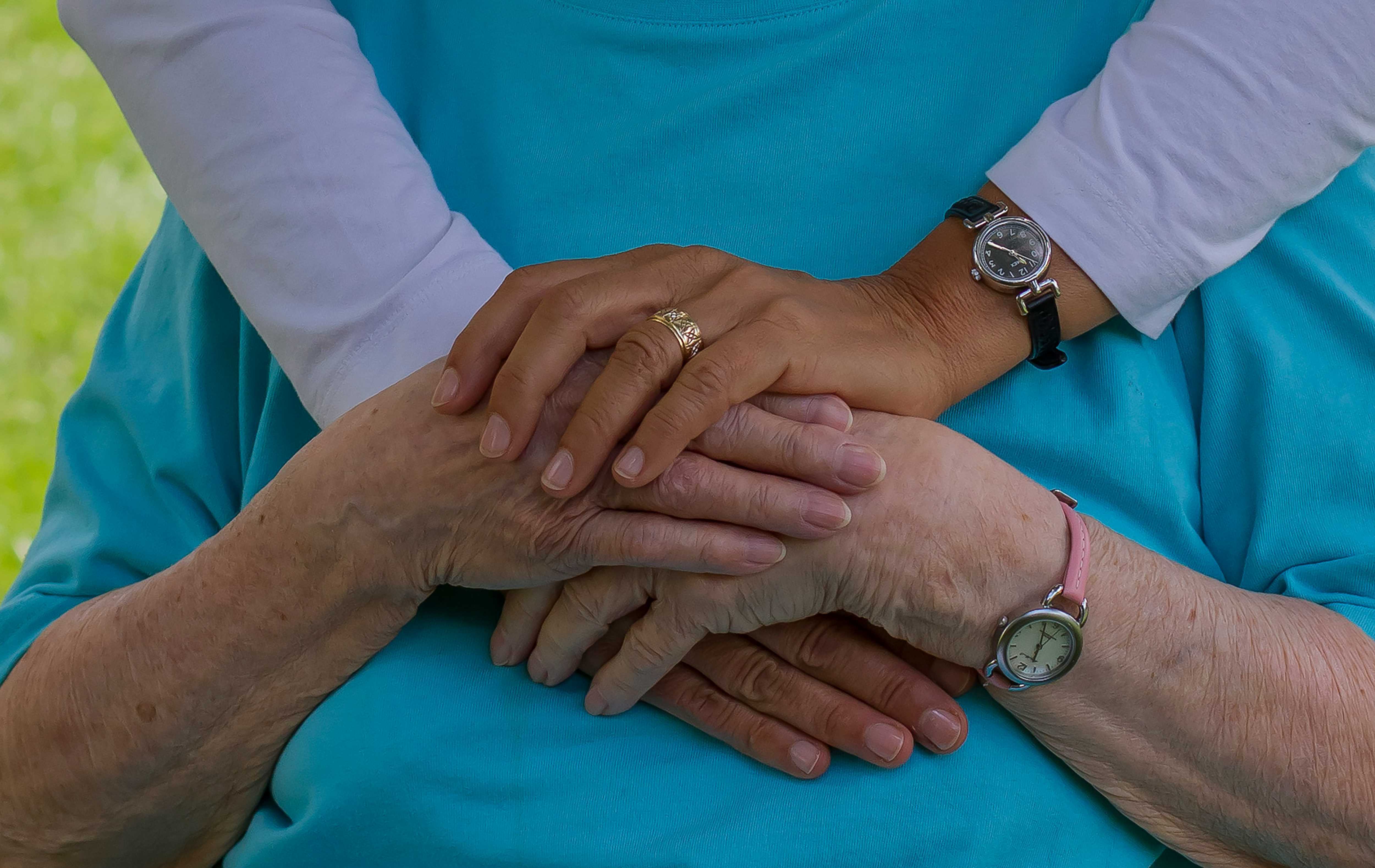
Caregiver discusses a patient with another family member. / Image via Canva
A woman named Veronica shared that she often feels stuck in the middle of family disputes. “I don’t like it when I’m just trying to do my job and take care of clients and I’ve got 20 people calling me. Sisters, wives, brothers, daughters, sons, and even best friends. Everyone has an opinion. I wish they’d have family meetings and decide what to do without sticking me in the middle.”
Another woman, Anne, added her two cents, saying, “Family dynamics are tricky. I want to respect how hard it is to age on everyone in the family, without feeling like I’m inserting myself in the drama.”
They want to be asked about their day
A caregiver takes a break. / Image via Canva
Anne shares that she sometimes feels invisible. “Sometimes I wish they would ask how things are in my life. What my hopes and wishes are. I would like it if they understood that sometimes I need a day off, or that my body hurts sometimes.”
On a resource site for caregivers, one of the helpful tips is finding the balance between helping others and self-care. This means paying attention to their own mental and physical health needs. “Maintaining your health is crucial for being able to care effectively for your loved one. Take care of your own health by focusing on nutrition, exercise, and sufficient rest. Regular self-care routines can help you stay strong and resilient in the face of caregiving demands.”
Mental Health America also has a few articles dedicated to self-care as a caregiver. “If you cannot remember the last time you slept properly, ate adequately, exercised weekly, or did not feel guilty about taking a sick day, then you’re probably feeling the impacts of caregiving on your mental and physical health. Ask yourself: ‘What could I do to replenish myself?’”
They go on to give tips: “Is there any small action that could improve my life or make me feel more content with my present state? If you’re treating yourself fairly, the answer should be yes. Everyone always has some need that could be better fulfilled—caregivers are no exception.”
Sometimes, especially after a caregiver has worked with a person for more than a month or two, they develop a true bond. While the connection is genuinely satisfying, it can make the loss of that patient even harder.
Mark, who has been working with senior citizens for two decades, explains how devastating the losses can feel. “I worked with a woman named Evelyn for seven years. She passed away at the age of 94. It’s especially hard because when you’re in this business, you might have three clients pass in the span of a few weeks.”
Veronica added, “Sometimes people forget how much we love the elderly we work with.”
These sentiments come back to decompression. Processing just one loss can be difficult. Having to do so for multiple people in a short amount of time takes extra healing time for everyone.
The resource site also notes how important it is to take breaks when needed. “Caregiving can be overwhelming, so taking respite breaks regularly is important. These breaks can help prevent burnout and give you time to recharge. Schedule time for yourself to engage in activities that you enjoy and that help you relax.”
It’s true that we all have the same 24 hours in a day. But it’s our own personal relationship to those 24 hours that greatly determines what that day looks like.
Time is one of those things that is both a constant in our collective reality, and yet highly subjective to the individual. It’s why one person hears “We need to be there 6:30” and translates that to “We need to be out the door in fifteen minutes,” and another person translates it as “Oh, I have plenty of time to change my clothes, walk the dogs, listen to a podcast, and clean out that junk drawer!” And of course, these two individuals will be spouses. It is universal law.
It would seem that—much like how knowing whether you’re an introvert, extrovert, or somewhere in between can help you navigate social settings—knowing your MO when it comes to time management can really help make your day flow a lot smoother.
That’s where the four “time personalities” come in.
In an article for Verywell Mind, experts Kristin Anderson, LCSW, and Dr. Ryan Sultan, explained that most of us fall somewhere on a spectrum between “very rigid” and “very flexible.” There are, of course, various factors that dictate why we might fall into a certain spot—including neurodiversity, age, and other aspects of our overall personality. But regardless, knowing the gifts and challenges of our go-to time management settings can greatly affect how we “function.”
See which one below seems to resonate the most.
The 4 Time Personalities
1. The Time Optimist
The never-ending mantra, or perhaps the “famous last words,” of this personality is “I’ve got plenty of time!” regardless of what the clock says.
Because of this, Sultan says time optimists “don’t really feel pressure under a time crunch.” They truly believe they can fit multiple tasks into a short amount of time and don’t easily account for potential delays, which leads to chronic tardiness.
“They’re ones who leave for a dinner reservation with just enough time to get there, as long as there’s no traffic and they hit every green light,” said Sultan.
Folks who consider themselves time optimists might benefit from exploring the “double it rule,” which has you automatically double the amount of time you think it’ll take to get somewhere or complete a task.
2. Time Anxious
Unlike time optimists, “time anxious” personalities feel an enormous amount of pressure, assuming “everything that can go wrong, will go wrong (e.g., traffic, delays, getting lost on the way).” Therefore, they attempt to ease this tension by showing up to things incredibly early.
Dealing with time anxiety involves many of the same tools to handle everyday anxiety, such as grounding techniques (5-4-3-2-1 technique, deep breathing), cognitive restructuring (challenging perfectionism, setting realistic goals), and structured planning (using calendars/apps, setting “worry time”). These strategies help shift focus from the future to the present, reducing the fear of wasted time. And maybe, just maybe, the time anxious can experiment with being fashionably late to low-pressure situations.
3. Time Bender
For time benders, the whole concept of time is merely subjective. Where time optimists overestimate what they can accomplish within a certain amount of time, time benders create entirely different time rules for themselves. “Being 10 minutes late basically counts as on time,” Anderson uses as an example.
These are the curious, creative souls who thrive under pressure and easily lose track of time when they reach a flow state, or bounce from inspiring task to inspiring task.
To help curb time-bending tendencies, a good option could be the “Pomodoro Technique,” which has you working in focused, 25-minute bursts followed by short breaks to maintain high energy and concentration.
“Time blindness” might sound very close to “time optimism” and “time bending,” but the former is associated with an actual inability to perceive the passage of time. That’s why Anderson and Sultan explained that this category is frequently found in those with ADHD or executive function issues.
4. Time Blind
“It’s not that these folks don’t care about being late or making other people wait,” said Anderson. “Without external reminders or cues, it’s easy for them to lose track of how long things take, which makes sticking to a schedule more challenging.”
Sultan added, “Their brains actually have a difficult time registering and processing temporal information, causing impairments in working memory, executive functioning, and temporal discounting.”
Though time blindness might be more deeply ingrained than the other three personalities, there are several proven tools that can help—from simple, tried-and-true methods like visual/audio timers (think hourglasses and analog clocks) to apps designed to help strengthen time estimation. And of course, these tools aren’t exclusively beneficial to those with bona fide time blindness. Optimists and benders can try them out as well.
Once you better understand how you uniquely navigate time, you’re better able to (a) incorporate strategies that help you work within your limitations and (b) give yourself a little grace. Perhaps that last part is most important.
Everywhere you go, there seems to be a constant war between children’s clothing retailers who want to push the boundaries of modesty and parents who push back, saying they are sexualizing children. On top of that, when young girls believe they are supposed to wear clothes that are tight-fitting and revealing, it’s very damaging to their self-esteem and body image. So what is a parent to do?
“I think it’s one thing that the girls’ clothes are very fitted and small, and it’s another that they’re in such direct contrast to what you find on the boys’ side, and those two things send a pretty strong message about what they’re supposed to look like, dressed to be slim and to be fit,” Sharon Choksi, a mom of two and founder of the clothing line, Girls Will Be, told CNN.
Mom spots a revealing dress at Target
The topic came up again recently when Meghan Mayer, a mother of 2 and a 7th-grade school teacher, posted a TikTok video about a dress she saw at Target, which received over 1.6 million views. Meghan was reacting to a smock-style, patterned dress with balloon sleeves that appeared modest at first glance. But after closer examination, it has holes in the waist on both sides, revealing the girl’s midriff and possibly more.
“My oldest daughter and I are at Target, and there’s some cute spring stuff,” Mayer started the video. “I am a little bit more conservative when it comes to my kids’ clothing, so maybe I’m overreacting, but let me know what you think of these dresses.”
She added that the dress may be okay for a 12-year-old but was inappropriate for a 6- or 7-year-old. Mayer asked her followers what they thought of the dress. “Like I said, I know I’m a little bit more conservative. I don’t usually even let my girls wear bikinis, but maybe I’m overreacting, I don’t know. Thoughts?”
For reference, she then showed the dresses’ sizes to indicate they were for kids, then revealed the holes in the sides. “Look at these little slits on the sides of these dresses, right at the hips on all these dresses,” she said. The dress is obviously designed for a young girl to show skin, and it begs the question: Why would she want to, and who is supposed to be looking?
Most people found the dress to be inappropriate
Most people commenting on the video thought the dress was a bit much for such a young girl to wear, and that it was inappropriate for someone that age to expose themselves.
“You’re not overreacting. You’re parenting properly,” Paper Bound Greetings wrote. “No, no. There is no reason for those holes to be there. They should have pockets! Not holes!” Anna wrote. “I think retailers are trying to mature our kids too fast. I agree with mom!” HollyMoore730 commented. “That dress is SO CUTE until you see the slit. Why did they have to ruin it like that?!?”krb15 added.
“All the lady people have been asking for is dresses with pockets. This is the opposite of pockets. Whyyy?” akcrucial wrote.
But some thought that the dress was acceptable, while others thought Mayer was overreacting.
“Unpopular opinion, I think they’re cute,” Dr. Robinson wrote. “When I was a kid in the ‘70s, I wore halter tops and tube tops; they were not seen as big deals. I don’t think this is scandalous,” Kimberly Falkowsi added. “Overreacting. Both my girls have the blue and white, you can’t even tell much. It’s not that big of a hole. The dresses are so cute,” LolitaKHalessi commented.
“Fun fact… you don’t have to buy it, Bethany wrote. “Idk I think it’s cute and that everyone just making it weird when it really isn’t,” Wisdomdeals added. “Nothing wrong with the dress. It’s sold out in my area. Luckily if you don’t like it or think it’s inappropriate, you don’t buy it for your child,” Maddison commented.
Some commenters told Mayer that she should buy the dress and have her daughter wear a shirt beneath it so it doesn’t show skin. However, Mayer believes that it would support Target in making questionable kids’ clothing.
“No, I’m not going to buy it and have them wear a tank top with it, because then that’s showing Target that it’s OK,” she told Today.com. “And over time, the cutout will get bigger and bigger.”
This article originally appeared two years ago. It has been updated.
Once you reach a certain age, you resign yourself to the fact that young people will no longer think you’re cool. And that’s OK. But sometimes it’s nice to remind them how awesome you are (were?) when the opportunity presents itself.
And that was exactly the feat achieved by Gen Xers during a wholesome TikTok trend that instantly transported you right back in the attitude-filled, neon colored post-disco Decade of Decadence, otherwise known as the 80s.
Specifically, it’ took you back to an 80s dance club. In the trend, which peaked around a years ago, kids asked their parents to “dance like it’s the 80s,” as the 1984 track “Smalltown Boy” by the British pop band Bronski Beat played in the background. The song’s high energy tempo mixed with heartbreaking, anguish-ridden lyrics make it a fitting choice to bring us back to the time period.
The TikTok “80s dance challenge”
Parents happily obliged to their kids’ requests to show off their 80s dance moves. Their muscle memory kicked in the minute the tune began to play, and it was a whole vibe.
Check out Tabatha Lynn’s video of her mom, Leanne Lynn, which quickly racked up over 12 million views.
Leanne and Tabatha told TODAY that since going viral, the dance became a common “topic of conversation in the family text group.”
There are two factors here that folks really seem to connect with. One: 80s dancing was simple. Just moving to the rhythm, maybe a head bob for some flair or a robot if you’re feeling adventurous. Of course, the 80s had ambitious moves like the worm and the moonwalk, but for the most part it was just about groovin’ to beat.
The 80s was a time of rapid expansion for music. Much of this we have the birth of MTV to thank for, which subsequently dropped music videos, CDs and a vast array of music sub genres straight into the heart of pop culture.
Plus, the 80s brought us the synthesizer, which remains a strangely satisfying sound even in 2024. So while the era might have brought some things that most of us would prefer not to revisit—like acid washed denim and awful, awful hairstyles—some of its gems are truly timeless.
The trend also shows how, even though the weekly outing to a dance hall might be a thing of the past, people inherently want to bust a move. Luckily, there’s no shortage of clubs that cater to someone’s music tastes, no matter the era.
Speaking for 00s teens everywhere…just play the Cha Cha slide and we’ll come a-runnin.
This article originally appeared two years ago. It has been updated.