

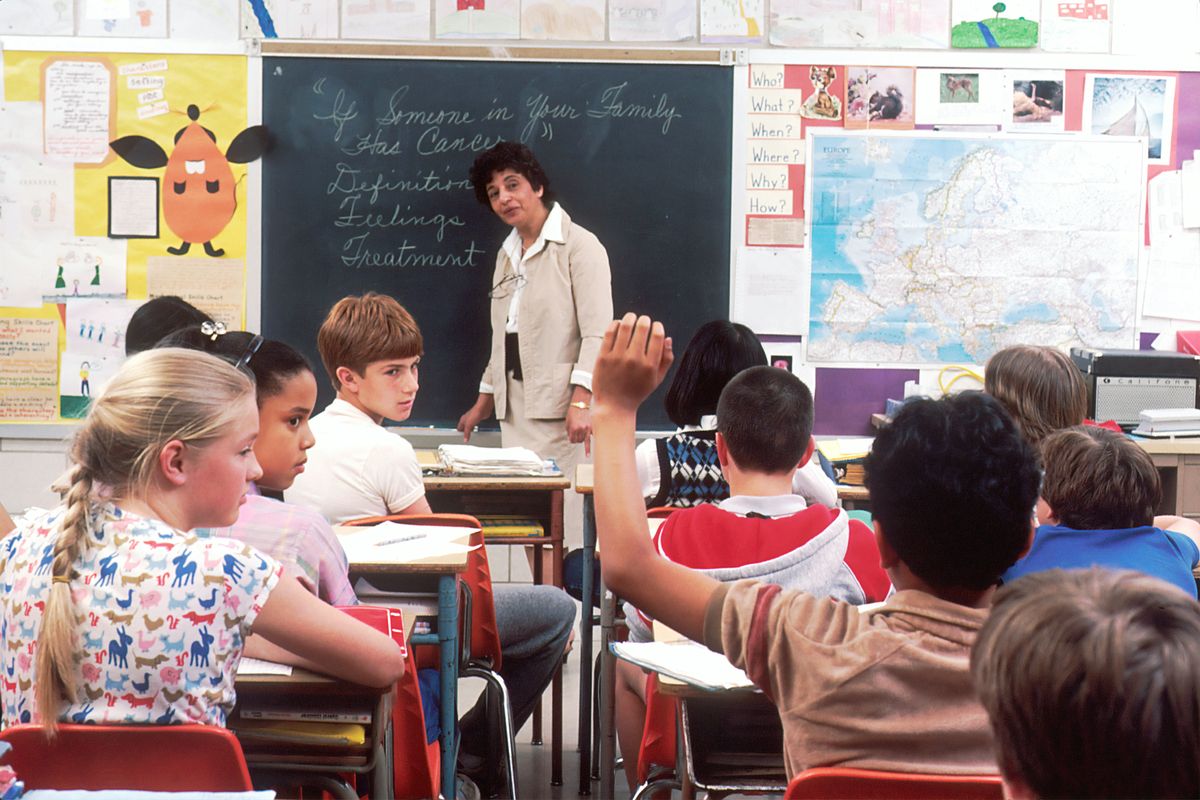
Racism is a difficult subject to discuss among adults and it can be just as challenging when talking about it with children. It's important for parents or teachers to talk about it in a way that's age-appropriate and to address any strong emotions that are caused by the discussion.
Talking about about race with kids can be difficult, but avoiding the conversation helps perpetuate racism.
"Because institutional racism is so ingrained and so automatic and so accepted, without enough people wanting to enact true, long-lasting change, institutional racism ends up becoming our personal bias. But we still must be held accountable for our actions," Sarah Gaither, assistant professor psychology and neuroscience at Duke University, told CNN Health.
Over the past few weeks, the topic of race in America has come to the forefront of the national conversation after the deaths of George Floyd, Ahmaud Abrey and Breonna Taylor. While these deaths have caused unbelievable grief anger, they present parents and educators with a teachable moment.
Vera Ahiyya, who's known affectionately as the "TuTu Teacher," is a Kindergarten teacher in Brooklyn, New York, who created a great video explaining the issue of race in America for her students.
Ahiyya does such a great job at talking about a subject at a level that children can understand it's being viewed and shared by people outside of her classroom.
Let's Talk About Racewww.youtube.com
"You may have noticed, or heard your family talk about what's happening on the news … Beyond just the COVID virus, which is spreading, we also are combating a different kind of disease," she begins the clip.
"It's something that happens with the way that people think," she adds. "Some people have the belief that people with black or brown skin should not have the same rights or privileges as people with white skin. This is called racism, and racism has happened in the United States for over 400 years. That's a very long time, and by now, you would think that something so terrible would be gone. But it's not that easy. Racism is everywhere and it is our job to stop it."
She then gives her students tips on how to handle racism when they see it in the world to stop it from spreading.
"One way to stop racism is to call it out when you see it," Ahiyya continues. "That means, if you see someone being treated differently because of the color of their skin, you have the voice, you make the choice, to say 'This is wrong.'"
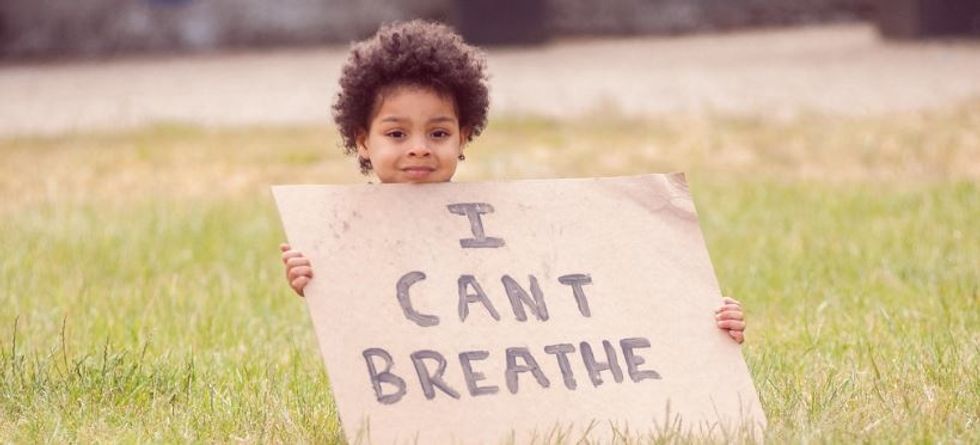
"You can decide whether to say something, or walk away," she advises. "But your choice can impact the lives of a lot of people."
She then shows how people are fighting racism today by protesting in the streets.
"So, right now, what's happening is a lot of people are making the choice to say 'that's wrong, racism is wrong' and they are talking specifically about racism towards black people," Ahiyya says.
Ahiyya ends her comments by empowering children to fight back against racism.
"You can do it by writing letters to show your support," Ahiyya tells them. "You can do it by speaking up when you see something that is very wrong. You can ask questions to your family and friends about how you can do more to help. There's so many ways to help."
She concludes the video reading "Let's Talk About Race" by Julius Lester.
- Tennessee police chief tells officers who defend George Floyd's ... ›
- A note to all my fellow white folks trying to get a quick anti-racism education - Upworthy ›
- How ‘Karen’ went from a popular baby name to a stand-in for white entitlement - Upworthy ›
- How ‘Karen’ went from a popular baby name to a stand-in for white entitlement - Upworthy ›
- City council member cites Urban Dictionary in an official statement criticizing BLM - Upworthy ›
- Sorry to ruin your summer, but the 'ice cream truck' song is racist AF - Upworthy ›
- Waitress Gennica Cochran quickly and forcefully confronted a racist in her restaurant - Upworthy ›
- 'Everyday hero' Gennica Cochran quickly and forcefully confronted a racist in her restaurant. - Upworthy ›
- Lady Antebellum changed its name so it wasn't racist. Now they've sued a Black singer over hers. - Upworthy ›
- The racist ice cream man song is being replaced with a joyful new one by the Wu-Tang's RZA ›
- Student's response to a school assignment bravely challenges its cultural assumptions ›
- Indigenous woman dies in Canadian hospital after filming racist taunts from nurses - Upworthy ›
- Racists 'Zoom-bombed' Rep. Jahana Hayes' event but herresponse showed exactly how to defeat them - Upworthy ›
- Racists 'Zoom-bombed' Rep. Jahana Hayes' event but her response showed exactly how to defeat them - Upworthy ›
- A brave and compassionate teacher disarmed a school shooter then hugged her until police arrived - Upworthy ›
- 89-year-old retired math teacher is still tutoring students - Upworthy ›
- Software developer shares her story of racism in first class. - Upworthy ›
- Teacher shares her lesson on fairness using Band-aids - Upworthy ›
- Teacher and therapy dog make viral TikTok videos - Upworthy ›
- Teacher and therapy dog make viral TikTok videos - Upworthy ›
- 'Aunt Karen' infiltrated a 'White Lives Matter' group and it's as bad as you'd expect - Upworthy ›
- Sandra Bullock is brutally honest with her kids about race, because she has to be ›
- Researchers studied kindergarteners' behavior and followed up 19 years later. Here are the findings. - Upworthy ›
- A 10-panel comic explores a subtle kind of racism many people of color experience. - Upworthy ›
- Entire class of high school graduates return to retired kindergarten teacher's house to thank her - Upworthy ›
- High school graduates return to visit their beloved kindergarten teacher - Upworthy ›
- Former preschool teacher reveals funny stuff kids say - Upworthy ›
- Software developer shares her story of racism in first class. - Upworthy ›
- A 10-panel comic explores a subtle kind of racism many people of color experience. - Upworthy ›
- A 10-panel comic explores a subtle kind of racism many people of color experience. - Upworthy ›
- Studied kindergarteners' behavior and followed up 19 years later. - Upworthy ›
- A boy told his teacher she can't understand him because she's white. Her response is on point. - Upworthy ›
- A boy told his teacher she can't understand him because she's white. Her response is on point. - Upworthy ›
- Community fights for Latino waiter who received a racist threat - Upworthy ›
- A Black woman and white man share a refreshingly wholesome—and healing—exchange - Upworthy ›
- Sandra Bullock is brutally honest with her kids about race, because she has to be - Upworthy ›
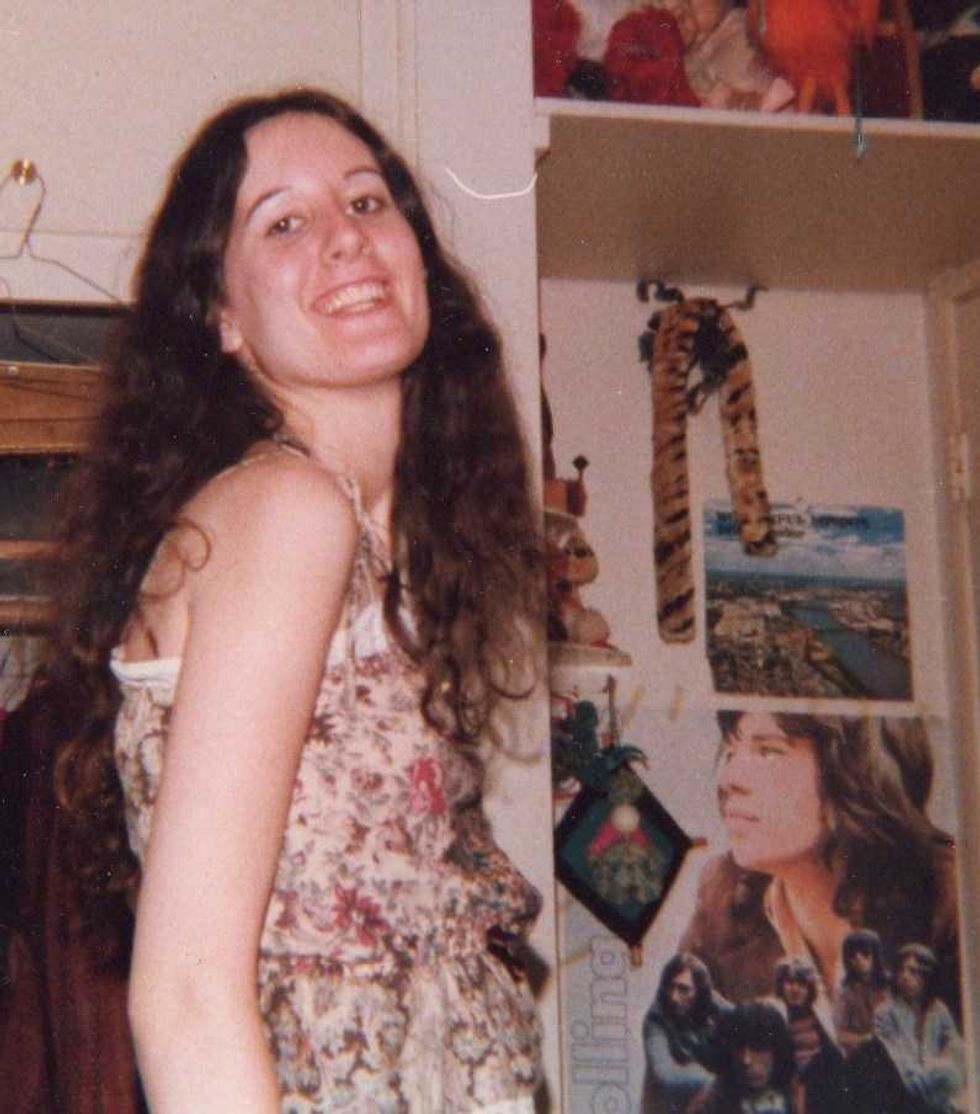 A Generation Jones teenager poses in her room.Image via Wikmedia Commons
 An office kitchen.via
  An angry man eating spaghetti.via
 At least it wasn't Bubbles.
  You just know there's a person named Whiskey out there getting a kick out of this.


An Irish woman went to the doctor for a routine eye exam. She left with bright neon green eyes.
It's not easy seeing green.
Did she get superpowers?
Going to the eye doctor can be a hassle and a pain. It's not just the routine issues and inconveniences that come along when making a doctor appointment, but sometimes the various devices being used to check your eyes' health feel invasive and uncomfortable. But at least at the end of the appointment, most of us don't look like we're turning into The Incredible Hulk. That wasn't the case for one Irish woman.
Photographer Margerita B. Wargola was just going in for a routine eye exam at the hospital but ended up leaving with her eyes a shocking, bright neon green.
At the doctor's office, the nurse practitioner was prepping Wargola for a test with a machine that Wargola had experienced before. Before the test started, Wargola presumed the nurse had dropped some saline into her eyes, as they were feeling dry. After she blinked, everything went yellow.
Wargola and the nurse initially panicked. Neither knew what was going on as Wargola suddenly had yellow vision and radioactive-looking green eyes. After the initial shock, both realized the issue: the nurse forgot to ask Wargola to remove her contact lenses before putting contrast drops in her eyes for the exam. Wargola and the nurse quickly removed the lenses from her eyes and washed them thoroughly with saline. Fortunately, Wargola's eyes were unharmed. Unfortunately, her contacts were permanently stained and she didn't bring a spare pair.
- YouTube youtube.com
Since she has poor vision, Wargola was forced to drive herself home after the eye exam wearing the neon-green contact lenses that make her look like a member of the Green Lantern Corps. She couldn't help but laugh at her predicament and recorded a video explaining it all on social media. Since then, her video has sparked a couple Reddit threads and collected a bunch of comments on Instagram:
“But the REAL question is: do you now have X-Ray vision?”
“You can just say you're a superhero.”
“I would make a few stops on the way home just to freak some people out!”
“I would have lived it up! Grab a coffee, do grocery shopping, walk around a shopping center.”
“This one would pair well with that girl who ate something with turmeric with her invisalign on and walked around Paris smiling at people with seemingly BRIGHT YELLOW TEETH.”
“I would save those for fancy special occasions! WOW!”
“Every time I'd stop I'd turn slowly and stare at the person in the car next to me.”
“Keep them. Tell people what to do. They’ll do your bidding.”
In a follow-up Instagram video, Wargola showed her followers that she was safe at home with normal eyes, showing that the damaged contact lenses were so stained that they turned the saline solution in her contacts case into a bright Gatorade yellow. She wasn't mad at the nurse and, in fact, plans on keeping the lenses to wear on St. Patrick's Day or some other special occasion.
While no harm was done and a good laugh was had, it's still best for doctors, nurses, and patients alike to double-check and ask or tell if contact lenses are being worn before each eye test. If not, there might be more than ultra-green eyes to worry about.