upworthy
Add Upworthy to your Google News feed.
Google News Button
Internet

The 6 discontinued food and drink products that people are demanding come back immediately

Why did they ever go away?

nostalgia; nostalgic products; discontinued products; 90s nostalgia; 2000s foods; 90s childhood
Photo Credit: Goleh|Wikimedia

6 nostalgic products people demand make a come back

There's something from nearly everyone's childhood that simply no longer exist, whether it be a toy, television show or snack. But it seems to be that the snacks are what causes people to feel most upset when that nostalgia kicks in. Maybe it's because as you age you no longer play with toys and aren't very interested in tween shows from the 80s or 90s, those sorts of things are expected to go away.

Foods and snacks on the other hand really crank up the fond memories because they're things you can taste and smell. You remember them with all of your senses. So when someone asked what discontinued food do you still mourn, more than 30k people had something to add to the list. Here are some of the most requested:


1. SoBe Drinks

The "lizard drink" 90s kids just couldn't get enough of. Technically, you can still find the drinks in very few places, they're just extremely difficult to locate and have been since early 2021 according to Mashed. One person wrote in the Reddit thread that Washington state has them in select areas, prompting one person to reply, "please tell me where you've seen it, I live in Western WA and have not seen it in years. I am willing to drive literally hours for a sobe." Apparently grocery stores in Kenmore, Washington carry the 90s drink or you can buy them in bulk from the PepsiCo website supposedly.

2. McDonald's Box Cookies

In a far, far away time in the late 1900s, McDonald's used to carry delicious little boxes of cookies with McDonald's characters on the boxes. They came in similar boxes to old school animal crackers but the formula for those cookies were nothing short of delicious. Then the restaurant giant stopped carrying them after the mid 90s before bringing them back in the 2000s but in a small bag. They're gone again, now everyone has the sads.

"Those McDonaldland cookies were the only thing that got me through my first pregnancy. Just the smell of them would make the morning sickness fade. I miss them," one person shares.


3. Flintstones Push-Ups

Those push-ups were delicious and clearly orange was the superior flavor. Even though the ice cream treat was designed to be contained in the tube, you always wound up sticky with orange juices running down your arm and face. The paper tube was notorious for starting to disintegrate before you were able to get to the bottom. One person admitted that the treat was the one thing she knew would make her feel better while sick, "I was sick last week and my boyfriend asked what he could get me and I blurted out..."push-pops." I had no idea where it came from, but my soul knew. It remembered."

4. Orbitz drink

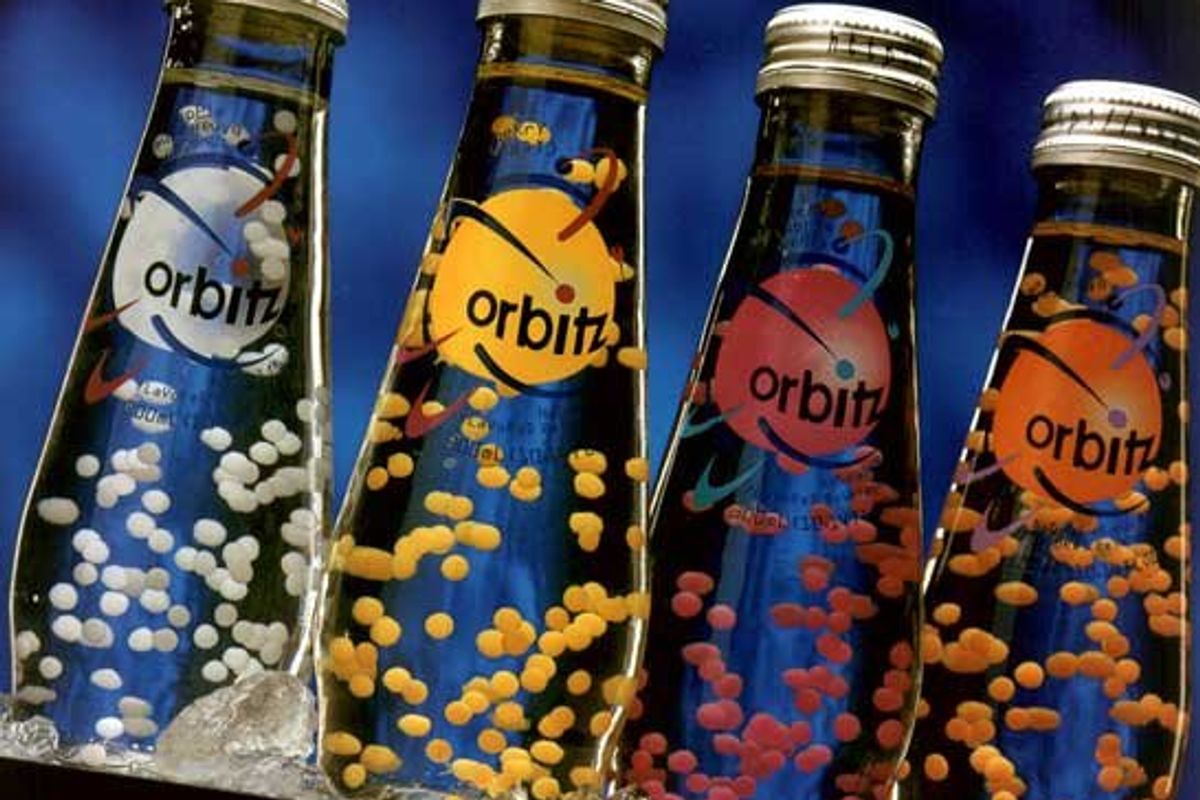
The drink that looked like a lava lamp with little flavored beads that bursted like boba. Orbitz wasn't around very long and maybe the fact that it did look like a decorative lamp had something to do with it but still people miss the non-carbonated drink. It came onto the market in 1996 and was gone by 1998. Someone suggested with the popularity of boba, Clearly Canadian may be able to pull off a comeback for the nostalgic drink, "Yes! I thought of the "lava lamp drinks". I think these would do better now with the popularity of boba. They were just too far ahead of their time."
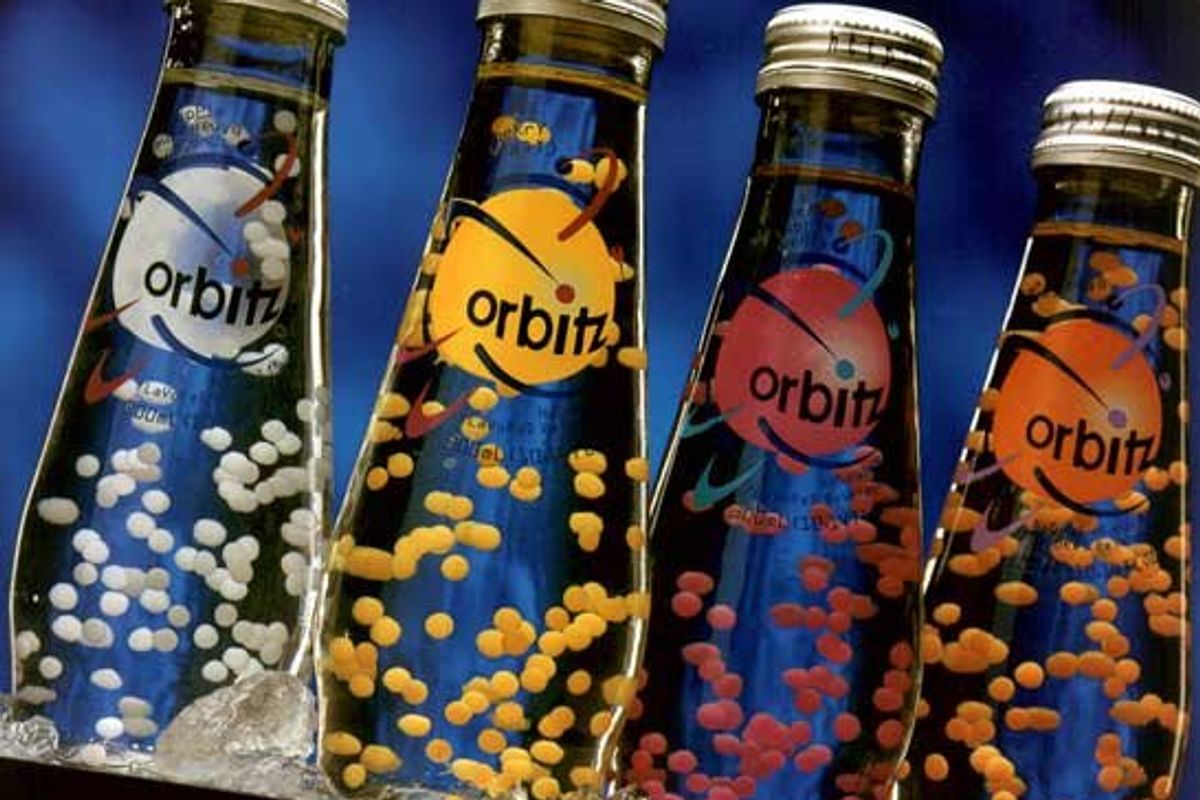

Photo credit: Wikimedia

5. Carnation Instant Breakfast Bars

Apparently people have strong feelings about the discontinuation about these bars with more than one person cursing Nestle for the demise of the bar. Someone enthusiastically agrees the bars should've stayed around, "I'm not the only one!!!!!!!!!! Those things were amazing. They tasted good and were actually filling. Whoever decided to stop making those was a moron. They really need to bring those back."

6. Yogos

These delicious balls of childhood memories were apparently a choking hazard but it didn't stop people from eating them. Was it the risk of aspiration that caused the company to pull the plug on the yogurt covered treat? "My kid almost choked to death on one of these back in like 03-04. They were real good tho...," one person shares. According to commenters Costco has a dupe called Yoggies that tastes similarly to Yogos.


Some other popular mentions were Altoids Tangerine Sours, Blue Pepsi, Crystal Pepsi and Fruit Stripe Gum. People are demanding that some of these things return so they can continue their nostalgic journey with the real thing in hand. While there's no plans to petition companies, at least people know they're not alone in their longing for long lost snacks.

Gen Z; Millennials; technology; cell phones; social media; teens and technology; teens social media

Gen Z is the first generation less cognitively capable than their parents. Denmark has the solution.

Nearly every parent hopes their child will be better off than they are: smarter, more secure, and more well-adjusted. Many parents see this as a stamp of successful parenting, but something has changed for children growing up today. While younger generations are known for their empathy, their cognitive capabilities seem to be lagging behind those of previous generations for the first time in history.

Dr. Jared Cooney Horvath, a teacher turned cognitive neuroscientist who focuses on human learning, appeared before Congress to discuss concerns about cognitive development in children. In his address to the members of Congress, he says, "A sad fact that our generation has to face is this: our kids are less cognitively capable than we were at their age. Since we've been standardizing and measuring cognitive development since the late 1800s, every generation has outperformed their parents, and that's exactly what we want. We want sharper kids."


kids, intelligence, sharp kids, generations, education, cognitive abilities Student smiling in a classroom, working on a laptop.Photo credit: Canva

Horvath explains that the reason this happens is that each generation has gone to school longer than the previous generation. Gen Z is no exception to the longer duration of time spent in school, but they're the first ones who aren't meeting this normal increase in cognitive development. According to the cognitive neuroscientist, the decline is due to the introduction of screens in the classroom, which started around 2010.

"Across 80 countries, as Jean was just saying, if you look at the data, once countries adopt digital technology widely in schools, performance goes down significantly. To the point where kids who use computers about five hours per day in school for learning purposes will score over two-thirds of a standard deviation less than kids who rarely or never touch tech at school," Horvath reveals.

In most cases, the decline in performance doesn't result in better strategies. The neuroscientist shares that the standardized testing has been adjusted to accommodate lower expectations and shorter attention spans. This is an approach that educators, scientists, and researchers went to Capitol Hill to express wasn't working. But not every country is taking the approach of lowering standards to meet lowered cognitive ability. Denmark went in the opposite direction when it realized their students were slipping behind.

France24 recently interviewed educators in Denmark following their seemingly novel approach to students struggling with cognitive development. Since the beginning of the 2025/2026 school year, Denmark has not only been having students turn in their cellphones, but they've also taken tablets, laptops, and computers out of the classroom. No more digital learning for the majority of the school day. Danes went old school by bringing back physical textbooks, workbooks, and writing assignments. The results have been undeniable. Even the students can't seem to deny the success of the countrywide shift in educational approach.

"I think the biggest issue has been that, because we kind of got rid of the books and started using screens instead, that we've noticed that a lot of the kids have trouble concentrating, so it's pretty easy to swipe with three fingers over to a different screen and have a video game going, for example, in class," Copenhagen English teacher, Islam Dijab tells France24.

Now, instead of computers being part of every lesson, Denmark uses computers very sparingly and with strict supervision. One student says that it has been nice not having screen time at school because she loves to read and write. But it wasn't just the lack of attention span children were developing, they were also developing low self-esteem and poor mental health due to the amount of time spent on devices.

kids, intelligence, sharp kids, generations, education, cognitive abilities Students focused and ready to learn in the classroom.Photo credit: Canva

The data showing the negative impact of screens on teens' brains has prompted a nationwide change in Denmark that extends outside of the classroom. Afterschool activities are eliminating or extremely limiting electronic use. There is also a national No Phone Day that encourages everyone to put away their devices for the day, and Imran Rashid, a physician and digital health expert, is petitioning parliament to ban social media use for children under the age of 15. The no phone movement in Denmark is a nationwide effort that hopes to right the ship before another generation feels the effects.

Matthew McConaughey, Dazed and Confused, 90s movies, ted danson, ted danson podcast, woody harrelson, movies, pop culture

Matthew McConaughey in Dazed and Confused (1993)

One might not call David Wooderson from Dazed and Confused a wholesome character. Iconic? Timelessly quotable and effortlessly cool? Sure. But wholesome? That’s a stretch. And yet, the childhood memory that helped Matthew McConaughey create that star-making role is just that: wholesome.

While appearing on the Jan. 7 episode of the Where Everybody Knows Your Name podcast hosted by Ted Danson and Woody Harrelson, McConaughey shared how he actually landed the role, and it’s about as classic a Hollywood story as you can get.


Apparently, one of McConaughey's film school classmates worked as a bartender for the rooftop bar at the Hyatt. One night, McConaughey went to visit this friend, who informed him that casting director Don Phillips was sitting close by.

McConaughey went over to talk to Phillips, and the two hit it off. Perhaps a little too well, because, McConaughey recalls, “Three and half hours later, we get kicked out” after a conversation about golf led to Phillips hopping onto a table to demonstrate his swing.

- YouTube www.youtube.com

While sharing a cab home, Phillips asked McConaughey, “Hey, you ever done any acting?” to which he answered honestly: “I said, ‘Yeah, I was in a Miller Light commercial. I don't know if you consider that acting. Maybe it was more of a modeling job.’ ”

Still, Phillips thought he “might be right” for the role of Wooderson in a Richard Linklater coming-of-age film titled Dazed and Confused. Knowing only that the character was someone “out of high school, but he still likes the high school girls,” McConaughey showed up at 9:30 a.m. the next morning to a script and a handwritten note that read, “Hey, Matthew, great night last night. I read this part. You might be right for it.”

Skimming the script, McConaughey found that now-immortal words, “That's what I love about them high school girls, man. I get older, but they stay the same age.” He instantly knew that was a “launchpad line.”

During the two weeks leading up to the audition while McConaughey was “trying to figure” the true spirit of his character, he was struck by a memory of picking up his older brother Pat from school with his mom while his car was at the shop.

“We're driving through the campus and I'm looking out the back end of that wood-paneled station wagon. I'm looking for Pat. . . . And as we’re going by, about 200 yards away, I see this shadowed figure leaning against the shady wall in the smoking section,” McConaughey recalled.

He continued, “I can see the ember of this lazy finger cigarette hanging on these two hands. This guy's leaning against the wall with his left leg, boot heel up against the wall, smoking. And I went, it’s my brother.” Not wanting his big brother to get in trouble for smoking, little McConaughey let his mother keep driving. Somehow, Pat got home on his own.

“In my 10-year-old eyes, my 17-year-old brother, who was my hero, in that shot from 200 yards away, he was cooler than James Dean. He was 9 feet tall. He was the coolest man. Now, that's who I based Wooderson on,” McConaughey gushed. “That wasn't who my brother was, but that, in my 10-year-old eyes, that's who it was.”

Matthew McConaughey, Dazed and Confused, 90s movies, ted danson, ted danson podcast, woody harrelson, movies, pop culture Matthew McConaughey and Shawn Andrews in Dazed and Confused (1993)Facebook

From that point, McConaughey had a solid anchor. When he showed up for the audition, he was ready. He even improvised everyone’s favorite “Alright, alright, alright” line. When Harrelson and Danson asked if McConaughey ever tires of people saying it to him, he replied with an adamant, “Hell no.”

It’s always amazing to hear what tiny spark sets off someone’s creativity, isn’t it? What a great reminder that life provides an endless supply of inspiration.

Watch the full episode of Where Everybody Knows Your Name below:

- YouTube www.youtube.com

ups, ups driver, delivery driver, ups deliveries, cookout, family, food, hospitality, kindness
Relaxed008/YouTube
UPS driver invited to family's cookout.

UPS drivers are always on the grind delivering packages around the clock—even on holidays. And one family took notice of the hard-working UPS driver in their neighborhood who had his nose to the grindstone as they enjoyed a cookout together. Rather than simply let him pass by, they decided to flag him down and extend an invite to join them in a move that proved community and hospitality are still alive and well.

TikToker @1fanto shared a touching video with his followers from Easter weekend where his family invited a UPS driver making rounds in their neighborhood to come to their cookout and 'make a plate.'


"Everybody family around here 😭," he captioned the video. "Everybody invited to the cookout.😂"

@1fanto

Everybody family around here 😭 #easter #cookout #wherethefunction

In the video, the UPS driver is seen standing in the family's driveway, and a group of cookout attendees warmly welcome him to join them. The uncle of @1fanto says to the driver, "You've been working hard all day man, you can go on in there!" He calls out for a woman named Stephanie to "take care of him!"

The UPS driver walks up the driveway, and they encourage him to go inside and get his fill as he enters the garage. After securing a plate of food and a drink, the driver walks back outside to mingle with guests, shaking hands with the uncle who invited him.

"You good?" the uncle asks, and the driver responds, "Yeah I'm good. They hooked me up. Thank you so much. Appreciate y'all for inviting me out." On his way back to his truck, the uncle encourages the driver to invite other workers to stop by as well.

- YouTube www.youtube.com

In a follow up video, @1fanto explained more about how the invite went down. He shares that the UPS driver was driving by the family's house on the Saturday before Easter, and at the time the family was enjoying a big fish fry cookout together. His uncle flagged the driver down, and he pulled over.

He shares that his uncle told the driver, "Go inside and get you a plate!" The driver asked him, "Are you sure?" But he reassured him, adding that the family made sure to ask the driver what he wanted and didn't want on his plate to "make sure he was good and got everything he needed".

"I saw it had a positive impact. That's what my family do. That's not something that we just do for social media," @1fanto shared. "That's something that we do on a regular basis that doesn't just happen when the camera's on. It happens when the camera's off, too. We're all equal. We all bleed the same."

ups, ups truck, united parcel service, ups delivery, ups deliveries, ups driver A UPS truck with package deliveries.Image via Wikipedia

Viewers had lots of positive things to say in the comment section.

"I am a UPS driver and that makes our day. People showing love to us"

"Your family represents the best of America🫶🏼 Your uncle is now all of our uncle."

"Working the holidays suck. But they made that man’s entire day. Love it."

"I love when people are nice for no reason. You’re so real ♥️thank you for being so kind."

"Being a delivery driver is grueling, often thankless work. It's awesome to see a family that remembers those hardworking folks are essential parts of our communities."

This article appeared last year. It has been updated.

biscuit, biscuits, british biscuit, cookie, american biscuit

British people call cookies "biscuits," which are different from what Americans call biscuits.

Although we both speak English, British people and American people have different words for certain things. One major difference is the word "biscuit."

For British people, "biscuit" is used to describe what Americans call "cookies." One curious American on Reddit posed the question: "what do British people call biscuits?"


The simple question led to an entire discourse on British baked goods, and Brits offered their best explanation on how they define them.

- YouTube www.youtube.com

First things first: the Brits on Reddit made it clear that they also have cookies.

"All cookies are biscuits, but not all biscuits are cookies. To British people, a cookie is a specific type of biscuit," one Redditor explained.

Another Brit broke down the difference between what they consider a "biscuit" and "cookie": "We have shaped, mostly flatter, slightly harder biscuits (like nice biscuits, tea biscuits, and things like custard creams that are two biscuits with a sweet filling), but we do also have cookies that are what comes to mind when you think of cookies," they shared. "The softer, not form shaped, irregular circular cookies with chocolate chips etc."

@british_ash_

Cookie vs Biscuit 🍪 In the UK a cookie is a particular type of biscuit with a high butter and sugar content so the dough melts during cooking giving a crispy edge with a softer centre. All cookies are biscuits BUT not all biscuits are cookies 🍪 In America, biscuits are sinilar to UK scones 🍪 #learnenglish #englishteacher #studyenglish #visituk #london #biscuit #cookie

British 'biscuits' vs. American 'biscuits'

So, what do Brits call those flaky biscuits Americans douse with gravy? Unfortunately, these type of biscuits don't really exist in Great Britain.

"We actually don't have a version of the American biscuits here, nor (as far as I am aware) the white gravy with the sausage meat. We have some white sauces, but we don't do white gravy as a standard, nationwide thing," one British Redditor explained. Another added, "American biscuits are unknown outside of North America. Most Britons have likely never eaten one."

However, British scones are very close to American biscuits. "People are saying scones and the biggest difference between the two is texture and ratio of ingredients. Scones have less butter and are usually more dense. Biscuits have more butter and have buttermilk creating more levity," one Redditor explained.

Another added, "I had a classmate who came from Britain and he once called them 'butter/cheese scones'. And I was like these things are nothing like scones. And he was like, 'It's a quick bread using baking powder as the leavening. The difference is it's savory'. And I was like........ Okay fine."

However, another Brit argued that American biscuits are more like British dumplings.

"The nearest thing to the US biscuits are savoury British dumplings which are often made from suet and used in casseroles," they shared.


@seasonedbf

It’s been years and we still can’t get “IT’S BISCUITS” out of our head @VICTOR KUNDA #seasoned #ukvsusa #popeyes #onthisday

So what do British people call biscuits?

It may be underwhelming, but the consensus is: "American biscuits."

"'American biscuits' … 'they really eat them with gravy?' Most Brits who have heard of American style biscuits are aware that they aren’t scones but unless they’ve actually tasted them tend to have difficulty conceptualizing the difference," one British Redditor explained.

Another added, "I lived in England for 13 years. They have no idea what an American biscuit is. It simply does not exist over there. I looked. It’s like asking an American what we call Haggis."

This commenter clarified: "We probably call American biscuits - 'American biscuits' because we don’t have an equivalent here. Like how we do with American football."

blind, visually impaired, eyesight, vision loss, glasses, AI, ai glasses, technology, accessibility, meta glasses

An elderly woman driving a car.

When actress Kat Conner Sterling isn't in front of the camera, she often finds herself behind it. With a social media following of hundreds of thousands to appease, Sterling has found a surprising star: her mother.

Sterling's mother, Charlotte, has been the focal point of many hit reels and posts, partly due to her colorful personality and partly because she has been blind since she was a teenager.


According to Newsweek, Charlotte, 64, began losing her sight when she was just 17 due to a rare genetic disease. Her vision quickly deteriorated and she became legally blind before her eyesight worsened further with the onset of glaucoma and retinitis pigmentosa. Charlotte says she can only see shades of light and dark and sometimes make out the shapes of common objects, but otherwise, she is "totally blind." Despite having many decades to adapt, it's challenging for Charlotte to do many everyday tasks independently.

In a recent TikTok post, however, Kat shared how her mother's life was about to change in a big way thanks to a new pair of AI-powered glasses. In one video clip, Charlotte is shown getting dressed and visiting an eye doctor to have the glasses fitted and tested.

"They never said blind people can't be cute," Charlotte says, as Kat helps her apply makeup.

In the optometrist's chair, Charlotte puts on the glasses and asks them to access the menu for the restaurant the women are planning to visit for lunch. She then asks the glasses to recommend the "best food to get there."

Meta's AI glasses, along with other AI-powered eyewear, don't enhance a person's eyesight, per se. Instead, they feature a small camera that can take in images and videos from the outside world and translate those visuals into spoken text that only the wearer can hear. The glasses are also Bluetooth-enabled, allowing them to connect to a smartphone's data connection to access the internet.

In the next clip, mother and daughter visit a grocery store, where Charlotte holds a bag of chocolate chips and asks the glasses to read the packaging aloud. In the caption, Kat explains that her mom hasn't been able to grocery shop independently in decades.

"I was excited to think there might finally be something that could give me a slice of independence, rather than constantly relying on friends and family to help me understand what I'm seeing," Charlotte tells Newsweek.

After testing the technology on a few more items, Charlotte gives an enthusiastic thumbs-up. "Yay, yay, yay!" she says.

@katconnersterling_

#ai #disability #accessibility #mom #artificialintelligence

Kat's videos of her mother testing out the glasses have received millions of views and thousands of supportive comments. In a world where AI is polarizing at best and harmful at worst, many viewers found the footage incredible:

"I despise AI for nonessential use, but I will always support AI usage for good. This is amazing!"

"This is what AI should be used for. Not as a search engine but as medical assistance and medical research."

"My opinion on ai just changed"

"This is the only use of ai i'll accept, we should advocate for this more it really does have the potential to help so many people"

"The only AI in our society should be helping us make life easier not harder. this is an amazing use for AI glasses"

In another clip, Charlotte uses the glasses to get a description of the food served to her at a restaurant. She then has the glasses help her find the Diet Coke dispenser on a soda machine.

She's still getting used to the device and the technology, and so far is only scratching the surface of what's possible.


@katconnersterling_

something cool. We did not expect this response. The messages, the stories, the encouragement… it’s been overwhelming in the best way. People working in disability programs want to share this with their teams. Others are reaching out hoping this could help them or someone they love. It’s reached way more people than we ever imagined. Definitely inspiring us to make more content! Stay tuned #momsoftiktok #ai #technology #disability #accessibility

An essay in Ability Magazine shares another blind user's experience with Meta's AI Ray-Ban glasses. Writer Gina Velasquez describes how the glasses help her orient herself in public, physical spaces:

"Sitting in a waiting room at the massive Mount Sinai Hospital, the Meta glasses not only accurately identified the location as a hospital waiting room, it also described the furniture, the reception area and the patients sitting in chairs. When I asked for the location address, it answered and went on to tell me about the hospital wing I was in and other departments it contained. The Ray-Bans gave me more information about where I was than I've ever received from the companions who've helped me attend my appointments."

She also shares an anecdote from podcaster Ed Fischler, who uses AI glasses to "read" non-braille books to his three-year-old grandson—something that wouldn't have been possible without the technology.

Velasquez also notes that using a service called Be My Eyes, a real human volunteer can tap into the camera on her glasses to add a human touch by offering descriptions, assisting with visual tasks, and more.

There are downsides, of course, as with any technology. AI has many limitations, including inaccuracies and hallucinations, so it may not be safe to rely on AI glasses to read prescription labels or help you cross a busy street, for example. Some users also have privacy concerns with companies like Meta having access to a camera they wear for several hours a day.

But overall, AI glasses have received positive marks from the accessibility community.

As for Kat, she's thrilled for her mom. The two are extremely close, and it's been incredibly fulfilling for Kat to see her mother regain even the slightest bit of independence in her daily life.

Of their trip to the grocery store, Kat says, "It felt strange not standing right beside her reading everything, but it was such a meaningful and welcome change for both of us. I even left her in an aisle for a few minutes while she browsed on her own, with the glasses reading everything to her."

They hope the technology will continue to improve, becoming less clunky and more accurate over time. But for many people like Charlotte, the glasses are already making a positive difference.