Clear, effectivecommunication is just as much about what you don’t say as it is about what you do say. It’s incredibly easy for a message to get watered down with filler words and passive phrases, many of which we use on a daily basis.
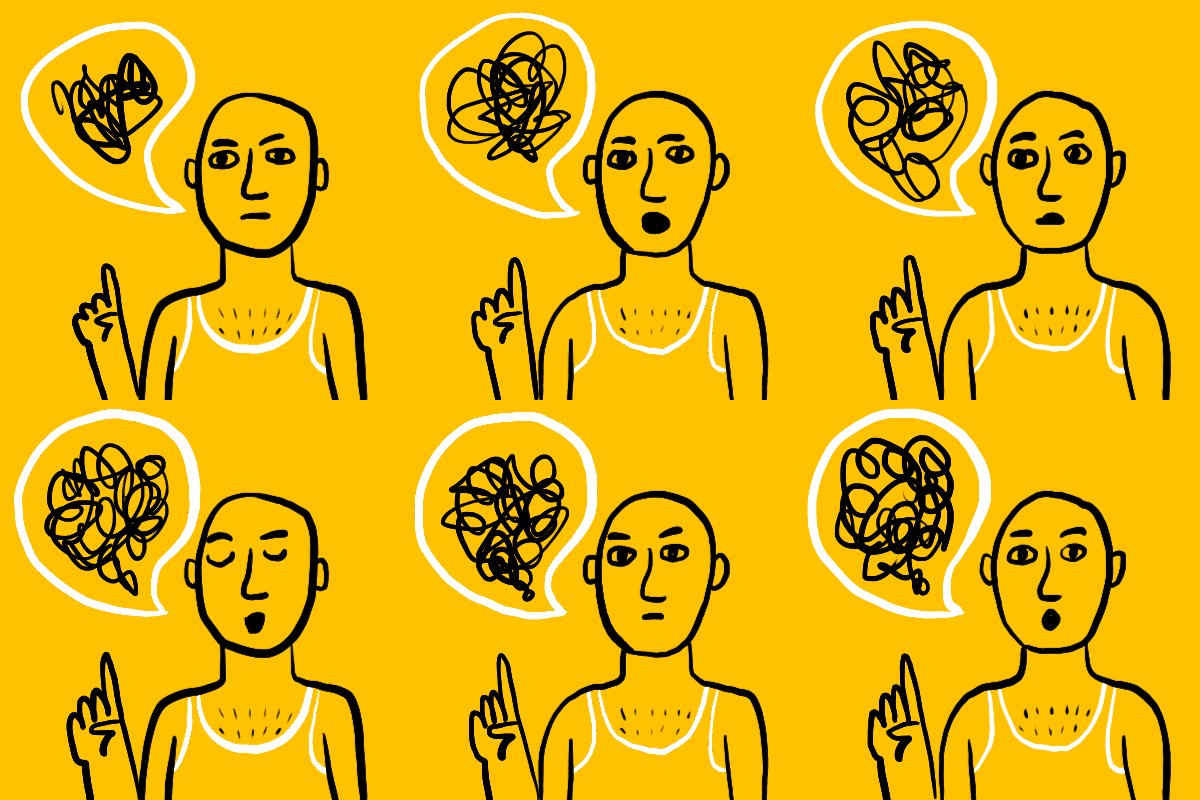
Case and point: “I think” statements. Sure, this seems like a harmless option. Logical even. After all, it’s honest. Certain factors have led you to think this or that is the right choice, and thus, you are saying so. But as CNBC Make It contributor Lorraine K. Lee explains, overuse of these two well-intentioned words can “diminish your presence and undermine your confidence.”
In fact, Lee lumps “I think” in with “just,” “sorry” and “maybe,” which are more well-known examples of minimizing language, aka passive qualifiers that lessen the meaning of what you’re trying to communicate, rather than enhance it. She notes that however “polite” these phrases seem, etiquette comes at the cost of credibility.
Specifically, “I think” can make an opinion, however well informed, come across as nothing more than a passing thought, and therefore not taken seriously. Or it can make the speaker seem “hesitant” of their own perspective.
So instead, Lee recommends swapping “think” for “I recommend,” which conveys the same meaning but is more “action-oriented” and “decisive.” An example she uses is saying “I recommend trying this restaurant,” rather than “I think you should try this restaurant.“
Lee advises that this swap be used in times when you aren’t all that confident as well, with some added caveats for transparency. Using “from my experience, I’d recommend…” for example. It’s easy to see how you can be upfront about uncertainties, while still clearly communicating your stance.
Things get further conflated when you think about how many people use “I feel statements” when they mean to use “I think statements.” “I feel like this restaurant is better than the other one.” “I feel that you should go with this plan.” “I feel like this isn’t the most productive use of our time.” This is not only grammatically inaccurate, as these are opinions one thinks, not feels, but it also pacifies an already weakened version of what you’re trying to say in the first place.
So, how do we really develop this better speaking habit? Lee recommends (see what we did there?) first listening for when and where those “I think” statements tend to pop up. You can even ask for the folks around you to help keep you accountable. She also suggests allowing for a pause before speaking, which gives you time to make the mental swap before saying anything out loud. And since most of us type exponentially more than we speak, be sure to make those swaps in written communications as well.
Bottom line; it’s easy for us to go on autopilot with our language. That, plus a desire to not come across as pushy or domineering, can cause us to not really say what we mean. But if we want to be understood, we need to be intentional with what we say, or don’t say.
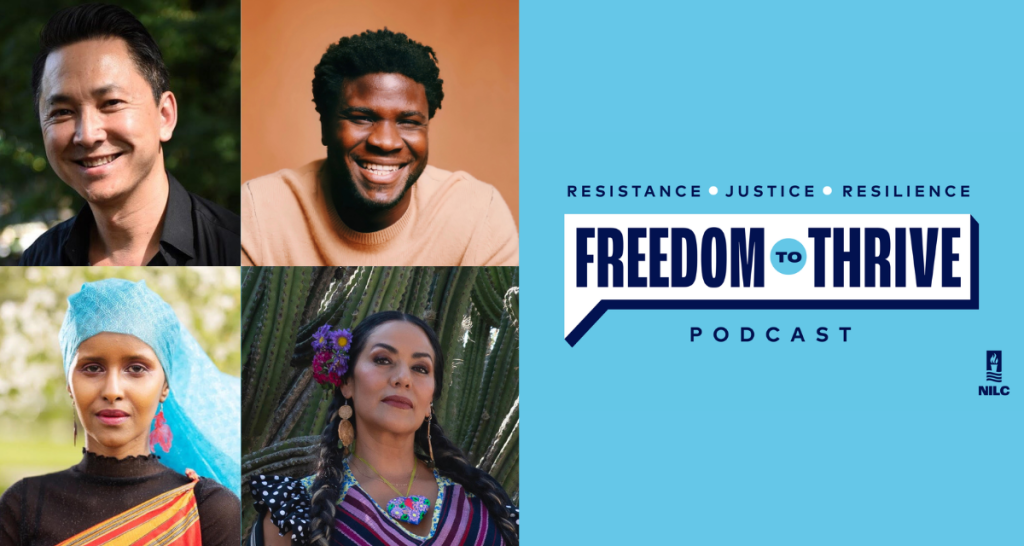
A Somali refugee and current resident of Minneapolis, the multimedia artist and activist draws on her lived experiences to create work that explores trauma, displacement, and resilience. But like so many of the guests on Freedom to Thrive, an award-winning podcast produced by the National Immigration Law Center (NILC), Mansour doesn’t want to focus only on trauma; she also wants to celebrate the unexpected beauty she’s found during difficult experiences.
“One of the beautiful things about tragedies is that it activates hearts, and courageous people are born,” she says. For example, Mansour has noticed more Minnesotans than ever are reaching out to help the vulnerable, after the anti-immigrant crackdowns carried out by the Department of Homeland Security. “They are bringing food, they’re bringing extra clothes, they’re walking with people, and it’s just really beautiful.”
Hector Flores, co-founder of the Las Cafeteras and host of Freedom to Thrive, agrees with her. A child of immigrants himself, he has also seen how hope and hardship often live side by side.
Flores comes from a family with mixed status and is highly aware of the challenges immigrants and refugees in his community face, and how they’re affected by people’s misconceptions. “People want to know about trauma all the time, but we’re more than just undocumented,” he says. “We’re artists, singers, creatives … there’s so much richness in the culture.”
At its core, Flores’ comment is exactly what the Freedom to Thrive podcast is all about: Celebrating immigrants as complex, dynamic individuals, and challenging the dominant narrative that too often reduces them to symbols of hardship.
Launched in 2024, Freedom to Thrive explores heritage, resilience, community, and the ways art and comedy can spark social change. Now in its second season, the podcast continues to feature conversations with immigrants, policymakers, artists, musicians, activists, and more. Recent guests have included comedian Mo Amer, Grammy Award-winning singer Lila Downs, and Pulitzer Prize-winning author Viet Thanh Nguyen.
Where the first season focused on individual stories of identity and belonging, Flores says his goal for season two, where he joins as host, is to “take it to the next level” — using storytelling to highlight “the fact that we’re more similar than different.”
One recent podcast episode drives this point home. In December, Flores interviewed Bryan Andrews, a rising country music star and rural Missouri native who frequently uses his platform to speak about issues affecting immigrant families. At the heart of his message and his songwriting, Andrews says, is the idea that small-town Americans and the rest of the country, including immigrants, have more in common than they realize.
“It doesn’t matter where you’re from,” Andrews says on the podcast. “We’re all trying to make a living and we’re tired of getting railroaded by corporate greed or by politicians who don’t care.”
Rural Americans, Andrews says, are often stereotyped as racist and misogynistic but “the overwhelming majority of people in my home town have love in their hearts.” Media stereotypes often amplify differences and divide, he says, but at the end of the day, “we’re all in this together.”
Flores, who was raised in a working-class immigrant neighborhood in East Los Angeles, had similar thoughts. He says he often sees its residents stereotyped as wealthy, consumerist, and status obsessed. “That exists, but that’s not my life, that’s not my community,” he says. Like small-town Americans, people in the city “just want to work hard and take care of their families. We all want the same thing.”
Although the podcast tackles some heavy issues, each episode’s ultimate focus is how personal and collective struggles can be healed through art, driving home a message of hope and resilience:
Mansour’s episode about her experiences in Minnesota is just one of many examples. Flores asks her,
“What gives you hope for the people creating a home here?”
“The love I feel from other Minnesotans. It is trumping any hate we’re experiencing,” she replies.
CTA: Stream all episodes now on the Freedom to ThriveYouTube channel or the website,here.
The podcast has been nominated for a Webby in the “Belonging & Inclusion” category. You can vote for it to win until Thursday, April 16!
This article is part of Upworthy’s “The Threads Between U.S.” series that highlights what we have in common thanks to the generous support from the Levis Strauss Foundation, whose grantmaking is committed to creating a culture of belonging.
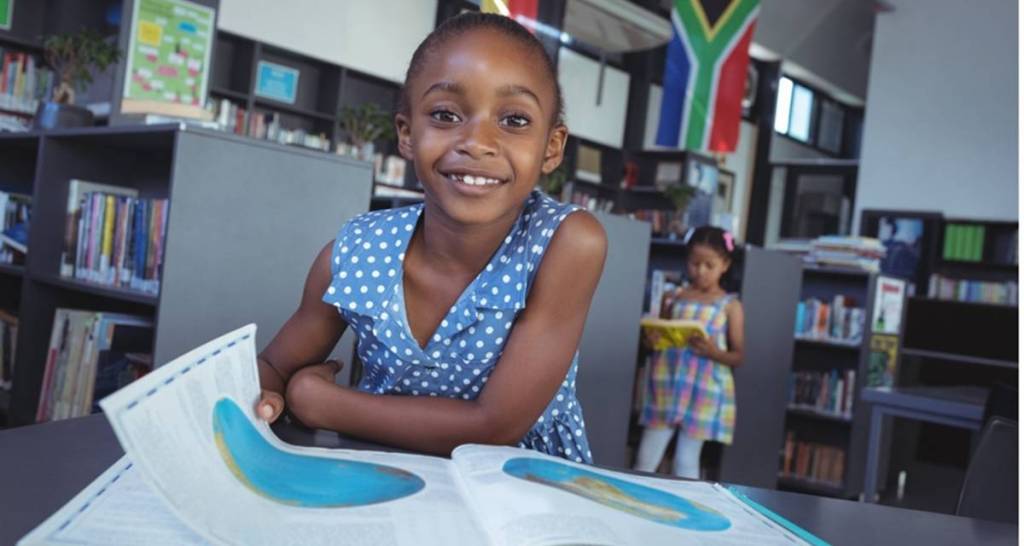
It may seem like the public library is one of the most accessible places for people across the socioeconomic spectrum. However, people in underserved communities often face barriers to accessing the incredible benefits of the public library.
Those who weren’t raised as regular library-goers may misunderstand library policies or be afraid of incurring fees for late book returns. They may also be uncomfortable filling out the necessary paperwork or lack the digital literacy to navigate the system. That’s why a new program by the Chicago Public Library and Chicago Public Schools is so groundbreaking: it allows school children to use their school identification cards to double as library cards.
What is Chicago’s 81 Club?
The 81 Club (a nod to the city’s 81 public libraries) began in 2022 as a pilot program that allowed any child with a school ID to pick up a library card by showing up to a library in person. It led to a 63% increase in library access among economically disadvantaged students and 81% among English language learners.
Celebrating the expansion of The 81 Club, this first-of-its-kind data-sharing agreement between @chipublib and the district puts the power of our city’s 81 public library branches directly in the hands of more than 315,000 CPS students, giving them instant access with their… pic.twitter.com/7XZbf9gK6J
— CPS – Chicago Public Schools (@ChiPubSchools) April 7, 2026
After its success, the city made the program even easier by allowing students to use their IDs as cards instead of obtaining a library card, thereby eliminating major barriers to entry. The program essentially grants immediate library access to its 316,000 students.
“This partnership demonstrates my administration’s commitment to build a more equitable and thriving city by bringing all of government together to invest in our young people,” Mayor Brandon Johnson said in a statement. “By removing barriers and connecting young people to learning opportunities in every neighborhood, we are helping to ensure that students have access to the resources they need in school and beyond.”
The 81 Club gives students access to countless resources
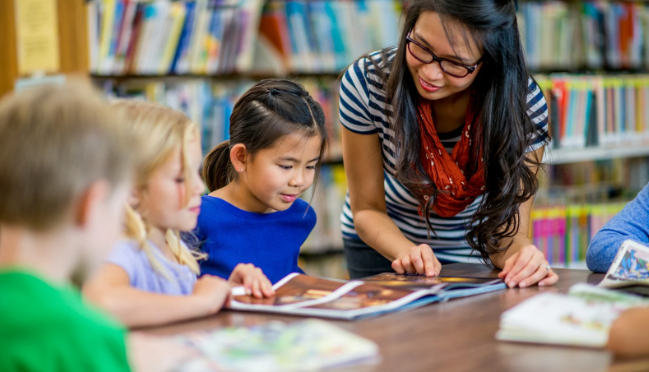
As members of the 81 Club, Chicago students can access the system’s 6-million-item collection, digital media, online databases, and one-on-one tutoring.
“At Chicago Public Library, the library is the city’s most accessible out-of-school learning space,” CPL Commissioner Chris Brown said in a statement. “The 81 Club moves us beyond access; it ensures every CPS student can step into opportunity, with the freedom to explore their interests, the joy of choosing their own path, and an abundance of books in every neighborhood. This is how we connect schools and libraries to strengthen Chicago’s neighborhoods and support young people and their families.”
One of the major goals of the program is to improve library access to those who face the toughest barriers, such as foster youth, undocumented students, and the unhoused.
Since the original program launched four years ago, the number of students using the Chicago Public Library system has increased. A report found that 3,000 students from 390 different CPS schools activated their 81 Club accounts. Administrators hope that the expanded program will raise those numbers higher.
“The 81 Club shows what is possible when we invest in ideas that scale access and impact,” Board Chair of the Chicago Public Library Foundation Michael Fassnacht said in a statement. “This is about ensuring that every young person in Chicago can connect to opportunity, regardless of circumstance.”
America’s public library system is cherished as one of the few places where people can enrich themselves without being expected to pay. Society can only benefit by making it easier for everyone, especially our youth, to access the joy and growth that comes with having a library card.
Sexual Assault is a topic many people don’t want to think about, but it’s an unfortunate reality for some. Due to the topic being uncomfortable and often stigmatized, there can be a misunderstanding around how prevalent sexual assault is. Brittany Piper is an author, sexual assault educator, and survivor who uses a unique approach to highlight the number of those impacted.
April is Sexual Assault Awareness Month, and April 1st marks the anniversary of Piper’s assault. To commemorate the occasion, she created a compilation video of an activity she performs during her training sessions at college campuses. The video was uploaded to her social media page, where it has amassed over four million views.
The video gives a visual representation of the startling statistics. Someone is sexually assaulted every minute in the United States, and every nine minutes, a child is sexually assaulted, according to RAINN. They also reveal that “An estimated 443,635 people age 12+ experience sexual violence each year in the U.S.” and that “26.4% of female and 6.8% of maleundergraduate students experience rape or sexual assault involving physical force, violence, or incapacitation.”
Those staggering statistics make Piper’s visual depiction more powerful. Piper focused the camera on different groups of college students in lecture halls. She asks the students to stand if they know someone who has experienced sexual assault or if they themselves have experienced it. In each video, nearly every student stands up. Piper tells the different groups of students to remain standing if the assault was reported. Almost instantly, the majority of people sat down.
As students look around taking inventory of how many were still standing, the educator asks one last question. For the few students who were still on their feet, she asked them to stay standing if the perpetrator received any punishment for their actions. In a heartbreaking visual, approximately 4 to 5 students remained standing in total.
“The creaking of chairs. It’s a visceral symphony etched into my bones,” Piper writes. She later adds, “Today, as I stitched together just a few of the stages my body remembers, the pattern is heartbreakingly clear. Every time, when I ask who knows a survivor, it’s always too many.”
Gen Z may have a clearer understanding of what constitutes sexual assault and be more likely to share their experience with others. A meta-analysis published by Science Direct that looks at ACE (adverse childhood experiences) scores shows Gen Z is less likely to have experienced childhood sexual assault than Gen X.
Viewers of the video were moved by the sheer number of people who sat back down. One person shares, “So many standing followed by so many sitting down breaks my heart.”
Another laments, “I guarantee the boys still sitting DO know someone who’s a survivor. They just don’t realize it because the person hasn’t told them.”
One man is calling for accountability, writing, “Men this is on us. We need to call anyone, anywhere, anytime we see something…. To start … let’s look in the mirror at our own behavior.”
Someone else has a sad revelation, writing, “It hits hard when you realize that she can do this in any city in the usa and get the exact same results. She wasn’t surprised, she knew what would happen when she asked those questions, no matter where she was in the usa.”
“The visual is overwhelming. Made me cry,” another person says.
“Thank you for your work. This is a such powerful way to show rape culture and the impunity in our society,” someone shares.
Editor’s Note: If you or someone you know has been a victim of sexual assault, you’re not alone. RAINN offers free, confidential support, 24/7 in English and Spanish through their National Sexual Assault Hotline. Call 1-800-656-HOPE (4637), text “HOPE” to 64673 or chat at RAINN.org/hotline.
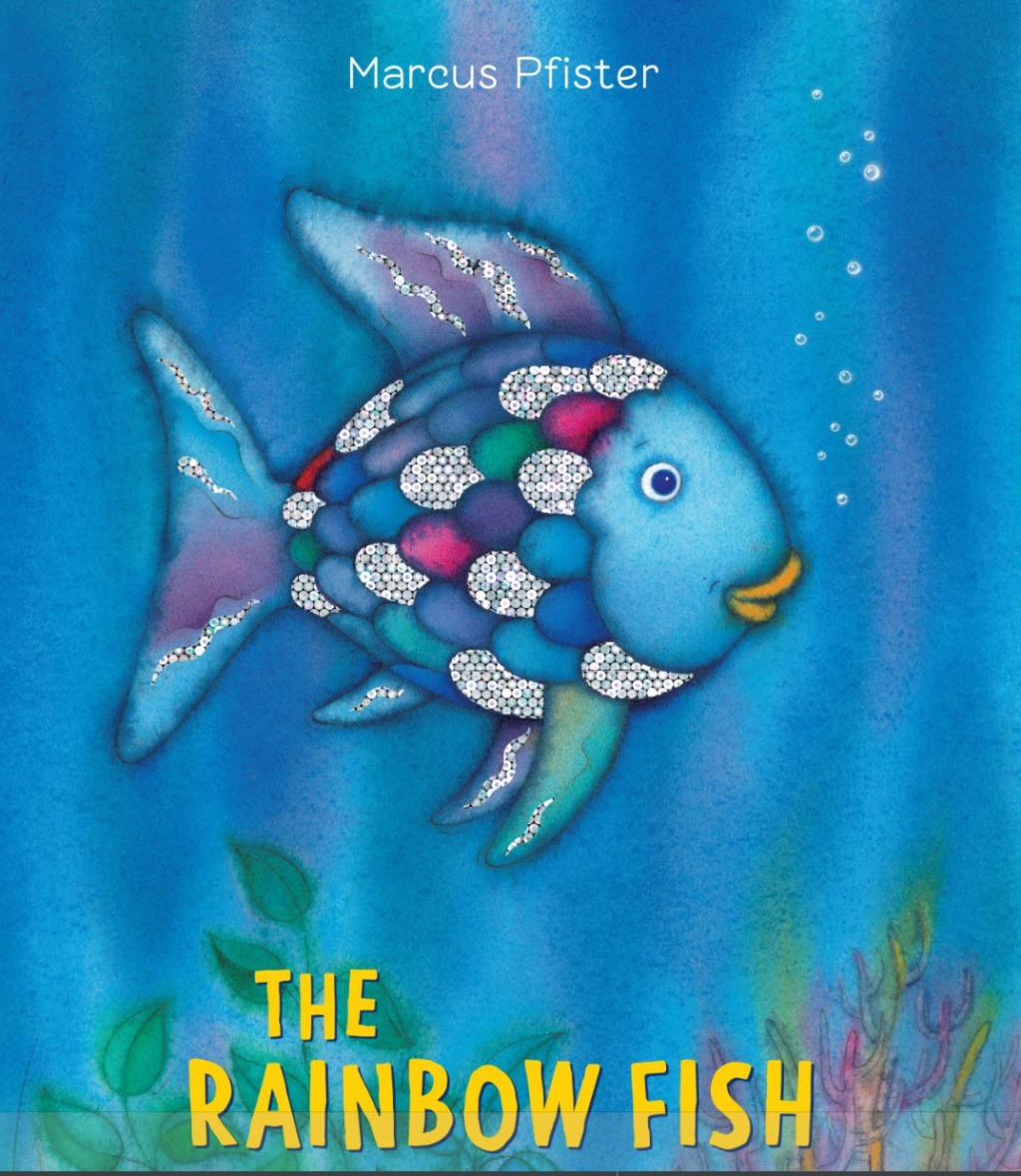
Few children’s books are as deeply ingrained into the collective millennial psyche as “Rainbow Fish.” In addition to selling a gazillion copies, Marcus Pfister’s 1992 classic has spawned counting books, board books of opposites, hand puppets, and sequels such as “Rainbow Fish to the Rescue!” and “Rainbow Fish Finds His Way.” What’s not to love about those oh-so sparkling rainbow scales and heartwarming lesson about how sharing leads to happiness far better than selfishness? Only, according to some…that’s not the story’s lesson. In fact, some believe that the book teaches all the wrong lessons.
In a video posted to his TikTok, fifth-grade teacher Mr. Vương (a.k.a “America’s Favorite Teacher”) admitted that while the illustrations were, in fact, great, and the author probably had “good intentions”, he still didn’t like the story behind this award-winning classic. The Rainbow Fish took home the Christopher Award, the Bologna Book Fair Critici in Erba Prize, and the American Booksellers ABBY Award.
For those who never read the book, or perhaps forgot, Vương explains that at the beginning, “Rainbow Fish is full of himself because when all the other fish wanted to play with him, he sort of swam past them and thought he was better. Then one of the fish asked for one of his scales, and he refuses.”
The case against Rainbow Fish
This is where Vương feels the book missed the mark, as it depicts drawing a boundary as a character flaw of Rainbow Fish (more on that later). He said, “In my opinion, I think he has the right to do that because he doesn’t have to give up part of himself or anybody.” The real flaw, Vương argues, “was that he was not humble.”
Vương goes on to say that in the book, when Rainbow Fish said no, all the other fish decided not to play with him, which “made it more about how all the fish didn’t accept him because he didn’t give up his scales, rather than them responding to his stuck-up behavior.”
Also in the book, the wise Octopus advises that Rainbow Fish overcome his pride and give up all but one of his scales to the other fish. He might no longer be the most beautiful fish in the sea, but he is finally happy. Thus, bringing in the moral of the story of sacrificing vanity for peace. “So he got acceptance…when he gave up parts of who he was…” Vương declares matter-of-factly.
He’s not the only one with doubts
Vương’s hot take seemed to resonate with a few other adults who thought the Rainbow Fish had lost its luster. “Rereading it as an adult now, it made me angry. Little fish has the audacity to ask for a shiny scale, Rainbow Fish says no, so little fish goes and bad mouths him to all the other fish so they all turn on him and only become his friends when he gives up a part of himself,” one viewer wrote.
“I feel like the book had more of a ‘sharing is caring’ moral and just carried out the message in a weird way with the scales” another said. One person even quipped, “…and now I know where I learned to be a people pleaser from. Thanks FYP.”
It’s worth noting that regardless of his own personal opinion of the book, Mr. Vương still uses it to “teach about how to think critically about themes.”
Changing the narrative
“I opened up with what the theme was and then I read the story without telling them my opinion,” he says. “Then the kids made all these connections themselves and some of them looked at it through the lens of, ‘Oh it’s selfishness.’ And some of them were like, ‘Wait, is he buying his friends?’”
Not only that, but the class had “really good discussions” about transactional relationships, as well as dissecting what the author’s original intent might have been. They will also be creating their own alternate endings, “where the theme is not that you gotta, you know, pay for your friends,” as the last part of their assignment.
While not everyone might share Vương’s opinions on this kid’s book, we can probably all agree on his stance that “just because it has an award-winning sticker on it, it does not make it top-notch.”
This article originally appeared two years ago. It has been updated.
When elementaryschoolteacher@mommy_n_zachy went on TikTok to talk about the skills her students struggle with, it wasn’t to shame anyone. It was an honest cry for help. Her short video, which has now been viewed nearly five million times, has sparked a wide conversation about what children are, and are not, prepared for when they walk into a classroom.
In the clip, she listed 10 basic skills many of her 3rd graders couldn’t do. Some forgotten skills, like reading an analog clock, counting physical money, or writing in cursive, aren’t entirely surprising given how technology has shifted daily habits for all of us. Many adults rarely use cash, handwritten letters, or wall clocks themselves.
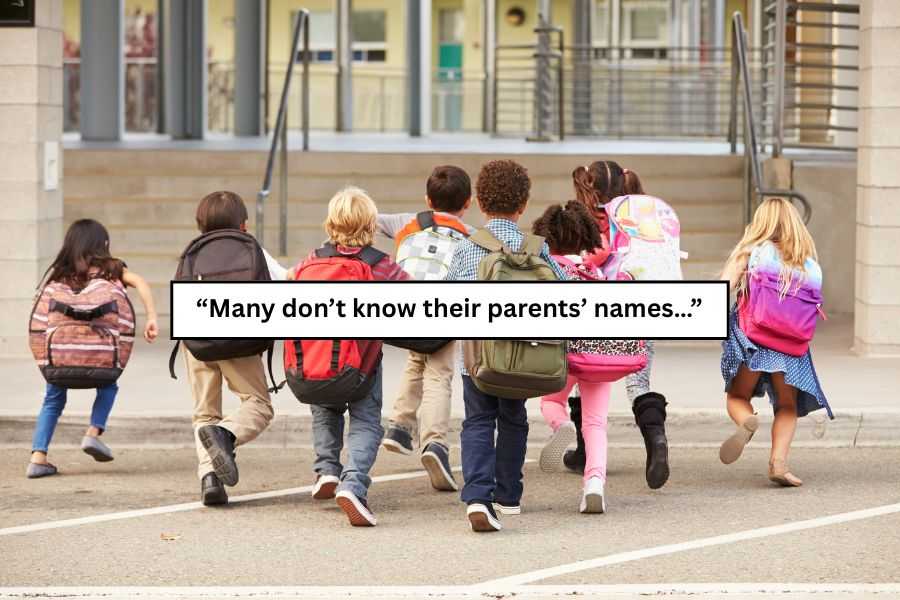
But more troubling is the fact that many kids cannot memorize their parents’ phone numbers or their home address. Even more concerning, students often don’t know how to use a dictionary, follow multi-step directions, tie their shoes, remember their parents’ names, know where their family is from, or recall the year they were born. These are practical safety skills and developmental milestones that help children navigate the world with more independence.
What makes the situation even harder, she shared, is that many students don’t seem very interested in learning these basics. For teachers, starting from scratch on so many foundational tasks makes an already demanding job even more difficult, especially when large classrooms and limited time already stretch their capacity.
“We are going to do our part as teachers, but we just need a little help at home, please,” she said. “We are a community. We work together. So let’s set our kids up for success. … If y’all can help us out, we need to go back to basics.”
Her words touched a nerve. While some commenters placed blame on schools, the broader conversation that emerged was about how essential it is for parents and teachers to work together. Many adults pointed out that families juggling financial pressures, work schedules, limited childcare, or lack of support may not always have the time or energy to reinforce these skills. Others noted that teachers, too, face resource shortages and systemic challenges. The consensus was that partnership, not blame, is what helps children most.
Fortunately, the skills @mommy_n_zachy highlighted are very teachable at home with simple routines. Parents can practice phone numbers as a little song or rhyme. Reading clocks can become a daily guessing game. Counting coins while unloading groceries can turn into a mini challenge. Tying shoes can be practiced for a few minutes before leaving the house. Writing letters to grandparents, labeling drawings, or even copying short messages can build comfort with script. Asking children to complete two-step or three-step directions can strengthen their working memory and confidence. None of these activities require extra money or special materials. What they need most is repetition, patience, and a supportive adult by their side.
Dad helps daughter with homework at table; mom reads in background. Photo credit: Canva
If anything, her viral video reminded many people that children thrive when all the adults in their world take part in their learning. Small efforts made consistently can make a meaningful difference, both in the classroom and beyond.
This article originally appeared last year. It has been updated.
There are two kinds of teachers, and we’ve all had our fair share of both. There’s the “strict” teacher that rules with an iron fist, holds fast to classroom rules, and demands excellence. And then there’s the “cool” teacher that plays things a little looser, has fun with the kids, and finds creative ways to inspire them to learn.
At least, that’s the way it used to be. More and more, there seems to be a new kind of educator that’s able to bring together the best of both worlds when teaching Gen Z.
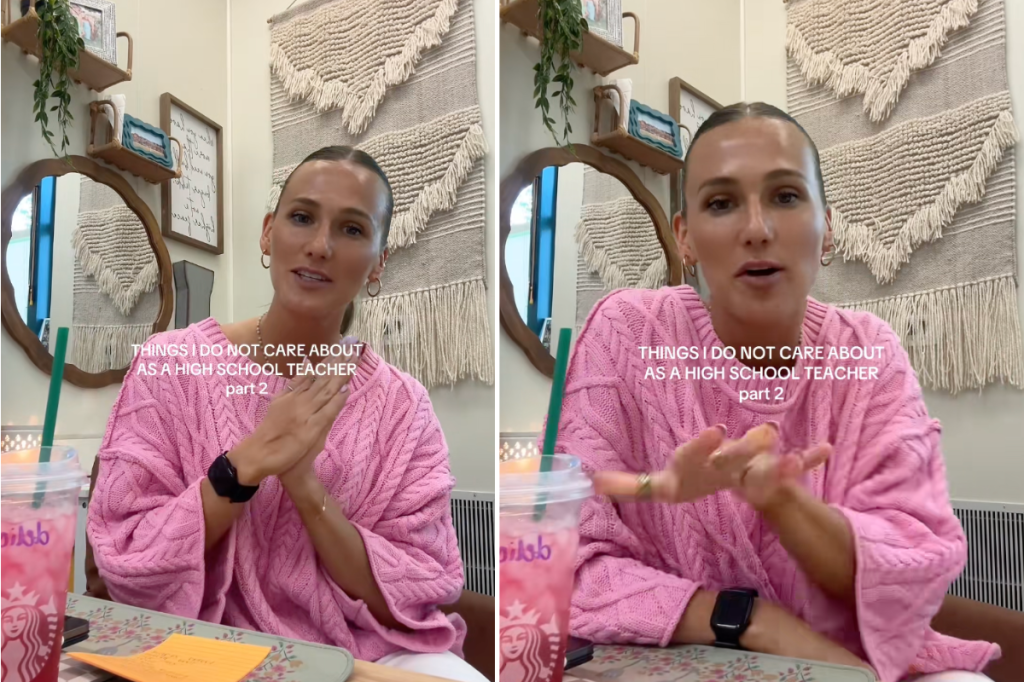
One such teacher is Katy Johnson, who has been sharing a behind-the-scenes look at her career as an educator for years on social media. She’s racked up nearly a million followers in the process.
High school teacher goes viral
In a recent TikTok, Johnson went viral after beginning: “Let’s talk about some things I simply do not care about as a high school teacher.”
First up? Drinking and eating in class.
“I don’t care,” she says in the video. “I do not care at all. Literally last week I had a kid eating a rotisserie chicken. Don’t care. He got his work done. Doesn’t bother me.”
Next up: “Dress code. That is not my worry.”
She adds that, unless it’s offensive, she will let almost anything go. “Girl, wear your crop top and your shorts, I don’t care.”
Being a minute or two late to class, before instruction has begun
Charging phones
Sitting in assigned seats
Talking in class
Basically, Johnson says she doesn’t get bothered by behaviors unless they interrupt the classroom. She doesn’t want kids talking while she’s speaking, but doesn’t mind if they chat with friends while finishing assignments, for example. And she’d rather have a teen’s phone plugged into the wall, charging, than for them to be using it during class.
15 million people viewed Johnson’s TikTok and many were quick to praise her relaxed approach:
“see she gets it,” wrote one commenter
“You should teach teachers,” added another.
“Agree with this. Some teachers care so much about things that don’t matter and it ends up wasting so much time,” someone added.
Multiple people chimed in with their suspicions that Ms. Johnson is likely every kid’s “favorite.”
But lest anyone think she’s a pushover, Johnson followed up with another video. This time, she covered some eyebrow raising behaviors she’s surprisingly strict about:
“I do have some things that I actually, really care about,” she says, starting with her no-nonsense bathroom policy.
“I do not let kids leave my classroom during my lesson. No.” She adds that if it’s a true emergency, she’ll make an exception, but she’s had to repeat lessons one too many times to be any more lenient than that.
Number two: No laptops in her math class.
“I firmly believe that math is best taught with pen and paper. We do not use Chromebooks. I care about that a lot,” she says.
The next is, in a surprise twist, phone usage. She says she does not allow students to use their phones at all during class, and even locks them away during instruction time. The only exception is, of course, that she will allow students to charge their devices as long as they’re not using them.
“Oh so she is a normal teacher after all,” wrote one disappointed commenter.
Replying to @Kiaha gilbert the #1 think I care about is THEM!! & their learning!!!! I don’t have a lot of rules, but the rules I have, I expect them to follow #teacher#teachertok#highschoolteacher
The series was so popular that Johnson followed it up with a part two with more things that “doesn’t care about,” including kids listening to music with one AirPod in and turning in work late.
“If you got your work done… I do not care what the kids do as long as they stay in this room and stay respectful.”
Traditionalists would probably say Ms. Johnson is far too permissive with when it comes to teaching Gen Z students. Eating messy meals? Drinking Starbucks? Straying from their assigned seats whenever they feel like it?
However, it’s the teachers who are willing to think outside the box that are seeing the best results with Gen Z. They’re a generation that spent a good chunk of their most formative years in COVID lockdown learning on laptop screens. They’re the first generation to have the kind of access to cell phones and social media that teens have today. And they’re at the bleeding edge of an age where AI can do all of your work for you even faster than a Google search.
Keeping them engaged in the learning process is key, and it’s a battle. Crucially, Johnson’s classroom rules challenge kids in the ways that really matter. Being accountable to themselves and others, finishing their work independently, and having the autonomy to succeed or fail based on their own merit.
Johnson may have left one thing off her list, however. She does care about her students, deeply. That much is obvoius.
From Pakistan to Tanzania, the most effective education solutions are community-led. Here’s how local leaders, in partnership with Malala Fund and supported by Pura, are mobilizing entire communities.
When asked to describe what Tanzania smells like, Grace Isekore closes her eyes and breathes in deep. For a moment, she’s somewhere else entirely. Tanzania is a rich tapestry of sights and scents, from the smell of sea mist that permeates the coastline to the earthy cardamom and cloves she cooks with in her kitchen. But when Grace emerges from her reverie, her answer is unexpected.
“Tanzania smells like peace,” she says, her eyes still closed. “I see a beautiful country where we are free to move, free to speak. And there is peace within the community.”
For Grace, that sense of peace isn’t just something she smells; it’s something she works toward every day. As a project coordinator with Pastoral Women’s Council (PWC), a women-led organization that empowers pastoralist communities in northern Tanzania, she has seen firsthand how girls flourish when they have the opportunity to attend school. Like scent, education not only connects girls to their own culture, but also helps broaden their horizons, realizing new possibilities for themselves and others. That transformation reshapes entire communities and ripples outward, with the potential to change countries and transform the world for the better.
Different scents, different approaches, and communities driving change
Spices in Tanzania. Captured by James Roh for Pura
For Grace and others around the world, education is freedom, as well as a pathway to a stronger community. Rooted in that shared belief, Pura, a home fragrance company, was inspired to build on their four-year partnership with Malala Fund to create something truly unique: a fragrance collection that connects people through scent to communities in Tanzania, Nigeria, Pakistan, and Brazil, where barriers to girls’ education are among the highest.
Using ingredients from each region, the new Pura x Malala Fund Collection uses scent to transport people to these regions directly. “Future in Bloom,” for example, invokes Pakistan’s lush valleys through notes of jasmine, cedarwood, and mango; while Tanzania’s fragrance, “Heart on Fire,” evokes the spirit and joyfulness of the girls who live there through cardamom, lemon, and green tea.
The new Collection honors the work Malala Fund does every day, partnering with locally-led organizations in these four countries to ensure every girl can access and complete 12 years of education. Each scent celebrates the joy, tenacity, and courage of the women and girls driving change on the ground, while also augmenting Pura’s annual grant to Malala Fund by donating eight percent of net revenue from the Pura x Malala Fund Collection to Malala Fund directly.
Just as each country’s scent is unique, so too are their needs related to education. But with support from Malala Fund and Pura, local leaders are coming up with creative ways to mobilize entire communities (parents, teachers, elders, and the students themselves, in their pursuit of solutions, understanding that educating girls helps everyone thrive. Here’s how their efforts are creating real, durable impact in Tanzania and Pakistan, and creating a ripple effect that changes the world for the better.
Parent-teacher associations help Maasai girls and their communities in Tanzania problem-solve
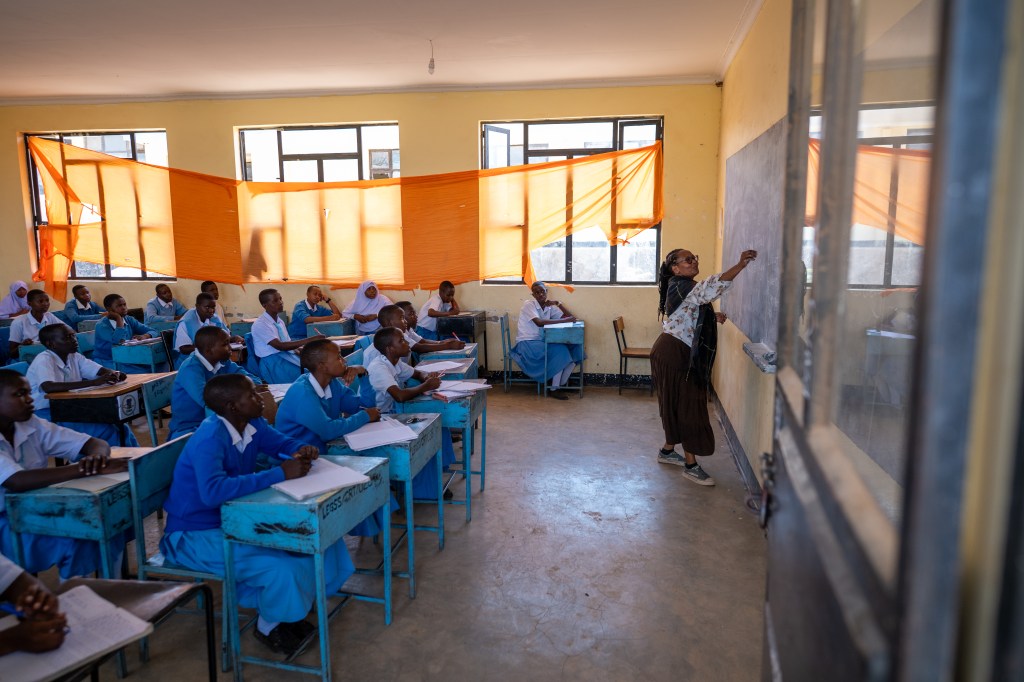
A girl’s school in Tanzania. Captured by James Roh for Pura
Northern Tanzania, Grace’s home, is home to pastoralist communities like the Maasai, a nomadic people who have moved with the seasons to nurture the land and care for their livestock for centuries. The nomadic nature of this lifestyle creates significant and unique barriers to girls’ education. Longstanding gender roles have enabled Maasai to survive in the harsh environment and have placed great value on both women and men. Over time, as nomadic life has been threatened by the privatization of land and stationary education models have been implemented, the reality of pastoralist livelihood has shifted and introduced new complexities. Now, the sheer distance to schools is both a practical challenge and one that often comes with danger from the landscape, predators, and potential exposure to assault along the journey. Girls shoulder the responsibility of household chores and there is often cultural pressure around early marriage – both leading to boys’ education being prioritized over girls’.
“There are very, very good [pastoralist] cultural practices, which are passed from generation to generation,” says Janet Kimori, an English teacher at Lekule Girls Secondary School in Longido, Tanzania. But when cultural practices act as educational barriers, “you have to sit down and look for where you are going to assist. As a school, as an individual, the school administration—all of us will chip in and know how we are going to deal with this problem.”
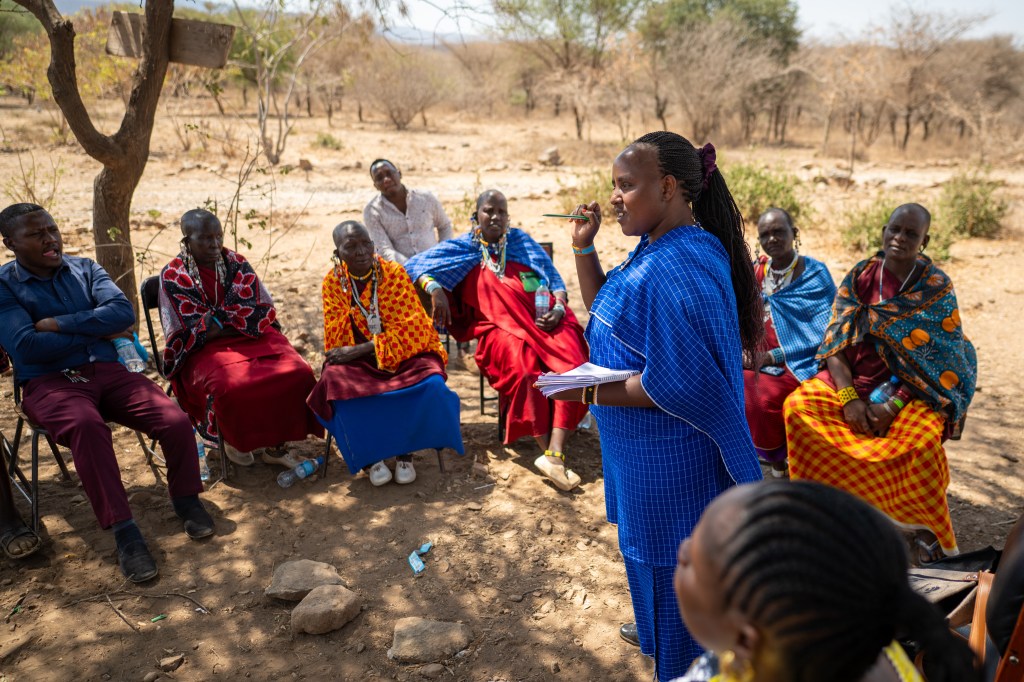
PWC works to ensure girls are able to exercise their right to an education while also preserving pastoralist culture. One successful approach, the organization found, has been the formation of Parent Teacher Associations (PTAs), created with help from Malala Fund. In PTA meetings, students, parents, teachers, elders, and government officials meet, discuss educational barriers, and come up with community-led solutions that preserve and honor their culture while advancing educational outcomes.
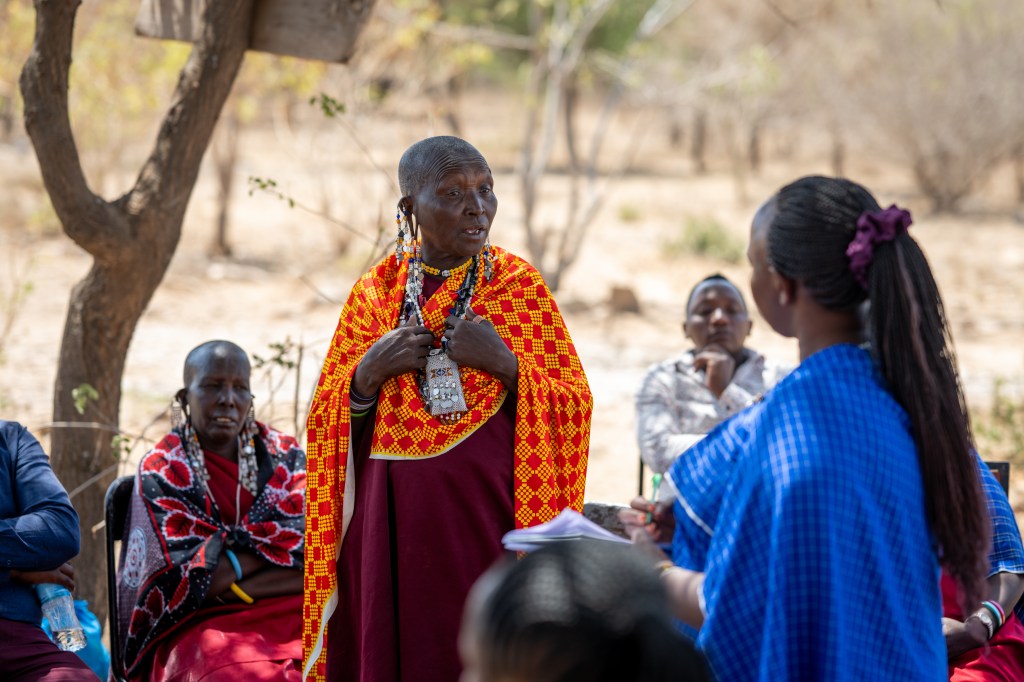
PTA meeting in Tanzania. Captured by James Roh for Pura
One recent PTA meeting highlights how these community-led solutions are often the most effective. At Lekule Girls Secondary School, the lack of fresh water forces girls to walk long distances to collect water for the school’s kitchen during the school day, and these long journeys not only disrupt class time but can leave girls vulnerable to sexual assault in isolated areas. Through facilitated discussion, PTA members landed on a solution: installing a borehole to pipe in fresh water to the school. Reliable access to water creates a better learning environment for the girls, but it also benefits the community at large, as local governments are then more likely to invest in health clinics and other community resources nearby.
With a solution in place, the PTA was then able to discuss ideas and map out a course of action. The women would raise money for the cost of the borehole, while the men would recruit workers to dig the hole and lay the pipe. Together, they would ask government officials to match their investment.
The benefits of PTA meetings within the pastoralist communities are undeniable. “The girls are talking and addressing issues in a confident way, and parents feel they are part of the resource team to solve challenges happening at school,” Grace says. One unexpected benefit: The larger cultural impact these PTA meetings have created. Thanks to the success of PTAs within pastoralist communities, the models are now being endorsed on a national level, and schools across Tanzania are starting to use them to solve problems in their own communities. When a community creates opportunities for girls to learn, everyone benefits.
Safe spaces in rural Pakistan help students and their parents connect, then drive change
Safe space for girls meeting in Pakistan. Captured by Insiya Syed.
A continent away in Pakistan, the country’s northernmost region of Gilgit-Baltistan seems like a land untouched by time. The region’s looming mountains, snow-capped peaks, lush valleys and crystalline lakes draw nature lovers and landscape photographers from around the world, but living among this kind of breathtaking scenery has its drawbacks. Schools in the region are few and far between, and the area’s harsh climate often makes roads inaccessible for travel. Poverty and gender-based discrimination are additional obstacles, making school even further out of reach, and girls are affected disproportionately. Going up against these barriers requires a persistent, quiet strength that’s found in the women who live there and reflected in Pakistan’s signature scent.
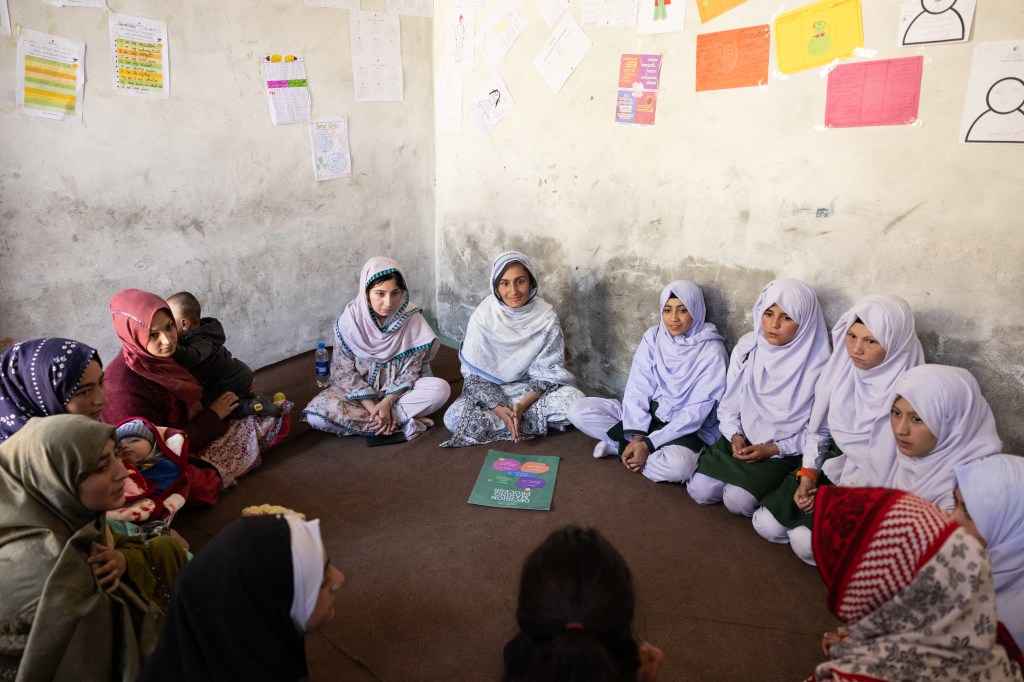
Saheli Circles are how local leaders in Gilgit-Baltistan are bridging the gap between girls and education. An Urdu term for “female friend,” Saheli Circles are after-school safe spaces where girls explore subjects like art and climate change, while also developing skills that help them manage emotions, set goals, and build positive relationships. Girls study in groups, visit the library, play sports, and tackle filmmaking and photography projects, all designed to develop self confidence and teach the girls how to advocate for issues that matter to them. But the work doesn’t stop there.
“What we’re trying to achieve here will only be impactful if it trickles down to the home environment and the school environment,” says Marvi Sumro, founder and program director of Innovate, Educate, and Inspire Pakistan (IEI), the local organization that developed the Saheli Circles model and partnered with Malala Fund in 2021 to make it a reality. Ever since, Saheli Circles have grown to involve teachers, elders, and parents to encourage relationship building that’s essential for young girls and adolescents. “Our spaces can give mothers and daughters an opportunity to interact a little differently—do an art activity, or have a cup of tea together, or some good conversation,” Marvi says.
The relationship building is what makes the biggest positive impact throughout the community. Recently, one Saheli Circle was able to bring together parents, teachers, and administrators to advocate for better education at their local school, and together they convinced the department of education to hire a science teacher. Another Saheli Circle organized a fund where members of the community can contribute monthly to pay for uniforms, books, and other school expenses for the girls in their village, eliminating those small, hidden costs that are often a barrier to education for many. A third Saheli Circle was able to produce a short film about how gender-based household chores can take away valuable study time from girls, leaving them at a disadvantage. “The girls put the film together and showed it to the mothers, and the response from the mothers was just beautiful,” Marvi says.
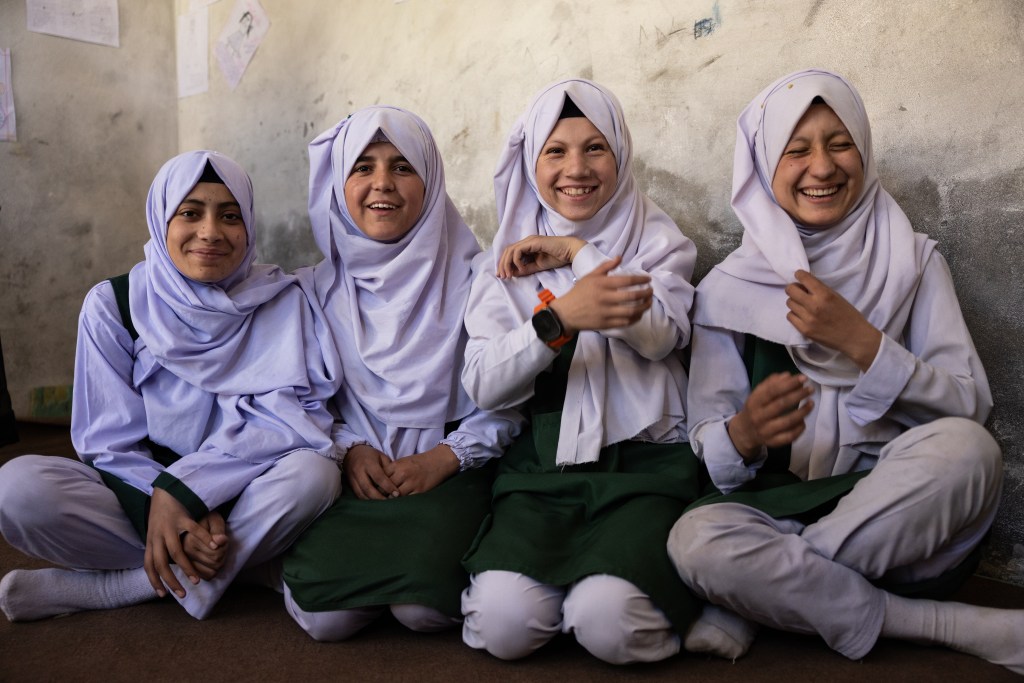
Girls smiling in Pakistan. Captured by Insiya Syed.
The education and relationship building that the girls receive in Saheli Circles connects them to larger opportunities and economic freedom that are not possible in their hometown. “For girls in Gilgit-Baltistan, education is extremely important because of the fact that we’re so far away from where the economy is, where the opportunity is. Education becomes this bridge for us, for our girls, to access all the opportunity and economy that exists in [larger cities].”
From rural Tanzania to remote Pakistan, local organizations prove every day that prioritizing girls’ education benefits everyone. Communities that lift up girls are able to secure resources like clean water and well-staffed schools, as well as build stronger relationships.
These outcomes are only possible because of the women and girls who work tirelessly in these regions to overcome barriers and drive progress. The Pura x Malala Fund Collection is a way to honor them, celebrate their achievements, and unite people the world over around a shared belief that education is freedom. Like scent, that belief can build, travel, and has the possibility to transform the world.
Experience the Pura x Malala Fund Collection here, and connect with the stories of real girls leading change across the globe.
Sometimes, explaining exactly how you feel can be hard. Sure, basic emotions like happy, sad, or angry are easy to name. But pinpointing the exact word for certain complex human emotions can be difficult. (And often, there isn’t an English word to convey those feelings.)
But those with an expanded vocabulary (or access to a dictionary) can often procure uncommon words for these emotions, helping them feel more emotionally intelligent.
On Reddit, people shared 10 of their favorite rare words that describe hard-to-explain feelings.
Sonder
“‘Sonder’ meaning the sudden realization that every random stranger you pass has a life as complex and messy as your own.” – ownaword
Merriam-Webster defines sonder as “the realization and understanding that all other people have lives as complex as one’s own.”
Sonder also has an interesting origin story. “The word was introduced by American author John Koenig in The Dictionary of Obscure Sorrows, a collection of words coined to describe feelings, emotional states, etc., for which the English language seems to lack a current word,” Merriam-Webster notes. “The dictionary was initiated as a website in 2009 and became a printed book in 2021.”
Ennui
“Ennui’s pretty well known, but not to everyone I guess. Ennui (pronounced ahn-WEE) is a noun defining a deep feeling of weariness, dissatisfaction, or listlessness caused by boredom or a lack of interest. It is more profound than simple boredom, often carrying an existential, ‘world-weary’ tone. Common synonyms include tedium, languor, apathy, and melancholy.” – nworbleinad
Merriam-Webster defines ennuias a “feeling of weariness and dissatisfaction; boredom.”
Eudaimonia
“Eudaimonia – much deeper than the usually given surface definition of happiness or well-being, philosophically speaking it means the deep and persistent feeling of flourishing because you are living in accord with the true nature of your being, or that you are in alignment with your true purpose.” – TurangaLeela80
Merriam-Webster defines eudaimonia as “well-being; happiness. Aristotelianism: a life of activity governed by reason.”
Encyclopaedia Britannicaexpands on eudaimonia in reference to philosopher Aristotle, who wrote two ethical treatises (Nicomachean Ethics and Eudemian Ethics) that explore the concept: “For Aristotle, eudaimonia is the highest human good, the only human good that is desirable for its own sake (as an end in itself) rather than for the sake of something else (as a means toward some other end).”
Frisson
“I wasn’t aware of the term ‘frisson’ until very recently, but now it comes to mind all the time when I have the experience. It refers to the aesthetic chills one can get from some external stimuli that’s deeply stirring and pleasurable. I most often experience it during masterful solo musical performances.” – common_grounder
Merriam-Webster defines frisson as “a sudden strong feeling or emotion.”
Piquancy
“Piquancy – the quality of being pleasantly stimulating or exciting.” – Putrid_Rock5526
Merriam-Webster defines piquancy (the quality or state of being piquant) as “agreeably stimulating to the taste, especially: having a pleasantly pungent, sharp, or spicy taste; engagingly provocative or stimulating, having a lively and often mischievous charm.”
Weltschmerz
“Weltschmerz (Welt = world + Schmerz = pain) — the sadness and discouragement you feel when you look at the state of the world and it falls painfully short of how you wish it was.” – canarialdisease
Merriam-Webster defines weltschmerz as “mental depression or apathy caused by comparison of the actual state of the world with an ideal state; a mood of sentimental sadness.”
Weltschmerz first appeared in 1827. “The word weltschmerz initially came into being as a by-product of the European Romanticism movement of the late 18th and early 19th centuries,” Merriam-Webster explains. “A combining of the German words for ‘world’ (Welt) and ‘pain’ (Schmerz), weltschmerz aptly captures the melancholy and pessimism that often characterized the artistic expressions of the era.”
The Daily Word: Weltschmerz Definition: (noun) A weary or pessimistic feeling about life; an apathetic or vaguely yearning attitude. Sorrow that one feels and accepts as one’s necessary portion in life; sentimental pessimism. Performed by: Don Huely Written by: Don Huely with ChatGPT Edited by: Dougie McFallendar Physical and psychological therapist to Don Huely: Fergus O’Shaughnessy Music: Piano Concerto No. 2 in C Minor by Sergei Rachmaninoff & Fanfare for the Common Man by Aaron Copland #huely#wordoftheday#thedailyword#Dougie69mf#fergusOshay#Rachmaninoff#Weltschmerz#Copland @fergusoshay @dougie69mf
“Anhedonia: The inability to experience pleasure or a loss of interest or satisfaction in previously enjoyable activities.” – adulting4kids
Merriam-Webster defines anhedonia as “a psychological condition characterized by inability to experience pleasure in normally pleasurable acts.”
Numinous
“Numinous: Describing an experience that is both awe-inspiring and spiritual.” – adulting4kids
Merriam-Webster defines numinous as “supernatural, mysterious; filled with a sense of the presence of divinity; appealing to the higher emotions or to the aesthetic sense.”
Torpor
“Torpor: A state of physical or mental inactivity, lethargy, or apathy.” – adulting4kids
Merriam-Webster defines torpor as “a state of mental and motor inactivity with partial or total insensibility; a state of lowered physiological activity typically characterized by reduced metabolism, heart rate, respiration, and body temperature that occurs in varying degrees especially in hibernating and estivating animals. Apathy, dullness.”
Lachrymose
“Lachrymose: Inclined to weep or cry easily, often describing a melancholic or tearful mood.” – adulting4kids
Merriam-Webster defines lachrymose as “given to tears or weeping, tearful; tending to cause tears, mournful.”
Human psychology really isn’t that complicated, if you think about it. Everybody wants to see themselves in a positive light. That’s the key to understanding Jonah Berger’s simple tactic that makes people 30% more likely to do what you ask. Berger is a marketing professor at the Wharton School of the University of Pennsylvania and the bestselling author of “Magic Words: What to Say to Get Your Way.”
Berger explained the technique using a Stanford University study involving preschoolers. The researchers messed up a classroom and made two similar requests to groups of 5-year-olds to help clean up.
One group was asked, “Can you help clean?” The other was asked, “Can you be a helper and clean up?” The kids who were asked if they wanted to be a “helper” were 30% more likely to want to clean the classroom. The children weren’t interested in cleaning but wanted to be known as “helpers.”
Berger calls the reframing of the question as turning actions into identities.
“It comes down to the difference between actions and identities. We all want to see ourselves as smart and competent and intelligent in a variety of different things,” Berger told Big Think. “But rather than describing someone as hardworking, describing them as a hard worker will make that trait seem more persistent and more likely to last. Rather than asking people to lead more, tell them, ‘Can you be a leader?’ Rather than asking them to innovate, can you ask them to ‘Be an innovator’? By turning actions into identities, you can make people a lot more likely to engage in those desired actions.”
Berger says that learning to reframe requests to appeal to people’s identities will make you more persuasive.
“Framing actions as opportunities to claim desired identities will make people more likely to do them,” Berger tells CNBC Make It. “If voting becomes an opportunity to show myself and others that I am a voter, I’m more likely to do it.”
This technique doesn’t just work because people want to see themselves in a positive light. It also works for the opposite. People also want to avoid seeing themselves being portrayed negatively.
“Cheating is bad, but being a cheater is worse. Losing is bad, being a loser is worse,” Berger says.
The same tactic can also be used to persuade ourselves to change our self-concept. Saying you like to cook is one thing, but calling yourself a chef is an identity. “I’m a runner. I’m a straight-A student. We tell little kids, ‘You don’t just read, you’re a reader,’” Berger says. “You do these things because that’s the identity you hold.”
Berger’s work shows how important it is to hone our communication skills. By simply changing one word, we can get people to comply with our requests more effectively. But, as Berger says, words are magic and we have to use them skillfully. “We think individual words don’t really matter that much. That’s a mistake,” says Berger. “You could have excellent ideas, but excellent ideas aren’t necessarily going to get people to listen to you.”
This article originally appeared two years ago. It has been updated.