Amanda had a sign in her yard that read: “Mister Rogers did not adequately prepare me for the HOA.”
It’s a funny sign. It’s also, for anyone who grew up watching Fred Rogers teach an entire generation that neighbors treat each other with patience and kindness, a completely reasonable sentiment. Her HOA did not see it that way. They sent her a notice to remove it.
As she explained in a TikTok video posted to @corporate.amanda, she had suspected for a while that her HOA wasn’t exactly operating by the book. What she found confirmed it. The board hadn’t filed the required paperwork with the state to remain an active entity year over year. They hadn’t held their mandatory annual meetings. They had no minutes to show members. Technically, legally, they didn’t exist as an organization with any enforcement power.
“I know that they can’t technically do anything,” she said. “They can’t even represent themselves in court because they aren’t an entity at this time.”
Sweet petty revenge
So Amanda did not remove the sign. Instead, she spent a week driving around the neighborhood documenting every HOA violation she could find among board members’ own properties. Then she mailed the photos to each of them.
She also sent the board a formal request for five years’ worth of records — meeting minutes, audit documents, board formation paperwork — fully aware they couldn’t produce any of it. “I already know the answers to all these,” she said. “They haven’t done an audit. They haven’t done the things they are supposed to do.”
At the time of her video, they hadn’t responded to her emails in six days.
“I actually have a full-time job, and I am a mom, and I am in school,” Amanda said, “so I do have better things to do. But I am so petty that I have made this my new life mission.”
The response in the comments was immediate and enthusiastic, including from someone who works at an attorney’s office representing HOAs: “You’re absolutely right. If they got an attorney, that’d be the first thing they’d notice.”
A single door can open up a world of endless possibilities. For homeowners, the front door of their house is a gateway to financial stability, job security, and better health. Yet for many, that door remains closed. Due to the rising costs of housing, 1 in 3 people around the world wake up without the security of safe, affordable housing.
Since 1976, Habitat for Humanity has made it their mission to unlock and open the door to opportunity for families everywhere, and their efforts have paid off in a big way. Through their work over the past 50 years, more than 65 million people have gained access to new or improved housing, and the movement continues to gain momentum. Since 2011 alone, Habitat for Humanity has expanded access to affordable housing by a hundredfold.
A world where everyone has access to a decent home is becoming a reality, but there’s still much to do. As they celebrate 50 years of building, Habitat for Humanity is inviting people of all backgrounds and talents to be part of what comes next through Let’s Open the Door, a global campaign that builds on this momentum and encourages people everywhere to help expand access to safe, affordable housing for those who need it most. Here’s how the foundation to a better world starts with housing, and how everyone can pitch in to make it happen.
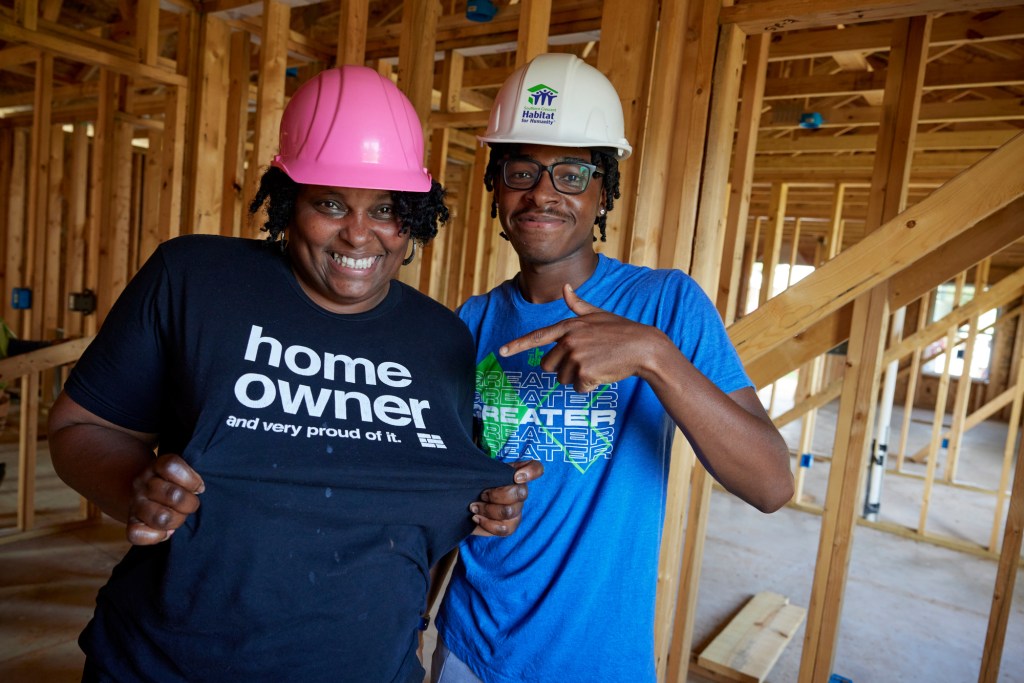
Volunteers raise a wall for the framework of a new home during the first day of building at Habitat for Humanity’s 2025 Carter Work Project.
Globally, almost 3 billion people, including 1 in 6 U.S. families, struggle with high costs and other challenges related to housing. A crisis in itself, this also creates larger problems that affect families and communities in unexpected ways. People who lack affordable, stable housing are also more likely to experience financial hardship in other areas of their lives, since a larger share of their income often goes toward rent, utilities, and frequent moves. They are also more likely to experience health problems due to chronic stress or environmental factors, such as mold. Housing insecurity also goes hand-in-hand with unstable employment, since people may need to move further from their jobs or switch jobs altogether to offset the cost of housing.
Affordable homeownership creates a stable foundation for families to thrive, reducing stress and increasing the likelihood for good health and stable employment. Habitat for Humanity builds and repairs homes with individual families, but it also strengthens entire communities as well. The MicroBuild® Initiative, for example, strengthens communities by increasing access to loans for low-income families seeking to build or repair their homes. Habitat ReStore locations provide affordable appliances and building materials to local communities, in addition to creating job and volunteer opportunities that support neighborhood growth.
Marsha and her son pose for a photo while building their future home with Southern Crescent Habitat for Humanity in Georgia.
Everyone can play a part in the fight for housing equity and the pursuit of a better world. Over the past 50 years, Habitat for Humanity has become a leader in global housing thanks to an engaged network of volunteers—but you don’t need to be skilled with a hammer to make a meaningful impact. Building an equitable future means calling on a wide range of people and talents.
Here’s how you can get involved in the global housing movement:
Speaking up on social media about the growing housing crisis
Volunteering on a Habitat for Humanity build in your local community
Travel and build with Habitat in the U.S. or in one of 60+ countries where we work around the globe
Join the Let’s Open the Door movement and, when you donate, you can create your own personalized door
Every action, big and small, drives a global movement toward a better future. A safe home unlocks opportunity for families and communities alike, but it’s volunteers and other supporters, working together with a shared vision, who can open the door for everyone.
Anxiety can be a funny thing. It loops through our frontal lobes, and if left unchecked, it doesn’t always willingly see itself out. Psychologists have long studied ways to help quell anxiety, and while potential solutions are certainly not one-size-fits-all, they’re worth exploring.
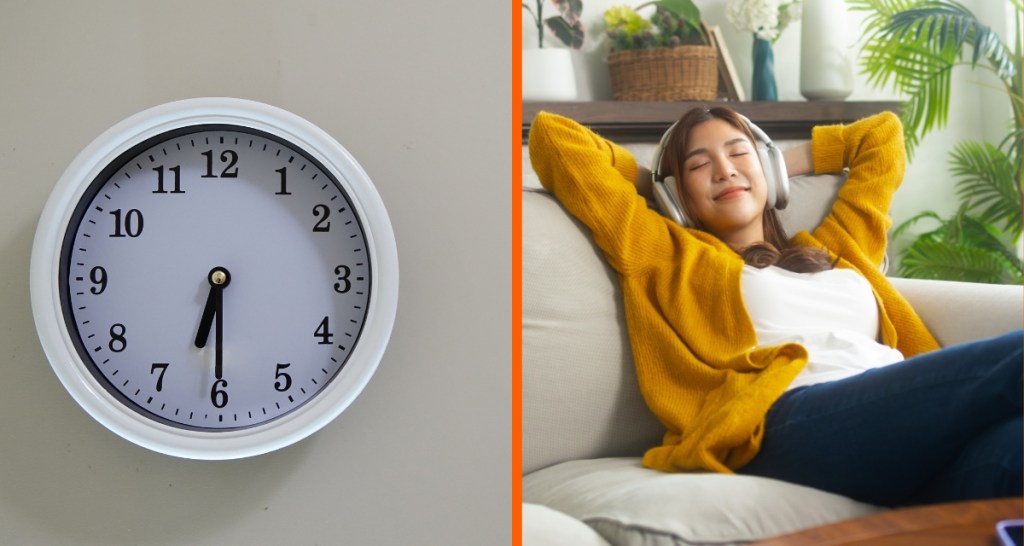
One such idea is called the “6:30 p.m. rule,” which, according to a recent piece on MSN, was popularized by journalist Mel Bradman, who was treated for chronic anxiety. The theory is that if we set a certain time each day to tell our minds, “no more worrying,” we can, in essence, “trick” our racing brains into slowing down.
In an op-ed for The Guardian, Bradman described her anxiety and said she was intrigued when her Norwegian therapist suggested the technique during a session:
“I was stuck in a particularly vicious circle of over-thinking, (and) she said: ‘Tonight after 6.30pm is ‘No Worry Time.’ ‘What do you mean?’ I asked. ‘Exactly that. From 6.30pm until you wake up the next day, you’re not allowed to worry.’”
When she pushed back on how that might help her, she relayed the therapist’s words: “‘By giving your brain a rest, and allowing the other parts of you that aren’t driven by anxiety to come back in,’ she said. She told me that anxiety is a bully, and like all bullies, it needed to be put in its place.”
Bradman continued the practice and says it helped her reframe the idea of worry. “Last year, when I was travelling in Bangkok, I saw a sign in a bar that read ‘No worry zone.’ I loved it. It was a reminder that I could make my life a worry-free zone, and that you don’t have to be held hostage by anxiety – sometimes you can call the shots,” she wrote.
It’s 6:30 p.m. for a reason
The MSN article notes that choosing 6:30 p.m. isn’t random:
“The choice of 6:30 p.m. is not insignificant. After this time, the brain begins its recovery phase: the fatigue accumulated throughout the day often amplifies negative thoughts and rumination. Setting a limit allows you to interrupt this cycle before it takes over, offering genuine mental rest, much like a muscle after exercise. To give you an idea, one study estimates that we have an average of 6,200 thoughts per day. It’s impossible to control them all, but framing them within a specific timeframe is entirely feasible and helps reduce stress.”
“This rule works because it provides a cut-off and psychological boundary for anxiety,” she said. “Anxiety tends to seep into any unstructured space, especially in the evening when our minds are tired and our brains are more susceptible to ruminating and over-thinking.”
It’s about the prefrontal cortex
“Later in the day, our prefrontal cortex is less effective, while our emotional center, driven by our amygdala, can take over and make us more reactive,” Chen added. “That’s why our worries can feel louder at night, and a 6:30 p.m. cutoff helps create a concrete boundary and routine to shift us out of a problem-focused mode into recovery.”
Rachel Loftin, a psychologist with Prosper Health, also told Upworthy why 6:30 p.m. is a good benchmark.
“The ‘6:30 p.m. rule’ works because it sets a clear boundary at a time when the mind is more likely to drift into worry,” Loftin said. “Early evening is when the structure of the day falls away, so thoughts can expand unless something interrupts them. It also trains the brain through repetition. If you consistently stop engaging with worries after a set time, your mind starts to learn that evening isn’t the time for problem-solving, and those thoughts show up less.”
“It removes the need to decide when to stop”
Loftin says this can be especially helpful for neurodivergent patients.
“For neurodivergent adults, that clarity is especially helpful,” she said. “It removes the need to decide when to stop, making it easier to keep rumination from taking over the night.”
Poet Ralph Waldo Emerson may have been on to something when he famously wrote:
“Finish each day and be done with it. You have done what you could. Some blunders and absurdities no doubt crept in; forget them as soon as you can. Tomorrow is a new day. You shall begin it serenely and with too high a spirit to be encumbered with your old nonsense.”
I briefly explained and then he sat down to watch with me. It was 2022. A discussion about fascism on X had led me to look up “The Wave,” a 1981 ABC Afterschool Special based on a real-life high school experiment in Palo Alto, California, in 1967.
The real experiment was both fascinating and terrifying
In the real experiment, first-year history teacher Ron Jones had students at Cubberley High School engage in a simulation of how fascism spreads as part of a lesson on World War II, with him playing the role of the dictator. His intent was to show skeptical students how the Nazis came to power by creating a social movement he dubbed the Third Wave.
“It started out as a fun game with the most popular teacher at school,” Mark Hancock, one of the students in Jones’ history homeroom class, told Palo Alto Online in 2017. “He told us, ‘If you’re an active participant, I’ll give you an A; if you just go along with it, I’ll give you a C; if you try a revolution, I’ll give you an F, but if your revolution succeeds, I’ll give you an A.’”
Hancock said he started off planning to get that revolution A, but it quickly grew beyond grades and turned into something real. “At the end, I was scared to death,” he shared.
It began with Jones rallying the students around the idea of “strength through discipline” and “strength through community.” He had them engage in regimented behaviors and handed out membership cards. At first, it was just fun, but students began to enjoy feeling like part of a special community. Jones pushed the importance of following the rules. The students even formed a “secret police” to monitor other students, and if someone broke a Third Wave rule, they’d be reported and publicly “tried” by the class.
The students got wrapped up in it to a frightening degree and even Jones found himself enjoying the way the students responded to him. “It was pretty intoxicating,” he told Palo Alto Online.
But according to Verde Magazine, Jones felt like he’d lost control of it by the fourth day.
The experiment ended at the end of the week with a rally. Jones told the students they were actually part of a real national Third Wave movement and that the national leader was going to speak to them at the rally. Jones turned on the televisions to white static and watched the students eagerly wait for their leader to speak. That’s when he broke the news to them that they’d fallen for a totalitarian regime. Instead of a Third Wave leader speech, he played them a video of a Nazi rally.
According to a school newspaper at the time, most students were disillusioned. But one student said, “It was probably the most interesting unit I’ve had. It was successful in its goal to achieve the emotions of the Germans under the Nazi regime.”
What the 1981 film gets right
“The Wave” follows the true story quite closely and still holds valuable lessons. One chilling scene shows a kid who had been sort of an outcast prior to the “movement” saying, “For the first time, I feel like I’m a part of something great.” He was particularly crushed to find out it was all a fascist facade.
As is the cyclical nature of history, “The Wave” and what it can teach us is especially relevant today. According to NPR, “surveys of more than 500 political scientists find that the vast majority think the United States is moving swiftly from liberal democracy toward some form of authoritarianism.” The benchmark survey, known as Bright Line Watch, had “U.S.-based professors rate the performance of American democracy from zero (dictatorship) to 100 (perfect democracy),” noted NPR. After President Trump’s election in November 2024, scholars gave American democracy a rating of 67. By April 2025, that figure had dropped to 53, and public ratings fell below 50 for the first time since Bright Line Watch began collecting data in 2018.
Why this story feels so timely right now
The most recent Bright Line Watch surveys from early 2026 show expert ratings have stabilized around 57, still the lowest recorded since the project began.
John Carey, co-director of Bright Line Watch and a professor of government at Dartmouth, summed up the matter by saying, “We’re moving in the wrong direction.”
Since President Trump’s election in November, various publicationsworldwide have suggested that much of Trump’s rhetoric echoes that of Nazi Germany, with some pointing out parallels between each administration’s first 100 days in office. Other publications have criticized the comparison.
At any rate, this afterschool special is incredibly timely. If you can get past the ’80s aesthetic, it’s worth watching. Even my teen kids got into it, once they stopped making fun of the hair and film quality.
This article originally appeared four years ago. It has been updated.
https://www.canva.com/photos/MAGZQRzJFsM-an-marriage-proposal-scene-in-a-field/Friedrich Nietzsche's advice on one important question to ask before marriage.
Getting married is one of the biggest life-changing decisions most people have to make—and also one of the most stressful, according to the Holmes-Rahe Life Stress Inventory (also known as the Life Change Index Scale.) Even before getting engaged, much thought, time and care are required before exchanging vows. Deciding to commit your life to…
Getting married is one of the biggest life-changing decisions most people have to make—and also one of the most stressful, according to the Holmes-Rahe Life Stress Inventory (also known as the Life Change Index Scale.) Even before getting engaged, much thought, time and care are required before exchanging vows.
Deciding to commit your life to someone in marriage is something German philosopher Friedrich Nietzsche (1844-1900) spent a lot of time thinking about. He offered his wise thoughts on marriage to others during his life.
Nietzsche’s advice on whether someone should marry their partner comes down to one simple question. His advice is applicable to anyone debating getting engaged, newly married, or simply dating someone they might consider as a life partner. Nietzsche’s straightforward question can help people decide if one should walk confidently (or not) into marriage.
Friedrich Nietzsche’s important marriage question
Nietzche shared his wisdom with people wondering whether their partner is truly “the one.” He summed up his thoughts with this simple quote and question:
“[D]o you believe you are going to enjoy talking with this woman [or partner] up into your old age? Everything else in marriage is transitory, but most of the time you are together will be devoted to conversation.”
According to Nietzsche, the most important thing that will hold a marriage together is not attraction, money, or compatibility. It simply comes down to: do you enjoy talking to this person?
Mark Manson, author of The Subtle Art of Not Giving a F*ck Mark Manson shared why he strongly believes the advice is the secret for a happy marriage on a recent episode of the Pursuit of Wonder podcast.
He shared, “My favorite quote that I’ve ever heard about marriage came from the philosopher Friedrich Nietzsche.”
After reciting the quote, he explains why Nietzsche’s advice is so impactful:
“Looks come and go. Interests come and go. Finances come and go. Family problems come and go. But at the end of the day, can you spend the rest of your life in this conversation?” he says. “To me this is so profound because all the things that we care about when we’re young, when we meet somebody 99% of them will not matter anymore once we hit old age. Careers come and go. Money comes and goes. Families come and go. But if you can sustain that conversation through everything else, you can always have a great marriage.”
Nietzsche’s additional thoughts on marriage
Although Nietzsche never married, he wrote often about marriage and offered many theories on it meant to challenge and provoke thought. Nietzsche believed that friendship was paramount to a strong marriage as opposed to romance.
He wrote in Human, All Too Human (Aphorism 378), “The best friend will probably acquire the best wife, because a good marriage is founded on the talent for friendship.”
Nietzsche also wrote, “It is not a lack of love, but a lack of friendship that makes unhappy marriages.”
As researcher Skye Nettleton explains in her 2009 paper on Nietzsche and marriage, she notes the philosopher also wrote, “Sensuality often makes love grow too quickly, so that the root remains weak and is easy to pull out.”
Most married couples are aware of the alarming statistics: About 40-50% of first marriages are destined to end in divorce. On the bright side, that’s a number that has been falling steadily since the 1980s as people get married later and are more selective before settling down. On the bleaker side, it still means that “happily ever after” is hardly a guarantee.
Couples who are determined to buck the trend all have their own approach. It could be proactive couples’ therapy, a weekly date night, or the classic “never go to bed angry.” Some even have hard “rules” that neither is allowed to break, all in the name of protecting the relationship.
Couples coach shares the rules that she actually uses in her own marriage
Adele is a relationship coach who runs Happy Couples Connect. She has over half a million followers on social media and teaches adults “how to communicate in a healthy way so you can feel heard, valued, loved, and respected in your relationship.”
On Instagram, her bio tagline reads: “This page is for you if marriage is hard right now but you’re not ready to give up.”
Adele’s content resonates with her audience because she’s not afraid to share the real, uncomfortable truths from her own relationship. She says there was a time when there wasn’t a disagreement that wasn’t met with an explosive fight or a silent treatment. Fixing that is what inspired Adele to start her practice.
In a recent post on Instagram, Adele shares the five rules that she and her wife “never break.” She adds that a few years ago, these rules “didn’t exist” and the couple were on the brink of divorce.
The five rules of marriage, according to this relationship coach. Experts agree.
Adele lists out her relationship’s rules in the caption, and while it starts off with a few easier-said-than-done common sense policies, there are a few surprises on the list:
“Rule 1: We treat each other like two humans, not two perfect robots. We both mess up. Expecting perfection does not raise the standard. It just grows resentment.”
Other relationship experts might call this assuming the best in your partner. It’s terrific life advice when dealing with anyone you like, love, or respect. Come into disagreements with the understanding that they care and are trying, not assuming bad intentions.
“Rule 2: We choose to focus on what the other is doing right. The more we look for it, the more we see it. What you focus on expands. We choose to make that a gift.”
A natural tie-in to Rule 1, but it’s definitely easier to preach than to put into practice. It’s easy to nitpick and criticize all the little things our partner doesn’t do for us, meanwhile we’re overlooking the dozens of other things they are doing. It’s a rapid way to build resentment or contempt, which is the number one predictor of divorce.
“Rule 3: No phones after dinner. Because if they are within reach we will scroll, disconnect, and then wonder why we do not feel close.”
Tons of research has been done to show that cell phones can negatively impact our relationships if we’re not careful. In basic terms, scrolling your phone when your partner is nearby can make them feel less important. “When we sit down for dinner with our famlies and we put the phone on the table, it sends a psychological message to everyone sitting there that ‘You are not the most important thing to me right now,” says Simon Sinek.
“Rule 4: No hard conversations after 9 p.m. Late at night everything feels bigger than it is. We talk when we are rested, not exhausted.”
This is a popular concept in therapy and counseling circles. Not only does getting into a heated argument right before bed ruin your sleep, thereby making you crankier the next day, these arguments escalate more than they would during the day.
“Your amygdala (your emotional alarm system) becomes more reactive when you’re sleep-deprived or simply tired at the end of a long day. This combination means you’re more likely to perceive threat or criticism in neutral statements, react more defensively, say things you don’t mean, and struggle to see your partner’s perspective,” writes Quadra Wellness.
“Rule 5: A 30 second hug before any hard conversation. It lowers tension, reminds us we are on the same team and resets our nervous systems before we say a word.”
A hug is one of the most powerful human acts. A long, genuine hug with someone you love lowers stress, boosts oxytocin (the love hormone that makes you feel deep bonds and connection), and makes you happier. This puts you in a much more stable mindset before tackling hard conversations.
Relationship and communication skills don’t grow without effort
You’d think that being with someone for a long time would mean steadily learning to improve your communication over the years. That’s not always the case. In fact, often the opposite happens.
Little disagreements and petty grudges don’t get communicated effectively. They’re kept inside and they snowball into criticism, contempt, defensiveness, or stonewalling. These are what groundbreaking marriage therapist John Gottman calls “the four horsemen.” Once these start showing up regularly in your relationships, you’re in big trouble.
Even the best couples have to work at their communication skills constantly. Not everyone writes their rules down; sometimes they’re unspoken. But even silly or clinical sounding rules like these can turn a good relationship into one that’s really prepared to last a lifetime.
Confidence is not always easy to have in social settings, especially when meeting new people. In 2021, a YouGov study found that 37% of Americans reported feeling “not very confident” in new social groups.
Dr. Zahrai explains why the distance between the chest and chin can indicate confidence.
“When you’re slouching, when you’re withdrawing, when you feel insecure, yeah sure shoulders go…but it’s also your head that drops,” she says, gesturing her head to tilt downwards. “So if you can just think, ‘Okay, what is the distance between my chin and my chest, and how do I elongate it? Not by looking at the ceiling, but in a natural state, you will naturally feel more empowered.”
Dr. Zahrai suggests that this also builds a sense of trustworthiness between others that will encourage connection.
“And you will naturally convey more of that big trust energy that we’re seeking,” she adds. “The idea is when you’re showing up as the person you want to be, people then respond to that.”
She notes that it has a snowball effect and can feel contagious to people you interact with.
“They respond more positively to that, which then makes you feel, ‘Maybe I really do deserve this. Maybe I do have a voice that is valued’,” she shares. “And then you show up more like that, and then they respond. So we almost create our environment based on how we choose to show up.”
According to Dr. Zahrai, this gesture is a term called “neck flexion.”
The source for Dr. Zahrai’s confidence body language suggestion comes from a 2025 study published in the journal Psychophysiology. Researchers found a direct correlation with neck flexion (the act of lowering the head) to negative impacts on feelings of power (i.e. confidence) as well as lower moods.
Dr. Zahrai expanded on this during another podcast appearance delving into neck flexion research, where she explained that it “leads us to feel more insecure, more doubtful of our ourselves. All we need to do is lengthen this distance right here [as she’s signaling with her fingers between her chin and chest], and we will start to feel more powerful.”
How to feel confident besides body language
Body language may be one aspect to feeling more confident, but these are a few more tips from the American Psychological Association (APA) that may help boost your confidence:
Try self-affirmations
Research supports self-affirmations for better personal and social well-being. You can do this by reflecting on your core values, identity, and positive traits.
Celebrate your successes
Confidence without impostor syndrome can be achieved by reminding yourself of both big and small personal “wins”—things like receiving an email with positive feedback or not moving on too fast when someone congratulates you.
Build your resilience
Building resilience is an important part of building confidence in yourself. The APA notes that there are four parts to building resilience: connection, wellness, healthy thinking, and meaning. These include things like continuing to connect with others through empathy, taking care of your body, moving towards goals, and learning from the past to build a more confident future.
Back in the day, when a couple broke up, you either heard about it firsthand or had to endure an uncomfortable moment at an event where you asked someone where their significant other happened to be. However, in the social media era, many people choose to announce the breakup with a somber post or simply change their relationship status.
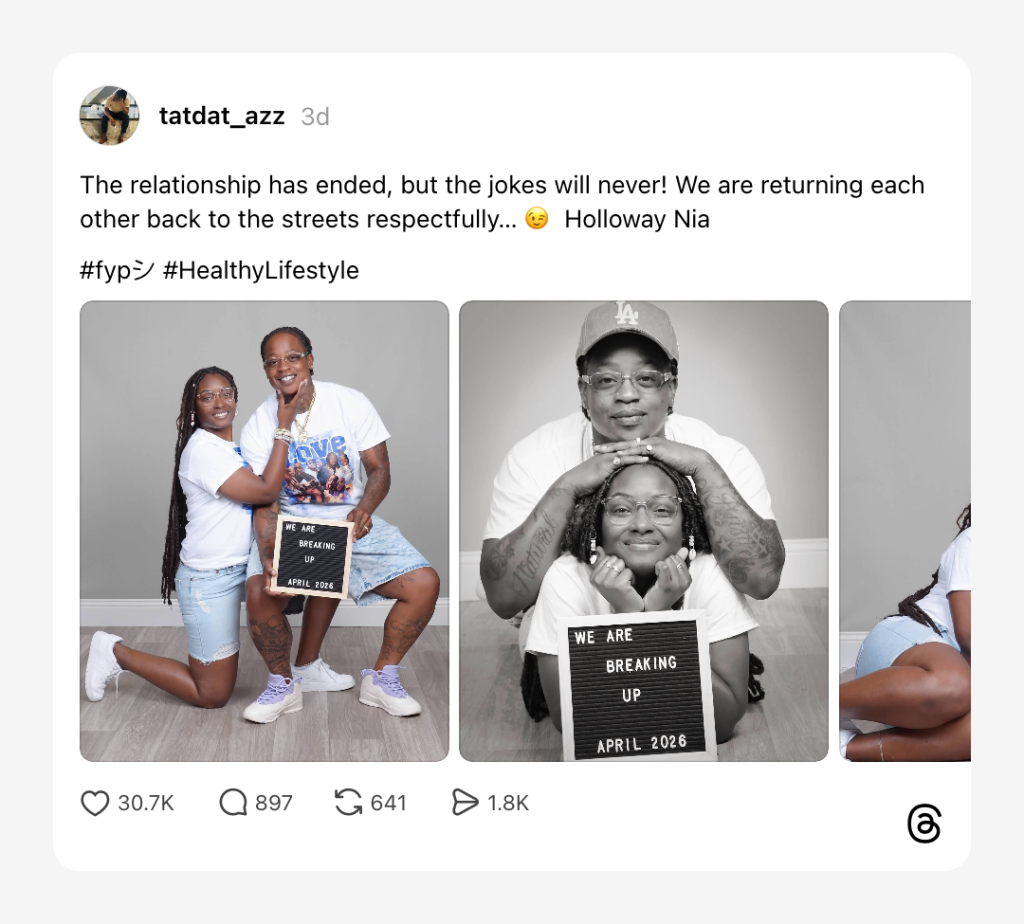
Chris and Tenia, a couple in the Columbia, South Carolina area, decided to have some fun with their breakup by doing a funny photoshoot and announcing it on a letter board, like a child starting a new grade at school. At first glance, it seems strange, but if people announce their engagement with a photoshoot, why not mark the pivotal moment when the couple goes their separate ways with some commemorative shots?
The photos, posted to Threads, are great because Chris and Tenia are posed as if they still love each other, wearing deadpan smiles as they stand back-to-back. “The relationship has ended, but the jokes will never!” Chris wrote in the caption. “We are returning each other back to the streets respectfully…”
The photoshoot was definitely a surprising way to announce their breakup, but many commenters praised the couple for their emotional maturity. While a lot of people in their situation would be at each other’s throats, they’re having fun with it.
“Take notes, lesbians. We can absolutely go our separate ways in peace,” cde_esq wrote.
“The level of maturity it takes to split amicably and still find and maintain a friendship is something a lot of people wouldn’t understand. All jokes aside, this is dope and a prime example that just because it ends romantically doesn’t mean it has to end platonically,” _shell_bell_22 wrote.
“Love this! This gives me faith in humanity lol, I love the idea of two nice folks realizing it doesn’t work romantically and it not becoming a toxic situation,” beetsoda wrote.
Chris and Tenia’s relationship ended after four and a half years because, according to Chris, they “realized recently we weren’t really happy, just going with the routine instead. We are on two different journeys but have the most respect and love for each other,” she told Queerty.
The breakup photos showed emotional maturity because they were clear and announced that the relationship was officially over. And as Brené Brown says, “Clarity is kindness.”
“When ending a relationship, it’s tempting to soften the blow with lines like, ‘Maybe in the future,’ or ‘I just need some time.’ But emotionally mature people know that dangling false hope only prolongs the pain,” relationship counselor Tina Fey writes in Eluxe Magazine. “Kindness doesn’t mean sugarcoating. It means balancing empathy with clarity. … It’s not about easing your guilt—it’s about giving them the gift of closure.”
Ultimately, it’s hard to see a relationship end, but Chris and Tenia seem to be handling it the best way possible. They used their breakup to show others that you can end a relationship and still treat each other with respect and a whole lot of humor.
Navigating ways to address anxiety can be one of the most beneficial lessons a person can learn. Sometimes we can “trick” the very neurochemicals that send signals throughout the synapses of our brains. In doing so, we might (at least at times) help calm ourselves down when we detect danger.
A clip of Dan Harris, the 10% Happier podcast host who is often deemed an expert on happiness, has been making the rounds where he gives a “three-step reset” for anxious feelings. During his appearance on radio host/podcaster Elvis Duran’s show, Harris shares what one can do when they begin to spiral.
First, recognizing that the spiral is happening in the first place is essential. “Notice this is happening,” Harris says. “I’m in a moment of anxiety.”
Hand on heart
The second step might be rather surprising to some, especially since it’s steeped in science. “Step number two, and this is where it gets a little cheesy, is… hand on the chest. You can put your hand on your heart. You can hug yourself. A lot of data show this triggers the parasympathetic nervous system. In other words, the aspects of your nervous system that are activated when you’re resting. So it just relaxes you.”
Talk to yourself like you would a friend
And third is self-love, in the same way you would love a dear friend. “Say to yourself what you would say to a good friend. Using your own name. I’ll say to myself, usually, ‘Dude. I know you’re worried about losing everything and living in a flop house. But that’s irrational. You’re totally fine. And even if it did happen, you’d still have your wife and son. And all of your friends. And your purpose on earth to help other people. You’re good.’”
Harris adds context. “Moments like that, if you’re in the car or on the way to a terrible job, or you’re leaving a domestic situation… that stinks. Again, I can’t fix all of that for you. But I can help you navigate regulating your nervous system. Deep breaths, as mentioned, and talking to yourself in a supportive way. Especially if you’re alone and there’s nobody to share your problems with. You can be your own support system.”
He adds, of note, that simply because these tools can be helpful, doesn’t mean that one shouldn’t reach out for external assistance. “Doesn’t mean you don’t need other people—you do. But you have a lot within your own mind and heart right now that can help you.”
Three step reset
On Duran’s Instagram page (and posted elsewhere, as well), the three reset steps are written clearly in the comments:
“1: Notice you’re spiraling and call it out. 2: Put your hand on your heart (yes really!)—science shows this calms you. 3: Talk to yourself like you would your friend, using your own name.”
Cortisol reduction
Upworthy spoke with Dr. Anna Elton (LMFT), who relayed how helpful heart-touching can be in times that are perceived to be stressful. “Research shows that even simple self-touch can reduce cortisol and buffer stress responses by signaling safety to the nervous system. It increases body awareness, helping you feel more in touch with your body and more connected to yourself, while shifting attention away from anxious thought loops.”
Ancient practices
Therapist Caitlin Blair helped explain to Upworthy further how it works. “Any practice where you are bringing awareness into your body, such as placing a hand on the heart, can help bring you out of a thought spiral and feel more grounded. Many ancient practices such as yoga have used the hand over heart to feel connected to their bodies and spirits.”
It’s not just the heart, she adds. “Other similar practices may include adding a hand on your abdomen or belly, where a lot of folks hold their stress, or focusing on their breathing. Anyone who considers themselves an over-thinker or compartmentalizer can really benefit from these body-based practices to reduce stress.”
Many kids are seriously struggling in school. According to the National Center for Education Statistics, an estimated 49% of public school students started off the 2022-2023 school year behind in at least one subject. More recent data shows some improvement, with that figure dropping to 44% for the 2023-24 school year, though millions of students remain behind.
While there are several factors contributing to this issue, including the lasting effects of the COVID-19 pandemic, underfunded schools, and a growing teacher shortage, many educators feel that one majorly overlooked factor is parental involvement, or the lack of it, in their child’s education.
A former teacher’s blunt take on parental denial
One former teacher bluntly stated that it was parents’ “denial” that’s to blame. Odion, who now works as a flight attendant, made her case in response to another teacher’s TikTok asking parents why they’re unaware that their children are underperforming for their grade level.
In the original video, user @qbthedon laments that his 7th grade students still perform at a 4th grade level, and, despite his efforts, those kids still move onto the next grade even though they’re not ready. The worst part is that the parents don’t seem to be aware that their kids are extremely behind.
This lack of awareness and engagement dates back further than the pandemic years, says Odion, who taught Pre-K and Kindergarten in 2013.
Case in point: parent-teacher conference nights, where virtually no parent would show up. Odion then recalled one father who did attend with his daughter, called Tia for the story, but would not believe that Tia did not know the full alphabet.
“In kindergarten, you have to at least know, I think it was 80% of the 52 letters, as in uppercase and lowercase, and you have to be able to identify at random. So, I’m telling the dad that she barely knows 10 letters. And he’s in denial. ‘Nah, you know, she knows her letters,’” Odion says.
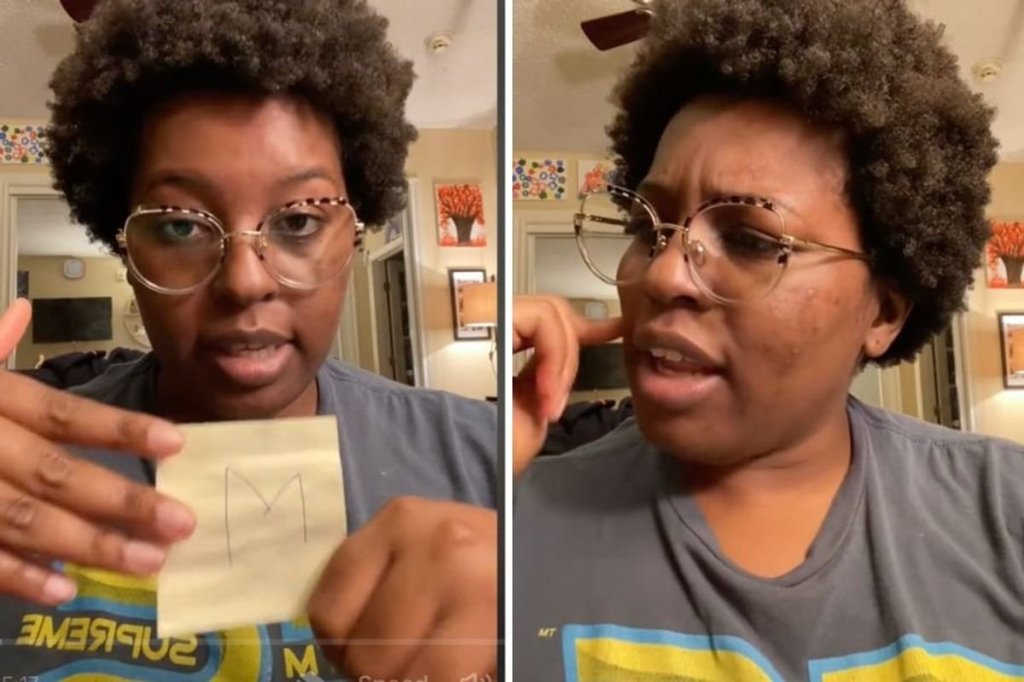
She then acts out that night, using a makeshift flashcard like she did to test Tia.
“I literally said, ‘What letter is this?’” Odion says while holding up the letter “M.” “She said something that’s not it. Put another one down. ‘What letter is this?’ She don’t know it.”
Still, the dad insisted that Tia knew her letters. Eventually, he blamed Tia’s older brother, who, despite only being a sixth grader himself, was “supposed to teach her.”
“It is not up to a child in elementary school, or middle school, or really any of your older kids, as someone who’s an older child… It is not up to the kids to teach younger kids,” Odion says in the clip.
Using another example, Odion states that a fifth grader in her class was reading at a kindergarten level and could only process basic sentences like “I see you” and “I like to see.”
In this instance, the students should be held back in order to fully learn the year’s curriculum. But Odion argues that parents fight against it “because they are more concerned about the optics of a child being held back than actually taking care of the child’s needs.”
Why holding kids back is not a simple solution
While the research shows that holding kids back a grade does improve their academic performance by granting them more time, there are still significant pros and cons to consider. In other words, being held back might not be the best solution for every struggling child. The biggest point Odion seems to be trying to make is that in addition to teachers and administrators, parents need to be more proactive in their child’s education.
“Parents, y’all can’t be backseat drivers about your child’s learning. You have to help reinforce it at home. You put a kid in front of that phone or iPad whenever they come home, it better be on YouTube, and it better be learning about letters and sight words. You can’t tell me you can’t read to the kid. It takes 10 minutes to read to the kid. No one is that busy,” she concludes.
This article originally appeared two years ago. It has been updated.