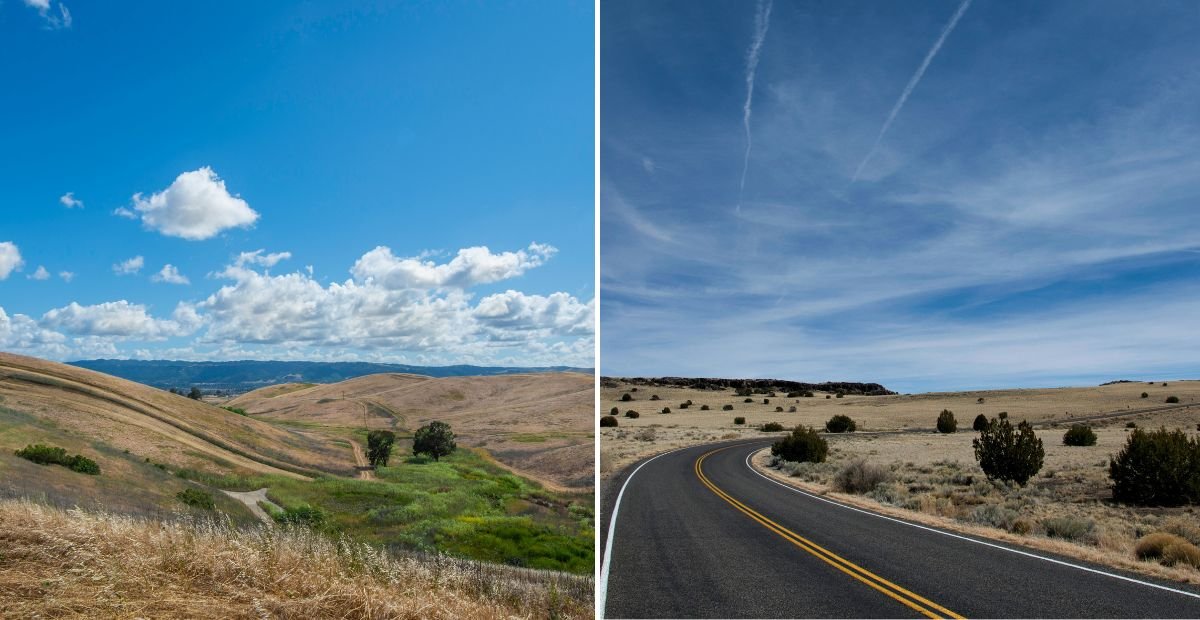
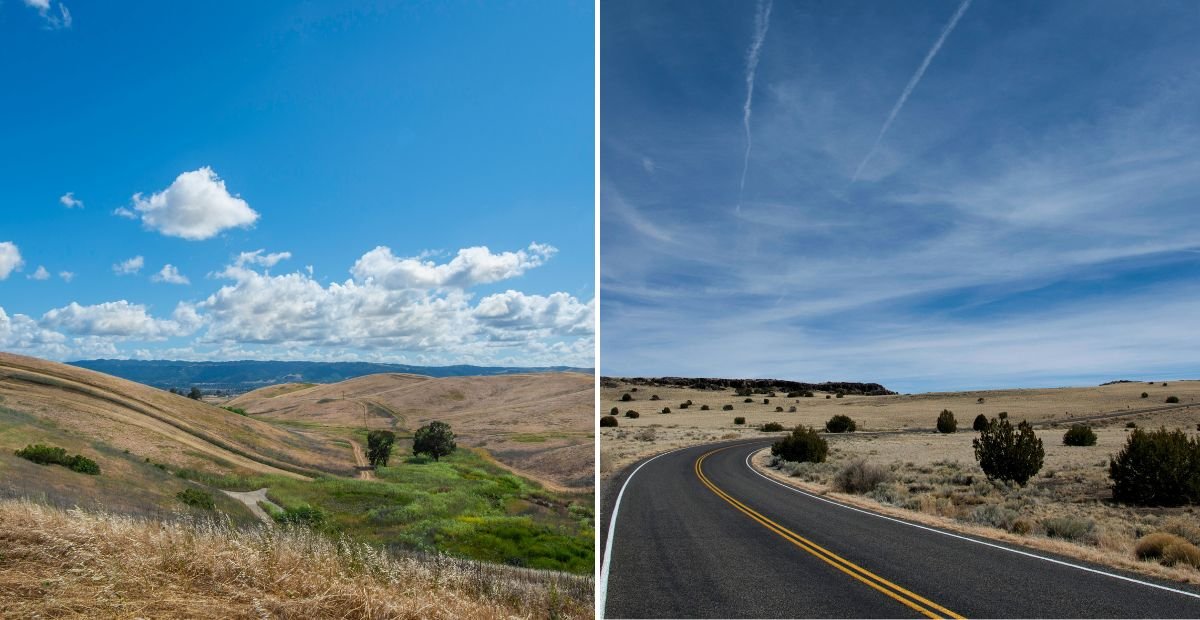
Have you noticed that clouds are looking a bit different than you remember them when you were younger? Less fluffy and more wispy? Fewer billowing clouds against a bold, blue sky and more washed out skies with see-through cloud patterns?
There have always been different kinds of clouds, of course, but people are remarking that something seems to have changed, which has led to all kinds of conspiracy theories. Combined with the debunked theories about contrails being “chemtrails,” a whole new wave of suspicions about our skies is taking hold. Some people say it’s all in their heads, but others are insistent that the sky just isn’t the same.
There is a scientific explanation for why clouds might actually be changing, but not one that conspiracy-minded folks are going to like. It’s most likely due to climate change, as climate scientists predicted that these cloud changes would be coming years ago.
First, let’s look at the different kinds of clouds and where they form in the atmosphere. Those billowy, cartoon-like cumulus clouds we all enjoy are formed at lower altitudes, while the wispy cirrus or spotty cirrocumulus clouds that make the sky look washed out or mottled are formed higher up in the stratosphere. In reality, all different cloud types are common, but climate change is making those higher, wispier ones more common.
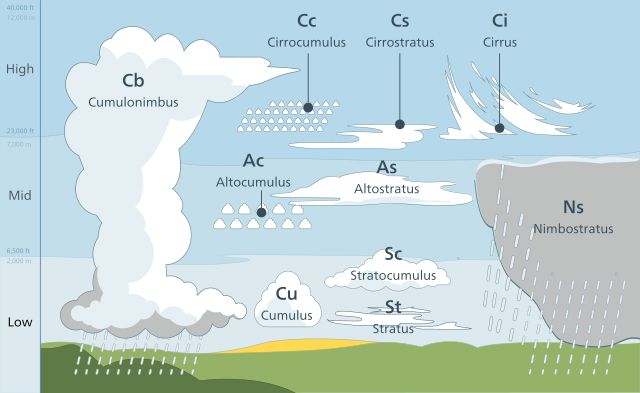
In 2016, Dr. Ilissa Ocko explained that models had predicted that climate change would push clouds higher in the sky and scientists were starting to see evidence of it happening. Ocko, who earned her Ph.D. and M.A. in Atmospheric and Oceanic Sciences at Princeton University, wrote, “A warmer Earth elevates clouds because the troposphere, the lowest layer of our atmosphere where weather occurs, can extend higher with a hotter surface.” As the
Not only are higher cloud formations an effect of climate change, but they also contribute to it. While clouds reflect the sun’s light, higher clouds also trap heat, potentially accelerating the warming of the planet’s surface. As Ocko explained:
“Anything that absorbs energy must also re-emit energy. How much is released depends on the temperature of the object.
Heat absorbed and then re-emitted by low clouds that are close to the ground is similar to the heat emitted by the surface because the temperature of the ground and the cloud are similar.
But the higher the cloud is in the sky, the colder it is. So when these high clouds absorb Earth’s heat, they re-emit it at a much lower temperature, forming a blanket that traps heat in the climate system similar to how greenhouse gases trap heat.”
So what we end up with, in theory, is a self-perpetuating issue of higher cloud formation both being propelled by and amplifying climate change.
However, the science is still very much in flux when it comes to clouds and climate change. Predictive models aren’t perfect, and some phenomena scientists expected have played out differently in real life, both for better and for worse. For instance, more recent research shows that trade cumulus clouds, which help cool the Earth, are affected less than expected by a warming atmosphere. That’s good news. On the other hand, scientists have also found that mixed-phase clouds, which were predicted to have a dampening effect on climate change, don’t help as much as they thought, especially when temperature rise accelerates. That’s not good news.
There are a lot of cloud-climate change connections and scientists are continuously looking for clues and possibilities for how clouds can help or hinder our efforts to battle the climate crisis.
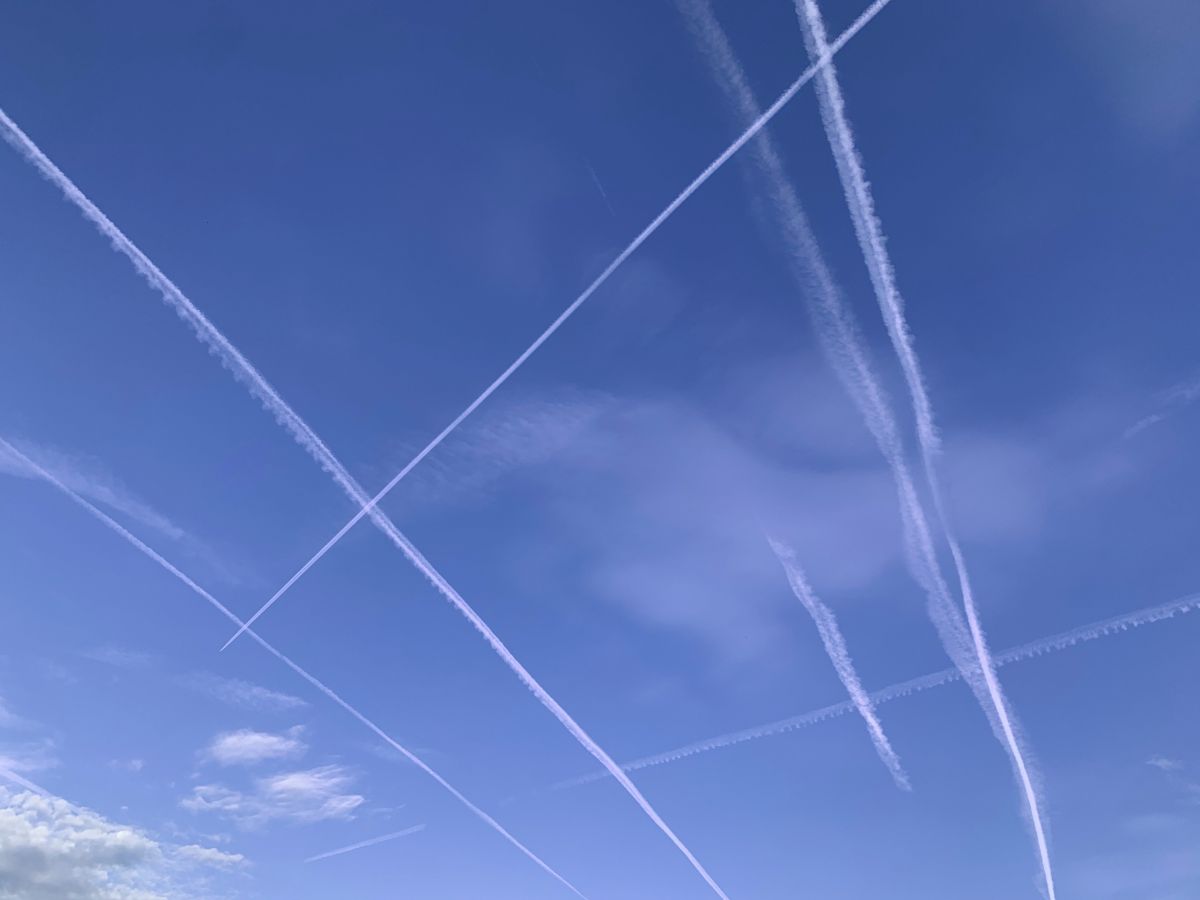
But what about the contrails that some folks erroneously call “chemtrails”? Despite being a well-known phenomenon of clouds formed from the condensation of a jet’s exhaust, they too play a role in climate change. Contrails form when the humidity and temperature the plane is flying through are right (cold and humid), and the troposphere where modern planes fly provide tend to provide those conditions.
While contrails aren’t some big government conspiracy to drop toxic chemicals on the unsuspecting populous, they aren’t harmless. Some contrails dissipate quickly, but under certain atmospheric conditions, they can linger and spread out to create those wispy clouds that trap heat in the atmosphere. Some estimates cite contrails as being responsible for more than a third of the total aviation contribution to climate change.
Thankfully, the aviation industry is testing ways to best reduce contrails, including flying at different altitudes. There are tradeoffs with fuel consumption, so a balance has to be struck, but as we learn more there will surely be more innovations that help.
The bottom line is that yes, clouds may actually be different from what we remember in our youth, but it’s not because of anything nefarious or suspicious. It’s most likely what scientists have seen coming for years and we are now seeing the effects of—climate change. All the more reason for us to take action to slow it down now.