upworthy
Add Upworthy to your Google News feed.
Google News Button
More

Study reveals how implicit bias affects pedestrians of color walking on the road.

A fascinating look at driver psychology.

race, danger, walking, safety, perception
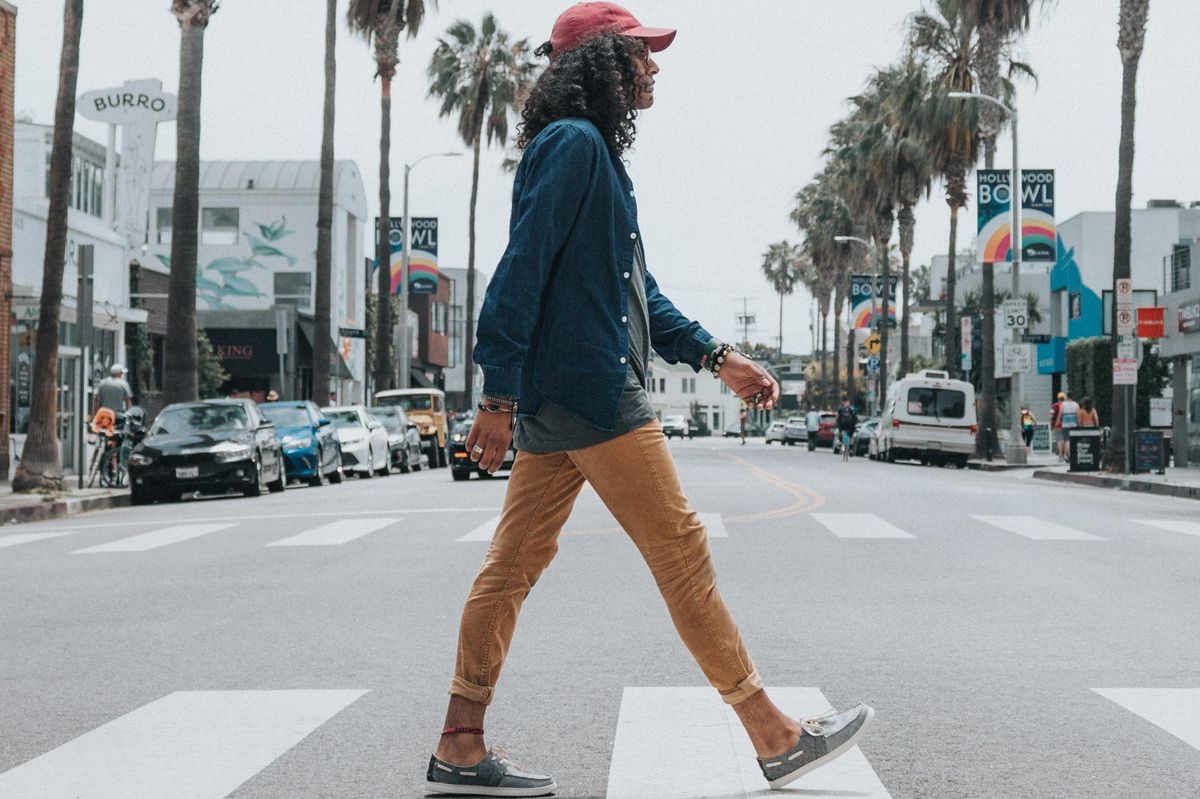
Photo by Tyler Nix on Unsplash

A person of color uses a crosswalk.

You missed a study that illuminates the very real dangers of literally "walking while black."

In addition to rogue police officers targeting people of color on the street, a study from Portland State University found that drivers are less likely to stop for black pedestrians.

The study, a follow-up from one conducted in 2014, administered tests using identically dressed black and white volunteers attempting to cross the same intersection. The 2014 study revealed black male pedestrians waited 32% longer than white male pedestrians for cars to stop. The 2017 research expanded on these tests to include black and white women and marked versus unmarked crosswalks.


When the crosswalk was unmarked, the stopping rate was relatively low across the board, regardless of race or gender — and regardless of Oregon law. However, when zebra stripes were added to the crosswalk, drivers were more likely to stop for white pedestrians, regardless of their own race or gender. In these marked crosswalks, cars stopped for white pedestrians 57% of the time and black pedestrians 44% of the time.
crosswalk, pedestrians, victims, disparity

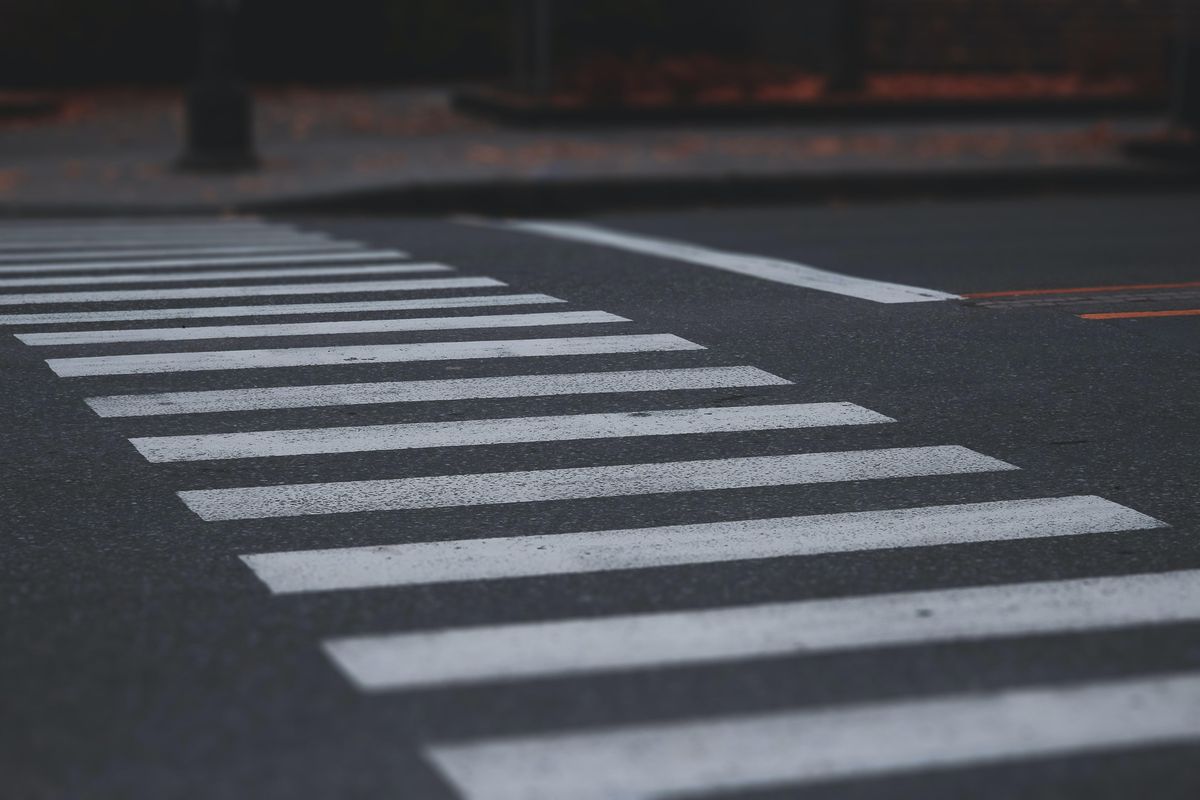
Using a crosswalk has some unwanted inherit risks.

Photo by Sigmund on Unsplash

And the drivers who did stop for black pedestrians tended to crowd the crosswalk, giving black pedestrians less room to cross safely.

The researchers also measured where drivers stopped for pedestrians. A driver stopping on or before the stop line is more than 10 feet away from the intersection, giving the pedestrian ample room to cross. When the pedestrian was a black male, drivers stopped after the stop line in 71% of the trials. For black women, it was 67%.

When the pedestrians were white men or women, the drivers stopped before the line 52% and 55% of the time, respectively.

Yes, you're reading this data correctly — the very tool meant to keep all pedestrians safe is generally effective only when the pedestrians are white.
responsibility, car safety, fatalities, people of color

safe space, respect, bias, studies

Photo by Erik Mclean on Unsplash

Studies like this don't necessarily mean everyone behind the wheel is racist. But it's likely that implicit biases are at work.

Since the race and ethnicity of the driver had little effect on whether they yielded to pedestrians, it's unlikely that they're driving around with malicious intent to injure or harm pedestrians of color. However, subconscious and implicit biases — aversions, preferences, or attitudes that we prescribe to certain people or communities without even realizing it — are real and powerful. When we have to make quick decisions, our brains often rely on these implicit biases, which can have unintended (even deadly) consequences.

"Driving is a situation where you're processing a lot of information," Kimberly Kahn of the Transportation Research and Education Center at Portland State University told The Oregonian. "It's in those situations where the most subtle and implicit biases can impact decision-making."

Some of these implicit biases may be why people of color are overrepresented when it comes to pedestrian fatalities.

In 2014, nearly 5,000 people in the U.S. were killed while walking. Non-white individuals are approximately 35% of the U.S. population but make up just over 46% of pedestrian deaths. Some of this can be attributed to the higher prevalence of pedestrians of color and the way certain streets and neighborhoods are designed with minimal safe crossings. However, even controlling for these factors, a disparity persists — it's simply not safe to walk in some neighborhoods.

But there are ways to combat both unsafe walking conditions and our own biases.

Increasing the number of drivers stopping for pedestrians across the board will inherently improve the number of drivers stopping for people of color. This means pushing local leaders for better crosswalk signage and street marking. It's also important to implement smart design, investigate where pedestrians are most at risk for being struck, and consider what measures can be put in place to slow cars or change traffic patterns.

And it's crucial that we work on our own implicit biases, first by acknowledging that they exist. It can be difficult to take a good hard look at why we think the way we do, but by examining our own preconceived notions and attitudes, we can make great strides toward dismantling or changing them.

This article originally appeared on 11.01.17
ups, ups driver, delivery driver, ups deliveries, cookout, family, food, hospitality, kindness
Relaxed008/YouTube
UPS driver invited to family's cookout.

UPS drivers are always on the grind delivering packages around the clock—even on holidays. And one family took notice of the hard-working UPS driver in their neighborhood who had his nose to the grindstone as they enjoyed a cookout together. Rather than simply let him pass by, they decided to flag him down and extend an invite to join them in a move that proved community and hospitality are still alive and well.

TikToker @1fanto shared a touching video with his followers from Easter weekend where his family invited a UPS driver making rounds in their neighborhood to come to their cookout and 'make a plate.'


"Everybody family around here 😭," he captioned the video. "Everybody invited to the cookout.😂"

@1fanto

Everybody family around here 😭 #easter #cookout #wherethefunction

In the video, the UPS driver is seen standing in the family's driveway, and a group of cookout attendees warmly welcome him to join them. The uncle of @1fanto says to the driver, "You've been working hard all day man, you can go on in there!" He calls out for a woman named Stephanie to "take care of him!"

The UPS driver walks up the driveway, and they encourage him to go inside and get his fill as he enters the garage. After securing a plate of food and a drink, the driver walks back outside to mingle with guests, shaking hands with the uncle who invited him.

"You good?" the uncle asks, and the driver responds, "Yeah I'm good. They hooked me up. Thank you so much. Appreciate y'all for inviting me out." On his way back to his truck, the uncle encourages the driver to invite other workers to stop by as well.

- YouTube www.youtube.com

In a follow up video, @1fanto explained more about how the invite went down. He shares that the UPS driver was driving by the family's house on the Saturday before Easter, and at the time the family was enjoying a big fish fry cookout together. His uncle flagged the driver down, and he pulled over.

He shares that his uncle told the driver, "Go inside and get you a plate!" The driver asked him, "Are you sure?" But he reassured him, adding that the family made sure to ask the driver what he wanted and didn't want on his plate to "make sure he was good and got everything he needed".

"I saw it had a positive impact. That's what my family do. That's not something that we just do for social media," @1fanto shared. "That's something that we do on a regular basis that doesn't just happen when the camera's on. It happens when the camera's off, too. We're all equal. We all bleed the same."

ups, ups truck, united parcel service, ups delivery, ups deliveries, ups driver A UPS truck with package deliveries.Image via Wikipedia

Viewers had lots of positive things to say in the comment section.

"I am a UPS driver and that makes our day. People showing love to us"

"Your family represents the best of America🫶🏼 Your uncle is now all of our uncle."

"Working the holidays suck. But they made that man’s entire day. Love it."

"I love when people are nice for no reason. You’re so real ♥️thank you for being so kind."

"Being a delivery driver is grueling, often thankless work. It's awesome to see a family that remembers those hardworking folks are essential parts of our communities."

This article appeared last year. It has been updated.

americans, american flag, american body language, cia, cia body language

Americans are known to do this body language gesture, according to the CIA.

Americans have unique body language and gestures that set them apart from other countries and cultures. These American quirks—such as pointing and eating while walking—are easily picked up by non-Americans who are quickly able to identify us.

Besides a certain demeanor, other American indicators include clothing choices like backwards baseball caps and wearing sunglasses on one's head.


According to Jonna Mendez, the Central Intelligence Agency's (CIA) former Chief of Disguise, there is one specific posture that has been deemed a dead giveaway of an American identity. It's called the "American Lean."

@magni.fy

Only Americans Do This #travel #funfacts #culture #USA #bodylanguage The "American lean" is a cultural quirk where people from the U.S. instinctively lean on walls, railings, doorframes, or furniture when standing in public. It’s casual, relaxed, and often signals comfort in occupying space... but where did it come from?

American body language identifiers

In a 2019 interview with NPR, Mendez and former Director of the CIA, Gina Haspel, explained more about how American body language differs from European body language.

"They wear their wedding rings on different fingers. They eat differently than we do. They don't shuttle that fork back and forth," she explained.

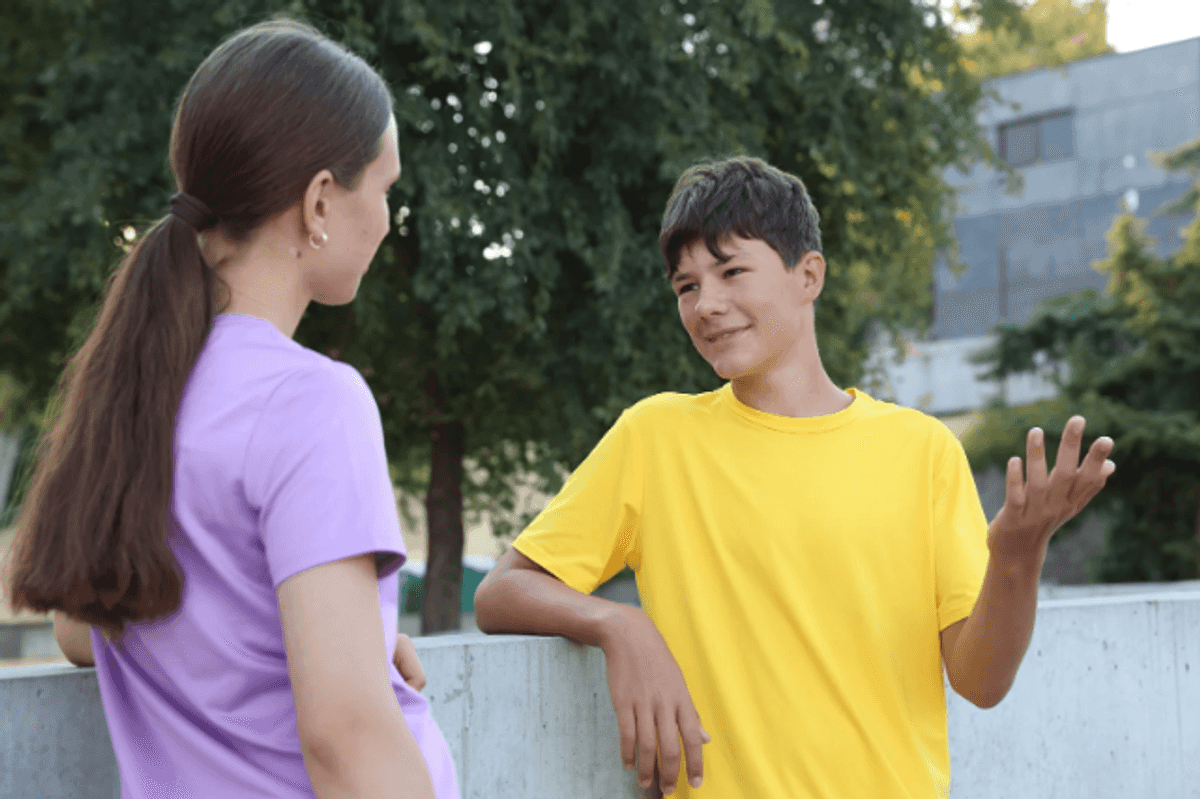
Haspel also commented on Mendez's description of the "American Lean," adding, "They think that we are slouchy, a little sloppy. And they think that they can almost see that in our demeanor on the street because they stand up straight. They don't lean on things."

Mendez expanded on American appearance and body language during an "Ask Me Anything" interview on Reddit.

"More broadly, generalizing (and it is always a little dangerous to generalize) Americans are seen as a bit more casual in their dress on the street than other nationalities. Casual might be too soft a word. Sloppy? Nobody else seems to be wearing sweatpants and shirts on the streets," she explained. "We are also thought to be loud, for instance you can identify the group of Americans in front of the tourist office by the noise that they make. We are not disparaged everywhere, but we do tend to stand out."

- YouTube www.youtube.com

Why Americans do the "American Lean"

On Reddit, curious Americans tried to explain their leaning habits. Many offered their opinions:

"Idk why it’s an American thing, but I’m American and I lean on things because I feel uncomfortable and awkward all the time and having a third point of grounding (2 feet + shoulder/back) is more comfortable." - a_sternum

"American and I've gotta lean on everything because every job I worked was aggressively against us sitting in case the customers saw us comfortable [I guess]? There's a weird notion that sitting equals lazy." - pickleruler67

"Not allowed to sit at work so we tend to lean against things. The phrase 'time to lean, time to clean' is also very prevalent. We're not okay btw." - W3R3Hamster

"idk but apparently it's enough of a thing that my school advised us to not do it while studying abroad so as not to make ourselves targets as tourists/foreigners/Americans 😅." - uhhwhatamidoing

"1) Americans are less formal in most situations, good posture is less emphasized. 2) It’s cool.. think James Dean or fashion models. 3) Laziness." - No-Oil-1669

Others explained how different cultures "rest" in different positions.

"Drive down the street in South Korea and you see folks squatting instead of leaning," one shared. Another added, "The Slavic squat is an alternative."

Gen Z; Millennials; technology; cell phones; social media; teens and technology; teens social media

Gen Z is the first generation less cognitively capable than their parents. Denmark has the solution.

Nearly every parent hopes their child will be better off than they are: smarter, more secure, and more well-adjusted. Many parents see this as a stamp of successful parenting, but something has changed for children growing up today. While younger generations are known for their empathy, their cognitive capabilities seem to be lagging behind those of previous generations for the first time in history.

Dr. Jared Cooney Horvath, a teacher turned cognitive neuroscientist who focuses on human learning, appeared before Congress to discuss concerns about cognitive development in children. In his address to the members of Congress, he says, "A sad fact that our generation has to face is this: our kids are less cognitively capable than we were at their age. Since we've been standardizing and measuring cognitive development since the late 1800s, every generation has outperformed their parents, and that's exactly what we want. We want sharper kids."


kids, intelligence, sharp kids, generations, education, cognitive abilities Student smiling in a classroom, working on a laptop.Photo credit: Canva

Horvath explains that the reason this happens is that each generation has gone to school longer than the previous generation. Gen Z is no exception to the longer duration of time spent in school, but they're the first ones who aren't meeting this normal increase in cognitive development. According to the cognitive neuroscientist, the decline is due to the introduction of screens in the classroom, which started around 2010.

"Across 80 countries, as Jean was just saying, if you look at the data, once countries adopt digital technology widely in schools, performance goes down significantly. To the point where kids who use computers about five hours per day in school for learning purposes will score over two-thirds of a standard deviation less than kids who rarely or never touch tech at school," Horvath reveals.

In most cases, the decline in performance doesn't result in better strategies. The neuroscientist shares that the standardized testing has been adjusted to accommodate lower expectations and shorter attention spans. This is an approach that educators, scientists, and researchers went to Capitol Hill to express wasn't working. But not every country is taking the approach of lowering standards to meet lowered cognitive ability. Denmark went in the opposite direction when it realized their students were slipping behind.

France24 recently interviewed educators in Denmark following their seemingly novel approach to students struggling with cognitive development. Since the beginning of the 2025/2026 school year, Denmark has not only been having students turn in their cellphones, but they've also taken tablets, laptops, and computers out of the classroom. No more digital learning for the majority of the school day. Danes went old school by bringing back physical textbooks, workbooks, and writing assignments. The results have been undeniable. Even the students can't seem to deny the success of the countrywide shift in educational approach.

"I think the biggest issue has been that, because we kind of got rid of the books and started using screens instead, that we've noticed that a lot of the kids have trouble concentrating, so it's pretty easy to swipe with three fingers over to a different screen and have a video game going, for example, in class," Copenhagen English teacher, Islam Dijab tells France24.

Now, instead of computers being part of every lesson, Denmark uses computers very sparingly and with strict supervision. One student says that it has been nice not having screen time at school because she loves to read and write. But it wasn't just the lack of attention span children were developing, they were also developing low self-esteem and poor mental health due to the amount of time spent on devices.

kids, intelligence, sharp kids, generations, education, cognitive abilities Students focused and ready to learn in the classroom.Photo credit: Canva

The data showing the negative impact of screens on teens' brains has prompted a nationwide change in Denmark that extends outside of the classroom. Afterschool activities are eliminating or extremely limiting electronic use. There is also a national No Phone Day that encourages everyone to put away their devices for the day, and Imran Rashid, a physician and digital health expert, is petitioning parliament to ban social media use for children under the age of 15. The no phone movement in Denmark is a nationwide effort that hopes to right the ship before another generation feels the effects.

Matthew McConaughey, Dazed and Confused, 90s movies, ted danson, ted danson podcast, woody harrelson, movies, pop culture

Matthew McConaughey in Dazed and Confused (1993)

One might not call David Wooderson from Dazed and Confused a wholesome character. Iconic? Timelessly quotable and effortlessly cool? Sure. But wholesome? That’s a stretch. And yet, the childhood memory that helped Matthew McConaughey create that star-making role is just that: wholesome.

While appearing on the Jan. 7 episode of the Where Everybody Knows Your Name podcast hosted by Ted Danson and Woody Harrelson, McConaughey shared how he actually landed the role, and it’s about as classic a Hollywood story as you can get.


Apparently, one of McConaughey's film school classmates worked as a bartender for the rooftop bar at the Hyatt. One night, McConaughey went to visit this friend, who informed him that casting director Don Phillips was sitting close by.

McConaughey went over to talk to Phillips, and the two hit it off. Perhaps a little too well, because, McConaughey recalls, “Three and half hours later, we get kicked out” after a conversation about golf led to Phillips hopping onto a table to demonstrate his swing.

- YouTube www.youtube.com

While sharing a cab home, Phillips asked McConaughey, “Hey, you ever done any acting?” to which he answered honestly: “I said, ‘Yeah, I was in a Miller Light commercial. I don't know if you consider that acting. Maybe it was more of a modeling job.’ ”

Still, Phillips thought he “might be right” for the role of Wooderson in a Richard Linklater coming-of-age film titled Dazed and Confused. Knowing only that the character was someone “out of high school, but he still likes the high school girls,” McConaughey showed up at 9:30 a.m. the next morning to a script and a handwritten note that read, “Hey, Matthew, great night last night. I read this part. You might be right for it.”

Skimming the script, McConaughey found that now-immortal words, “That's what I love about them high school girls, man. I get older, but they stay the same age.” He instantly knew that was a “launchpad line.”

During the two weeks leading up to the audition while McConaughey was “trying to figure” the true spirit of his character, he was struck by a memory of picking up his older brother Pat from school with his mom while his car was at the shop.

“We're driving through the campus and I'm looking out the back end of that wood-paneled station wagon. I'm looking for Pat. . . . And as we’re going by, about 200 yards away, I see this shadowed figure leaning against the shady wall in the smoking section,” McConaughey recalled.

He continued, “I can see the ember of this lazy finger cigarette hanging on these two hands. This guy's leaning against the wall with his left leg, boot heel up against the wall, smoking. And I went, it’s my brother.” Not wanting his big brother to get in trouble for smoking, little McConaughey let his mother keep driving. Somehow, Pat got home on his own.

“In my 10-year-old eyes, my 17-year-old brother, who was my hero, in that shot from 200 yards away, he was cooler than James Dean. He was 9 feet tall. He was the coolest man. Now, that's who I based Wooderson on,” McConaughey gushed. “That wasn't who my brother was, but that, in my 10-year-old eyes, that's who it was.”

Matthew McConaughey, Dazed and Confused, 90s movies, ted danson, ted danson podcast, woody harrelson, movies, pop culture Matthew McConaughey and Shawn Andrews in Dazed and Confused (1993)Facebook

From that point, McConaughey had a solid anchor. When he showed up for the audition, he was ready. He even improvised everyone’s favorite “Alright, alright, alright” line. When Harrelson and Danson asked if McConaughey ever tires of people saying it to him, he replied with an adamant, “Hell no.”

It’s always amazing to hear what tiny spark sets off someone’s creativity, isn’t it? What a great reminder that life provides an endless supply of inspiration.

Watch the full episode of Where Everybody Knows Your Name below:

- YouTube www.youtube.com

biscuit, biscuits, british biscuit, cookie, american biscuit

British people call cookies "biscuits," which are different from what Americans call biscuits.

Although we both speak English, British people and American people have different words for certain things. One major difference is the word "biscuit."

For British people, "biscuit" is used to describe what Americans call "cookies." One curious American on Reddit posed the question: "what do British people call biscuits?"


The simple question led to an entire discourse on British baked goods, and Brits offered their best explanation on how they define them.

- YouTube www.youtube.com

First things first: the Brits on Reddit made it clear that they also have cookies.

"All cookies are biscuits, but not all biscuits are cookies. To British people, a cookie is a specific type of biscuit," one Redditor explained.

Another Brit broke down the difference between what they consider a "biscuit" and "cookie": "We have shaped, mostly flatter, slightly harder biscuits (like nice biscuits, tea biscuits, and things like custard creams that are two biscuits with a sweet filling), but we do also have cookies that are what comes to mind when you think of cookies," they shared. "The softer, not form shaped, irregular circular cookies with chocolate chips etc."

@british_ash_

Cookie vs Biscuit 🍪 In the UK a cookie is a particular type of biscuit with a high butter and sugar content so the dough melts during cooking giving a crispy edge with a softer centre. All cookies are biscuits BUT not all biscuits are cookies 🍪 In America, biscuits are sinilar to UK scones 🍪 #learnenglish #englishteacher #studyenglish #visituk #london #biscuit #cookie

British 'biscuits' vs. American 'biscuits'

So, what do Brits call those flaky biscuits Americans douse with gravy? Unfortunately, these type of biscuits don't really exist in Great Britain.

"We actually don't have a version of the American biscuits here, nor (as far as I am aware) the white gravy with the sausage meat. We have some white sauces, but we don't do white gravy as a standard, nationwide thing," one British Redditor explained. Another added, "American biscuits are unknown outside of North America. Most Britons have likely never eaten one."

However, British scones are very close to American biscuits. "People are saying scones and the biggest difference between the two is texture and ratio of ingredients. Scones have less butter and are usually more dense. Biscuits have more butter and have buttermilk creating more levity," one Redditor explained.

Another added, "I had a classmate who came from Britain and he once called them 'butter/cheese scones'. And I was like these things are nothing like scones. And he was like, 'It's a quick bread using baking powder as the leavening. The difference is it's savory'. And I was like........ Okay fine."

However, another Brit argued that American biscuits are more like British dumplings.

"The nearest thing to the US biscuits are savoury British dumplings which are often made from suet and used in casseroles," they shared.


@seasonedbf

It’s been years and we still can’t get “IT’S BISCUITS” out of our head @VICTOR KUNDA #seasoned #ukvsusa #popeyes #onthisday

So what do British people call biscuits?

It may be underwhelming, but the consensus is: "American biscuits."

"'American biscuits' … 'they really eat them with gravy?' Most Brits who have heard of American style biscuits are aware that they aren’t scones but unless they’ve actually tasted them tend to have difficulty conceptualizing the difference," one British Redditor explained.

Another added, "I lived in England for 13 years. They have no idea what an American biscuit is. It simply does not exist over there. I looked. It’s like asking an American what we call Haggis."

This commenter clarified: "We probably call American biscuits - 'American biscuits' because we don’t have an equivalent here. Like how we do with American football."