It’s funny how once something sort of abstract experience gets a name attached to it, it suddenly becomes much easier to relate to and talk about. The internet—and primarily TikTok—has been great for that. Sure, things get out of hand quite easily (like the overuse of “therapy speak”) but there has also been quite a lot of validation and meaningful conversations that have spawned from these overnight buzzwords.
“Gramneisa,” which combines the words “grandparent” and “amnesia,” has been popping up on Reddit discussions for a while now, though the coiner of the term seems unknown. But only recently has it been really gaining traction.
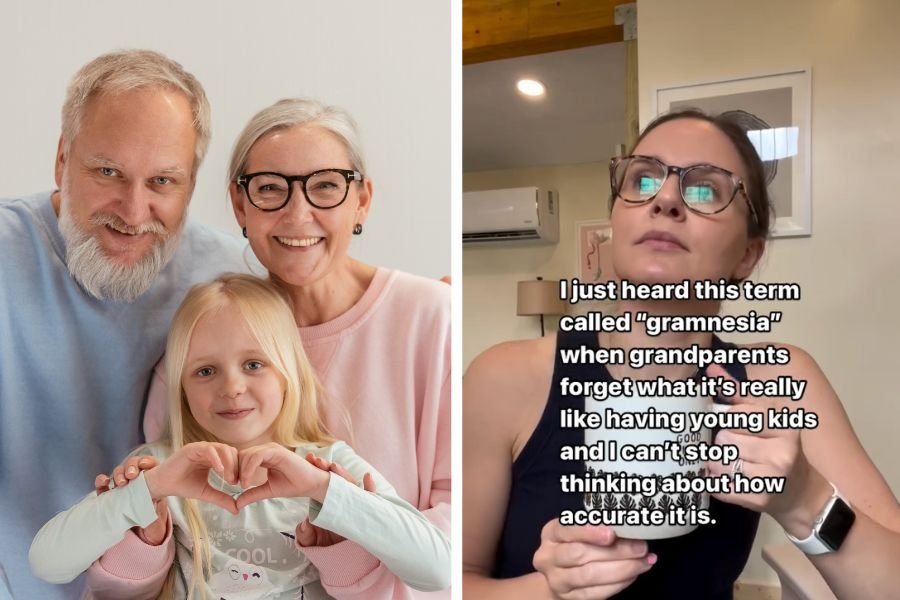
Back in June, Maryland-based therapist and mom Allie McQuaid, really brought “gramnesia” to the forefront of the conversation when she made an Instagram video all about it.
“I just heard this term called ‘gramnesia’ when grandparents forget what it’s really like having young kids and I can’t stop thinking about how accurate it is,” she said in the clip.
And then in her caption, McQuaid shared how so many of her clients would get “slammed” by their parents about how different (i.e. “easier”) raising kids was for them whenever they brought their own children around.
These hyperbolic memories are, as McQuaid put it, so “ridiculous” that they’re clearly “forgot[ten] what it was really like in those early years of parenthood.”
Some example of “gramnesia” statements could be:
“You never had tantrums when you were a kid”
“I potty trained you before you were one”
“You were always happy to eat whatever we fed you.”
“You were spanked and turned out fine!”
Clearly, Mcquaid’s video struck a chord, because it wasn’t long before people begin chiming in with their own stories of gramneis.
“My MIL, over the years, loved to act like her children were perfect growing up. I love to tell the stories of her son (my hubby) getting into all kinds of trouble as a kid – oh the shock.”
“*Baby makes any kind of noise* Grandma: “Oh they must be teething!” Me : “Umm she’s 4 months old, She isn’t teething yet – just has feelings and is you know – A BABY” grandma: ‘well my kids had all their teeth by 4 months’ ”
“5 months old and not sleeping through the night? Did you try rice cereal? Baby not walking ? Rice cereal. Baby not in college yet? Have you tried rice cereal?”
“Ugh my dad literally just said this to me last week… ‘I don’t remember you guys having this many tantrums’… right after my boys were upset.”
Mcquaid posited some theories as to why gramnesia exists in the first place.
One could simply be the natural tendency to have a cognitive bias which puts past experiences in a more positive light than they actually were, aka having “euphoric recall.”. As she told Huffpost, we tend to have a “foggier memory of how things truly were” as we get older, “especially if the experience we had was particularly difficult or even traumatic.”
Plus, the first few years of parenthood are often such a blur anyway. Mcquaid herself admitted that I” I even have a hard time remembering the first year of motherhood, and that was only four years ago.”
In addition, Mcquaid theorized that a gramnesia exists because previous generations “were not given space to express emotions or indicate that they were struggling to adjust to motherhood.” Honestly, a sound hypothesis.
And for the frustrated folks itching to confront their boomer parents about this, Mcquaid suggests picking your battles.
“Check your capacity if you have the space or energy to even consider bringing up your frustration with your parents,” she told Huffpost. “You are likely in the throes of parenting right now, and maybe all you can do is smile and nod after hearing for the 100th time how ‘you were never like this.’”
However, if you are determined to bring it up, Mcquaid suggests to keep it centered around you the situation makes you feel, rather than combating their memories. So instead of “that’s NOT how it happened!” try something like “When you said that I never did X when I was Y’s age, it makes me question how well I’m doing as a parent.” Probably easier said than done, to be sure.
And while this sore spot might never come to a full resolution for a lot of millennial parents, at least take some solace in knowing that you’re not crazy, nor are you alone. Clearly.
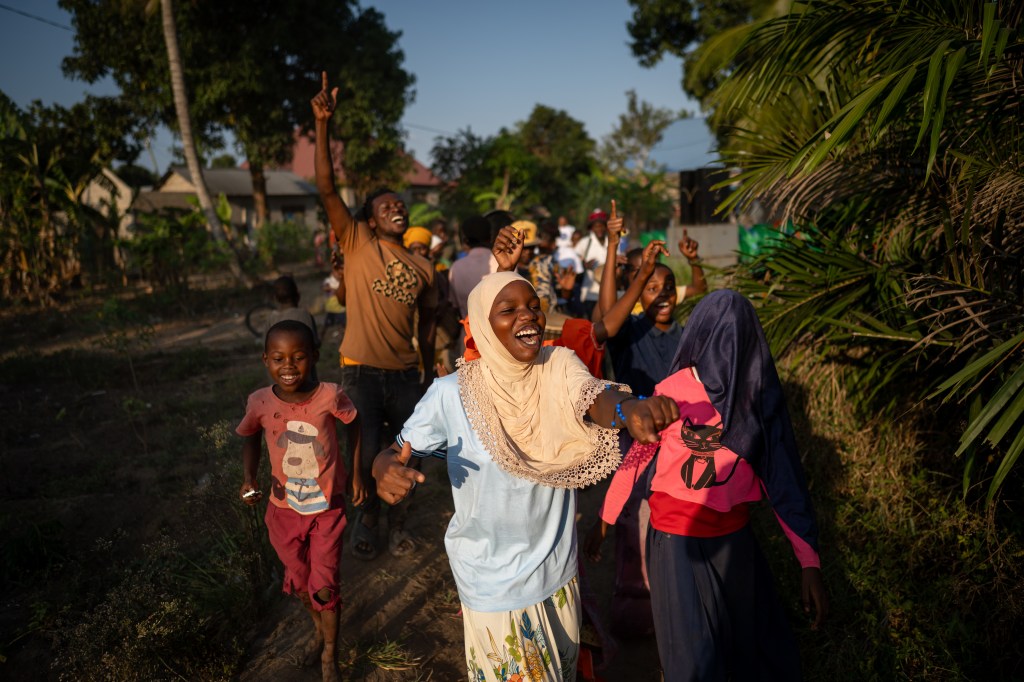
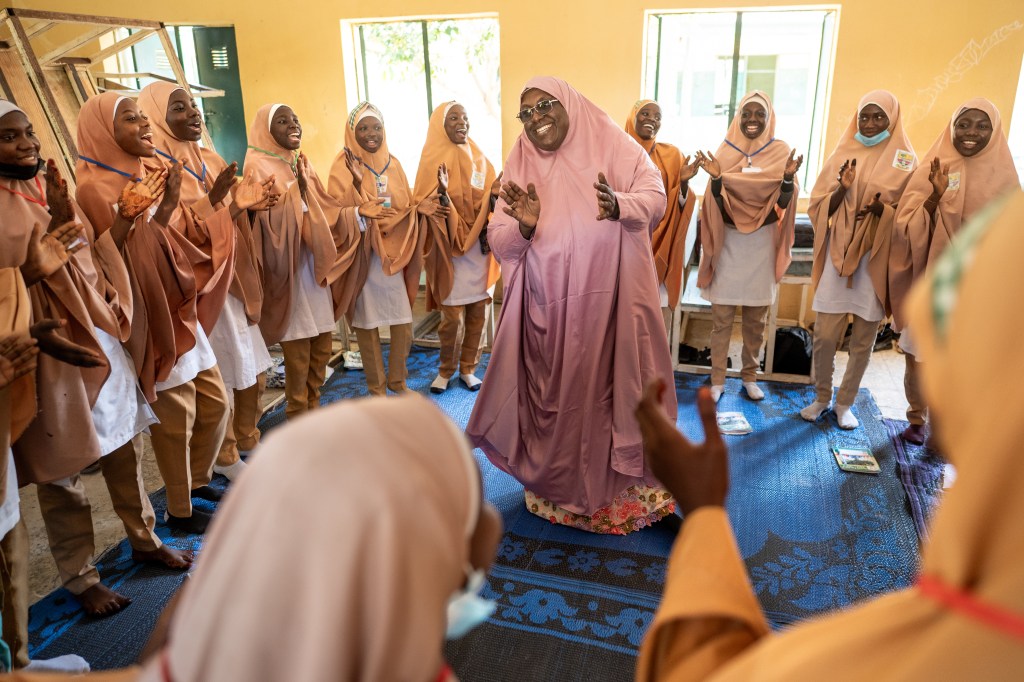
In a small village in Pwani, a district on Tanzania’s coast, a massive dance party is coming to a close. For the past two hours, locals have paraded through the village streets, singing and beating ngombe drums; now, in a large clearing, a woman named Sheilla motions for everyone to sit facing a large projector screen. A film premiere is about to begin.
It’s an unusual way to kick off a film about gender bias, inequality, early marriage, and other barriers that prevent girls from accessing education in Tanzania. But in Pwani and beyond, local organizations supported by Malala Fund and funded by Pura are finding creative, culturally relevant ways like this one to capture people’s interest.
The film ends and Sheilla, the Communications and Partnership Lead for Media for Development and Advocacy (MEDEA), stands in front of the crowd once again, asking the audience to reflect: What did you think about the film? How did it relate to your own experience? What can we learn?
Sheilla explains that, once the community sees the film, “It brings out conversations within themselves, reflective conversations.” The resonance and immediate action create a ripple effect of change.
MEDEA Screening Audience in Tanzania. Captured by James Roh for Pura
Across Tanzania, gender-based violence often forces adolescent girls out of the classroom. This and other barriers — including child marriage, poverty, conflict, and discrimination — prevent girls from completing their education around the world.
Sheilla and her team are using film and radio programs to address the challenges girls face in their communities. MEDEA’s ultimate goal is to affirm education as a fundamental right for everyone, and to ensure that every member of a community understands how girls’ education contributes to a stronger whole and how to be an ally for their sisters, daughters, granddaughters, friends, nieces, and girlfriends.
Sheilla’s story is one of many that inspired Heart on Fire, a new fragrance from the Pura x Malala Fund Collection that blends the warm, earthy spices of Tanzania with a playful, joyful twist. Here’s how Pura is using scent as a tool to connect the world and inspire action.
A partnership focused on local impact, on a global mission
Pura, a fragrance company that recognizes education as both freedom and a human right, has partnered with Malala Fund since 2022. In order to defend every girl’s right to access and complete 12 years of education, Malala Fund partners with local organizations in countries where the educational barriers are the greatest. They invest in locally-led solutions because they know that those who are closest to the problems are best equipped to solve and build durable solutions, like MEDEA, which works with communities to challenge discrimination against girls and change beliefs about their education.
But local initiatives can thrive and scale more powerfully with global support, which is why Pura is using their own superpower, the power of scent, to connect people around the world with the women and girls in these local communities.
The Pura x Malala Fund Collection incorporates ingredients naturally found in Tanzania, Nigeria, Pakistan, and Brazil: countries where Malala Fund operates to address systemic education barriers. Eight percent of net revenue from the Pura x Malala Fund Collection will be donated to Malala Fund directly, but beyond financial support, the Collection is also a love letter to each unique community, blending notes like lemon, jasmine, cedarwood, and clove to transport people, ignite their senses, and help them draw inspiration and hope from the global movement for girls’ education. Through scent, people can connect to the courage, joy, and tenacity of girls and local leaders, all while uniting in a shared commitment to education: the belief that supporting girls’ rights in one community benefits all of us, everywhere.
You’ve already met Sheilla. Now see how Naiara and Mama Habiba are building unique solutions to ensure every girl can learn freely and dare to dream.
Naiara Leite is reimagining what’s possible in Brazil
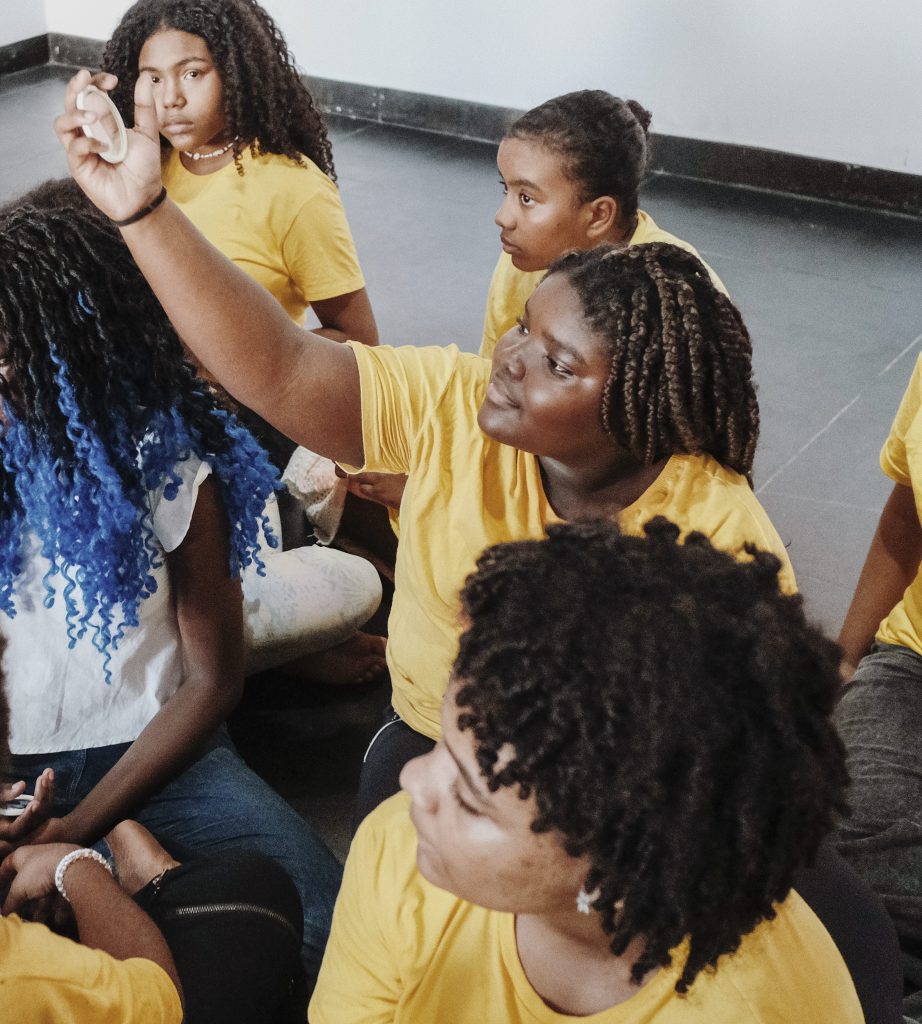
Julia with Odara in Brazil. Captured by Luisa Dorr for Pura
In Brazil, where pear trees and coconut plantations cover the Northeastern Coast, girls like ten-year-old Julia experience a different kind of educational barrier than girls in Tanzania. Too often, racial discrimination contributes to high dropout rates among Black, quilombola and Indigenous girls in the country.
“In the logic of Brazilian society, Black people don’t need to study,” says Naiara Leite, Executive Coordinator of Odara, a women-led organization and Malala Fund partner. Bahia, the state where Odara is based, was once one of the largest slave-receiving territories in the Americas, and because of that history, deeply-ingrained, anti-Black prejudice is still widespread. “Our role and the image constructed around us is one of manual labor,” Naiara says.
But education can change that. In 2020, with assistance from a Malala Fund grant, Odara launched its first initiative for improving school completion rates among Black, quilombola, and Indigenous girls: “Ayomidê Odara”. The young girls mentored under the program, including Julia, are known as the Ayomidês. And like the Pura x Malala Fund Collection’s Brazil: Breath of Courage scent, the Ayomidês are fierce, determined, and bursting with energy.
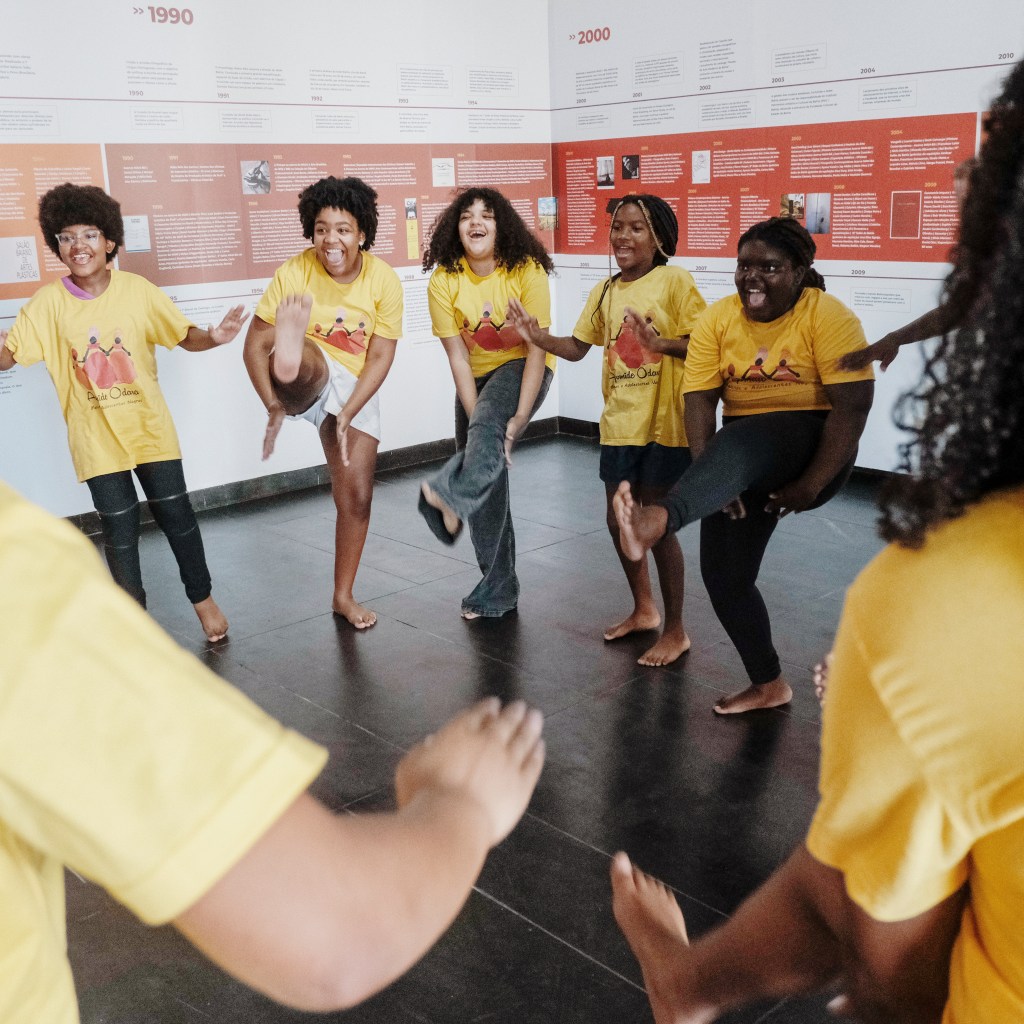
Ayomidês with Odara in Brazil. Captured by Luisa Dorr for Pura
Ayomidês take part in weekly educational sessions where they explore subjects like education and ethnic-racial relations. The girls are encouraged to find their own voices by producing Instagram lives, social media videos, and by participating in public panels. Already, the Ayomidês are rewriting the narrative on what’s possible for Afro-Brazilian girls to achieve. One of the earliest Ayomidês, a young woman named Debora, is now a communications intern. Another former Ayomidê, Francine, works at UNICEF, helping train the next generation of adolescent leaders. And Julia has already set her sights on becoming a math teacher or a model.
“These are generations of Black women who did not have access to a school,” Naiara says. “These are generations of Black women robbed daily of their dreams. And we’re telling them that they could be the generation in their family to write a new story.”
Mama Habiba is reframing the conversation in Nigeria
Centre for Girls' Education, Nigeria. Captured by James Roh for Pura
In Mama Habiba’s home country of Nigeria, the scents of starfruit, ylang ylang and pineapple, all incorporated into the Pura x Malala Collection’s “Nigeria: Hope for Tomorrow,” can be found throughout the vibrant markets. Like these native scents, Mama Habiba says that the Nigerian girls are also bright and passionate, but too often they are forced to leave school long before their potential fully blooms.
“Some of these schools are very far, and there is an issue of quality, too,” Mama Habiba says. “Most parents find out when their children are in school, the girls are not learning. So why allow them to continue?”
When girls drop out of secondary school, marriage is often the alternative. In Nigeria, one in three girls is married before the age of 18. When this happens, girls are unable to fulfill their potential, and their families and communities lose out on the social, health and economic benefits.
Completing secondary school delays marriage, and according to UNESCO, educated girls become women who raise healthier children, lift their families out of poverty and contribute to more peaceful, resilient communities.
Centre for Girls’ Education, Nigeria. Captured by James Roh for Pura
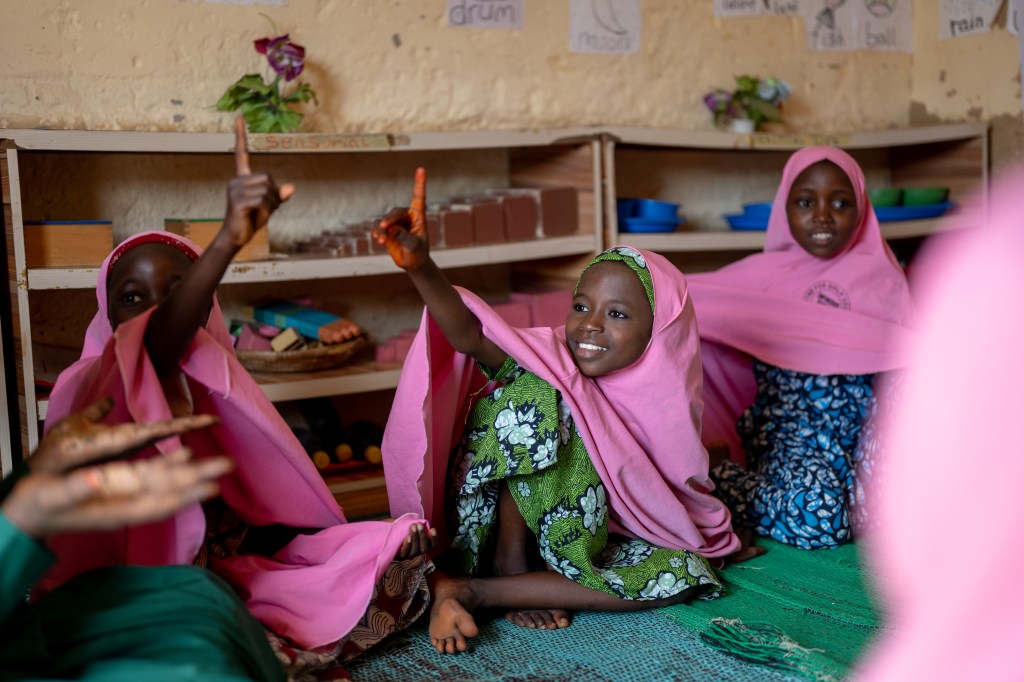
To encourage young girls to stay in school, the Centre for Girls’ Education, a nonprofit in Nigeria founded by Mama Habiba and supported by Malala Fund and Pura, has pioneered an initiative that’s similar to the Ayomidê workshops in Brazil: safe spaces. Here, girls meet regularly to learn literacy, numeracy, and other issues like reproductive health. These safe spaces also provide an opportunity for the girls to role-play and learn to advocate for themselves, develop their self-image, and practice conversations with others about their values, education being one of them. In safe spaces, Mama Habiba says, girls start to understand “who she is, and that she is a girl who has value. She has the right to negotiate with her parents on what she really feels or wants.”
“When girls are educated, they can unlock so many opportunities,” Mama Habiba says. “It will help the economy of the country. It will boost so many opportunities for the country. If they are given the opportunity, I think the sky is not the limit. It is the starting point for every girl.”
From parades, film screenings to safe spaces and educational programs, girls and local leaders are working hard to strengthen the quality, safety and accessibility of education and overcome systemic challenges. They are encouraging courageous behavior and reminding us all that education is freedom.
Experience the Pura x Malala Fund Collection here, and connect with the stories of real girls leading change across the globe.
Motivational speaker Jim Rohn is credited with the idea that each of us is the average of the five people we spend the most time with. The same could be said about the way we raise our kids. Each family has its own values, traditions and way of doing things, but we can’t help adopting…
Motivational speaker Jim Rohn is credited with the idea that each of us is the average of the five people we spend the most time with. The same could be said about the way we raise our kids. Each family has its own values, traditions and way of doing things, but we can’t help adopting certain norms from our neighbors and the culture that surrounds us.
That’s why it’s so fascinating to compare parenting in the United States with parenting in other countries around the world. Here are a few things American parents might be surprised to learn that parents and societies around the globe do differently:
1. No kids menus
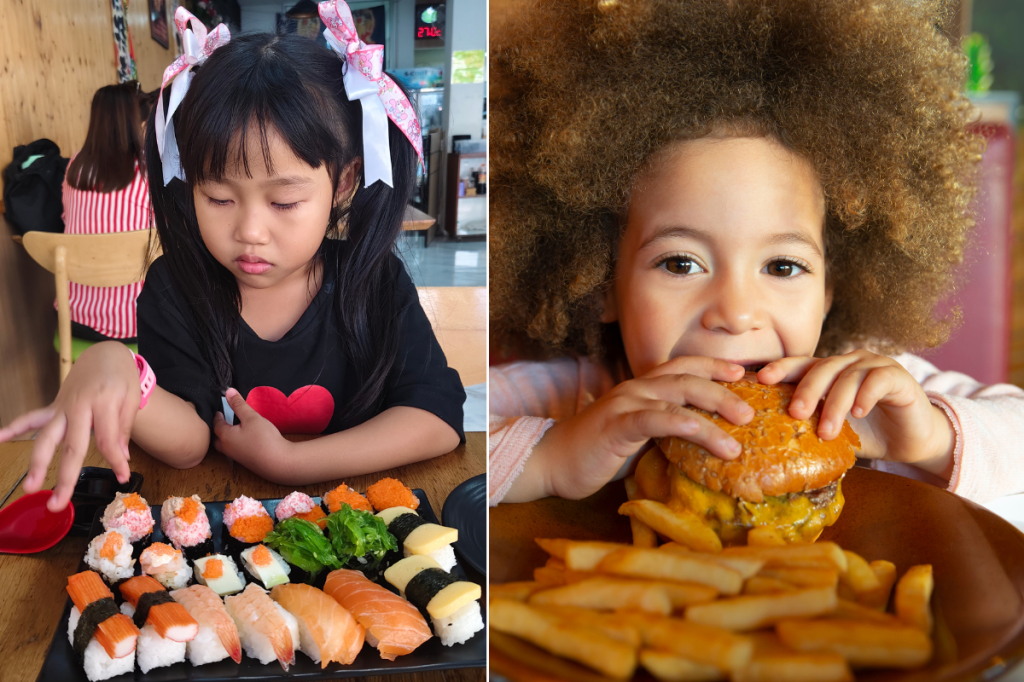
Most American restaurants feature an altered menu for children, usually with simple foods like grilled cheese, chicken nuggets, or cheeseburgers.
In many—perhaps even most—other countries, children are expected to eat smaller portions of what the adults are eating, even if it’s spicy or complex. In countries like Germany, many restaurants offer a menu item called a “robber’s plate,” an empty plate that allows kids to steal bites from their parents.
According to Pew Research, about 3.4% of American children are homeschooled. That’s a relatively small percentage, but accounts for millions of kids. American parents are keen on homeschooling for many reasons, including distrust of the moral instruction in public schools or worries about the “school environment.”
American parents who move abroad are often surprised to find that homeschooling is extremely rare or even illegal in most other countries. Its popularity is growing in the United Kingdom, but even there, only about 100,000 children are currently homeschooled. In places like Germany and the Netherlands, children are required by law to attend school.
3. Some kids are allowed to drink alcohol
The legal drinking age of 21 is strictly enforced in America, with little to no exceptions. What goes on in people’s private homes is anyone’s guess, but legally speaking, the rules are pretty black and white.
In many countries around the world—including Australia, France, Canada, and Ireland—the legal drinking age is 18, and the overall approach to alcohol is far more casual. However, there are numerous exceptions in several of these places. In the U.K., for example, 15-year-olds can have a beer or glass of wine with dinner at a restaurant as long as they’re supervised by an adult. At home, almost anything goes, with the minimum legal drinking age on private premises in the U.K. being five—although doctors strongly advise against this.
4. Postpartum care
In America, it’s common for mothers to leave the hospital about 48 to 96 hours after giving birth, depending on the delivery method and any complications. In the past, new moms would get a single postpartum checkup about six weeks later, although standards have recently changed to encourage earlier support.
Giving birth in other countries around the world can be drastically different. In the U.K., new mothers can be discharged from the hospital as soon as six hours after an uncomplicated birth, which is one of the fastest turnarounds in the world.
In China, however, it’s common for new moms to “sit the month” and take 30 to 40 days of confined rest at home or in a “birth hotel.” South Korea, meanwhile, sends about 85% of new mothers to a joriwon, a specialized postpartum care facility, for about two weeks.
5. Independent kids
In the U.S., kids are spending less time outside. Some estimates say only about 6% of children regularly play outside unsupervised, and around 11% walk or bike to school alone, a number that has fallen dramatically over time.
This is a stark difference from many other cultures around the world, where kids frequently exercise more day-to-day independence. In most European countries, at least 40% of kids walk or bike to school. Japan is famous for children as young as six taking the subway and running errands independently, thanks to high levels of social trust.
“We don’t hover and helicopter kids here like American parents,” a U.S. parent living in Switzerland wrote on Reddit. “Kids walk to school on their own in elementary. They can take public transportation on their own, and parents don’t worry.”
6. Bedtime differences
Americans march to the beat of their own drum in the evening, with kids, on average, going to bed early—and almost always in their own beds.
About 90% of American kids under 10 are in bed by 9 p.m. Bedtimes around the world, however, vary greatly, with countries in Southern Europe like Italy and Spain allowing kids to stay up past 10 or 11 p.m. for late dinners and socializing. In other places, bedtime is much more rigorous. Kids in Germany and New Zealand have some of the earliest bedtimes around.
Co-sleeping is also a major difference. Sharing a bed with your infant is on the rise in America, but it’s still recommended against by the American Academy of Pediatrics. However, the U.S. doesn’t hold a candle to countries in Asia, Africa and Latin America, where more than 70% of young children share a bed with their parents.
7. Bilingual kids
About 20% of kids in the U.S. speak more than one language, usually because someone at home speaks it regularly. In many other countries around the world, learning multiple languages is far more common.
According to Quartz, “Almost every country in Europe requires students as young as six to learn a foreign language, usually English. Even more impressive, over 20 European countries (including France) require students to learn two foreign languages in school for at least one school year.”
America is far from the most monolingual country, however. Places like Hungary, Japan, South Korea, and Brazil place little importance on kids learning English or any other foreign language.
8. Greeting and talking to adults
It’s common in America for kids to be shy around adults or to have their interactions guided and supervised by a parent. In many other countries, kids are taught from a young age to formally greet adults as a show of respect.
“Greeting and talking to adults is taught early on,” wrote one U.S. parent who raised their children in Spain. “My boys always note how awkward some of their US peers are when talking to adults or public speaking. Looking into someone’s eyes when speaking is another thing they noted.”
It’s fascinating to consider alternative approaches to parenting that would seem completely inappropriate in America but tend to work just fine in many other parts of the world. American parents would probably have a hard time letting their six-year-old walk to school independently without drawing suspicion from neighbors or law enforcement. It just goes to show that not every interesting idea can be implemented everywhere, and that our unique cultures shape the way we raise our kids, for better or worse.
When Stephen Spencer got his PhD in music theory and composition, he likely never imagined how he’d one day use that training to propel himself to viral fame. The composer and songwriter has always enjoyed turning everyday things into little musical ditties, or even full songs. But when he became a dad to a precocious…
When Stephen Spencer got his PhD in music theory and composition, he likely never imagined how he’d one day use that training to propel himself to viral fame.
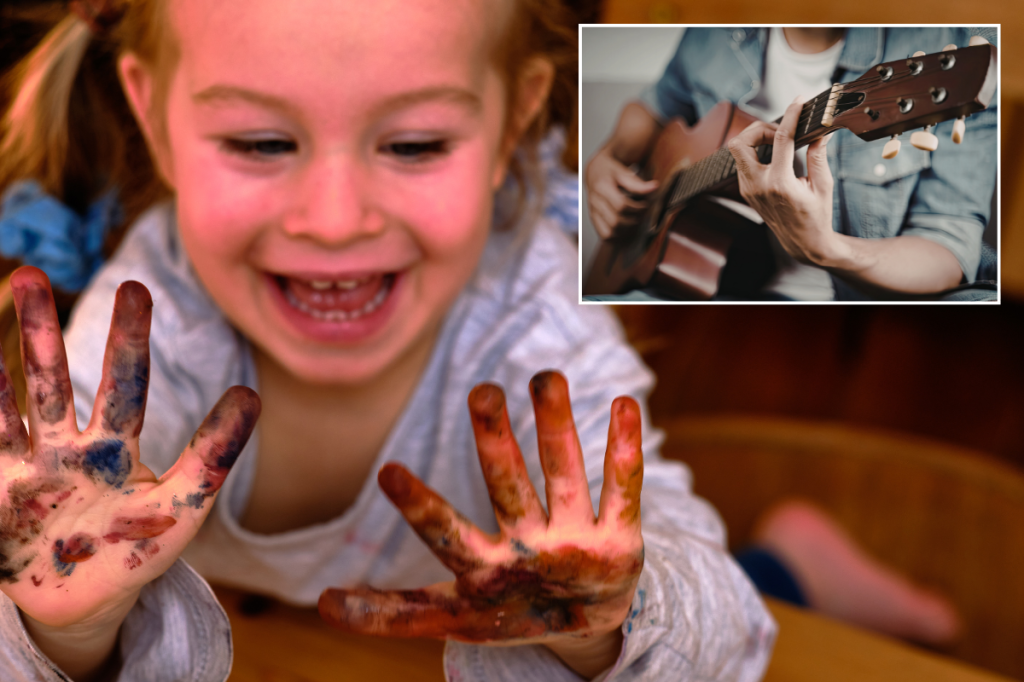
The composer and songwriter has always enjoyed turning everyday things into little musical ditties, or even full songs. But when he became a dad to a precocious and creative daughter, he suddenly found himself with more inspiration than he knew what to do with.
Spencer began paying close attention when his daughter’s stories became longer and more elaborate. “She started giving me these stories—real narratives that had a beginning, middle and end combined with toddler logic and grammar—they just sounded like songs to me,” he tells Muse.
At first, he thought he’d record a few as a fun experiment to share with friends and family—sort of a musical photo album. But almost as soon as he began posting the songs on Instagram, they went far more viral than he ever could have imagined.
Spencer currently has more than 300,000 followers, even though his first “toddler songs” clip was uploaded only a few months ago.
The effortless creativity of toddlers is a joy to experience. Photo credit: Canva
The first song goes like this:
“There was a little woman/Who liked wigglin’ so much (she liked wigglin’, she just really liked wigglin’)/Her mom said/Her mommy said ‘you can’t’/So she goed to her room/And she wiggled again…”
Cute, right? Yes, it’s all very adorable—until you actually take the time to listen to Spencer’s song. Then you’ll be blown away.
His voice. The production value. The arrangement. It’s all top-notch. Frankly, the songs—which commenters have dubbed “toddler yacht rock” or “tot rock”—are far better than they have any right to be.
It’s no wonder that the very first clip received nearly three million views on Instagram
And just a week or so later, Spencer was back with another banger:
“There was a purple bear princess/She was a grown up dog/She was a grown up purple bear princess dog/(What was her name?)/Uh ‘Blossom’/ (That’s a nice name)/Actually it’s ‘Crudda’”
It’s beautiful lyricism, and all parents of toddlers will relate to the hazy logic, made-up words, and impeccable improvisational skills. The fact that Spencer can turn them into genuine hits is incredible.
Parents and their kids—heck, anyone with ears—can’t stop listening to Spencer’s tunes on repeat
“Phil Collins could have co-produced this one,” one commenter wrote.
“I may have listened to this 948572 times,” added another.
But probably the thing that’s really sticking with viewers is the amazing, unspoken bond between dad and daughter hidden in the lyrics.
“I’m imagining how happy your daughter will be once she’s older, maybe a parent herself, and revisits these videos,” someone wrote under a recent video. “You’re an amazing musical talent & a even better dad.”
In fact, Spencer says that the pure, unfiltered, joyful creativity that pours effortlessly out of his daughter has inspired both him and his music students.
“I think that children are the perfect model for how we should create as adults. There’s this unfiltered joy. You’re in the sandbox playing and not worrying about how things should be judged or appraised. … And yeah, it has inspired me as a creator. It’s also inspired me as an educator,” he says, adding that he hopes he can teach his students to follow the threads of their own joy and curiosity, the way his daughter does.
For now, Spencer has a few songs up on Spotify and potentially a handful of music videos in the works. Meanwhile, he and his daughter are still churning out new songs and will continue to do so as long as it brings them both happiness.
Schools often have fun activities scheduled for the 100th day of school. Mom Emily Haswell was prepared for the adorable school activities for her daughter. Instead of celebrating 100 days of school, the preschool decided to hold activities around the 101st day. Parents were asked to dress their children as Dalmatians, seemingly as a theme…
Schools often have fun activities scheduled for the 100th day of school. Mom Emily Haswell was prepared for the adorable school activities for her daughter. Instead of celebrating 100 days of school, the preschool decided to hold activities around the 101st day.
Parents were asked to dress their children as Dalmatians, seemingly as a theme for the classic Disney movie 101 Dalmatians. But at some point, wires must have gotten crossed, cut, and thrown over a cliff. The photo sent to parents displayed something hysterically horrifying that Haswell wasn’t prepared for.
“Today was my daughter’s 101st day of school,” Haswell says in an Instagram video. “So I sent her to school, all the kids went to school as Dalmatians, and they had a puppy parade. She was so excited, and I was so excited for her. And then I checked the little website to look at pictures of the day, and I gasped.”
Admittedly, the mom says some people may think of Dalmatians and their connection with firefighting, but she did not. When she prepared her daughter for the 101st day of school dressed as the spotted pooch, she assumed the activity was based on the Disney movie. But when she checked photos of her daughter’s day, it looked as if a classroom of puppies had been engulfed in flames.
Yes, the children were all dressed as spotted puppies, seated in front of a wall of flames.
“When I saw that picture, I gasped. And I thought, ‘Now, why do they have my baby doing a hell-themed photo shoot? I had to check the paperwork,’” Haswell says before adding that a firetruck might have been a better choice. “I thought the teachers were like, ‘We’re in hell,’” she laughs.
Viewers were equally as confused as the mom, with one person saying, “Nah, because if they are locking in on 101 Dalmations/101 days of school – and even using a Disney dalmatian on the little sign the kid is holding – they canNOT mix up the themes and go ‘SURPRISE! We actually meant the fire station dalmatians, so here’s a wall-sized backdrop of a structure fire. Enjoy!’”
A teacher guesses what actually happened, writing, “I can promise you as a teacher… There was at least one teacher who saw it and thought, ‘um, this looks like puppy children in hell,’ but the person who ordered the backdrop and put it up was really excited about it and the rest just said, ‘okay.’”
Others took the opportunity to joke about the situation: “101 Damnations. DAMNATIONS. I’m sorry you all read it wrong.”
Someone else laughs, “I’m sorry this is so insane and deeply hysterical.”
“The teachers are sending an SOS!” One person says.
“I mean, it’s probably better than the teachers dressing up as Cruella de Ville,” another jokes.
A firefighter’s wife chimes in, saying, “I’ve been a firefighter’s wife for over 20 years and I can tell you right now I would have been just as horrified.”
One person remembers a fire from the 101 Dalmatians movie, so maybe that’s where the idea came from: “I feel like there is a scene where they all get out of a fire? They use the soot to disguise themselves as labs lol. But this is insane, what a weird idea for a photo backdrop for kids.”
Watching kids grow up is one of the great honors of parenthood, but it comes with many bittersweet moments. For one man, it was letting go of a nine-year-long bedtime routine he had created with his preteen son. Redditor YoTeach68 shared his gut-wrenching and all-too-familiar parenting story with his fellow dads. He explained that he…
Watching kids grow up is one of the great honors of parenthood, but it comes with many bittersweet moments.
For one man, it was letting go of a nine-year-long bedtime routine he had created with his preteen son. Redditor YoTeach68 shared his gut-wrenching and all-too-familiar parenting story with his fellow dads.
He explained that he was a divorced dad with 50/50 custody. One way he made the most of his time with his son was by continuing a cherished bedtime routine they had done since his son was just two years old.
“We developed a whole bedtime routine that included me reading aloud to him, then talking about our day (highs and lows, that kind of thing), then me singing the same three short songs to him (songs that I learned at a summer camp when I was a kid, and the camp where he currently goes) while rubbing his back,” he shared.
As a single dad, he acknowledged that some nights were harder than others. He also knew things wouldn’t be this way forever, adding, “Obviously I couldn’t be singing to him and rubbing his back his whole life.”
After getting advice from fellow dads on when it would be appropriate to cut it off, the consensus was to let his son decide.
Parent of pre-teen/ late grade school aged kids. light up every time your kid walks into the room. This is going to teach them that attention is not earned, it is just part of being in loving, caring relationship. And that attention is going to be returned back to you when they turn into a teenager. Because the number one issue parents of teams report to me is the indifference of their teenager toward them. Follow for more tips on how to have a better relationship with your kids. #parentsofteens#teeangers#raisinggoodhumans#raisegoodkids#respectfulparenting#discipline#teachrespect
Unfortunately, when the time finally came, he shared how he knew it was time.
“He’s 11 now, and over the past two weeks or so he’s been telling me each night that he was just going to go to bed after giving me a quick hug and that I didn’t need to read to him or anything,” he explained.
Sensing the change, he decided to talk to his son about it.
“I finally sat him down and asked him if he felt he was outgrowing the bedtime routine, and he said yes. I told him how much the bedtime routine had meant to me, because I have no memories of my own parents putting me to bed (I do have memories of a cassette player in my bed that read books aloud). I told him I hoped it had meant something to him. I asked if he would indulge me and let me put him to bed one last time, and he obliged.”
The two then did their final bedtime routine together.
“Last night we went through the routine one last time (and I even pulled out one of his favorite picture books from when he was about 5). We talked about our day. I sang the songs. I rubbed his back. Then I kissed him on the cheek, told him I would cherish the memories of putting him to bed the last nine years, turned off his light, and closed his door behind me).”
Many dads shared their emotional responses to the story:
“Welp I’m f*cking crying on the toilet as my wife and my son nap lol.”
“❤️ that was lovely. My daughter is 5 and we put her to bed with a routine every night. Sometimes it’s fun and lovely and sometimes it’s a struggle. And sometimes it’s both. And part of me is looking forward to her doing to bed herself and part of me knows I’ll miss it.”
“I’ve been thinking about this a lot with my boys lately. They’re still young, and still love the bed time routine with me and their mum. But I’m already getting emotional over the idea that one day, like you, I’ll have to do it one last time. Treasure the memories forever, as I’m sure you will. I don’t really know what else to say, but…yeah, this made me feel things even more. Kudos.”
“Lying in bed now with my snoring 4 year old, after doing our bedtime routine and this post hit hard. Giving him a big hug and kiss before I leave as always but I’m going to do it more mindfully. Hopefully he still wants me to do this until he’s 11 too. You are a great dad.”
“Damn, f*cking onions.”
A therapist explains how dads can cope
Hillary Pilotto, therapist and founder of Better Balance Counseling, Ltd., told Upworthy that this transition is a normal (albeit painful) experience that many parents face.
“At 11, kids are right in the middle of the individuation process; developmentally, they are supposed to be pulling away,” she explained. “Wanting more independence, more privacy, more of their own identify separate from mom and dad. That’s not rejection. That’s healthy.”
And this may bring some relief: it’s actually a sign of good parenting.
“A child who feels secure enough in their attachment to say ‘I’m ready to do this on my own’ is actually a sign that the bedtime routine worked,” she added.
While these may be “good” things, Pilotto acknowledged that none of that makes it easier for the parent.
“There’s a grief in these transitions that doesn’t get talked about enough,” she shared. “It is not a dramatic loss; no one died, nothing went wrong, but something real is ending and it’s okay to feel sad about that. I tell parents: you’re allowed to mourn the little kid even while you’re proud of the one standing in front of you.”
She recommended that other parents take notes from the dad who shared his story if they are going through a similar transition.
“The best thing a parent can do in these moments is what the dad did; honor it. Name it,” she said. “Show your kid that transitions matter and that it’s okay to feel two things at once. That’s a lesson that will stay with them long after the bedtime routine is gone.”
It can be tough for parents to see their kids on the receiving end of unkind comments. But sometimes, we’re reminded that many kids have unshakable confidence—and actually have a thing or two to show us about what resilience really looks like. Recently, a mom named Maren Droubay shared that her young daughter Emmie was…
It can be tough for parents to see their kids on the receiving end of unkind comments. But sometimes, we’re reminded that many kids have unshakable confidence—and actually have a thing or two to show us about what resilience really looks like.
Recently, a mom named Maren Droubay shared that her young daughter Emmie was the target of some mean-girl bullying. A few girls had apparently told Emmie, “We don’t even like you.” Ouch.
But apparently Emmie was completely, totally, undeniably unbothered. And Droubay was so proud of her response that she shared it on Instagram.
Holding a very apropos princess wand, Emmie recited the words:
“Well, guess what? My family thinks I’m a princess, and I’m super kind and nice…If you don’t think that, that’s okay because that’s what I think of myself, and that’s who I actually am…I know who I am.”
“I hope someday I can be as confident as she is,” Droubay wrote in her video. She added in the caption that this was “one of those moments where you realize you might be doing at least one thing right as a parent.”
Indeed, viewers credited Droubay for Emmie’s delightful resilience.
“That is the product of some A-plus parenting and a village that has poured confidence into this babygirl. May we see more of this in our kids. All of our kids,” one viewer wrote.
Another added, “Wouldn’t it be amazing if all parents talked to their children like this and they all thought they were super nice and kind. Good job, she is a sweet little princess! 🌟”
While Droubay told Upworthy that Emmie’s self-esteem comes rather naturally (“she has always been a confident girl”), she nonetheless has proactively worked to “encourage” it, mainly by “speaking to her with love.”
“One thing I learned in college that really impacted me is that children form their sense of self in the first five years of life,” recalled Droubay. “I have tried to make them feel loved as much as I can because of that. We love the new Cinderella and so ‘have courage and be kind’ has been a repeated phrase for me with my children.”
That is a sentiment shared by experts like parenting educator Samantha Moe, who said that words of affirmation “help children feel valued and reinforce their positive qualities.” That said, many parents might be concerned, and rightfully so, that too much praise could cause a child to seek external validation. In the video below, Moe explained that even consistent “I love yous” can offer a self-esteem boost without causing dependence.
Since the encounter, Droubay has spoken to the other girls’ parents, and all is well. Her stance: “Little girls are just kids! Not every kid has the tools to be kind and is still learning. Every parent is doing their absolute best.”
And even better, Emmie has gotten to see the incredible impact her video has had and has apparently “cried happy tears” because of it. All in all, it’s a pretty happy ending. It has inspired Droubay to offer these words of encouragement to fellow parents:
“Your children only have one brief childhood, and then they go out into the world as adults. Our words have deep impact on who they will be. Every action we take as parents affects their lives—obviously I mess up as a parent all the time—but we have the power to speak love, kindness, and condolence into our kids—so why not?”
Back in 2022, True, a five-year-old under the care of social services, was dropped off at Children’s Nebraska in Omaha for a seven-hour heart procedure. No parent, guardian, or caseworker was to be found. True had been struggling with complications from a previous open-heart surgery for his congenital heart disease, a condition that caused parts…
Back in 2022, True, a five-year-old under the care of social services, was dropped off at Children’s Nebraska in Omaha for a seven-hour heart procedure. No parent, guardian, or caseworker was to be found.
True had been struggling with complications from a previous open-heart surgery for his congenital heart disease, a condition that caused parts of his heart to be underdeveloped. Unfortunately, his caseworker had COVID-19 at the time, leaving True to face the surgery alone.
A fateful encounter
After spotting him in the pre-op room, pediatric cardiac anesthesiologist Dr. Amy Beethe “could not stop staring” at the sweet child’s face throughout the surgery, CBS News reported.
“It just took me back that this four-year-old kid was undergoing heart surgery and no one was there,” she told KETV.
Despite already having six children of her own, Beethe couldn’t shake the connection she felt to True and called her husband Ryan to discuss making him their seventh child.
“I just said, ‘we need to have a talk when we get home and I need ya to have an open mind,’” Beethe recalled.
Though initially “hesitant,” Ryan nonetheless agreed that “it just felt right.” A year and a half later, True was adopted.
“It didn’t take long to fall in love with him and know that we needed him in our family,” Ryan told KETV.
The story doesn’t end there, however
Beethe and her husband knew that True had five siblings in the same foster care situation and not only worked to get them adopted into stable homes, but also into homes within Beethe’s community—including her sister, her sister-in-law, and a coworker. This ensured the entire family stayed in close contact.
The couple even adopted True’s older sister, Laney, bringing the family to eight children in total. While the now 10-year-old will need a full heart transplant in the future, he won’t be facing those challenges alone.
The effects of sibling separation in foster care
Sibling separation is recognized as a significant, yet common issue in the child welfare system. It is estimated that between 53% and 80% of siblings in foster care are separated from one or more of their brothers or sisters. This is either because the foster home is not large enough to accommodate them, because of different care needs, or because of the timing of their removal. It makes an already traumatic situation worse—potentially leading to long-term mental health issues, substance abuse, academic struggles, difficulties maintaining close relationships, and a lasting feeling of rejection.
The fact that Beethe could keep all six siblings together is nothing short of a miracle. She hopes their story will inspire others to consider taking in a foster child: “They are like a little flower bud that just blossoms. If more people would do it, it would change the world.”
Pregnancy cravings are one of the many bizarre things experienced during pregnancy. From sweet to salty, they run the gamut of tastes. A study published in Frontiers in Psychology found that an estimated 50–90% of women experience pregnancy cravings and noted that they often begin at the end of the first trimester and become most…
Pregnancy cravings are one of the many bizarre things experienced during pregnancy. From sweet to salty, they run the gamut of tastes.
A study published in Frontiers in Psychology found that an estimated 50–90% of women experience pregnancy cravings and noted that they often begin at the end of the first trimester and become most intense during the second trimester.
A June 2025 study on pregnancy cravings found that pregnant women tended to crave cold foods rather than hot ones. They also preferred “crunchy” textures over foods described as “smooth” or “creamy.”
To all the moms out there – what’s the strangest thing you’ve craved during pregnancy? 🤯🎙️ full episode all about pregnancy nutrition with @Glucose Goddess out everywhere now. LINK IN BIO or search ‘On Purpose Glucose Goddess’ to watch on YouTube #pregnancyjourney#motherhood#pregnant#moms#pregnantlife
Moms on Reddit opened up about their intense and strange pregnancy cravings, sharing the crazy combos they couldn’t get enough of while pregnant. These are some of their salty, sweet, and super-weird cravings:
Salty cravings
“There’s a mom and pop restaurant almost 45 minutes from my house, and very much out of my budget, that has the most AMAZING dry rub boneless wings- and their ranch is house made. I want to BE the chicken wing, I swear to god it’s the best thing I’ve ever eaten in my life.” – Disastrous-Radish504
“I just about had a meltdown at work when the fast food place forgot ketchup. I actually walked through the entire office asking if anyone had ketchup packets stashed away somewhere, ransacked the break room…I finally went down to the cafe in the building and asked to buy just ketchup. The guy took one look at me and just started pouring it into a container, free of charge, he could see my big belly and my face and pretty sure he knew exactly what was up.” – superherostitch
“McDonald’s hamburgers (like the super basic one that comes in a happy meal) with no cheese and extra extra extra extra extra extra pickles.” – glory87
“Anything with lots of avocado, lemon, meat, and olive oillllll 🤤.” – PitchGlittering
“My favorite craving was Olive Garden’s salad, I ate it every day for a week it was so intense, my weirdest was my craving for McDonald’s fish fillets 🤢🤢🤢 I still can’t wrap my head around it because I think they are so gross, fish and cheese is the worst but man I’d ask my husband every other day to stop after work and get me at least 2, for a solid month. Ugh.” – CoffeeTvCandy
“The first time I found myself eating beef jerky in my car in a gas station parking lot without any recollection of purchasing it was when I realized I needed to buy a pregnancy test. I’d been vegetarian for over 8 years at that point and now for over 30 years aside from that pregnancy.” – Visual-Fig-4763
Sweet cravings
“Watermelon and fruit in general the first trimester. Then smoothies and milkshakes second trimester. I think I just wanted all the foods third trimester, but could only eat a few bites at a time.” – Jusmine984
“Blood oranges. I just couldn’t stop eating them. Also helped that we lived in Florida. So I was like a blood orange hoarder for 9 months. Would make my husband go to random farms to pick up oranges on his way from work.”- Senior_Tangerine3083
“Chocolate chip pancakes.” – soul-searcher3476
“Cinnamon Toast Crunch lol. I’m not a cereal person but i was when pregnant.” – tiredmillienal
“Oooooh I’ve got some funny ones. I had a lot of cravings, but ironically my most intense ones weren’t for food. Except at the end- at the end of my first pregnancy, I VIOLENTLY craved snow cones. Bought a literal whole machine yo make them. At the end of my second, it was popsicles, so I was in heaven at the hospital 🤣🤣🤣 was like ‘please can i have a popsicle?’ And the hospital was super happy to bring me all the popsicles I wanted LOL.” – Darkovika
“Mine was orange juice. For about the first 8 weeks, even before I knew I was pregnant, I was going through a half gallon a day.” – ButterflyTangerine
Crazy combination cravings
“With my first: all the cheeseburgers and those weird candy orange slice candies. I’m 32 weeks with my second and I’ve consumed nearly all the heirloom tomatoes the world has grown. That’s why your grocery store doesn’t have them. Twas meeeeeeeeee.” – heylittlefightergirl
“With my oldest I craved a mayo lettuce sandwich – yep just a mayo, lettuce on white bread.” – syaami
“Sushi. Raw fish. And blue cheese. Not even kidding. I was so nauseous all the time, and thinking about eating sushi was the only thing that got me through.” – Ok_Bumblebee_3978
“The food that slapped was Sea Salt and Vinegar chips with Sardines stuck between two crunchy chips.” – DogsNCoffeeAddict
“Vegetable sushi, stewed okra and tomatoes, and M&Ms.” – ghostdumpsters
“One time I went to the grocery store at 10 pm because I was craving salt and vinegar chips with French onion dip. Sounds gross but damn did that hit the spot at the time.” – yogipierogi5567
It seems kids are becoming less and less welcome in public spaces. For one thing, fewer Americans are choosing to have children at all. Couple that with social media, and the trend has only served to amplify the disruption kids cause in traditionally adult spaces like breweries and brunch spots. An eternal struggle exists between busy parents with no babysitter who still want to enjoy avocado toast and the folks who’d prefer to do so without noisy kids around.
But surely, one place where families are always welcome would have to be church—the original community gathering space. A place where all are not only welcome, but embraced. Even loud kids. However, this has turned out not to be strictly true either.
Over the years, many churches have separated children from the main worship space and instead provided them with age-appropriate activities. It’s a noble idea, but many parents say the practice feels exclusionary and forces families to spend that time apart. Even in the supposedly loving environment of church, there are plenty of folks who want to hear the service without the wail of a toddler in a tantrum.
Julie, a blogger and pastor’s wife, writes, “If you walk into a church that doesn’t have a heart for kids, you’ll know almost instantly. Congregants will look annoyed at childlike behavior and sounds, they’ll strongly discourage children from staying in the worship service, and folks will appear generally disinterested in them.”
One church is going viral for its cleverly worded “new policy” when it comes to noisy kids attending services.
Many churches don’t allow children in the main worship area, or at least frown upon it. Photo credit: Canva
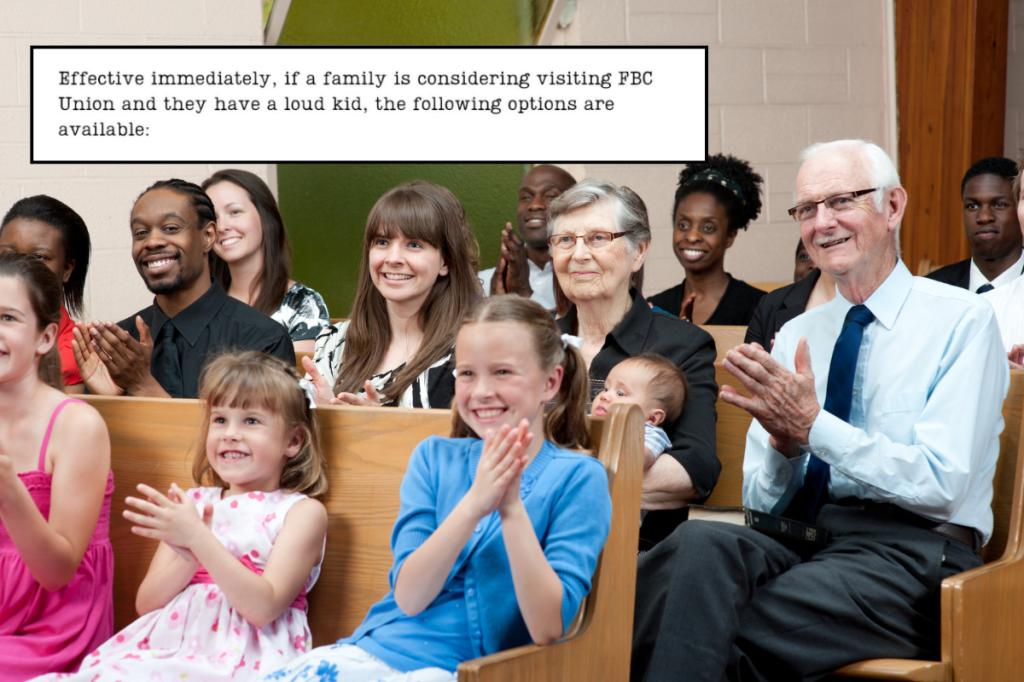
First Baptist Union in Union, Mississippi, recently posted an announcement on its Facebook page regarding loud kids at church.
“There have been updates to the Loud Kid Policy at FB Union,” the post read. “If you have a loud kid, then this is for you. I know it might ruffle some feathers, but we had to do the right thing.”
The whole memo has to be read to be fully appreciated, but in short, church leaders announced they would offer “five” options for families who wanted to visit with loud children. With a little clever wordplay, all of the options amounted to the same thing: Bring them.
“We believe the sound of children in worship is not a distraction. It is evidence of life, growth, and the future of the church. If your child makes noise, you are not bothering us. You are blessing us.”
The post was a viral hit. Not only was it re-shared hundreds of times by the Union community, but it also reached far beyond Mississippi. The original memo and slight alterations of it were posted by churches across the country.
Reactions were largely positive. Many parents and church members chimed in to comment on how much they appreciated the tongue-in-cheek gesture:
“I’m not even a member of FBC so I’m unsure as to why I’m seeing this, however, this is great. A pastor once said that a church without children is the signs of a dying church. Bring in the little ones!!”
“A friend shared your post with me and wow! What a relief! Someone from leadership [at my church] called me and told me that my 18month old foster son was very distracting and then he asked me 1) Do I know we have a nursery? And 2) Why am I not utilizing it. I was livid.”
“I once heard a preacher say, ‘If I can’t preach over a crying kid, it’s time for me to stop preaching,’ when someone got up to take a loud child out of the sanctuary.”
“Not a member but I love this. When I first came to our church I was so worried cuz all of my kids are loud. When they would be loud id look at the older adults and would see smiles. Now I bring our baby in and they all love seeing him. Its so nice not to feel like I can’t sit thru a service because my baby is fussy.”
However, not everyone was on board with the sentiment, especially as the announcement began reaching a wider audience. After New York Times columnist David French reposted it, a few folks took umbrage.
“I don’t love it at all. If your child is being unruly, loud, or disruptive during a church service, you should be considerate of everyone else and step out with them. If they’re old enough, they should be disciplined appropriately. Assuming it’s acceptable to let a child scream and whine through the service is ridiculous.”
“No. When the Word of God is preached, we should have an environment that eliminates distractions. I have 5 beautiful children, but if they’re starting to fuss, or just be a normal 2-4 year-old, we remove them and take them to children’s church or out in the foyer.”
With its post about loud kids at church, First Baptist Union unintentionally sparked a fascinating debate about the presence of children in public, even in family-friendly spaces. Whether we like it or not, children come pre-packaged with noise, movement, and disruption—and it’s not always the result of poor parenting. Whether you find their childish chaos beautiful and invigorating or extremely annoying is a matter of personal taste.
One thing is for sure. With more and more breweries outright banning children and airlines separating young children from their parents during the seating process, thereby sparking wars in the economy section, it’s refreshing to see at least one place take a stand and allow kids to be seen and heard. No matter how loud.