
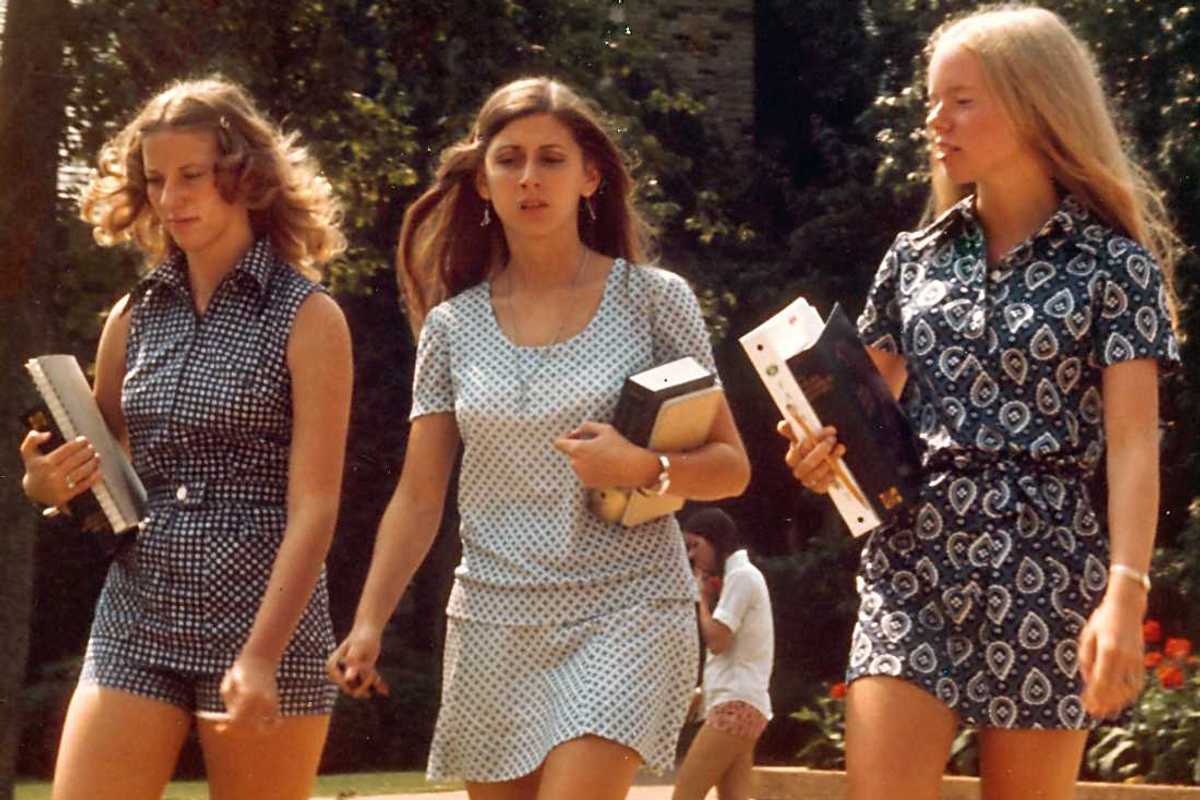
Generation Jones is the microgeneration of people born from 1954 to 1965.
Generational labels have become cultural identifiers. These include Baby Boomers, Gen X, Millennials, Gen Z and Gen Alpha. And each of these generations is defined by its unique characteristics, personalities and experiences that set them apart from other generations.
But in-between these generational categories are "microgenerations", who straddle the generation before and after them. For example, "Xennial" is the microgeneration name for those who fall on the cusp of Gen X and Millennials.
And there is also a microgeneration between Baby Boomers and Gen X called Generation Jones, which is made up of people born from 1954 to 1965. But what exactly differentiates Gen Jones from the Boomers and Gen Xers that flank it?
- YouTube www.youtube.com
What is Generation Jones?
"Generation Jones" was coined by writer, television producer and social commentator Jonathan Pontell to describe the decade of Americans who grew up in the '60s and '70s. As Pontell wrote of Gen Jonesers in Politico:
"We fill the space between Woodstock and Lollapalooza, between the Paris student riots and the anti-globalisation protests, and between Dylan going electric and Nirvana going unplugged. Jonesers have a unique identity separate from Boomers and GenXers. An avalanche of attitudinal and behavioural data corroborates this distinction."
Pontell describes Jonesers as "practical idealists" who were "forged in the fires of social upheaval while too young to play a part." They are the younger siblings of the boomer civil rights and anti-war activists who grew up witnessing and being moved by the passion of those movements but were met with a fatigued culture by the time they themselves came of age. Sometimes, they're described as the cool older siblings of Gen X. Unlike their older boomer counterparts, most Jonesers were not raised by WWII veteran fathers and were too young to be drafted into Vietnam, leaving them in between on military experience.
How did Generation Jones get its name?
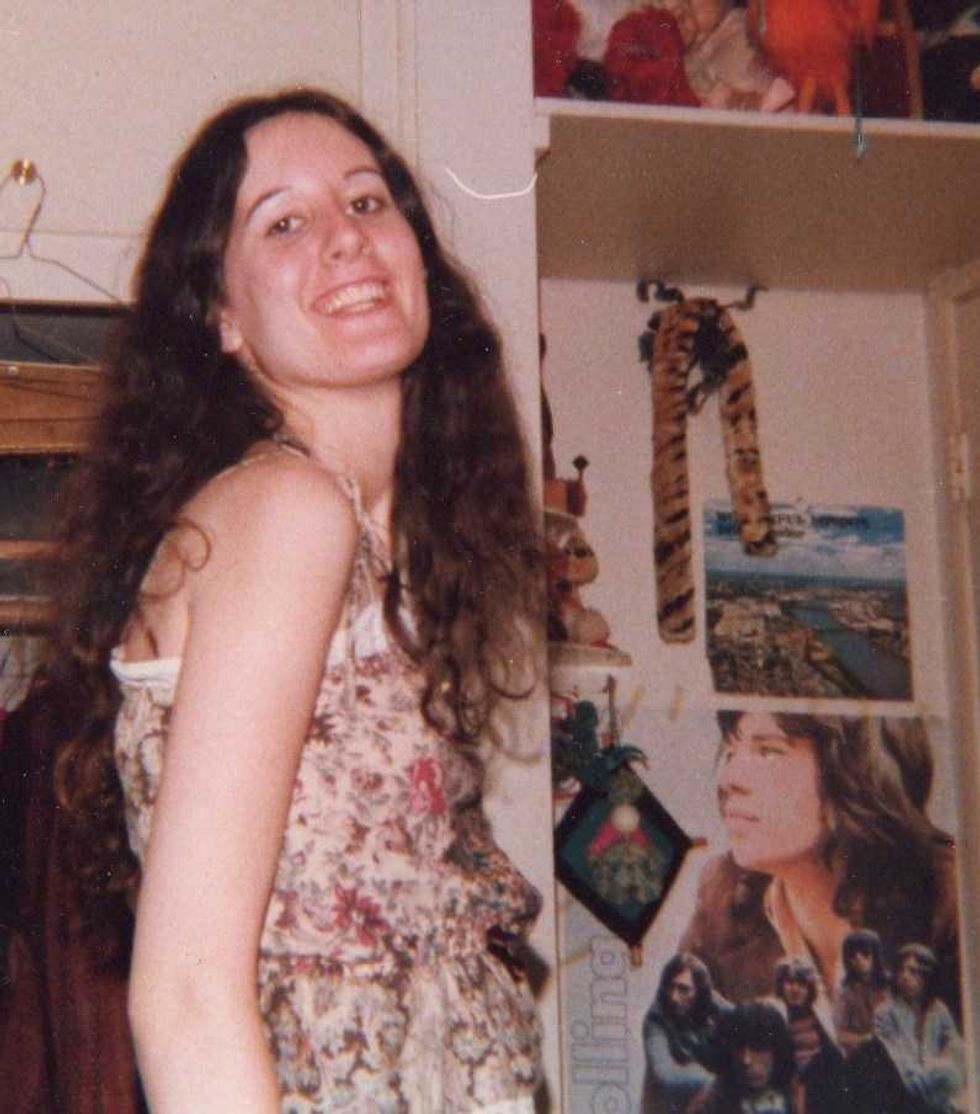 A Generation Jones teenager poses in her room.Image via Wikmedia Commons
Gen Jones gets its name from the competitive "keeping up with the Joneses" spirit that spawned during their populous birth years, but also from the term "jonesin'," meaning an intense craving, that they coined—a drug reference but also a reflection of the yearning to make a difference that their "unrequited idealism" left them with. According to Pontell, their competitiveness and identity as a "generation aching to act" may make Jonesers particularly effective leaders:
"What makes us Jonesers also makes us uniquely positioned to bring about a new era in international affairs. Our practical idealism was created by witnessing the often unrealistic idealism of the 1960s. And we weren’t engaged in that era’s ideological battles; we were children playing with toys while boomers argued over issues. Our non-ideological pragmatism allows us to resolve intra-boomer skirmishes and to bridge that volatile Boomer-GenXer divide. We can lead."
@grownupdish Are you Generation Jones? Definitive Guide to Generation Jones https://grownupdish.com/the-definitive-guide-to-generation-jones/ #greenscreen #generationjones #babyboomer #generationx #GenX #over50 #over60 #1970s #midlife #middleage #midlifewomen #grownupdish #over50tiktok #over60women #over60tiktok #over60club
However, generations aren't just calculated by birth year but by a person's cultural reality. Some on the cusp may find themselves identifying more with one generation than the other, such as being culturally more Gen X than boomer. And, of course, not everyone fits into whatever generality they happened to be born into, so stereotyping someone based on their birth year isn't a wise practice. Knowing about these microgenerational differences, however, can help us understand certain sociological realities better as well as help people feel like they have a "home" in the generational discourse.
As many Gen Jonesers have commented, it's nice to "find your people" when you haven't felt like you've fit into the generation you fall into by age. Perhaps in our fast-paced, ever-shifting, interconnected world where culture shifts so swiftly, we need to break generations into 10 year increments instead of 20 to 30 to give everyone a generation that better suits their sensibilities.
This article originally appeared two years ago. It has been updated.
 A Target store at night.via
  An aisle at a Target.via
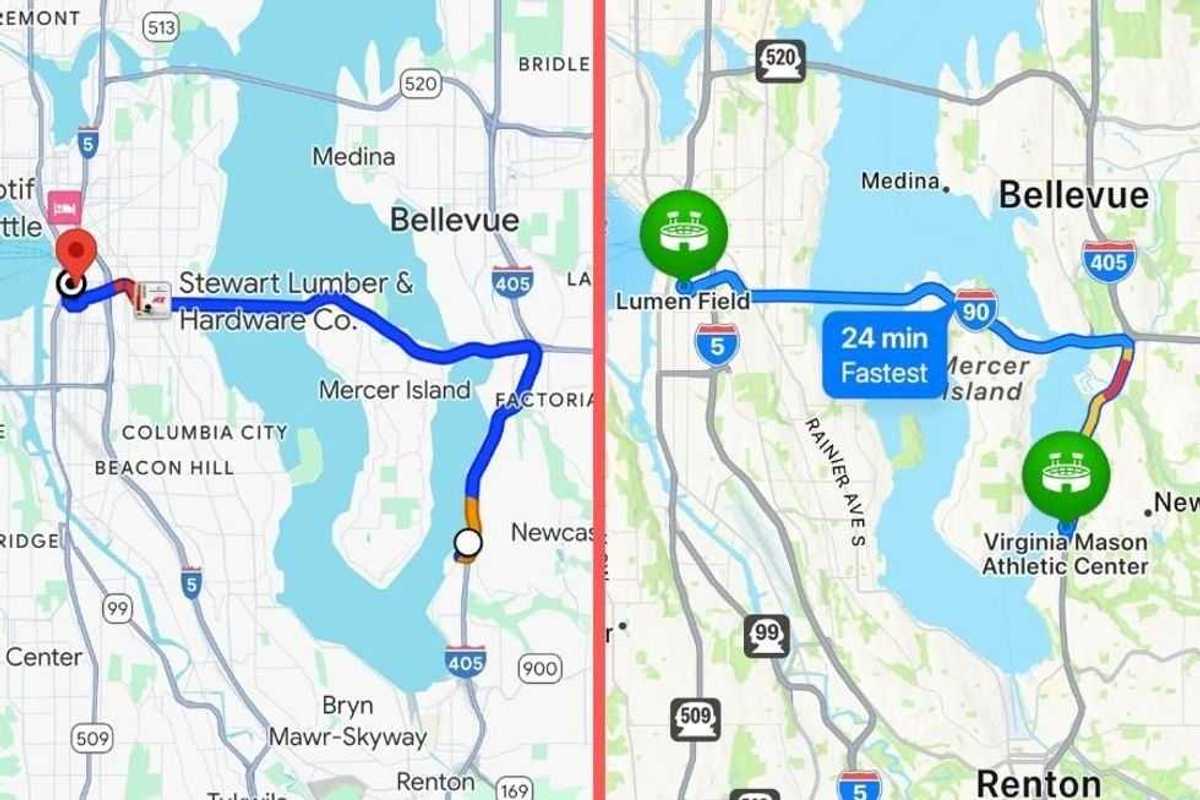
 Which map app is best?
 We've become pretty finicky about our map apps in the modern age.
It's hard to date when you're fat, but not for the reasons you might think.
"You know what I like about you? You’ve got fat pride. I felt that way, too, until I realized I wanted anyone to fuck me ever."
We’d been talking online for weeks — he was funny, erudite, nerdy, kind. He’d told me he’d lost weight in the past. I’d done my due diligence of telling him how fat I was, working hard to avoid repeats of past hurt and disappointment. I’d weeded through dozens of profiles about wanting to meet "healthy," "active" women and several that pointedly instructed that fat women weren’t welcome. Many men had sent graphic, sexual messages, and when I politely declined or didn’t respond, they issued lengthy screeds. "U SHOULD BE GRATEFUL." "I wouldn’t even rape you."
In amongst all of that, I’d found someone who seemed like a gem. And then, on our first real date, this. It was frustrating, isolating, and made me feel so big and so small, all at the same time.
I gently pushed back. "You know you’re saying that about me, too, right?"
"What?"
"When you talk about no one wanting to fuck fat people, you’re talking about me, too."
He shook his head. "Don’t take it personally. It’s not personal."
I got quiet then asked for the check. He said he’d walk me out. When we got outside, he tried to kiss me then asked if I wanted to go back to his place.
Years later, I was falling for a new partner.
We’d been dating for several months, and she was extraordinary: full of life, wildly intelligent, absurdly beautiful. I’d tell her often — maybe too often — how stunning I thought she was. With equal frequency, she’d talk about my body. "You’re so brave to dress the way you do." "I want you to feel empowered."
At first, her responses sounded like reciprocity, but they always seemed to sting. I felt deflated every time she said it. Like that first date, she couldn’t see past my body. She valued me, but she didn’t desire me. When she spoke, she never spoke about my body — only about my relationship to it. She was amazed that I wasn’t sucked into the undertow of self-loathing and isolation that she expected from fat women. Those comments were a reminder of how frequently she thought of my body, not as an object of desire, but as an obstacle to overcome. She was impressed that I could. She could not.
When you and I talk about dating, dear friend, we have a lot of overlapping experiences because dating can be difficult and awkward for anyone.
It’s a strange auditioning process: all artifice to find someone who can respect your uncrossable lines, and failed auditions usually mean those lines get crossed. It’s easy to feel judged, stalled, alone in the process. It can get exhausting, exciting, frustrating, exhilarating.
But dating as a fat person means contending with so many added layers of challenge.
You told me once you imagined it was impossible to date as a fat person. It’s not; it’s just a lot of work. Lots of people are willing to sleep with fat people. Many are willing to date a fat person.
Few are willing to truly embrace a fat person. Almost no one, it seems, really knows what that means.
That first date, dear friend, is such a frequent moment.
My sweet, funny date was abruptly overthrown, overtaken by years of the same anti-fat messages all of us hear. He couldn’t reconcile being fat and being loved. All of that, suddenly, was visited upon me, as it so often is.
I only bring up my feelings about being a fat person after knowing someone for some time. But, with startling regularity, new acquaintances, dates, and strangers offer diet advice, trial gym memberships, and, even once, a recommendation for a surgeon. My life as a fat person is a barrage of weekly, daily, and hourly offers of unsolicited advice. At first, the detailed answers, the constant defense, the explanation of my daily diet and medical history are ineffective — no answer is sufficient. Over time, it becomes burdensome, then exhausting, then frustrating. And it doesn’t seem to cross the minds of most people I meet that I’ve heard what they’ve said before — not just once, but over and over again, in great detail. I have a forced expertise in diets, exercise regimens, miracle pills, and the science of weight loss.
That may not be your experience, dear friend, because people may approach you differently.
You might not know what it’s like to feel your face flush or your heart race when your body so reliably becomes a topic of conversation during dinner parties, work events, first dates. There’s a familiar wave of frustration, hurt, and exhaustion. It’s all the visceral, invisible consequence of unintended harm because few of us — even you, my darling — have unlearned the scripts we’re expected to recite when we see a body like mine.
As a fat woman, I just want what anyone else wants: to be seen, to be loved, to be supported for who I am. To be challenged and adored. To be worth the effort for who I am.
When I meet people whose first response to me is about my fat body, I learn something important about that person. Whether their opening salvo is "Fat bitch" or "I’m concerned about your health" or "Have you tried this diet?" or "I think you’re beautiful," they all send the same message: that I am invisible. Rather than seeing me or getting to know who I am, they can only see my fat body.
It’s true of so many people I meet. They’ve got this deep-seated block: They can’t see fat people as individual people with individual stories because no one expects them to. Nothing in our culture indicates that fat people might have individual experiences, different stories, life experiences as rich and varied as anyone else. Instead, we’re met with diagnosis, prognosis, quarantine: an anthropological impulse to demand to know why we are the way we are and to figure out how to stop us from having the bodies we have. We’re reduced to figures in an equation, a puzzle to solve. But truthfully, we’re so much messier than that. We’re just as contradictory, real, and human as anyone else you know, and loving us is just as complicated.
When we have conversations like this, you often say, "I had no idea."
It’s heartening, dear friend, and it’s also hard to hear. It’s a harsh reminder that even those closest to me are subject to all those same influences and impulses.
There’s so much work in just working up the mettle to date at all. Building your own confidence and battling your own doubt enough to date at all can be difficult, in part because there’s no template. Media representation is seriously lacking for many communities; seeing thriving fat people in media is nearly nonexistent. Being fat means not seeing yourself reflected anywhere as being happy, healthy, or affirmed.
Being fat means taking on the Sisyphean task of creating your own world, one in which you can declare a truce with yourself and learn to feel OK or feel nothing at all about yourself when the entire world seems to be telling you that is not possible.
It means finding whatever you can scavenge to build yourself some makeshift shelter of thatch and driftwood. It’s brittle and dry, and it’s something. You try to build something that can withstand the gale-force winds of seeing an episode of "The Biggest Loser" or hearing a stranger offer unsolicited diet advice that you’re already taking. You build it slowly, painstakingly — testing methods and gathering rare, essential materials over time. It’s precious and fragile, a labor of love and a means of survival.
And finding a partner means opening that hard-fought home to someone else, over and over again, knowing that person might destroy it.
Usually, they do.
You’ve mourned it a hundred times. Your skin has thickened. Sometimes that person burns it to the ground, setting a fire to watch it burn. But more often, they just forget to extinguish their cigarette. Yes, when we look for love, some of us are hurt intentionally, cruelly, because of our bodies and because of overt fatphobia. But usually, we’re hurt without malice, through rote scripts about who we’re allowed to be and an expectation that we’ll devote our lives to meeting those expectations.
Often, when looking for friends and partners, I search for those who will be gentle with the home I’ve built, ramshackle though it is.
What made such an impression on my partner from years ago was that I didn’t stop there: I wanted someone who would help build that home, someone who would protect it, someone who would call it their home, too. Because a lack of harm isn’t love.
I want love. And as a fat person, there’s audacity in that.