upworthy
Add Upworthy to your Google News feed.
Google News Button
Joy

German holiday ad depicting two girls separated by invisible barriers hits home

A hauntingly beautiful message for our polarized times.

girl touching a glass wall in the snow

"Bubbles," a holiday ad by Deutsche Telekom

Most advertisements are purposefully obnoxious or annoying in some way, designed to grab our attention in order to sell us a good or service. But occasionally a commercial comes along to accomplish that same goal but in a more thoughtful way, with artistic beauty and a heartfelt message that taps into our humanity. Are such ads still trying to sell us something? Of course. Does that mean the people behind those ads aren't sincere in the messages they're trying to convey? Not necessarily, which is why people around the world are celebrating a 2-minute holiday spot from a German telecom company.

The ad from Deutsche Telekom, the parent company of T-Mobile, plays more like a short film than a commercial. As a version of "Shchedryk" (the Ukrainian folk song that gave us the melody for "Carol of the Bells) plays, we see two girls around middle school age, one dressed in red with a pointy nose and the other in blue with pointy ears, forming a friendship despite the panes of glass that separate them. The scene alternates between the joy of playing together and the clear message that their elders don't want them interacting with one another. The girls are determined, but they eventually see how limiting the glass walls between them are. The reveal of their gifts to one another at the end is hauntingly beautiful, with a powerful message.

Watch "Bubbles":

- YouTubewww.youtube.com

Breaking down barriers is a classic message but one that feels incredibly timely for our highly polarized present. The ad feels like it makes a subtle allusion to the Berlin wall, but the walls that separate these girls are perfectly transparent. They can see into each other's worlds, but can't get past what's separating them. The way they see the problem but feel powerless to change it feels like a fitting metaphor for today's divisions, as do the bubbles that surround the girls and their communities preventing them from fully communicating with one another.

People found the video surprisingly moving.

"It's the invisible wall that people build between each other because of perceived differences...nationality, religion, sexual orientation and how they perpetuate it by passing it on to their children."

"The innocent and non-judgemental minds and hearts of children - so much that adults could learn from them!"

"Isn't amazing how it takes innocent children to take down the walls put in place by adults."

"It shows that governments and small minded people cannot keep people apart forever. They can keep us apart for awhile but the human spirit does survive in spite of governments and small minded people."

"Heart wrenching, and joy inducing all in one ad."

"A knockout Christmas ad with a profound message for our time... Wunderbar!"

"Blue, red. This ad has me crying. I am struggling here in the USA. Merry Christmas to all around the world!"

The tagline for the ad on the YouTube share reads, "Connections Begin When Barriers Break. ❤️💙" Though the ad comes from Germany, the song lyrics being sung in English and the red and blue colors can easily be seen as pointing to American politics (which arguably impacts much of the world in direct and indirect ways). It's a good reminder that so much of what divides us are invisible barriers we've created and grown to identify with. Seeing those things through the eyes of children helps highlight how absurd it is to wall ourselves off from one another due to differences—an age-old human habit of prejudice that only leads to more misunderstandings and suffering. It might seem scary to shatter the bubbles we've built around ourselves, but when we do, we may find that what's on the other side isn't nearly as scary or awful as we've been led to believe.

May we all find ways to break down barriers and embrace the joy of friendship in this season of goodwill.

ideas, homelessness, prodigy, social work, solutions
Photo credit: @ribalzebian on Instagram

Ribal Zebian is going to test a house he designed by living in it for a year.

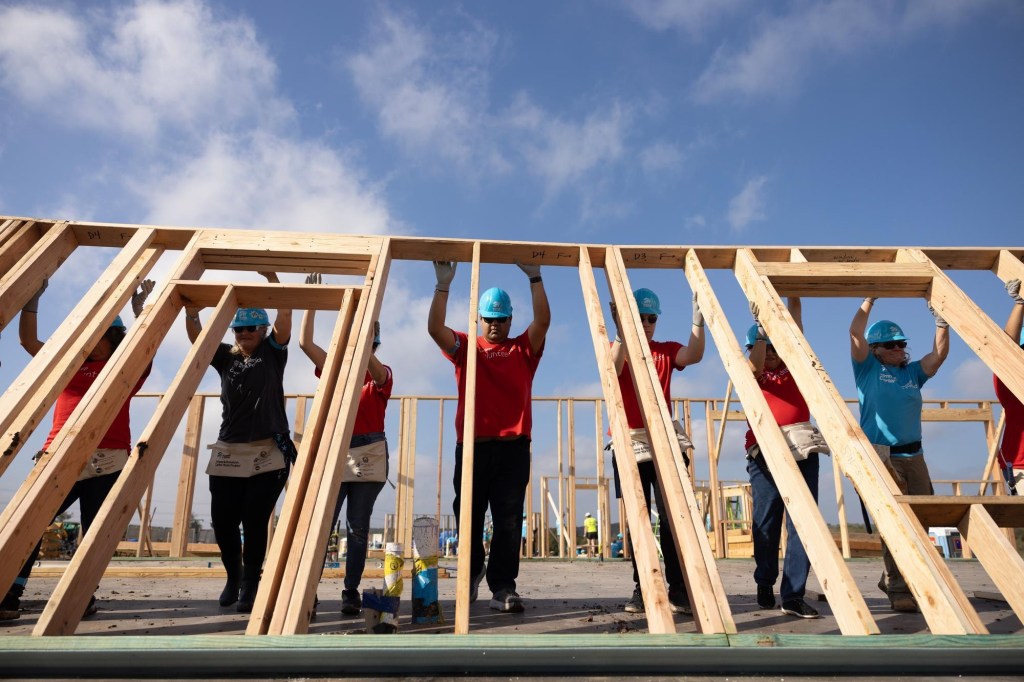
Ribal Zebian, a student from the city of London in Ontario, Canada, already made headlines last year when he built an electric car out of wood and earned a $120,000 scholarship from it. Now, he's in the news again for something a little different. Concerned with homelessness in his hometown, Zebian got to work creating a different kind of affordable housing made from fiberglass material. In fact, he’s so confident in his idea that the 18-year-old plans on living in it for a year to test it out himself.

Currently an engineering student at Western University, Zebian was concerned by both the rising population of the unhoused in his community and the rising cost of housing overall. With that in mind, he conjured up a blueprint for a modular home that would help address both problems.


Zebian’s version of a modular home would be made of fiberglass panels and thermoplastic polyethylene terephthalate (PET) foam. He chose those materials because he believes they can make a sturdy dwelling in a short amount of time—specifically in just a single day.

“With fiberglass you can make extravagant molds, and you can replicate those,” Zebian told CTV News. “It can be duplicated. And for our roofing system, we’re not using the traditional truss method. We’re using actually an insulated core PET foam that supports the structure and structural integrity of the roof.”

Zebian also believes these homes don’t have to be purely utilitarian—they can also offer attractive design and customizable features to make them personal and appealing.

“Essentially, what I’m trying to do is bring a home to the public that could be built in one day, is affordable, and still carries some architecturally striking features,” he said to the London Free Press. “We don’t want to be bringing a house to Canadians that is just boxy and that not much thought was put into it.”

Beginning in May 2026, Zebian is putting his modular home prototype to the test by living inside of a unit for a full year with the hope of working out any and all kinks before approaching manufacturers.

“We want to see if we can make it through all four seasons- summer, winter, spring, and fall,” said Zebian. “But that’s not the only thing. When you live in something that long and use it, you can notice every single mistake and error, and you can optimize for the best experience.”

While Zebian knows that his modular homes aren't a long-term solution to either the homeless or housing crisis, he believes they could provide an inexpensive option to help people get the shelter they need until certain policies are reformed so the unhoused can find affordable permanent dwellings.

@hard.knock.gospel

What to buy for the homeless at the grocery store. 🛒 Most people get it wrong. After being there myself, these are the survival items that actually matter 💯 The 2nd to last one is about more than survival—it’s about DIGNITY. We are all one circumstance away from the same shoes 🙏 SAVE this for your next grocery run. 📌 IG@hardknockgospel Substack@ Outsiders_Anonymous #homelessness #helpingothers #kindness #payitforward #learnontiktok

Zebian’s proposal and experiment definitely inspires others to try to help, too. If you wish to lend a hand to the unhoused community in your area in the United States, but don’t know where to look, you can find a homeless shelter or charity near you through here. Whether it’s through volunteering or through a donation, you can help make a difference.

Joy

People from around the globe share 15 signs that someone is obviously an American

"An Italian told me that Americans walk confidently in the wrong direction."

tourists, american tourists, us tourists, vacation, american style

Americans on vacation.

One of the fun things about traveling to different countries is that you not only get to learn about other cultures, but you also learn some things about your own. Americans who travel abroad often learn that people around the world appreciate them for being open, friendly, and good at spreading hope and optimism.

On the other hand, people in other countries can often tell when an American is coming from a mile away because they speak loudly, whether indoors or outdoors. Americans also have a very peculiar body language and are known to lean on things when they have to stand for an extended period.


A Reddit user posed a question in the AskReddit subforum to learn more about how Americans stand out abroad: What's an "obvious" sign that someone is American? The post received more than 35,000 responses, with an overwhelming number of commenters noting that Americans are all smiles and love to make small talk, something most people appreciate.

According to Redditors, here are 15 "obvious" signs that someone is American:

1. They have a unique confidence

"An Italian told me that Americans walk confidently in the wrong direction."

"Been taught to walk fast, and look worried.. People think you know what you're doing."

2. They're friendly

"I worked as a cashier in a tourist place in Paris, I always recognised Americans because they were kinda friendly to me and they always left tips."

"I guess there are worse things than friendly and generous."


3. Time = distance

"If someone asks how far away something is, an American will tell how you long it takes to get there as opposed to a physical distance."

"It actually pisses off some Americans to give a distance in miles, unless they're calculating gas mileage. In some places, you have to give with and without traffic options. I think it's more valuable info in time than in distance."

4. Grinning at strangers

"The gentle grins you give to strangers if you make eye contact with them as you pass by, at least in the Midwest. was not well received in Germany."

"I dated a European man here in the US. When we walked together, every time I made eye contact with someone on our path I would smile at them, and they would always smile back. Boyfriend was so confused at all these strangers smiling at me. Kept asking if I knew all these people. It was hilarious."


5. They like personal space

"How much personal space they give themselves. Americans like at LEAST an arm's length."

"We're conditioned to fill spaces evenly. I noticed when i worked delivery, spending lots of quality time on elevators that for every new person that enters, everybody shuffles to even things out. Similar thing plays out in social gatherings and bars. Not sure if that's universal or not, but I find it interesting. I think the size of our personal bubbles is because our spaces are generally much larger because we've got the space (heh) to build bigger buildings, sidewalks, roads etc. Might also explain why we're louder. Used to filling larger spaces with volume."

Body language expert Joe Navarro says that among Americans, the social zone for acquaintances and casual interactions is four to 12 feet, while family and close friends stand 1.5 to four feet apart. The intimate zone, for those closest to us, ranges from the skin to about 18 inches.


6. They lean

"According to the CIA, when training to be a spy, you have to unlearn how to lean. Americans tend to lean on things when standing still."

All of this is true, according to Jonna Mendez, the former chief of disguise at the CIA, who has shared some of her tips and tricks for making Americans seem more European. "So we would de-Americanize you," Mendez told NPR. "They think that we are slouchy, a little sloppy. And they think that they can almost see that in our demeanor on the street because they stand up straight. They don't lean on things."


7. They don't have an indoor voice

"I've lived in America for 25 years, and it still irritates me that instead of lowering their voices in restaurants so everyone can hear, Americans just scream over each other and make their restaurants as loud as clubs."

"For some reason, my otherwise smart and wonderful American friends will speak in the same volume, diction, and speed regardless of any outside factor unless specifically asked."

8. Dessert for breakfast

"In my homestay in London, I was told that I was 'so American' for enjoying a piece of cake for breakfast (not frosted cake, but like a nuts and dried fruit spiced coffeecake kind of thing). Apparently, that's exclusively for like a 4 pm snack, and breakfast is more of a savory meal."

"A lot of American breakfast items in my mind are desserts (pancakes, muffins, waffles, etc.). It doesn't mean I won't eat them, but it's kinda weird to do so."

9. They wear their clothes differently

"A British man once told me he knew I was American because I was wearing a baseball cap backwards."

"An Italian told me they could tell I was American because I wore my sunglasses on the top of my head when I wasn't using them."


10. Exposed soles

"While visiting Turkey, I was told that I looked American because I was sitting with one leg across the other, and the bottom of my shoe was exposed. Apparently, it's rude idk."

"In a lot of places outside of the US, showing the bottom of your shoe is rude."

11. Tactical gear

"Tactical sunglasses."

"I'm in the US, and virtually anything marketed towards men has the word 'tactical' in front of it."

12. They love small talk

"I'm from California (though a smallish town), and we wave to neighbors on our road, even if we haven't met, and start conversations in the grocery line with people if the opportunity presents itself. Also, smiling and saying hello to someone you happen to walk by and make eye contact with is quite normal. We are a social species, it would be so weird not to be friendly, even to strangers, for me, and I'm not even that social of a person."

"What really gets me to it is not that Americans do small talk constantly, but the fact that they are so good and fast at it. I mean, I say 'yeah, it's hot,' and they reply with some interesting fact or make a connection to their hometown. I feel less of myself after this. They must have some small talk class in school or some sh*t."

13. They like to point

"I've always observed my US friends like to point at stuff while walking and say what it is…. We were out walking around Amsterdam recently and they were like 'hey look it's a smoke shop'…. 'Oh look a sex shop'…. 'Oh hey, it's a prostitute' …. 'Look at the canal'…. 'Wow it's another prostitute'….. 'another canal' etc etc. It was like watching Netflix with Audio Descriptions turned on."

"You know that little voice inside your head, your internal monologue? Americans seem to monologue their thoughts."


14. Optimism and enthusiasm

"Dunno in all context, but Americans in Europe stand out with their ceaseless optimism and enthusiasm."

"I'm reminded a lot of Ted Lasso. Everyone I know (all Americans) loves the show. I wonder what kind of European fan base it has."

"Americans are so positive and have such a thirst for life. It sickens me."

15. They eat while walking

"When I lived in Europe, people said only Americans eat while walking. I'd be eating a bagel or something on the way to work or class, and multiple people asked if I was American lol."

"Jay Leno said on Top Gear, I think it was, that Americans are also the only people who eat while driving. I don't do this, but I constantly see people who do, haha, especially in LA, where people spend a lot of time in their cars."

party, chatting, likable, drinks small talk, men and women

A woman speaking with two men at a party.

When we think of someone likable, we often imagine a person with a big personality who's the life of the party. We conjure up images of social butterflies and people who keep everyone at the dinner party glued to their every word when they tell a story. The funny thing is, according to research, that's not really the case.

Studies show that the easiest way to make someone like you is to show interest by asking questions during the conversation and making it clear that you like them. People also really love those who come off as genuine.


Michael Gendler, a co-founder of Ultraspeaking, a platform that helps people master the art of public speaking, recently shared three "magic" phrases that make you more likable, all of which align with what science tells us.

Three phrases that make you more likable

Phrase 1: "Here's what really scares me..."

This phrase resonates with people because it shows you're genuine by admitting your vulnerability. "Man, talk about your feats, real fears, not like 'Oh, I'm scared I'm going to be too successful.' Tell us about something that actually scares you. Don't be guarded. Be open, and other people will appreciate that," Gendler says.

Phrase 2: "You know what I really like about you?"

This phrase makes people like you because it counters a psychological phenomenon known as signal amplification bias, which suggests we tend to overestimate how clearly we express our feelings to others. This means that, many times, when we think others know we like them, they may not be so sure. So a little assurance goes a long way toward showing them the feeling is mutual. "People love being complimented as long as it is genuine," Gendler says.


Phrase 3: "Tell me more"

As Dale Carnegie wrote in How to Make Friends and Influence People, the key to interacting with others is focusing on being interested in them rather than trying to impress them by being interesting. "Be interested, not interesting," Carnegie writes.

A Harvard study supports this, showing that when you first start speaking with someone, you should follow your first question with two more. People who do this are rated as much more likable than those who, after one question, shift the conversation to themselves. "People love feeling like what they're saying is interesting. So invite them to speak more," Gendler continues.


Don't forget to be genuine

Ultraspeaking's post is a breath of fresh air for those who aren't comfortable trying to impress others at parties, on dates, or in the office. The video shows that if you make people feel important, they're much more likely to like you in return. The key is that it has to come from the heart.

"Remember, don't just use these phrases and expect them to work," Gendler says. "They have to be genuine and open. That's what makes people likable."

1970s, '70s, generations, food, meals

Kids in the 1970s pretending to cook

"What's for dinner?" has been asked by kids for millennia, probably, and the most common answers depend on both where and at what time in history it was asked. In ancient times, people were limited to what they could hunt or gather. Medieval recipes look different than what people ate in the 19th century. And what our grandparents ate when they were children was different from what our kids eat today.

Obviously, people couldn't DoorDash Chipotle in the '70s, but when someone on Reddit asked people born before 1970 what they ate for dinner most weeks, there were some standard meals a lot of Americans clearly ate regularly growing up. Lots of meatloaf and beef stroganoff. Pork chops and chop suey. Convenient assistance from Shake n' Bake, Hamburger Helper and TV dinners. Canned fruits and veggies. So much Jell-O.


Here are some of the most popular responses:

"Overcooked pork chop, minute rice, canned green beans, canned fruit cocktail

Spaghetti with ground beef and sauce made from a packet (Durkee?)

Pot roast (whatever cut of meat was on sale) cooked with Lipton onion soup mix. Frozen peas. Canned peaches.

Meatloaf with mashed potatoes and canned green beans. Canned pears

Shake n bake chicken and scalloped potatoes from a box. Canned fruit of some kind.

On awesome days Chef Boyardee pizza mix from a box.

I liked LaChoy chop suey.

Always with a jug of milk on the table."

1970s, '70s, generations, meals, meatloaf Meatloaf was a staple dinner.Photo credit: Canva

"So I think many of our moms went to the same home ec classes. Our house also had on rotation:

Goulash: It wasn’t what I have come to understand is Hungarian Goulash, but ground beef/spices/tomatoes.

Chicken Diane: Way overcooked chicken with rosemary, thyme and other seasonings.

Meatloaf: Yes, ketchup on top.

And the ever-present rice. Dad bought an aluminum rice cooker from his time in Japan and we had rice (he added soy sauce on top) 3x per week. The other side was baked potatoes.

The big treat!!!??? Chef Boy Ar Dee pizza from a tube on Friday once per month. Mom had a round aluminum baking pan and make dough, spread the included sauce on the dough, add the Parmesan Cheese (in the included packet). That was the biggest treat - and in all honesty I would go back to that day cause I miss my mom. Best pizza ever."

- YouTube www.youtube.com

"Hamburger patty or braised round steak, green salad, canned vegetable (peas, beans, corn, beets). Occasionally a baked potato. Sometimes my mom would toss chicken in a flour/seasoning mix and bake it and we'd have oven fried chicken--maybe once every couple of weeks. We got beef from a cousin so it was cheap, and chicken was expensive.

Mom also made spaghetti with ground beef, and beef stew with the tougher cuts of the cow. Oh--and liver--God how I hated liver night.

We always had cheap grocery store 'ice milk' in the freezer for dessert."

1970s, '70s, generations, food, meals, spaghetti Spaghetti is still a classic.Photo credit: Canva

"Sunday - Spaghetti/macaroni and homemade spaghetti sauce and a salad.

Monday - Roast chicken, a side (potatoes, Rice-a-Roni), and a veg.

Tuesday - Pork chops, a side (potatoes, Rice-a-Roni), and a veg.

Wednesday - Spaghetti/macaroni and homemade spaghetti sauce and a salad.

Thursday - Rump or sirloin steak, a side (potatoes, Rice-a-Roni), and a veg.

Friday - breaded and fried fish (ugh--haddock, halibut, or cod if the latter was on sale), a side (potatoes, Rice-a-Roni), and a veg.

Saturday - Rump or sirloin steak, a side (potatoes, Rice-a-Roni), and a veg.

Dessert would be supermarket ice cream (carton, usually Neopolitan), Jello chocolate pudding, Table Talk pie (usually apple)."

1970s, '70s, generations, food, meals, pork chops Why were pork chops so popular?Photo credit: Canva

"Typical meals: stroganoff made with ground beef and egg noodles. Pot roast. Swiss steak. Chicken cacciatore. Fried chicken. This was in California, but my parents were from the Midwest so pretty meat-and-potatoes. There was always a side vegetable and a starch. Rarely bread or rolls. Occasionally salad but not always until the 1980s. No formal/planned dessert except for special occasions like birthdays and holidays, but sometimes there was ice cream in the freezer or there were cookies (store bought; my mom wasn't a baker). In the late 70s my mom loved Julia Child and started to be more adventurous with cooking; later she took Asian cooking classes too."

"Beef stroganoff, fried bologna, weiners wrapped in bacon and then broiled, baked beans, (from scratch) liver.

Jello 1-2-3 (so space age!) Bundt cake, canned fruit salad, canned pears, canned peaches."

- YouTube www.youtube.com

"When we had some money (early in the pay period):

Spaghetti with sausages and homemade sauce

Liver and onions

Chop suey

Spare ribs and sauerkraut

Pork chops with mashed potatoes and gravy

Beef stew

Boeuf bourguignon

Beef stroganoff

When we were short on money:

Spam & scrambled eggs

Homemade macaroni & cheese

Cold cereal

That’s all I can think of right now.

We very rarely ever had dessert and almost never ate out. We never had fast food, the only fast food chain in town was Burger King, and McDonald’s was a town away and only open about six months of the year."

Here's to all the meals that nourished us in every era of our lives.

men; dental care; weaponized incompetence; wife; marriage; men's healthcare

Dentist has hilarious solution for husbands who show up for appointments without knowing why

Watch any sitcom involving a family, and you'll see some stereotype of a seemingly clueless man with his exasperated wife. In reality, there are plenty of men who are perfectly capable of handling their own affairs and being equal partners. But there are some guys still bopping around like the lovable oaf sitcom archetype, and Dr. Brady Smith has had enough of his fellow men.

Smith is a dentist who shares content on social media. In one of his most recent videos, he expresses frustration with the men who come into his office. In the tongue-in-cheek video, the dentist is in his office explaining that sometimes when men come to their dental appointments, they have no idea why they're there. Smith jokingly decides that the men who arrive confused will be forced to play a dental procedure game.


men; dental care; weaponized incompetence; wife; marriage; men's healthcare Dental checkup for a healthy smile.Photo credit: Canva

"Men will come to their dental visits sometimes without knowing why they're there, and as a dentist, that's odd to come face-to-face with when I walk into the room. When I say, 'looks like you're here for a check-up and a cleaning,' and they say, 'I don't know, I didn't schedule the appointment.' That does not happen with women," Smith says before eventually revealing his solution.

Smith says that he's been a dentist for 16 years and has never experienced a woman walking into his office without knowing what services she's there to receive. He explains that the frequency with which men come into his office confused about why they're there is very often, but they don't seem to be embarrassed about it. The dentist then encourages the men to ask their wives what the appointment is for when they inform them that they've scheduled them a dental appointment.

men; dental care; weaponized incompetence; wife; marriage; men's healthcare Dentist at work ensuring a bright, healthy smile.Photo credit: Canva

"If one more guy says, 'I don't know what I'm doing here, and my wife scheduled the appointment,' I'm gonna create a wheel of services, and I'm just gonna spin the wheel. It's gonna have root canal, full dentures, sinus lift, teeth whitening, night guard, F around with a laser, whatever. And we're gonna spin that wheel, and whatever it lands on, that's what you're getting, and I'll call your wife, and I'll say, 'Listen, Kevin didn't know why he was here, so we spun the wheel, and it landed on full dentures. So get an ice pack and pick up his meds at the pharmacy, please," Smith says while staring directly into the camera.

It seems that Smith is not the only medical professional experiencing this phenomenon. There may be a "spin-the-wheel to find out what kind of services you're having" game installed in offices across America, as one doctor shares, "Can confirm this phenomenon happens at the dermatologist as well."

Another physician writes in part, "As a physician, I’d say about 85% of my male patients don’t know how to answer their own medical history and medication list. As soon as I ask my first question, 'Do you have any allergies?' They look over to their wife, completely clueless, and she proceeds to answer the rest of the questions in detail," before revealing that she's often shocked when male patients know all of their own information.

But don't worry; it's not all men. Quite a few wives share that they don't experience these issues because their husbands schedule their own appointments. Others added random suggestions to put on the wheel, like a full set of braces and a colonoscopy. But tucked between the jokes and fellow doctors sharing their own experience with this issue are people calling out the behavior as weaponized incompetence. They explained that it is behaviors like this that cause women to feel like they're doing the heavy lifting in their relationship, resulting in burnout.

"Excuse me while I scream. AAAAAAAAAAAAAAAAAAARGGGH," one woman writes.