upworthy
Add Upworthy to your Google News feed.
Google News Button
Pop Culture

Gen Z, Gen X and millennials share their 'boomer' complaints, proving old folks can be right

We all have an inner boomer that comes out from time to time.

boomers, old people complaints, technology

Boomers weren't wrong about everything.

Baby boomers (people born between 1946 and 1964) have been taking a lot of heat over the past few years from younger generations who think that their me-first mentality helped create a world where the climate is getting warmer, the rich are getting richer, the poor are getting poorer and people born in the ‘40s and ‘50s still rule the modern workplace.

Boomers are also super frustrating because many can’t figure out modern technology, and the younger folks have to explain it until they are blue in the face.

Of course, these are all generational stereotypes that many baby boomers would reject. But they will probably stand up and cheer when they read a list of tweets inspired by X user @FvreignLL, who asked, “What is the most boomer complaint you have?” The post was embraced by younger people and received over 123 million views.

Even though boomers are in the hot seat these days, just about everyone can agree that they’re right about many things that get under younger people’s skin, too. One of the recurring themes of the post was that people can’t stand the fact that we are overly dependent on technology, and often, instead of making things more accessible, it makes them more frustrating.

Here are 15 of the best ‘boomer complaints’ that younger people have, too.

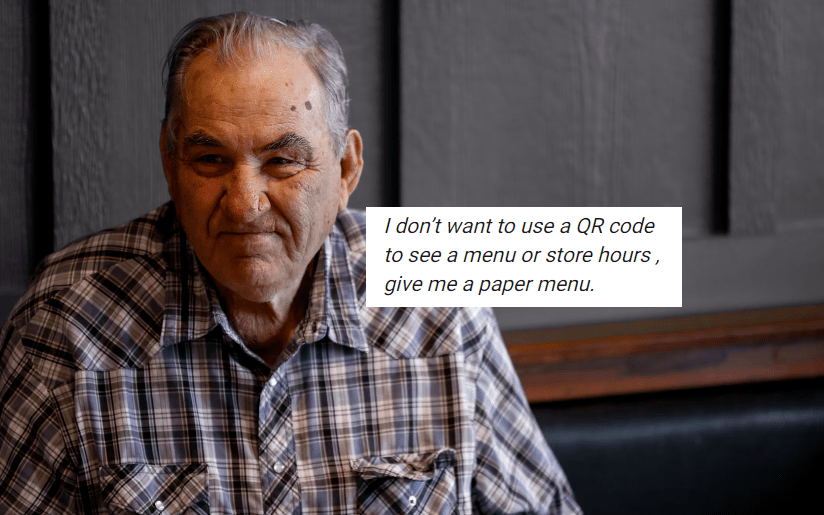
People had a lot of thoughts on the state of customer service in 2024.

Once a refugee seeking safety in the U.S., Anita Omary is using what she learned to help others thrive.
Pictured here: Anita Omary; her son, Osman; and Omary’s close friends
True

In March 2023, after months of preparation and paperwork, Anita Omary arrived in the United States from her native Afghanistan to build a better life. Once she arrived in Connecticut, however, the experience was anything but easy.

“When I first arrived, everything felt so strange—the weather, the environment, the people,” Omary recalled. Omary had not only left behind her extended family and friends in Afghanistan, she left her career managing child protective cases and supporting refugee communities behind as well. Even more challenging, Anita was five months pregnant at the time, and because her husband was unable to obtain a travel visa, she found herself having to navigate a new language, a different culture, and an unfamiliar country entirely on her own.


“I went through a period of deep disappointment and depression, where I wasn’t able to do much for myself,” Omary said.

Then something incredible happened: Omary met a woman who would become her close friend, offering support that would change her experience as a refugee—and ultimately the trajectory of her entire life.

Understanding the journey

Like Anita Omary, tens of thousands of people come to the United States each year seeking safety from war, political violence, religious persecution, and other threats. Yet escaping danger, unfortunately, is only the first challenge. Once here, immigrant and refugee families must deal with the loss of displacement, while at the same time facing language barriers, adapting to a new culture, and sometimes even facing social stigma and anti-immigrant biases.

Welcoming immigrant and refugee neighbors strengthens the nation and benefits everyone—and according to Anita Omary, small, simple acts of human kindness can make the greatest difference in helping them feel safe, valued, and truly at home.

A warm welcome

Dee and Omary's son, Osman

Anita Omary was receiving prenatal checkups at a woman’s health center in West Haven when she met Dee, a nurse.

“She immediately recognized that I was new, and that I was struggling,” Omary said. “From that moment on, she became my support system.”

Dee started checking in on Omary throughout her pregnancy, both inside the clinic and out.

“She would call me and ask am I okay, am I eating, am I healthy,” Omary said. “She helped me with things I didn’t even realize I needed, like getting an air conditioner for my small, hot room.”

Soon, Dee was helping Omary apply for jobs and taking her on driving lessons every weekend. With her help, Omary landed a job, passed her road test on the first attempt, and even enrolled at the University of New Haven to pursue her master’s degree. Dee and Omary became like family. After Omary’s son, Osman, was born, Dee spent five days in the hospital at her side, bringing her halal food and brushing her hair in the same way Omary’s mother used to. When Omary’s postpartum pain became too great for her to lift Osman’s car seat, Dee accompanied her to his doctor’s appointments and carried the baby for her.

“Her support truly changed my life,” Omary said. “Her motivation, compassion, and support gave me hope. It gave me a sense of stability and confidence. I didn’t feel alone, because of her.”

More than that, the experience gave Omary a new resolve to help other people.

“That experience has deeply shaped the way I give back,” she said. “I want to be that source of encouragement and support for others that my friend was for me.”

Extending the welcome

Omary and Dee at the Martin Luther King, Jr. Vision Awards ceremony at the University of New Haven.

Omary is now flourishing. She currently works as a career development specialist as she continues her Master’s degree. She also, as a member of the Refugee Storytellers Collective, helps advocate for refugee and immigrant families by connecting them with resources—and teaches local communities how to best welcome newcomers.

“Welcoming new families today has many challenges,” Omary said. “One major barrier is access to English classes. Many newcomers, especially those who have just arrived, often put their names on long wait lists and for months there are no available spots.” For women with children, the lack of available childcare makes attending English classes, or working outside the home, especially difficult.

Omary stresses that sometimes small, everyday acts of kindness can make the biggest difference to immigrant and refugee families.

“Welcome is not about big gestures, but about small, consistent acts of care that remind you that you belong,” Omary said. Receiving a compliment on her dress or her son from a stranger in the grocery store was incredibly uplifting during her early days as a newcomer, and Omary remembers how even the smallest gestures of kindness gave her hope that she could thrive and build a new life here.

“I built my new life, but I didn’t do it alone,” Omary said. “Community and kindness were my greatest strengths.”

Are you in? Click here to join the Refugee Advocacy Lab and sign the #WeWillWelcome pledge and complete one small act of welcome in your community. Together, with small, meaningful steps, we can build communities where everyone feels safe.

This article is part of Upworthy’s “The Threads Between U.S.” series that highlights what we have in common thanks to the generous support from the Levi Strauss Foundation, whose grantmaking is committed to creating a culture of belonging.

Joy

Thomas Jefferson coined a hip and funny phrase for abrupt goodbyes that still holds up today

A great phrase for when you've just gotta leave without explanation.

thomas jefferson, goodbye, name is haines, woman waving, us history

Thomas Jefferson and a woman waving.

"Irish goodbye" is a term for when someone slips out of an event without telling anyone, avoiding the awkwardness of announcing their departure. (Though the Irish didn't necessarily invent the phenomenon.) But what do we call it when someone decides to turn tail and leave a situation immediately, without any explanation at all? These days, there doesn't seem to be a name for a sudden, unexpected exit. Back in the 1800s, however, there was one, courtesy of the third president, Thomas Jefferson.

The phrase: "My name is Haines."


This may sound a bit strange, but it all stems from an unusual interaction Jefferson had while in office with a member of the opposition party. According to Monticello.org, The Weekly Picayune originally published the story in New Orleans on February 17, 1840.

The story behind "My name is Haines"

In 1805, during his second term as president, Jefferson was riding near Monticello, his Virginia residence, when he struck up a conversation with another man on the road. Amusingly, the man had no idea who he was speaking to, and as a rank-and-file member of the Federalist Party, which opposed Jefferson's Democratic-Republican Party, he had plenty of harsh words for the president.

monticello, thomas jefferson, jefferson house, virginia, famous houses Thomas Jefferson's Monticello.via Martin Falbisoner/Wikimedia Commons

The Weekly Picayune wrote:

"Haines took particular pains to abuse Mr. Jefferson; called him all kinds of hard names, ran down every measure of his administration, poked the non-intercourse and embargo acts at him as most outrageous and ruinous, ridiculed his gun-boat system as preposterous and nonsensical, opposed his purchase of Louisiana as a wild scheme — in short, took up every leading feature of the politics of the day, and descanted upon them and their originator with the greatest bitterness."

Jefferson simply listened, neither in the mood to argue nor to reveal his identity. When the two arrived at Jefferson's home, the president invited the man inside for refreshments. At one point, the visitor asked the president for his name. Here is how it was reported in The Weekly Picayune:

"Jefferson," said the President, blandly.

"The [devil]! What, Thomas Jefferson?"

"Yes sir, Thomas Jefferson."

"President Thomas Jefferson?" continued the astonished Federalist.

"The same," rejoined Mr. Jefferson.

"Well, my name is Haines!" and putting spurs to his horse, he was out of hearing instantly.

jefferson memorial, tidal basin, washington d.c., historical monuments, american history The Jefferson Memorial in Washington, D.C.via Joe Ravi/Wikimedia Commons

Why did Haines ride off so quickly?

There are many reasons Haines may have decided to bail on the president so abruptly. He was likely embarrassed after bad-mouthing the president to his face and may not have wanted to risk any reprisal for his harsh words. And as someone who harbored deep ill will toward the president, he probably had no interest in entertaining his company. Regardless, "My name is Haines" became a popular phrase after appearing in The Weekly Picayune , and it was used whenever someone wanted to leave a situation suddenly and without explanation.

The phrase would be used until around the Civil War, but by the beginning of the 20th century, it, too, had said goodbye. It faded away rather than vanishing in an instant, as Mr. Haines famously did.

Science

Her groundbreaking sea floor discovery was dismissed as 'girl talk.' But science proved her right.

Marie Tharp changed how humanity sees the planet, yet so many have never heard her name.

marie tharp, marie tharp scientist. continental drift theory, women in stem, women's history, scientific discoveries
Photo credit: Wikimedia Commons

Marie Tharp aboard the USNS Kane in 1968.

Most of us learn about the Earth's shifting tectonic plates in middle school. But in Marie Tharp's time, this fact we now take for granted was a groundbreaking, radical concept—and one that had to overcome gender bias.

In 1957, Tharp, a geologist and oceanographic cartographer, and her colleague Bruce Heezen published the first bathymetric map of the Atlantic Ocean. Tharp faced considerable challenges due to sexism. For one thing, women were not allowed on the ships that collected the seafloor data used to create the maps. So, Tharp spent hours at a desk translating thousands of sonar readings from ships that would not allow her aboard.


Her hand-drawn maps eventually revealed that the seafloor was covered in canyons, ridges, and mountains, all of which suggested that at some point, pieces of the Earth had moved.

This was important because the prevailing view at the time was that the ocean floor was flat and motionless. However, Tharp's findings supported Alfred Wegener's highly controversial continental drift theory, which proposed in 1912 that today's continents once fit together as a single supercontinent, known as Pangea.

Of course, we now know Pangea to be real, but not long ago, the idea was considered heresy. When Tharp reintroduced it through her findings, Heezen dismissed it as "girl talk," or an "old wives' tale," depending on the account. Either way, the context is clear.

- YouTube www.youtube.com

Heezen would come around in time, but the duo still had to persuade the rest of the scientific community. At that point, the supposed peaks and valleys were only conjecture. However, in 1959, when Jacques Cousteau, determined to prove Tharp wrong, lowered his underwater camera with 16-millimeter film into the middle of the ocean and a valley appeared on the footage, it became clear that she was right.

Though it was primarily Tharp's groundbreaking findings that paved the way for a new understanding of the seafloor, she was still viewed as "merely a technician." As a result, Heezen received the lion's share of the credit as they continued working together, eventually mapping all of the world's oceans. Tharp would not be allowed to set foot on a research ship until 1968.

But proving her tenacity, Tharp was nevertheless able to make a life-changing scientific contribution in spite of it all, because she was resourceful and believed deeply in the importance of her work. As she herself said, "I had a blank canvas to fill with extraordinary possibilities, a fascinating jigsaw puzzle to piece together. It was a once-in-a-lifetime — a once-in-the-history-of-the-world-opportunity for anyone, but especially for a woman in the 1940s."

In time, Tharp did receive recognition. In 1978, the National Geographic Society awarded Tharp and Heezen (posthumously) the highly prestigious Hubbard Medal. And, in 1997, the Library of Congress named her one of the greatest cartographers of the 20th century.

- YouTube www.youtube.com

And, of course, every time we look at a map, we witness a bit of her signature. Still, one can't help but wonder about the other women from history who secretly shaped the way we view the world today, and the pains they took to do so.

baby names, dog names, golden retriever, name shame, cvs, funny, funny tiktok, funny dog videos, names
@sarahwithscrubs/TikTok, used with permission

Honestly, most of us would have reacted this way.

It started like any ordinary pharmacy errand. A Michigan woman named Sarah was waiting at CVS to pick up a prescription for her “son.” When another woman waiting in line overheard the name of her “son,” she apparently couldn’t help but let out an unsolicited opinion.

“You’ll really name your son anything, huh?” the woman said with a sigh.


The name in question? Whiskey.

baby names, dog names, golden retriever, name shame, cvs, funny, funny tiktok, funny dog videos, names At least it wasn't Bubbles. Photo credit: Canva

Now, if you’re picturing a tiny human in a onesie named after your dad’s favorite Friday-night drink, and feeling a little baffled in the process, don’t worry. So was everyone else.

Except Whiskey isn’t a little boy. He’s a red golden retriever.

Yep. Sarah’s “son” is of the four-legged variety, currently undergoing cancer treatments and racking up a pharmacy bill that could rival a small country’s GDP. She and her husband get his prescriptions filled at their local CVS because (fun fact) many human and animal meds are the same, just at different doses.

baby names, dog names, golden retriever, name shame, cvs, funny, funny tiktok, funny dog videos, names You just know there's a person named Whiskey out there getting a kick out of this. media4.giphy.com

As Sarah explained to Newsweek, this strategy saves them a few bucks, but can certainly lead to some incredible misunderstandings.

In her TikTok video, which has now been watched over 3 million times, Sarah retold this CVS name-shaming incident, and viewers collectively lost it.

@sarahwithscrubs I should’ve thrown in I was picking up his cancer meds too lol 🤭😂 #fyp #foryoupage #storytime #dogs #smallcreator ♬ original sound - sarah renee

One commenter shared, “I was shaming you too until you said dog!” Another wrote, “I mean, Whiskey is a horrible name for a child 😂 But for a dog? Okay lol.”

However, a few folks came to Sarah’s defense. One person noted, “There are women named Brandi—what’s wrong with Whiskey?” Another admitted, “in my 49 years I didn't know CVS filled pet meds!"

It’s the kind of mix-up that reminds us how funny life can be when the human and animal worlds collide. Because let’s face it: Whiskey the dog? Adorable. Whiskey the toddler? Maybe… less so. It might be a mostly unspoken rule, but a rule nonetheless.

As for what became of that misunderstanding, Sarah shared that when the other woman called Whiskey a "horrible" name for a child to grow up with that could lead to getting bullied in school, Sarah quipped back with "Well, he's a dog. So I don't think so." Upon that realization, Sarah told Newsweek that she “apologized very nicely” once she learned that Whiskey was, in fact, a dog.

As Sarah put it, the stranger “just left in a hurry, probably to think about her actions later.”

Meanwhile, TikTok is still chuckling, and celebrating one very good boy with a name that fits him perfectly.

Moral of the story: some names are meant for baby humans, like Zach or Emma. Others are for the fur babies who greet you at the door with a wagging tail and oodles of love…like Whiskey. 🐾🥃

This article originally appeared last year

gentle parenting, mom and daughter, heart to heart, good parenting, happy family

A mother and daughter having a conversation.

The biggest difference between Baby Boomers and Millennials as parents is the older generation preferred a tough-love approach to raising their kids. In contrast, Millennials are more likely to choose gentleness. There are many reasons for this shift—some say it's a way for Millennials to heal their inner child, promote greater emotional intelligence, and break intergenerational trauma cycles.

A recent study by Lurie Children’s Hospital of Chicago found that 74% of Millennial parents prefer gentle parenting, whereas Boomers generally used a mix of authoritarian and authoritative styles. This means that when Millennials became parents, they had to set aside certain methods their parents used. One of the big ones was letting go of Boomer parenting one-liners and comebacks that, these days, can be seen as incredibly negative.


mom and daughter, mom, daughter, offended daughter, daughter won't listen A mom motions to her young daughter.via Canva/Photos

Popular Boomer parenting phrases:

"I’ll give you something to cry about.”

"I brought you into this world, and I can take you out of it.”

"As long as you live under my roof, you’ll obey my rules.”

“Because I said so…”

“If your friends jumped off a bridge, would you?”

“Back in my day, we had to…”

“Stop being so sensitive.”

“Wait until your father gets home.”

“Do as I say, and not as I do.”

“I love you, but I don’t like you right now.”

A great example of how parent-child relationships have evolved across generations is an Instagram post by Mariela De La Mora (@mariela.delamora), a leadership and business coach. In the video, the 44-year-old mom asked her 9-year-old daughter how a parent would finish a series of sentences that Millennials and Gen Xers heard growing up.

"I’ll give you something…" De La Mora asked her daughter, who responded, “to clean your room?"

"I brought you into this world and…” her mother asked, and the daughter responded, “I love you.”

"As long as you live under my roof…" the mother asked, and her daughter responded, “You’re safe."

The daughter’s answers were telling because she didn’t expect a parent to say something snarky and authoritative to their child. Instead, she assumed a parent would say something loving and affirmational. It really shows how gentle parenting has changed the mindsets of the younger generation. De La Mora believes that by stopping the use of these toxic phrases, children carry less burdens than previous generations.

“Sometimes you don't realize how far you've come until you look around and realize who is walking around this earth more ‘unburdened,’ because of you,” she wrote on the post. “Children or not, there is someone who is more unburdened because of how hard you had to work to reparent yourself. Let this be your reminder.”

gentle parenting, mom and daughter, heart to heart, good parenting, happy family A mother and daughter having a close conversation. via Canva/Photos

“Okay, we millennials are obviously not perfect parents, but I feel that as a generation we have collectively decided to attempt and raise our children in the safest, most self-aware and emotionally intelligent homes,” one person wrote in the comments. “I never realized how traumatic and heartbreaking these phrases were. Until hearing them end differently,” another added.

There is much debate over whether authoritative or gentle parenting styles are best for raising children. The simple takeaway is that children raised by authoritative parents tend to be more independent and free-thinking, whereas those raised under gentle parenting tend to have higher emotional intelligence. But what De La Mora’s video proves is that, even though there may be good debates over which parenting styles are better, we can probably all agree that some parenting phrases are best left in the past.

hospice, icu dying, passing away, final moments, afterlife

A man who is ready to pass away.

When people in the healthcare world experience death on a regular basis, they begin to see patterns in the timing of when patients pass away. Hospice workers say that when people are in their final days, they begin to see their departed loved ones surrounding their hospital bed. They will also share many of the same regrets and have frequent hallucinations.

Kirstie Robb, a TikToker who has worked as an ICU nurse for the past four years, has noticed a trend in people who are about to pass away. She says that when she hears a specific phrase from those who are brought in, regardless of the reason, they will be gone very soon: "Every single person who passes away says the same thing," she explained in her TikTok. "They say…'Can you please tell my family I love them? I don't feel good. I know I'm gonna die.'"


Somehow, people know when they are ready to die

@kirstierobbb

those who are meant to see this will see it.

Death is such a mysterious process that Robb can’t believe that so many people she’s seen know when the moment is upon them. We’re never trained to sense our death. Why is it that these people have such a clear understanding it's upon them? Robb says it is due to an internal, spiritual shift that defies medical understanding. "You guys, people know when they're gonna die," she says.

“There's a shift that happens that's spiritual, that nobody can explain, right? Their vitals may be stable. Their condition may be the exact same way it was when they came in. There's nothing inherently dangerous,” she continued. “Yet in every single circumstance, no matter what brought them in initially, no matter how many hours it is from the last time that they said that, they always die. Always.”


hands, holding hands, hospice, hospital bed, death, final days, Holding a hospice patient's hand. via via Canva/Photos


Lessons from being among the dying

Robb’s experience with the dying led her to remind everyone how important our lives are and to focus on what truly matters, rather than chasing material possessions. “Life is not meant to be an endless pursuit of things. Life is meant to be enjoyed. Life is meant to be appreciated. Life is meant to be explored. Why are you actually here?” Robb asks.

There is no research-based reason for this shift that occurs in people when they know they are going to pass, but David Casarett, M.D. explained his experience with it in Psychology Today.

afterlife, going to the light, bright light, death, final days, hallucination, heaven A man walking towards the light.via via Canva/Photos

“What they tell me is that they feel—something. Something different, or changing, or new. One young man dying of a sarcoma told me he felt free. Another middle-aged woman dying of liver cancer said she felt like she was falling out of a plane. Both had been correct to sense something amiss, and both died within the hour,” Dr. Casarett wrote. “I don't know how we could possibly foresee our own deaths. I'm not saying it's impossible; it's just beyond my power to explain.”

While there is a lot of mystery surrounding death, Robb and Dr. Casarett’s experience with it shows that those who are ready to pass away seem to be at peace and accepting of their final journey home, wherever that may be. It should give all of us a feeling of relief that our final hours may be the most peaceful we ever experienced.