upworthy
Add Upworthy to your Google News feed.
Google News Button
Sponsored Article - No Video Player

Courageous frontline worker quits her staff job to become a travel nurse in COVID hotspots

Courageous frontline worker quits her staff job to become a travel nurse in COVID hotspots
Courtesy of CeraVe
True

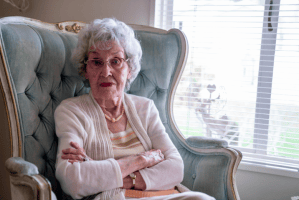
Meet Alexandra Flamm, a self-described adrenaline junkie who grew up knowing she wanted to work in the medical field to help save lives.

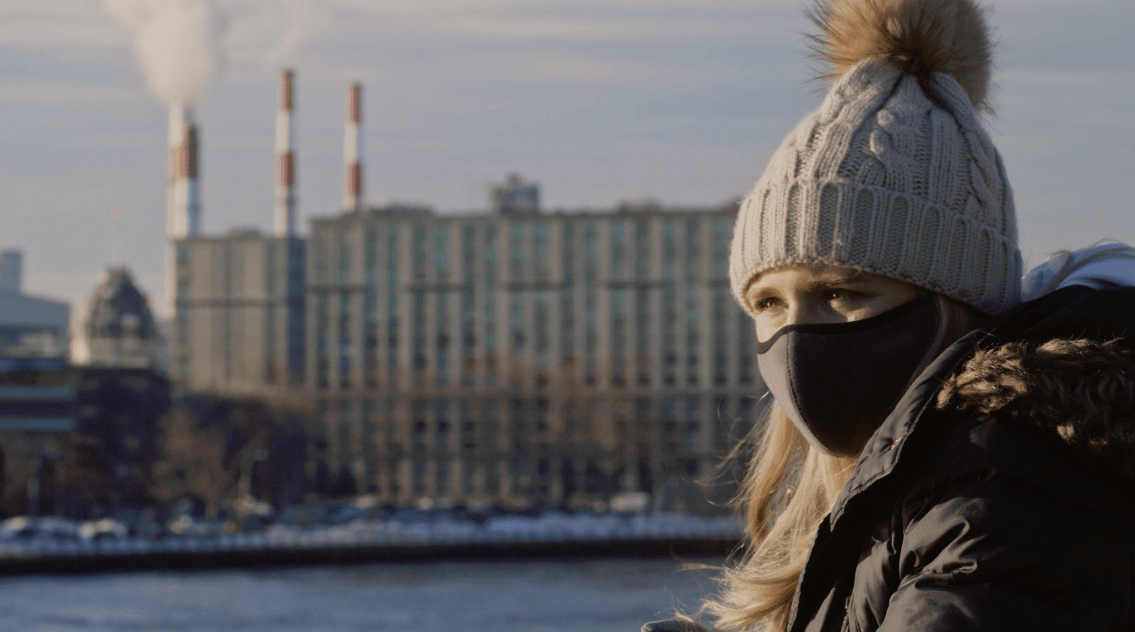
After receiving her degree in nursing, Flamm landed a job working in a Trauma Intensive Care Unit in the Bronx. Her hospital was located in one of the hardest hit areas when COVID-19 struck in March of 2020. Watching patients suffer from a mysterious virus no one had seen before shook Flamm; it upset her to know there were limits to what she could do to help.


Alexandra | Heroes Behind the Masks presented by CeraVewww.youtube.com

"I have never treated an illness I knew so little about. None of us had. So I couldn't tell patients that we would get them through this. I could only assure them that they would never be alone and we would be there through it all."

However, she didn't let fear stop her—instead, Nurse Flamm found creative ways to offer hope to patients' families during a very dark time. Because she was caring for COVID patients who were sedated and on a ventilator, she encouraged family members standing on the other side of the glass to call her cell phone, which she put inside of a plastic bag and placed next to the patient's ear.

"I always encourage family to talk to their loved ones. I would stand next to them looking at her through the glass door and try to be as honest as possible when they would ask me questions," she said. And if the patient took a turn for the worse, Flamm was there to hold their hand.

"Holding a patient's hand as they are dying because their loved ones couldn't be there was heart-wrenching and comforting at the same time...it felt like a privilege," she said.

Working in a hospital located in a COVID hotspot meant that Flamm and her co-workers were drowning in a sea of patients who needed ventilators and ICU care. It was virtually impossible to keep up. When travel nurses and other healthcare workers began showing up from elsewhere to help, it made a tremendous impact.
Courtesy of CeraVe

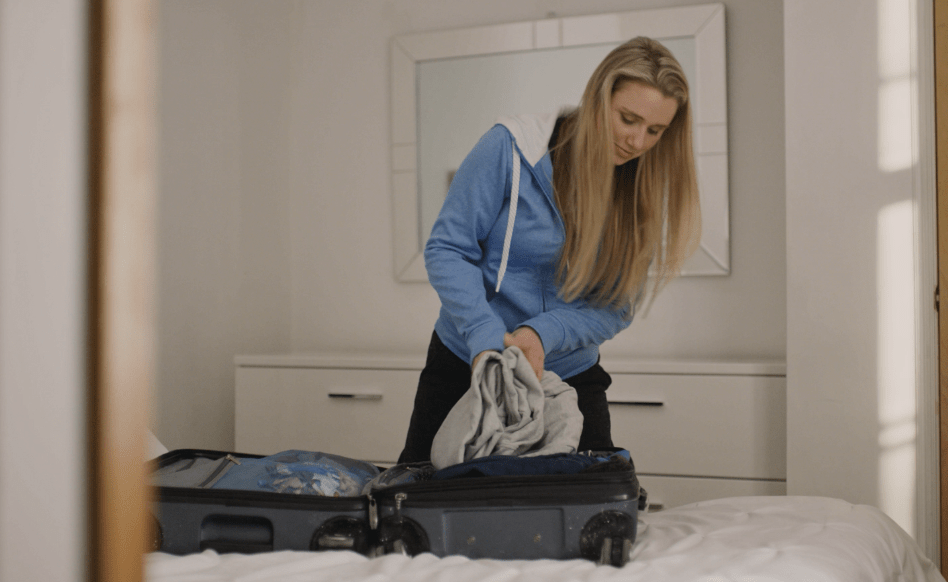
"I truly felt rescued by them, mentally and physically. They had such courage to jump right into a brand new place with no orientation and at the scariest time to be a healthcare worker...I wanted to be able to do that for someone else," Flamm said. "I wanted to go to a hotspot where the healthcare workers felt like they were drowning just like I had, and be able to help them feel rescued. And I wanted to use the knowledge and experience I had gained fighting COVID to help patients elsewhere."

So that's exactly what Flamm did. Once things started to calm down in New York, she quit her job at the hospital to become a travel nurse, flying to COVID hotspots all across the country. "I just wanted to go anywhere where [the spread of] COVID was [increasing]," she said. "It felt like a calling."

As a dermatologist-developed brand rooted in the medical community, CeraVe® is committed to supporting and celebrating healthcare professionals like Nurse Flamm. To give back to the workforce that is always giving so selflessly to others, CeraVe® put out a call to nurses to share their stories for a chance to be featured in Heroes Behind the Masks, a digital content series shining a light on nurses who go above and beyond to provide safe and quality care to patients and their communities.

As part of its commitment to nurses, CeraVe® is also a proud sponsor of the ANA Enterprise and their Healthy Nurse, Healthy Nation™ initiative, a movement designed to transform the health of the nation by improving the health of the nation's 4.2 million registered nurses. Through the initiative, ANA is connecting and engaging with nurses to inspire them to take action in five key areas: activity, sleep, nutrition, quality of life and safety.

Additionally, over the past year, CeraVe® has donated more than 500,000 products to hospitals to help provide therapeutic skincare relief to healthcare workers and is continuing the product donation efforts. Nurses looking to engage with the brand and learn more about these initiatives can join the Shift Change: Nurse Essentials Facebook group, an online community hosted by CeraVe® where nurses come together for personal and professional empowerment.

To see more stories about nurse heroes, visit https://www.heroesbehindthemasks.com/.

Gen Z; Millennials; technology; cell phones; social media; teens and technology; teens social media

Gen Z is the first generation less cognitively capable than their parents. Denmark has the solution.

Nearly every parent hopes their child will be better off than they are: smarter, more secure, and more well-adjusted. Many parents see this as a stamp of successful parenting, but something has changed for children growing up today. While younger generations are known for their empathy, their cognitive capabilities seem to be lagging behind those of previous generations for the first time in history.

Dr. Jared Cooney Horvath, a teacher turned cognitive neuroscientist who focuses on human learning, appeared before Congress to discuss concerns about cognitive development in children. In his address to the members of Congress, he says, "A sad fact that our generation has to face is this: our kids are less cognitively capable than we were at their age. Since we've been standardizing and measuring cognitive development since the late 1800s, every generation has outperformed their parents, and that's exactly what we want. We want sharper kids."


kids, intelligence, sharp kids, generations, education, cognitive abilities Student smiling in a classroom, working on a laptop.Photo credit: Canva

Horvath explains that the reason this happens is that each generation has gone to school longer than the previous generation. Gen Z is no exception to the longer duration of time spent in school, but they're the first ones who aren't meeting this normal increase in cognitive development. According to the cognitive neuroscientist, the decline is due to the introduction of screens in the classroom, which started around 2010.

"Across 80 countries, as Jean was just saying, if you look at the data, once countries adopt digital technology widely in schools, performance goes down significantly. To the point where kids who use computers about five hours per day in school for learning purposes will score over two-thirds of a standard deviation less than kids who rarely or never touch tech at school," Horvath reveals.

In most cases, the decline in performance doesn't result in better strategies. The neuroscientist shares that the standardized testing has been adjusted to accommodate lower expectations and shorter attention spans. This is an approach that educators, scientists, and researchers went to Capitol Hill to express wasn't working. But not every country is taking the approach of lowering standards to meet lowered cognitive ability. Denmark went in the opposite direction when it realized their students were slipping behind.

France24 recently interviewed educators in Denmark following their seemingly novel approach to students struggling with cognitive development. Since the beginning of the 2025/2026 school year, Denmark has not only been having students turn in their cellphones, but they've also taken tablets, laptops, and computers out of the classroom. No more digital learning for the majority of the school day. Danes went old school by bringing back physical textbooks, workbooks, and writing assignments. The results have been undeniable. Even the students can't seem to deny the success of the countrywide shift in educational approach.

"I think the biggest issue has been that, because we kind of got rid of the books and started using screens instead, that we've noticed that a lot of the kids have trouble concentrating, so it's pretty easy to swipe with three fingers over to a different screen and have a video game going, for example, in class," Copenhagen English teacher, Islam Dijab tells France24.

Now, instead of computers being part of every lesson, Denmark uses computers very sparingly and with strict supervision. One student says that it has been nice not having screen time at school because she loves to read and write. But it wasn't just the lack of attention span children were developing, they were also developing low self-esteem and poor mental health due to the amount of time spent on devices.

kids, intelligence, sharp kids, generations, education, cognitive abilities Students focused and ready to learn in the classroom.Photo credit: Canva

The data showing the negative impact of screens on teens' brains has prompted a nationwide change in Denmark that extends outside of the classroom. Afterschool activities are eliminating or extremely limiting electronic use. There is also a national No Phone Day that encourages everyone to put away their devices for the day, and Imran Rashid, a physician and digital health expert, is petitioning parliament to ban social media use for children under the age of 15. The no phone movement in Denmark is a nationwide effort that hopes to right the ship before another generation feels the effects.

inflation, inflation prices, food inflation, grocery inflation, grocery prices inflation

Inflation has impacted food prices.

Grocery prices have have continued to soar in the United States due to inflation. According to a new U.S. Bureau of Labor Statistics report on food inflation prices, they continue to increase in January 2026.

Certain foods have been impacted more than others. Coffee prices increased 20% from December 2024 to December 2025, while beef prices increased 15.5% percent, per ABC News.


Current grocery prices have impacted how people shop. Frugal people on Reddit discussed how inflation has changed their grocery shopping habits to stick to a budget. Many shared the foods and ingredients they have stopped buying due to increasing costs. Plus, they explained how it has positively impacted them—from becoming better bakers to making swaps that they like even better.

From meat to desserts, these are how frugal people are dealing with food inflation costs.

- YouTube www.youtube.com

Protein

"Haven't bought any beef other than hamburger in over a year. The prices are laughable." - polishprince76

"Yeah, we switched from ground beef to ground turkey over a year ago bc it was cheaper. Steak was never in the budget and now neither is ground beef." - TraditionalChest7825

"Beef, of course, is ridiculous. We've learned to make a lot of our recipes with chicken these days. I make chicken meatballs, chicken burgers and chicken meatloaf. We found it is cheaper to make our own ground chicken when boneless, skinless chicken is on sale than to buy it already ground. I don't mind as chicken is healthier than beef, anyway." - aeraen

"I swapped a lot of meat for tofu/ beans. If I do have meat on sale or something, I always make it last longer by like mixing it with beans/ mushrooms to go the distance too." - rockdog85

"Not sure if this is what you are after, but I moved from a place where peanut butter was cheap and tahini was expensive to a place where tahini is cheap and peanut butter is expensive, so now I use tahini in all the recipes where I used to use peanut butter." - tlatlsaddlebattle

"We try to find rib roast sales as it brings the price down and then we cut them to our liking or sometimes we will have the butcher do it." - Florida1974

Carbs

"I’m eating more oatmeal. Cereals are so expensive and they require milk." - EmmelinePankhurst77

"Chips. Every so often if there's a really good sale (4 bags for $10 isn't too bad) but no way is a bag of Lay's worth $4.79 or more." - myystic78

"I've switched to buying popcorn kernels instead, but I'd probably make an exception for something like a party." - Signal_Error_8027

"$7 for a loaf of bread? No thanks, I’ll bake my own. Getting a bread machine makes it super easy, too!" vozzov, Pretend-Policy832

"I learned how to make bagels! Honestly, just google homemade bagel recipe and pick the one that works for you! I’ve only made them with Greek yogurt so far (and they came out great), but I’m going to try making some with yeast next." - Efficient_Swan_9182

"Frozen pizzas. We make fresher single serve pizzas using Greek pita breads, or flatbreads as the base, with olive oil, shredded mozzarella cheese and whatever leftover/stored garden vegetables we have." - SnooMarzipans6812

Drinks

"Any sort of beverage. I used to buy Diet Coke pretty regular as it’s one of my few vices, but I can’t justify the price anymore. Occasionally I’ll buy the Aldi brand flavored seltzers but beyond that, we just drink filtered water from the fridge." - Alpacalypsenoww

"I started making jugs of iced tea, using (relatively inexpensive) tea bags. Soda is, indeed, too expensive, but sometimes I like having something to drink that isn't water." - witty_grapefruit

"I’ve found the Walmart version of Sprite called 'Twist Up' I feel is almost identical to Sprite & only costs $1 for a 2-liter." - Jedi_Hog

"Coffee pods. I bought a canister of Illy ground coffee on sale and it’s lasting me a lot longer than buying those Starbucks Nespresso pods. I love the smell of the ground coffee too. And less Vital Farm’s eggs and more from Costco." - Easy_Growth_5533

"I don’t drink coffee, but I do need a little caffeine or gogo juice as I call it, to get me going. So I started buying the Mio drink mix that you put in water. Certain ones do have caffeine in them and it doesn’t take much, so it saves money." - Florida1974

Sweets

"Any kind of cake. I learned how to bake and glad for it. I didn't realize how easy it is to do most of the basics (muffins, banana bread, Madeira cake, blueberry loaf, shortbread, etc). Most of the cakes and treats I used to buy are better homemade." - Chancevexed

"I stopped buying candy bars also. Instead, I substitute a bag of dark chocolate baking chips/morsels. Lasts months longer than a candy bar and still get a small chocolate fix a couple of times per week." - Katesouthwest

"My jaw dropped when I saw a small bag of chocolate chips was 6 dollars a bag. Hard pass! Sometimes large bars of chocolate go on sale. We just chop it for baking. It is way better than chocolate chips." - HappyinBC, HappyinBC

parenting, teens, raising teens, teen hangout, high school, game night for teens, activities for teens, parenthood

Amy White explains how her house became "the house" for her teens.

I grew up in "the house." In high school, my home was the designated place where my friends gathered, sometimes in big groups, sometimes just my small core squad. My three best friends spent the night there almost every Friday and/or Saturday night for four years straight. We devoured Totino's frozen pizzas by the dozen, inhaled soda, and laid waste to any snacks or leftovers that were brave enough to survive in the kitchen. Not only that, but my house was pretty small — four teenage boys took up a lot of space in the living room (the whole thing) and made a lot of noise playing video games deep into the night. It must have driven my parents and older brothers crazy. It's a wonder anyone put up with it.

Or so I thought when I was younger. When I became a parent myself, I started to understand a little more why my mom and dad were so willing to host and feed all my friends and me every single weekend. Why the outrageous grocery bill and constant chaos in the house were probably a small price to pay.


Mom explains how to make your house 'the house' where teenagers hang

One mom has perfectly encapsulated the value of turning your home into "the house" for your kids and their friends, and exactly how she did it for her family.

teens, teen house, teens hanging out, teens having fun, teenagers Teens hanging out in a living room.via Canva/Photos

Amy White shared a reel on Instagram showing her college-aged son hanging in her dining room with a group of friends playing cards. The text overlay reads "What makes your kids' high school friends want to come over, play cards & spend the night on their College Christmas Break." I think most parents can agree that we want our kids to keep coming home as long as possible! So how exactly did White pull this off?

Her explanation in the caption was spot-on.

First, White says that you have to start early. Become "the hang out house" in high school or even earlier. Then you have a better chance of holding onto the mantle into your kid's college years.


Next, be ready to stock the house with snacks and drinks, and don't make a fuss when your kid's friends have at it. "The kids knew we had food," she writes, "BUT they also knew I didn't care what they had. They knew they could eat anything in my pantry and fridge."

Third, and this is a big one, don't mistake being the "cool house" for being "the house." Some parents choose to allow their underage kids and friends to drink alcohol under their supervision, but you don't have to bend your morals and the law to lure the squad over to your place. Pizza and Coke is plenty to keep most teens happy. "We were not the house that served alcohol or even allowed the kids to bring alcohol to our house. And Guess What?? The kids still came and wanted to hang at our house!"

teens, teen house, teens hanging out, teens having fun, teenagers Teenagers eating pizza.via Canva/Photos

Fourth, always say Yes (as often as possible, anyway) when your kids want to have friends over. "They know my answer is 99% of the time YES," White writes. "You have to have your kids take the leadership of offering your home and if your home was 'open' to their friends in high school, they know it will be 'open' to their friends in college."

As a bonus tip, White pleas with parents not to worry about the mess having friends over makes. "I love a clean house and organization, BUT I would much rather have a crazy messy house for the kids where memories are made than a quiet house with nothing going on just to keep my house 'clean.'"

Should parents allow teens to drink at home?

There's an age-old debate over whether parents should allow teens to drink at home because it's better than if they do is unsupervised or keep their home dry as a bone. A recent study out of the University of Buffalo found that kids who grew up drinking at home had a greater chance of having addiction problems when they got older. "A robust relationship was found between parental permission to use alcohol during adolescence and increased alcohol use frequency and quantity, alcohol use disorder symptoms, and alcohol-related harms in young adulthood," the study says.

White writes, "It's worth being 'the house', so let go of control & get to know your kids friends." Commenters agreed.

White's video went viral to the tune of 8.5 million views and hundreds of comments. Parents shared their own experiences of what it's like being the default hang out house.

"Our house was the high school hangout for my son and friends... every weekend... I loved it!! Miss it now that they are all college graduates and have moved away. I love seeing them when they do come home for the holidays"

"A wise man once said don't be the house with the alcohol. Be the house with the food."

"Amy 1000% agree!!! My house is full of teenagers on the weekends and I love every bit of it. Even though I wake up to a kitchen that looked much different from when I left it"


teens, teen house, teens hanging out, teens having fun, teenagers Teenagers eating pizza.via Canva/Photos

"We never allowed alcohol, drugs, bad language, always respectful, and guess what, our house was always the house where the kids hung out. First my daughter, then my son. Through grade school, high school, then when my kids went out of state for college their college friends would come spend a couple weeks during the summer. I always thought of it this way, I loved knowing my kids friends and, who knows, maybe some of those kids, especially during the younger years, just maybe those kids just needed an adult to care. Anyway, it was always fun to have them here!"

"It used to crack me up when my daughter would bring over a bunch of her friends (girls and boys) in high school and instead of hanging out in the family room they all wanted to crowd into either the kitchen with me or our tiny office and happily share all the gossip with me."

Experts say that knowing your kids' friends, and their parents, can have huge benefits. Not only will it bring you the peace of mind of knowing where your kid is and who they're with when they get to those crucial high school years, it has been shown to tangibly improve kids ability to create positive relationships and problem-solve collaboratively. Plus, it can actually be really fun! Kids and teens are the funniest, silliest, most interesting people on the planet. Having a house full of them is messy and loud, but it's always a good time.

One caveat: "don’t feel bad if your house isn’t the chosen house," one commenter reminds us. "Just be happy your kid has a good group of friends and be thankful they have somewhere safe to hang out."

This article originally appeared last year.

hiccups, health, hiccup remedy, stopping hiccups, holding your breath

A simple method of stopping the hiccups takes less than 20 seconds.

Most of us get the hiccups on occasion, and some people have waged battles with persistent bouts of them. While harmless, hiccups are annoying, especially when it feels like they're never going to stop. There are all kinds of tips people have for getting rid of them, from drinking a glass of water upside down (which has never made sense) to holding your breath (which sometimes works) to having someone startle you (it's hard to be startled when you know it's coming).

Stanford University neuroscientist Andrew Huberman explains a science-supported technique to "reliably" stop hiccups in their tracks. It's a variation on holding your breath, with a couple of simple but important tweaks. Watch:


- YouTube www.youtube.com

"It's a technique that takes advantage of hypercontracting the phrenic nerve over a short period of time," he explains, "so that it then subsequently relaxes or alleviates the spasming of the phrenic nerve. And that simple method is to inhale three times in a row."

On the first inhale, you breathe in deeply through your nose. Then, without exhaling any air, you inhale again through the nose (however brief). Then you inhale a third time, which might be just a micro- or millisecond of breath, and hold your breath for about 15 to 20 seconds before exhaling slowly.

People in the comments said they tried it and shared their experiences:

"Amazing how fast this worked. 10/10!"

"It really stopped, I had them for 10 minutes and it worked, thank you!"

"Just finished first chemo treatment. Hiccups have been terrible. This helped me so much. Thank you!"

"This man is saving lives. I had hiccups for hours tried this and it worked right away."

"It worked!!! I have been hiccuping for the past 30 mins and it's started to get frustrating for me, then I came across this short and now I'm fine. Thank you."

What exactly are hiccups?

The Cleveland Clinic explains:

"Hiccups are repeated spasms of your diaphragm paired with a 'hic' sound from your vocal cords closing. Your diaphragm is a thin, dome-shaped muscle that separates your chest from your belly. It moves downward when you breathe in and upward when you breathe out.

Two things happen when you hiccup:

  • Your diaphragm pulls down suddenly between breaths, making you quickly suck in air.
  • The glottis (space between your vocal cords) suddenly closes to stop more air from coming in.

These actions make the 'hic' sound of a hiccup."

Hiccups usually go away on their own, but some people experience episodes that last much longer than expected. If they persist for more than two days, it's time to see a doctor.

hiccups, health, hiccup remedy, stopping hiccups, holding your breath Three inhales is all it takes.Photo credit: Canva

What causes hiccups?

As for the physiological cause, something irritates the phrenic nerve or vagus nerve, causing your diaphragm to contract and spasm. A number of factors can cause the irritation that leads to hiccups, and the Cleveland Clinic categorizes them as transient (temporary), persistent, and intractable.

Transient hiccups

According to the Cleveland Clinic, there's "often no clear cause for a random hiccup or two. But certain triggers might play a role, like:

  • Eating too much or too fast.
  • Eating spicy foods or foods that are very hot or cold.
  • Drinking carbonated beverages.
  • Swallowing excessive air (aerophagia).
  • Smoking tobacco or cannabis.
  • Drinking beverages containing alcohol."

chili pepper, spicy food, hiccups, hiccup triggers, what causes hiccups Spicy foods can trigger hiccups.Photo credit: Canva

Persistent and intractable hiccups

The Cleveland Clinic says "various medical conditions can cause persistent hiccups, including:

  • Gastrointestinal diseases, like GERD or gastritis.
  • Conditions affecting your central nervous system, like stroke, Parkinson's disease or multiple sclerosis.
  • Lung conditions, like pneumonia, pulmonary embolism or pleurisy.
  • Tumors or lesions, like mediastinal tumors, esophageal cancer, or pancreatic cancer.
  • Conditions that disrupt your metabolism and related nerve signaling, like uremia or hypocalcemia.
  • Certain infections, like flu, shingles, and herpes simplex.

Some medications can also cause persistent hiccups. Examples include:

  • Dopamine agonists.
  • Benzodiazepines (at low doses).
  • Some chemotherapy drugs.
  • Dexamethasone.
  • Azithromycin.

Persistent hiccups may also happen after certain surgeries or procedures, including those that require general anesthesia."

Whatever is causing your hiccups, getting them to stop is surely the primary concern. Try Huberman's three-inhale trick and see if it works as reliably as he suggests.

map, san francisco, tourist, california tourist, map of us, european tourist

Tourists looking at a map in San Francisco.

A few years ago, there was an online trend in which Americans posted things the “European mind can’t comprehend,” a series of memes featuring photos of vast spaces, incredibly huge restaurant portions, and Costco shopping sprees, to name a few. It was basically a joke about American grandiosity, which contrasts with more modest European sensibilities.

A significant difference between the European Union and the United States is size. Europe comprises 47 countries spread across 3,837,083 square miles, and the United States is one country covering 3,796,742 square miles. Therefore, in the U.S., the distance between major cities, especially in the west, is hundreds, if not thousands, of miles. Europeans may casually think that the U.S. is the size of a single country, such as Germany, when in reality, each state is the size of a European country.


The difference in distance and size leads to some rather funny moments in which Europeans assume they can travel from one coast to another in the same day. Or, at least, to different destinations in the same state in an hour or two. However, this couldn’t be further from the truth.

A Reddit user on the Casual Conversations subforum shared a funny story about a friend from the UK who thought they could wake up in Los Angeles, drive to the Grand Canyon for a quick hike, and then have dinner back in West Hollywood. In reality, even on a weekend, this round trip would take about 17 hours in the best-case scenario. That's without factoring in time to hike the canyon. The story inspired other Americans to share funny stories about friends in Europe who seriously underestimated the size of the U.S.

road trip, touring american, maps, mountains, snow, car A tourist takes out their map.via Canva/Photos

Here are 11 funny stories about Europeans who misjudged the size of the U.S.

1. Detroit for the afternoon?

"Not me, but my grandparents. They'd emigrated from Germany to the US in the late 1920's while in their 20s. Lived in the NY metro area. Somewhere in the 1960 or 70s or so, they had friends or relatives (I don't remember which) visiting from the old country who asked if they could perhaps drive to visit other friends of theirs, maybe for afternoon coffee one day... in Detroit. They politely explained that wouldnt work and how far it was.... but chuckled about it for decades after the visit."

"Detroit for coffee?! That is a 600-mile latte run."

2. Stop by Seattle?

"Distant relative from Austria was visiting his friend in Connecticut. Asked if he could stop by and see me on his week-long trip. I live in Seattle."

3. Stop by Dallas for dinner?

"My mom speaks Italian and on her way home one year, her plane was about to land in Chicago when she heard the two Italian men behind her excitedly talking about their plans. One said to the other, 'Okay. We'll pick up the rental car and then we'll drive to Dallas for dinner.' My mom eventually got them to realize that they'd be spending two full days in the car just getting to Dallas if all they did was drive. She suggested they find some food in Chicago instead."

dallas, texas, dallas freeway, sallas skyline, dallas sunset, The freeway leading into Dallas.via Canva/Photos

4. Shopping in San Francisco?

"My uncle is from Hawaii. He thought we could drive from LA to San Francisco to shop that morning and then maybe hit Venice Beach before dinner."

5. San Francisco for dinner?

"Fellow Angeleno here. When I was still in my last retail job, we got a lot of overseas tourists, and it wasn’t unusual for them to not realize how BIG the USA is. One customer asked me 'We’re thinking about going to San Francisco for dinner. What time should we leave?' He was so shocked when I explained that San Francisco was about an 8-hour drive with afternoon traffic."

It is about 380 miles to get from Los Angeles to San Francisco.

6. LA, DC, Miami in a single day?

"I had a group of EU friends who wanted to visit the US for a week. By the time I got out of that 5hr group call, they cancelled the whole trip. They wanted to land in Seattle, spend about 3 hours with me giving them a tour of the city, get a rental car, and explore LA, DC, and Miami all in a single day. The next day, hit up Yellowstone, the Grand Canyon, and mt rainer. The day after, hit up a Buckees for breakfast in Texas, eat lunch in NYC, and have dinner at my place in Seattle with my family, then go to Las Vegas after dinner to go party... Oh, and they only had $500 each (2k total), with plans to individually pay their own way, no travel insurance, and no temporary "travel" phone plans (meaning no phone service OR insured hospital visits if something went wrong). First thing i did when i got added to the call was pull up a pic of the US overlayed on top of Europe, and pointed out where seattle was, and all the other places they wanted to go, in comparison to Europe. Instantly deflated in excitement, then i went into cost of living for each state they wanted to visit."


7. 9/11 worries

"A Scottish family we knew lived in the States during 9/11. They got several concerned calls from friends and family wanting to make sure if they were okay and asking if they could see the Towers. They were in Michigan."

8. Why American's 'don't travel'

"I think this misunderstanding is at the root of a lot of how Europeans can judge Americans for “not traveling.” If it takes someone two hours to get to a different country and it takes me more than two hours to drive across Massachusetts, then the cost and time burdens aren’t equivalent."

9. How close is Florida to California?

"I was in Belfast earlier this year. The woman at the hotel front desk asked how the 'long drive' from Dublin was. As Americans, we were like, Oh, it wasn’t bad at all. Everything is a long drive in America. And she said, 'Yeah, it’s probably like twelve hours from Florida to Cali.'"

In reality, it would take about 45 hours to drive from San Francisco to Miami.

10. Walk from Syracuse to NYC?

"Years ago, a friend in the former Czechia was thinking of going to art school in NY. They were excited that they would be able to study, and have fun in the NYC clubs at night. The school was in Syracuse. It broke both his heart and brain when I told him it would be a 4.5-hour drive to NYC. He was under the impression he could 'just walk there.'"

11. Disney to Disney in 6 hours?

"Had a friend who wanted to rent a car and drive from Disneyland to Disney World. When they told me I immediately started laughing.They had no idea of how big the USA is and thought it might be a 6-hour drive tops."

In reality, it would take around 40 hours to drive from Disneyland in Anaheim, California, to Disney World in Orlando, Florida.