upworthy
Add Upworthy to your Google News feed.
Google News Button
Capital One Impact Initiative

A grandmother wanted to give her grandchildren the life they deserved. This building has made it possible.

A grandmother wanted to give her grandchildren the life they deserved. This building has made it possible.
Courtesy of Capital One
True
Capital One

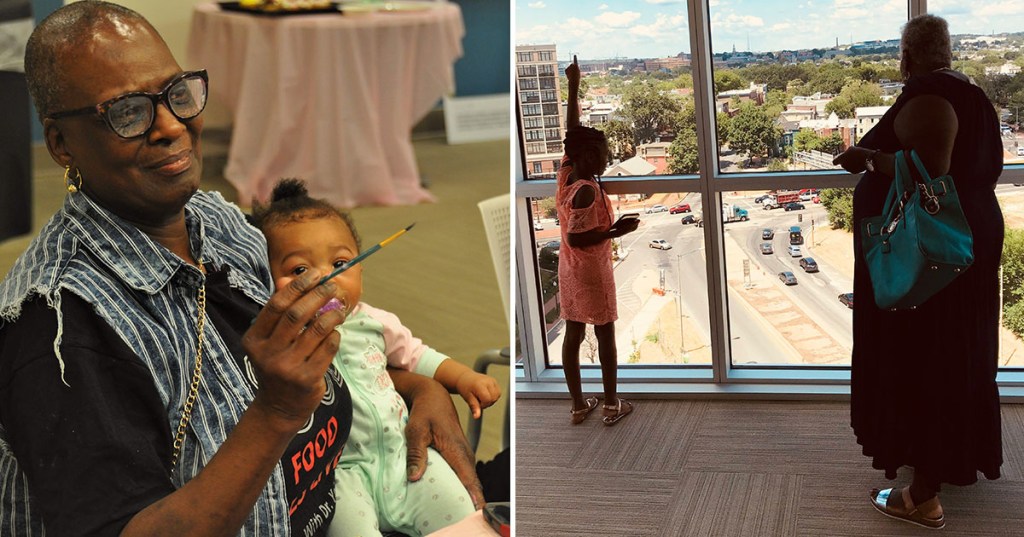
It was around Christmas 2018 and Jean Simpkins, 79, was looking out the window of her new three-bedroom apartment. Eleven floors above Washington, D.C., the grandmother of two gazed out at the lights of the city and became overwhelmed with gratitude. "The only thing I could say," Simpkins remembers, "was 'Thank you, Father.'"

Almost a year later, Simpkins still can't help but look at the apartment as a miracle — one she desperately needed. Fifteen years ago, when her grandson was born, she became his primary caregiver. Six years later, when her granddaughter was four, Simpkins was awarded full custody of her, too. She's spent the time since trying to give her grandchildren the life she knows they deserve, which has been difficult on a fixed income. On top of that, Simpkins worried that the neighborhood the family resided in wasn't the best influence on her kids. Something had to change.

Then she learned about Plaza West, a new development created by Mission First housing that would reserve 50 of its apartments specifically for families in which a grandparent or other older adult was raising children who were related to them. The waiting list, Simpkins says, was daunting. There are a great deal of grandfamilies in the D.C. area and she was sure it might be years before she got the call. But soon after applying, she was offered a choice between a two-bedroom and a three-bedroom apartment. She accepted the latter, sight unseen. She knew that each of her grandchildren needed space of their own.


Simpkins' apartment is spacious, and the twinkling lights she sees on the horizon every night are a bonus. But the real reward of living at Plaza West is the community that the grandfamilies — 49 grandmothers, three married couples, and one "very popular" single grandpa — have created for their children (and themselves). It's an intergenerational center, one where youth and seniors come together to learn from each other and give and receive wisdom.

At Plaza West, grandparents aren't just responsible for their own grandchildren. They become surrogate grandparents to every one of the kids living in the building. One grandmother, Simpkins says, takes all the children to basketball games. Other grandparents share the task of taking children to school and making sure they're back home safely.

Each month, grandparents gather together for "fireside chats," community meetings where they discuss their goals for the community as well as ask for support and air grievances in an encouraging environment. In the halls and common areas, grandparents hold all grandchildren accountable for their behavior — quickly addressing any symptoms of trouble and always imparting the importance of kindness and respect.

"We're all a family here," Simpkins says, both proud and grateful of the help she gives and receives from the people around her. "It really does take a village."

Grandfamilies, Simpkins adds, need to be a priority when it comes to housing — and Capital One agrees. That's why the bank, which has a long history of giving back to the community, worked so hard to help make Plaza West a reality for the grandparents, grand aunts, grand uncles, and children who need it.

"It's very difficult for grandparents who are raising their grandchildren on their own to find decent housing," says Ed Delany, a Capital Officer for the Mid-Atlantic region at Capital One who arranged the financing the bank provided. "There's a huge need, both nationally and in the District, for this type of housing." But that housing is rarely affordable. And when it is, Delany says, it's often sub-standard. Capital One wanted to ensure that grandfamilies in D.C. not only had a place to call home, but a place they'd be proud to live.

In order to achieve this, Capital One provided a $7.5 million construction loan and purchased more than $35 million in Low Income Housing Tax Credits to help Mission First make miracles happen for Simpkins, her family, and the other residents of Plaza West. In addition, Capital One left a $200,000 social purpose grant in place. That money is helping provide on-site support for the residents.

Capital One is proud to continue partnering with faith-based developers like Mission First because they help provide housing for those who need it most. They also allow people who've lived their whole lives in suddenly-popular neighborhoods to avoid getting priced out. Developments like Plaza West, Delany says, have had a major impact on quality of life as well as future prospects for the residents of the neighborhoods they serve.

Nothing could be more true for Simpkins and her grandchildren. Though they weren't happy with the move at first — it meant they'd have to leave some old friends behind — now that they've had time to adjust, they're flourishing. Since moving to Plaza West, both grandchildren have made the honor roll. And with more and more activities being added for older kids, including visits by mentors and programs created by Howard University, it's becoming easier to keep them involved closer to home. The neighborhood, Simpkins adds, has only become more safe and beautiful with the addition of Plaza West.

The greatest reward for her family, however, is the social support that living with other grandfamilies provides. The similar experiences they share helps provide both connection and comfort. Parenting is one of the world's hardest jobs, even with a strong support system. It can often make guardians feel isolated and lonely. That goes double for families that would be considered "non-traditional." But at Plaza West, Simpkins says, no one feels alone.

To learn more about Capital One's Community efforts, go to https://www.capitalone.com/about/.

dance, motherhood, mommy daughter dance, mother daughter relationship, parenting, wholesome
Umi4ika/Youtube

Svetlana Putintseva with her daughter Masha.

In 2005 at only 18 years old, Russian rhythmic gymnast Svetlana Putintseva became a world champion, after which she retired and eventually became a mom. Then, in 2011, Putintseva came out of retirement for one special Gala performance.

Little did anyone know that her then two-year-old daughter named Masha would be the key to making that performance so special.


As the story goes, the young child refused to leave her side that night. But rather than stopping the performance, Putintseva did what so many incredible moms do: she masterfully held space for two different identities.

As we see in the video below, Putintseva simply brought Masha onto the dance floor and incorporated her into the routine—holding and comforting her at times, performing impressive moves while she ran around at others…letting it all become a lively, endearing interaction rather than a rote routine. It became something really touching:

Watch:

Now, a bit of fact-checking as this video has once again started going viral. Despite what many captions say, Putintsevaā€˜s daughter was likely always a planned part of the performance (the tiny leotard is a bit of a giveaway). But that doesn’t really take away from the message behind it: motherhood weaves another soul into one's identity, forever. And one of the biggest lessons it teaches is how to hold someone else steady, all while becoming ourselves.

Every day, moms are engaging in a similar type of ā€œdanceā€: navigating through the world while guiding and nurturing their little ones. It probably doesn't always feel quite as graceful as what Putintseva put out, and, yet, it is just as beautiful.

dance, motherhood, mommy daughter dance, mother daughter relationship, parenting, wholesome A mother hugging her daughter.Photo credit: Canva

Maybe so many thought it was an improvised moment because improvising is a very real parent superpower. That’s certainly the takeaway we get from some of these lovely comments:

ā€œYou cannot control life but you can learn to dance with it. šŸ¤ā€

"This is beyond beautiful. 🄲"

ā€œIf this isn't a metaphor for motherhood. We improvise so much.ā€

ā€œA mother’s unconditional love šŸ„¹ā¤ļø She just made my whole month.ā€

ā€œI do this sometimes while deejaying. My daughter comes up so I hit the slicer and let her chop it up. A few chops and she is happy and goes about her business. šŸ„°ā€

ā€œI can see my daughter doing this to me soon whenever I get up on stage on perform. She already stares long and hard at me whenever I am onnstage singing. She doesn't take her eyes off me. Sure she would be running up to stand with me when she starts walking šŸ˜‚šŸ˜‚ i look forward to it thoā€

ā€œSobbing 😭😭😭😭 As a dancer who hasn’t performed since having a kid, this inspires me in so many ways 🄹🄹 So beautiful and it’s clear that she admires her mom so much šŸ„°ā€

- YouTube www.youtube.com

Though not much is written on Putintseva following this performance, one blog post says that Masha has followed in her footsteps by getting into rhythmic gymnastics. Maybe it all started with this one performance. ā¤ļø

uncomfortable conversation, awkward conversations, hand over mouth, silence, stop, young girl

A young girl with her hand over her mouth.

Few things are more uncomfortable than sitting like a deer in the headlights while someone pushes you into an incredibly awkward conversation. Whether it’s a TMI (too much information) conversation or they want to talk about politics or religion, it’s hard to tell someone that a subject is off-limits.

However, in a viral Instagram post, Charisse Sims makes an essential point about these awkward situations: it will be uncomfortable whether you tell them to change the subject or if you have to sit through the conversation. So, it’s better to take the option that’s less harmful to you. Sims is a mother of six and the host of the Parenting for the Culture podcast. She is also an awarded Educator by PBS and PBS Kids and founder of The Sims Library of Poetry.


How do you leave uncomfortable conversations?

In an Instagram reel from last spring, Sims shares advice with her then nine-year-old daughter, who she could tell felt very awkward about a recent conversation. ā€œImmediately, when she started having that conversation, I could see on your face that you felt uncomfortable,ā€ Sims told her daughter in the video. ā€œWhen you have that feeling, your response to them should be, ā€˜I feel uncomfortable in this conversation. Let's talk about something else.ā€

Sims then asked her daughter to repeat the phrase a few times to burn it into her brain for when she needed it. Her daughter then admitted that telling someone to change the conversation would be difficult. Most people probably agree that telling people you’d like to change the subject is uncomfortable.

However, Sims makes a great point: you will be uncomfortable both ways, so choose the one that best suits you.

ā€œWhich one is a longer discomfort, taking 10 seconds to say, ā€˜I feel uncomfortable in this conversation. Can we talk about something else?ā€ Sims asked. ā€œOr, sitting in a 20- to 30-minute conversation that you feel uncomfortable in?ā€

stop, child, girl says stop, talk to hand, hand out, stop hand, conversation, awkward A young girl holding her hand out saying "stop."via Canva/Photos

ā€œIt is uncomfortable telling people stop. It is uncomfortable being like, ā€˜I don't really like what you're doing,’ because you're worried you're going to hurt their feelings, and you want them to like you,ā€ Sims continued. ā€œBut it's also uncomfortable to sit there and be uncomfortable for a long time. So choose your discomfort, and choose the one that's going to help you, not hurt you.ā€

Candace Smith, an etiquette expert, says it’s also helpful if you have another topic on deck that the person may be interested in to make the transition smoother for both parties. ā€œWhen you think it’s time to let the other person know you will change the subject, be positive, and smile. Keep your eye contact warm and direct,ā€ she advises. She then gives an example: ā€œI’m going to change our subject here. Let’s talk about something cool like the Marvel movie!ā€

mom, daughter, advice, lessons, parenting, how to Mom and daughter.via Canva/Photos

Sims' advice is important because it’s something that all of us, adults included, can use next time we are forced into an uncomfortable situation. Her advice is a great tool for making sound decisions when we feel awkward and unable to think on our feet. ā€œI wish when I was growing up, I was taught more how to navigate tricky situations rather than just being told to stay out of them,ā€ Sims wrote in her post. ā€œAs simple as that is, It’s not always that easy. Our children need more support and actual practice navigating these awkward situations.ā€

This article originally appeared last year. it has been updated.

Science

Her groundbreaking theory on the origin of life was rejected 15 times. Then biology proved her right.

Lynn Margulis had the audacity to challenge Darwin. And we're lucky she did.

lynn margulis, lynn margulis symbiosis, biology, scientific breakthroughs, darwin, darwinism, women in science
Facts That Will Blow Your Mind/Facebook

A photo of Lynn Margulis.

Throughout her prolific and distinguished career, biologist Lynn Margulis made several groundbreaking contributions to science that we take for granted as common knowledge today. For example, she championed James E. Lovelock’s ā€œGaia concept,ā€ which posited that the Earth self-regulates to maintain conditions for life.

But by far, her most notable theory was symbiogenesis. While it was first written off as ā€œstrangeā€ and ā€œaesthetically pleasingā€ but ā€œnot compelling,ā€ it would ultimately prevail, and completely rewrite how we viewed the origin of life itself.


In the late 1960s, Margulis wrote a paper titled "On the Origin of Mitosing Cells," that was quite avant-garde. In it, she proposed a theory: that life evolved through organisms merging together to become inseparable.

In essence, cooperation is the driver of life, not competition and domination. This directly went against Darwin’s ā€œsurvival of the fittestā€ principle that was considered gospel in scientific circles. Margulis’ paper was rejected by fifteen journals before getting accepted into the Journal of Theoretical Biology.

- YouTube www.youtube.com

Time would be on Margulis’ side, however. By the late ā€˜70s and early ā€˜80s, research proved that the two major building blocks of plants and animals, chloroplasts and mitochondria were at one time independent bacteria. This solidified the fact that on a biological level, connection trumps autonomy for longevity. And now that fact is written in textbooks, with no real story of the adversity it overcame to get there.

While it is customary for most new scientific theories to be met with criticism, especially those that completely shift the current narrative, many have noted that sexism played a key part in Margulis’ initial lack of acceptance. On more than one occasion, she herself had hinted that women were seen as mothers and wives first, and scientists second. She recalled that while married to fellow scientist Carl Sagan that ā€œCarl would finish his sentence, unperturbedā€ while she was expected to ā€œhandle all the duties of a 1950s housewife, from washing dishes to paying the household bills.ā€

And yet, Margulis would have other ideas that were controversial that had nothing to do with her gender. Most famously, she did not believe that AIDS was caused by HIV, and instead believed it was cause by a syphilis-causing type of bacteria, despite there already being decades of research proving otherwise. That view was seen as an endorsement of AIDS denialism, which undermined prevention and treatment effort. Then later in life, Margulis became a vocal proponent of 9/11 conspiracy theories suggesting government involvement the in Twin Towers attacks.

And yet, perhaps this is one of those ā€œyou gotta take the good with the badā€ situations. Margulis’ inherent contrarian nature gave us both these unfounded, even harmful stances, in addition to entirely new paradigms that altered our understanding of life itself.

And if nothing else, it illuminated the need for science to include multiple points of view in order to unlock the truth. It seems life is, after all, about coming together.

hugh grant, hugh grant movies, renee zellweger, renee zellweger movies, bridget jones, bridget jones's diary
Images of Hugh Grant and Renee Zellweger via Wikicommons

Hugh Grant and Renee Zellweger were co-stars in the hit movie "Bridget Jones's Diary".

Hugh Grant and RenĆ©e Zellweger have made movie magic with their roles in the Bridget Jones film series. The two first co-starred in the original Bridget Jones's Diary back in 2001. Since then, there have been three additional Bridget Jones movies: Bridget Jones: The Edge of Reason (2004), Bridget Jones's Baby (2016), and Bridget Jones: Mad About the Boy (2025)—although Grant did not appear in 2016's Bridget Jones's Baby.

The result has been a long-standing friendship between the actors off-screen, with Grant developing a soft spot for Zellweger. During an appearance on The Graham Norton Show in 2016, Hugh agreed with his original assessment that she's "delightful. Also far from sane. Very good kisser."


When pressed, Hugh jokingly said, "She is genuinely lovely, but her emails are 48 pages long. Can't understand a word of them."

- YouTube www.youtube.com

Now, ten years later, RenƩe is returning to her Bridget Jones character, and the two reunite for a piece called "Bridget Jones: Mad About the Boy" for British Vogue. Apparently in their OG Bridget Jones days, had tons of questions between on-set shots for RenƩe. Examples include: "If you had to marry one of today's extras, who would it be?" and "Who is a better kisser, me or Colin Firth?"

This time, there was a new slew of questions for each actor. Here are a few key things we find out:

What did Hugh always think of RenƩe?

He says candidly (of course), "With a lot of other actors, you think they're really great, and then suddenly you see a little glint of steely, scary ambition, and you realize this person would trample their grandmother to get what they want in this business. But I've never seen that glint coming off you. So either it's very well disguised, or you are quite nice."

What does RenƩe really think of Hugh?

"You're hilariously brilliant at everything you hate. And, though you hate humans, you're a very good and loyal friend. I like you very much. And I love working with you."

And during a February 2025 interview on TODAY while promoting Bridget Jones: Mad About the Boy, Jones shared about Grant, "He's mastered cute-grouchy for sure...I mean, 25 years of coming together and catching up through this experience, I've come to know him in a really lovely way... I just adore him."

- YouTube www.youtube.com

What did Hugh really think of her English accent?

After discussing RenĆ©e's dialect coach, Hugh tells her that her attempt at an English accent is…"perfect."

Why does the Bridget Jones franchise remain so appealing?

Hugh says, "In a nutshell, I say it's an antidote to Instagram. Instagram is telling people, especially women, 'Your life's not good enough.' It's not as good as this woman's or that woman's, making you insecure. Whereas what Helen (the writer) did with Bridget is celebrate failures, while making it funny and joyful."

RenƩe makes some jokes and then says, "I think maybe folks recognize themselves in her and relate to her feelings of self-doubt. Bridget is authentically herself and doesn't always get it right, but whatever her imperfections, she remains joyful and optimistic, carries on, and triumphs in her own way."

@thisisheart

Renee Zellweger on what goes down in her email thread with Hugh Grant! #bridgetjones #reneezellweger #hughgrant #Fyp #foryou #celeb #movies

What does Hugh think of RenƩe's fashion?

After asking if people in general should be a "bit more stylish," Hugh tells RenƩe she's "very chic." RenƩe pushes back with, "I'm wearing a tracksuit." To which Hugh retorts, "Yeah, but a sort of PRICEY one."

And finally, those emails:

"You have sent me the longest emails I've ever received. I can't understand a single word of them. They're written in some curious language that I can't really understand."

"No!" RenĆ©e exclaims. "If you reference something in your emails that makes me laugh…I will circle back to that. And if you've forgotten that you wrote it, I don't think I should be held accountable for that!"

This article originally appeared last year. It has been updated.

Community

15 books real people say completely changed the way they see the world

Reading the right book at the right time can change everything.

books, reading, novels, classics, inspiration, motivation, self-help, literature
Self-help books, philosophical novels, and children's classics abound.

A lot of books claim to be life-changing, profound, or inspirational. In reality, many of them go in one ear and out the other. They may be enjoyable, or teach you a few new ideas, but ultimately they're forgotten quickly in the midst of our fast-moving lives. But sometimes, you come across the right book at the exact right time in your life, and the result is something completely unforgettable.

One Reddit user recently had such an experience. On the Subreddit ā€œr/productivityā€ they wrote: ā€œA few months ago, I stumbled upon a book (I won’t name it here to avoid biasing responses), and it triggered something I can’t fully explain. It didn’t just change how I think—it changed what I notice, how I react, and how I show up in life. Since then, I’ve made it a habit to collect these transformation stories—not summaries, not reviews—but real-life shifts triggered by reading a book. It’s incredible how the right book, read at the right moment, acts like a psychological lever.ā€


Then, they posed the following question: ā€œI’m asking this out of pure curiosity (and maybe low-key research): Have you ever read a book that changed your internal wiring in any way—your mindset, habits, or how you see the world? … Sometimes, the best books aren’t bestsellers—they’re just the right words hitting us at the right time.ā€

The comments were flooded with wonderful, life-changing book recommendations, from nonfiction epics about breaking through creative barriers to children’s books that remain on their mind. We’ve collected 14 of the most intriguing, below:

books, reading, novels, classics, inspiration, motivation, self-help, literature These books, people say, stuck with them forever. Photo by Matias North on Unsplash


1. The War of Art by Steven Pressfield (2002)

One user describes the book: ā€œIt’s not super long, and it’s written in this really straightforward, almost no-nonsense way. But it hit hard. The whole idea is about Resistance, that sneaky little force that stops us from doing the stuff we actually care about. It made me realize how often I make excuses without even knowing it. And Pressfield’s take is simple but powerful, just show up, do the work and don’t wait for some magical moment.ā€

Others were quick to follow, with one person commenting, ā€œThe War of Art is the only book I have ever read more than once. Well worth the readā€ and another said, ā€œDo The Work is a solid follow up to it. It’s short and to the point. Can easily listen to the audiobook in one sitting when you need a boost to GSD (get sh*t done). It’s 90 min.ā€

- YouTube www.youtube.com

2. The 7 Habits of Highly Effective People by Stephen R. Covey (1989)

One of the great self-help books from the late 1980s was recommended by multiple people.

One commented, ā€œIf I wanted to suggest the ONE book anyone to read in their lifetime, it is it. The idea is simple—be proactive, live by your values, and focus on what’s in your control. It will change the way you think and approach life.ā€

Another agreed, writing, ā€œ7 Habits also changed my life years ago by making my interpersonal relationships better, even though it doesn’t talk much about it. The book just motivated me to be my authentic self, increase my self-worth, and hence improved my relationship with others as a side effect. I had also read how to win friends and influence people at that similar period, but that book didn’t add any value as much as 7 Habits did.ā€

3. If the World Were a Village by David J. Smith (2002)

The first children’s book to grace the chat is a best-selling thought experiment that imagines the world’s 6.8 billion population as a village of just 100 people. One person describes it as a ā€œshort picture book, but [one that] completely changed how I see the life, world.ā€

They continue, ā€œI was shocked how fortunate I was compared to all other people who do not even have basic food and water, and at the time, I was so ashamed that I took it for granted. Since then, I’ve traveled around the world, trying to interact with local people, and I try to learn about the history and the reality of these locations. (And I learned English to communicate.) I would not be who I am today without that book.ā€

4. The Anatomy of Anxiety by Ellen Vora (2022)

Acclaimed psychiatrist Dr. Ellen Vora’s nonfiction book helps readers understand how anxiety manifests itself in the body and mind as a fear mechanism—and walks them through steps they can take to overcome it.

ā€œBefore reading this book, I’d been focusing lopsidedly on the spiritual side and suffering from years of anxiety problems and panic attacks,ā€ writes one Reddit user. ā€œThis book is a turning point for me, enabling me to view the mechanism of anxiety in the body more objectively.ā€

5. Flowers for Algernon by Daniel Keyes (1966)

First published as a short story in the April 1959 issue of The Magazine of Fantasy & Science Fiction (which won the Hugo Award for Best Short Story the following year), Flowers for Algernon is a powerful novel about the treatment of people who are mentally challenged. It explores the complicated relationship between intellect, emotion, and happiness.

One person commented that the novel ā€œreally made me think about how we all judge and treat other people, especially how we as humans look down on other people in different, subtle ways. It actually made me sick in a way I’ll never forgetā€ and ā€œcompletely changed my view on how we treat ā€˜stupid’ people. It’s so profound, because it’s such a short text, but it just hits you like a bullet train. I never cried so much after reading a book before.ā€

6. Zen and the Art of Motorcycle Maintenance by Robert M. Pirsig (1947)

Pirsig narrates a summer motorcycle trip undertaken by a father and his son, which slowly morphs into a man’s search for meaning.

ā€œI can’t fully describe the feeling. Part of my love was his concept of ā€˜quality’ and it almost becomes religion-like,ā€ commented one person. ā€œIt’s been probably 25 years since I read it. I should read it again.ā€

books, reading, novels, classics, inspiration, motivation, self-help, literature People insist you can read and re-read 'Zen and the Art of Motorcycle Maintenance' for ages. Photo by Glen Alejandro on Unsplash

7. Ishmael by David Quinn (1992)

ā€œThe metaphor about society being a faulty plane that is falling off a cliff but thinks it’s flying simply because it hasn’t hit the ground yet has always stuck with me,ā€ wrote one Reddit user of the philosophical novel.

Framed as a Socratic conversation between two characters, author David Quinn explores the ways modern human supremacy causes irreparable damage to the environment.

Another user echoed their praise, writing: ā€œI read a ton of self-help, and all the ones mentioned in this thread I have rolled my eyes at because they reiterate common thought trends with an occasional light bulb moment. Not to say they aren’t helpful, just not necessarily 'change my life' kind of books. Ishmael made me THINK and put life in perspective. It was the book that changed my conservative thinking to a very much empathy based way of living with intention.ā€

8. Meditations by Marcus Aurelius (161-180)

The Roman Emperor’s series of personal writings resounded with readers, with one who commented, ā€œSome of the best thoughts on how to live and grow, and how to deal with adversity, mortality, and impermanence. Dude was pretty in touch with the universal human condition for an Emperor.ā€

Another person replied, ā€œI think I really need to give a copy of this to my brother… It really helped me out, and I think I see him struggling with things that could be easier for him with some tools he could gain from this.ā€

- YouTube www.youtube.com

9. Radical Acceptance by Tara Brach (2004)

Reddit users are not the only ones who loved this book about embracing life through the heart of a Buddha; beloved Buddhist Thich Nhat Hanh wrote, ā€œRadical Acceptance offers us an invitation to embrace ourselves with all our pain, fear, and anxieties, and to step lightly yet firmly on the path of understanding and compassion.ā€

Similarly, people on the thread sung its praises, writing, ā€œHer RAIN method has literally saved my life and changed my perspective on how I interact with the world and how I treat myself. Thanks to her, I’m heading into a new chapter where trauma doesn’t rule my life,ā€ and ā€œThis book helped me tremendously while navigating hard personal situations, including terminal disease in my family.ā€

10. The Power of Your Subconscious Mind by Joseph Murphy (1963)

One person found this book, which posits our subconscious dictates life events, to be tremendously powerful.

ā€œI’m a pragmatic person and would question this book would it be introduced to me now instead of when my mind was more open,ā€ they begin. ā€œMaybe it works because it makes you believe that all it takes is a wish and some work… I read it when I was about 15 and have had many things I wished for happen.ā€

11. Siddhartha by Herman Hesse (1922)

Hesse’s ninth novel follows the spiritual journey of a man during the time of the Gautama Buddha. Originally published in 1922, it was later published in the United States in 1951.

One user writes, ā€œWe sometimes find ourselves most lost when we stop believing other people are going to be able to give us the mentorship we need. Often, literature can teach what straightforward non-fiction texts can’t.ā€

12. Love Yourself Like Your Life Depends on It by Kamal Ravikant (2020)

For a user on the thread, Ravikant’s inspirational self-healing book ā€œbrought home how essential self-love is, and that it isn’t indulgent or narcissistic. It’s the foundation that makes everything else possible.ā€

- YouTube www.youtube.com

13. The Little Prince by Antoine de Saint-ExupƩry (1943)

One of the best-selling books of all time, The Little Prince comments on life, adults, and human nature.

In particular, one part of the novel stood out for this Redditor: ā€œThe part in The Little Prince where the adult looks at his drawing and thinks it’s a top hat and the kid says ā€˜no, it’s a picture of a snake that just ate an elephant’ really helped little kid me understand how people can see the same things so differently. It seems small now, but as a little kid it’s hard to understand why adults ā€˜don’t get it’ when it seems obvious to kids. That helped me have patience for my parents/adults, and I think I carried it with me as a beginner builder of compassion for people in general.ā€

14. Get It Done by Aylet Fishbach (2022)

The final book recommendation came from a user’s friend. For them, psychologist and behavioral scientist Aylet Fishbach’s book ā€œchanged the way I think about how I manage my time and myself. I rarely think of ā€˜recovery’ and ā€˜productivity’ in the same sentence, and generally think in terms of opportunity costs or how to best use my time.ā€

15. The 12 Week Year by Brian P. Moran and Michael Lennington (2013)

The 12 Week Year offers an organizational system that combats the trouble people have sticking to New Years resolutions and other annual goals. The workbook breaks a year down into multiple 12-week chunks and helps encourage ugency in both goal-setting and how people approach those goals.

One commenter wrote, "It completely changed how I view time. A year is too long to stay focused, but 12 weeks? That’s war mode. It forces action and kills procrastination. It made me realize how much time I was wasting 'planning' instead of executing."

This article originally appeared last year. It has been updated.