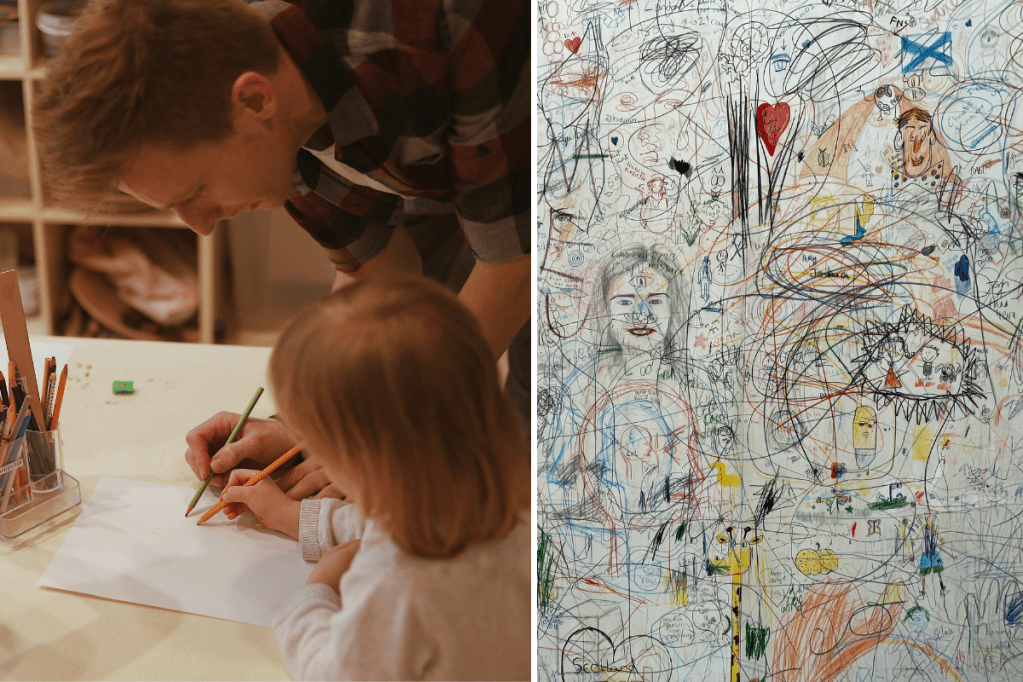
Having a young child means dealing with an avalanche of papers coming your way every single day. My 4-year-old comes home with a folder full of school artwork five days a week. Then there’s coloring sheets from restaurants and the ones she brings home from the grocery store. On the weekends, we usually have some kind of art time in the mornings and that leads to a stack of a half-dozen more drawings that we have to figure out something to do with.
At her age, most of the art is scribbles or crude attempts at unicorns. Hey, I’m just being honest! Whenever she shows me what she’s made, I’m always careful to praise and tell her how impressed I am. I tell her that what she’s made is beautiful and amazing. The most important thing to me is that she feels encouraged to keep going. Outside of that, I never really know what to say. After the fifth scribbly-line drawing I’ve seen that day I tend to run out of superlatives.
An art teacher on TikTok recently explained that there might be a better way to react to your young child’s scribbles.
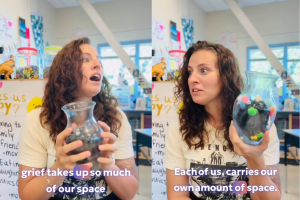
Susan Striker is an art educator who specializes in teaching art and creativity skills to young children. Her famous Anti-Coloring Book series challenges kids not just to color inside the lines, but to let their imaginations run far wilder, and has sold over a million copies worldwide. So, Striker has a lot to say about how to foster creativity in our kids.
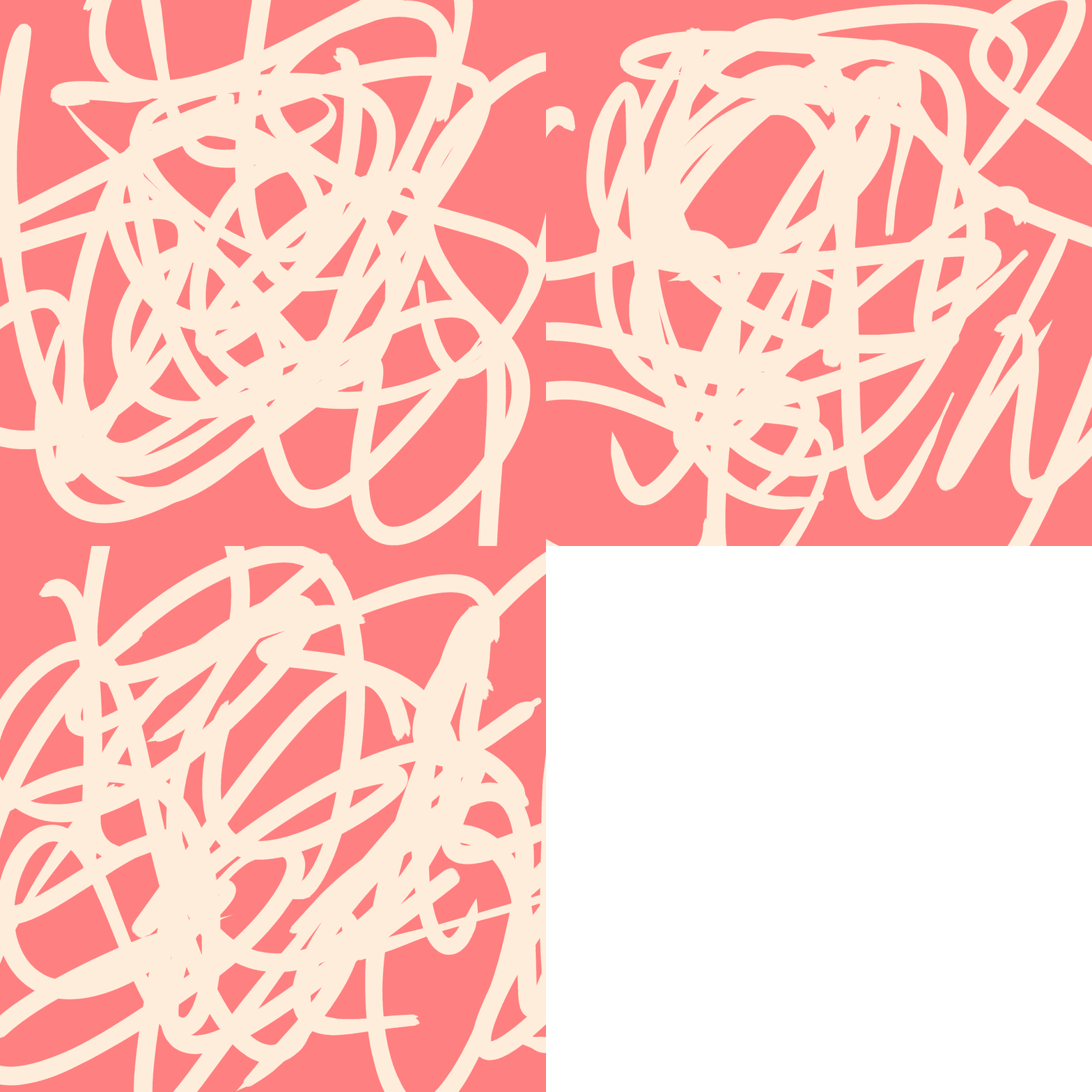
“This is not just a scribble,” she says in a recent video, holding up a piece of messy toddler art. “This is the introduction to fluency and literacy for your child. Don’t just say ‘Very pretty, honey,’ and throw it in the garbage. That is not what this is about.” She recommends calling out the specific elements of the scribble that are building blocks to writing letters, numbers, and more advanced art.
“Oh, aren’t you smart, sweetheart, you made a diagonal line! And look at this, a curved line and a straight line, you are so clever. … I see a horizontal line, you’re a genius! … Are you sure you’re only three?”
By naming and praising these elements of their work, we can help them learn what these foundational pieces are and how they’re used. It also allows us to offer them specific praise rather than general, which boosts their self-esteem and confidence and gives them the fuel to keep creating. Though tempting, Susan also says try to avoid interpreting what they’ve drawn.
“Don’t tell them that this [round thingy] looks like a wheel. This is a round shape. What it reminds you of will come much, much later.”
To a young mind, it might not be apparent how a squiggly line reminds you of a squirrel, for example. It might be a tough concept for them to grasp and may leave them confused or frustrated that you aren’t seeing their art the same way they do. Smaller concepts like light and dark, close together and far apart, colors, basic shapes and types of lines—these are things they can understand and build on.
Watch Striker’s fantastic explanation of the technique here:
Striker’s advice struck both a practical and emotional cord with parents.
It’s so easy to see how this concept can help a child as they begin to learn about drawing letters, numbers, and basic shapes. They’re all composed of the horizontal, diagonal, vertical, or curved lines our kids use in their drawings without even realizing it. So naming those elements helps free drawing become a sort of practice for more advanced skills.
“Susan!! This is so helpful and wonderful! I didn’t realize this until after we started practicing writing letters. And now I realize how helpful this would’ve been way before. Thanks for sharing,” wrote one commenter.
“Love this! My 18 mo old and I were coloring today and she’s just beginning to scribble more. Thank you for sharing this valuable perspective on how to talk about early art,” said another.
Others found Striker’s techniques moving, both in the way it helped them see their own kids in a new light and how it made them wish they had more support and encouragement when they were young themselves.

“Can someone do this for my scribble please.”
“This healed something that I didn’t know needed to be healed.”
“i hope you teach. i wish my elementary art teachers were as kind as you.”
“I tried this with my almost 4 yo this morning who has never been interested in coloring or scribbling,” one commenter wrote. “I couldn’t believe the way he lit up. He spent a half hour drawing! Thank you so much for this!!”
As a dad, I can’t wait to try these ideas out. I’m really excited to have a tool in my toolbox to both help my kid feel encouraged in her creativity and make even more progress toward writing and reading. Now if Susan Striker could only help me with the five-foot tall pile of artwork taking over my garage, all of my problems would be solved!