Visiting different states within America can sometimes feel like traveling to a completely different country, given the significant cultural differences and accents. Visiting parts of Louisiana may make you feel like you require a translator to navigate your vacation, as people often speak Creole or Cajun—both of which have very thick, unique accents. Southern Mississippi also has a mishmash of accents that range from Cajun to a non-distinct regional accent.
But one thing North Carolina has in common with states like Texas, Mississippi, and Louisiana is that they all have a range of southern colloquialisms that translate fine between southern states. It's when those creative southern phrases make their way above the Mason-Dixon Line that causes some confusion. Many southerners who travel north for work, pleasure, or relocation adapt quickly to not using uniquely southern phrases after experiencing looks of bewildered confusion.
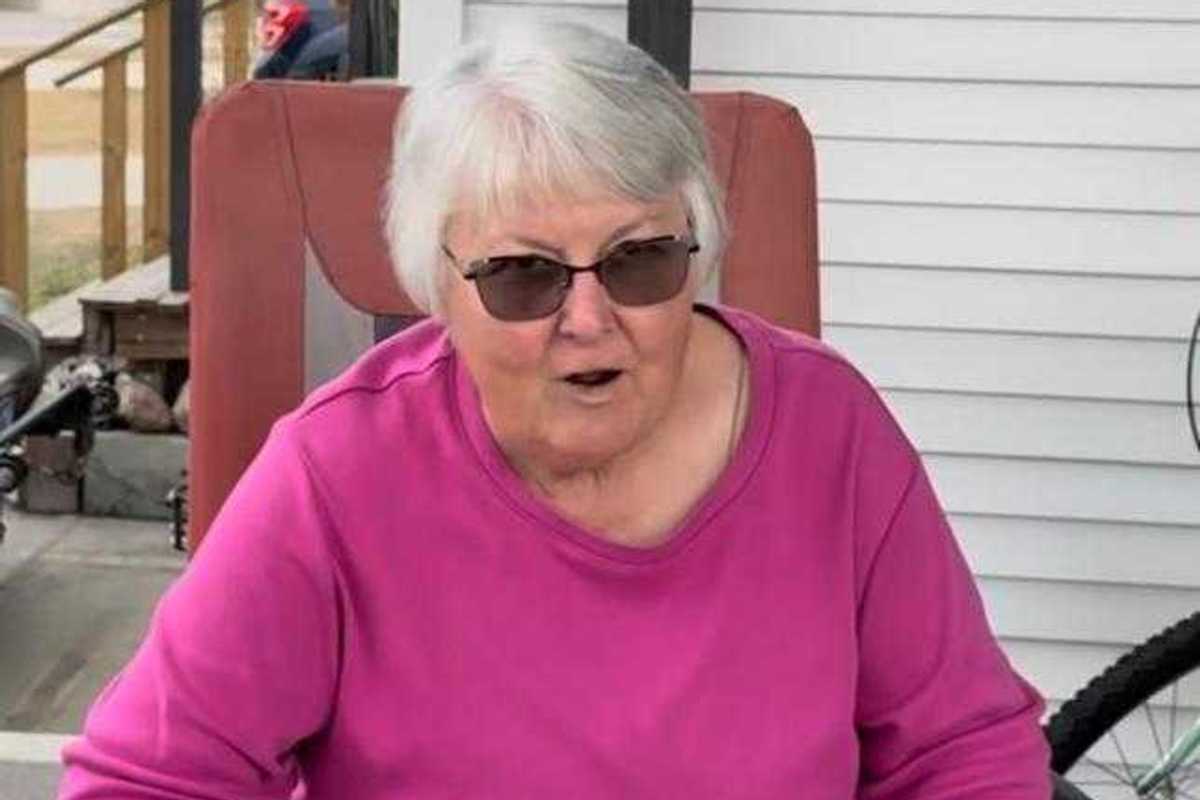
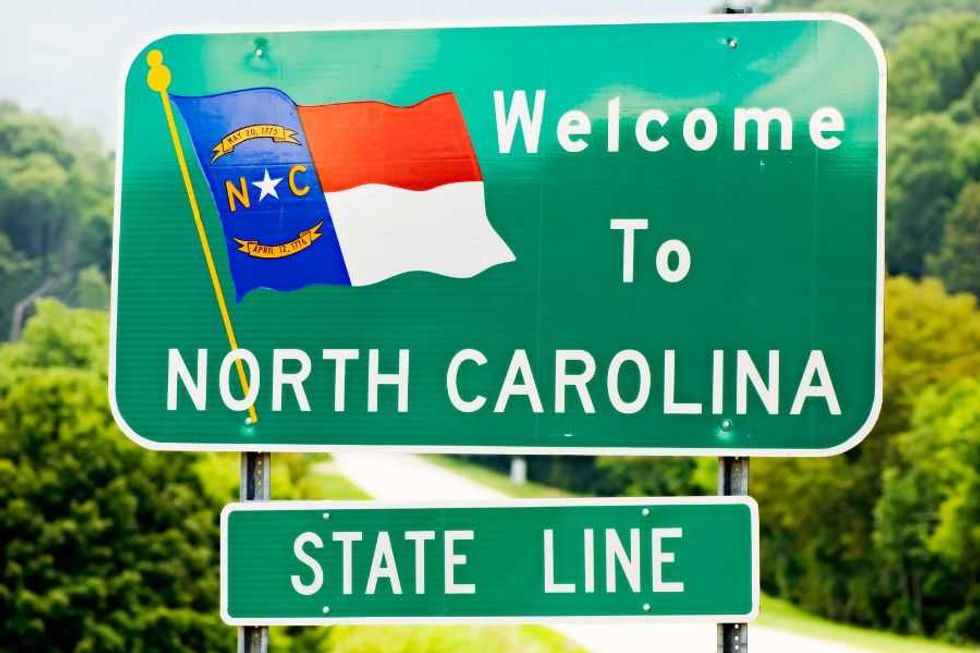
 Welcome to North Carolina State Line!Photo credit: Canva
Oftentimes, southerners don't even know where their beloved and well-used phrases originated or why. As far as a Google search pulls up, there's never been a child born in the world who has ever been small enough to be "knee high to a grasshopper," but that's not going to stop PawPaw from saying it. People who are used to hearing the sometimes outrageous phrases simply interpret them themselves and add them to their own lexicon for future use.
General Southern expressions to keep in your pocket
1. "You don't believe fat meat is greasy."
This is an expression often used when someone is intent on not listening to advice. It essentially means they won't believe it until they see or experience it themselves. We all know someone who has to learn lessons the hard way, and this is the saying that conveys that message without sounding harsh.
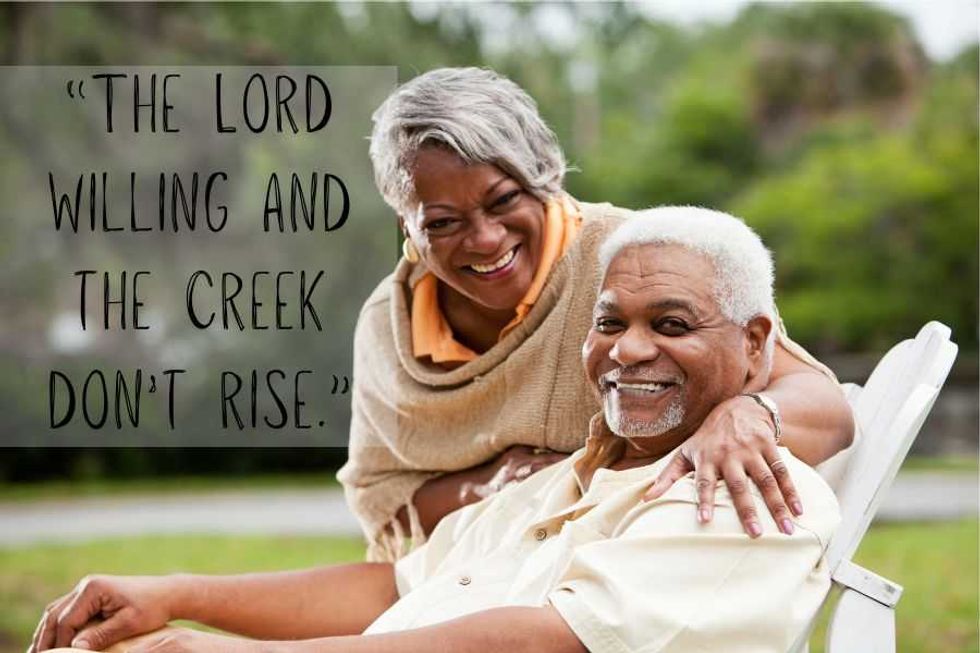
Smiling together: "The Lord Willing and the Creek Don’t Rise."Photo credit: Canva
2. "The Lord willing and the creek don't rise."
A phrase like this is used a lot by elders. It just adds a little dramatic flair when they're making plans. In a conversation, it would go like this: "So, I'll see you next Sunday at the potluck, right?" There may be a pause for emphasis along with a fist perched on their hip before responding, "The Lord willing and the creek don't rise." Just know they'll be there as long as they wake up in the morning and there's no natural disaster preventing them from getting there.
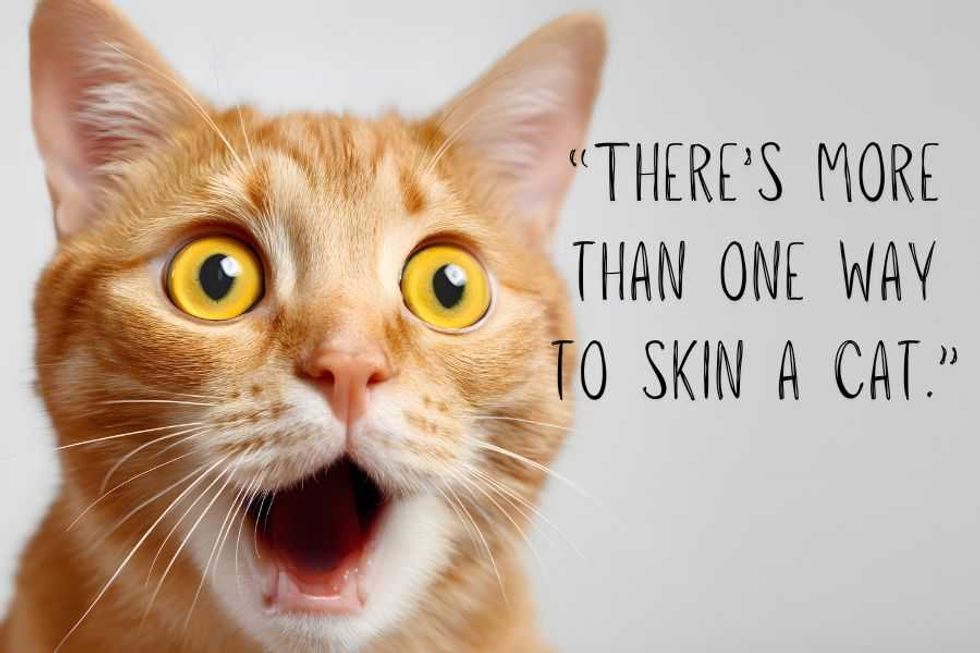
3. "There's more than one way to skin a cat."
This particular one is a phrase my husband uses often. It is often said by men doing manual labor, whether it's at work or around the house. If someone is trying something that isn't working, they have to come up with a better idea of how to make it work. If the original person pushes back on trying it a different way, that's when you'll hear, "There's more than one way to skin a cat." To date, no one has skinned a cat to prove a point, that I'm aware of, but there's debate on its origin. It's believed to come from a phrase used in the mid-1600s in England, "There's more than one way to kill a dog than hanging."
Surprised cat faces an idiom shock!Photo credit: Canva
Eventually, it got changed to the cat idiom southerners say today, though some suggest the phrase came from when women's coats were made from cat fur...(that's information you can't unlearn). Either way, as someone who has lived in the south for more than 20 years, you can rest assured that the only people skinning cats down here are taxidermists with the pet owner's permission. Just know they're saying there's more than one way to get the job done.
4. "Don't pee on my leg and tell me it's raining."
This is just a fancy way of telling someone not to lie to you.
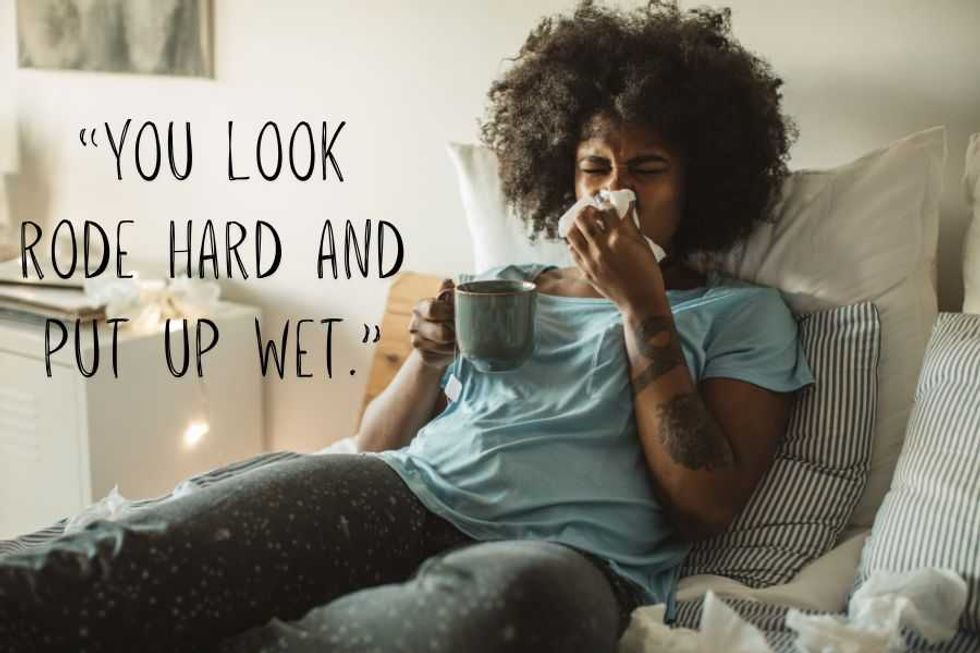
5. "Well, you look rode hard and put up wet."
Honestly, if someone says this to you, you're looking mighty bad. This means not only do you look exhausted, but you also look disheveled, and maybe even ill. When people say this, it's not meant to be rude. They're typically genuinely concerned about your well-being, whether it be that you appear to need a break or you need to rest and get some soup in your belly.
Feeling under the weather with a warm cup in hand.Photo credit: Canva
6. "P*ss or get off the pot" and "Fish or cut bait."
These two phrases mean the exact same thing. They're calling out someone's lack of progress and can be applied to all sorts of situations. It means to do what you're supposed to be doing or get out of the way so someone else can do the job you won't. By the time someone says this, they're a little annoyed, so it's best to go ahead and "pee or get off the pot" before they move you over and do it themselves.
7. "Well, butter my butt and call me a biscuit."
You can stick this in the same category as, "Well, I'll be a monkey's uncle." It's meant to convey genuine surprise and delight in information they've just received or upon seeing someone they haven't seen in a while and weren't expecting. It's a fun one to say, even outside of the South, due to the humorous element.
"Fluffy biscuits and a sassy Southern saying!"Photo credit: Canva
8. "I've got a hitch in my giddy-up"
You've got a limp due to hurting yourself somehow, or you're feeling under the weather in some way that's slowing you down.
9. "Why, bless your little pea-pickin' heart."
Ouch! You've just been insulted, and they wanted to make sure you knew. "Bless your heart" on its own can be said in a condescending way or a genuine, "I'm so sorry you're going through this" way. Using tone and context clues can help you decipher the difference. But when they add "little pea-pickin" right in the middle of the phrase, go grab some ointment because that was meant to sting.
10. "I'm going to snatch her baldheaded."
Whoever is the target of that comment should probably avoid being around the person making it. See also, "I'm going to jerk a knot in her tail." When it's an adult directing the comment at another adult, it could simply mean they're going to have a verbal confrontation. But, depending on the person, it could also mean physical confrontation because that is not off the table in Southern culture. If it's a parent directing the expression towards their child, then it usually means that the child is going to get into trouble.
Two women in a park having a tense conversation.Photo credit: Canva
Southern expressions about looks and intelligence
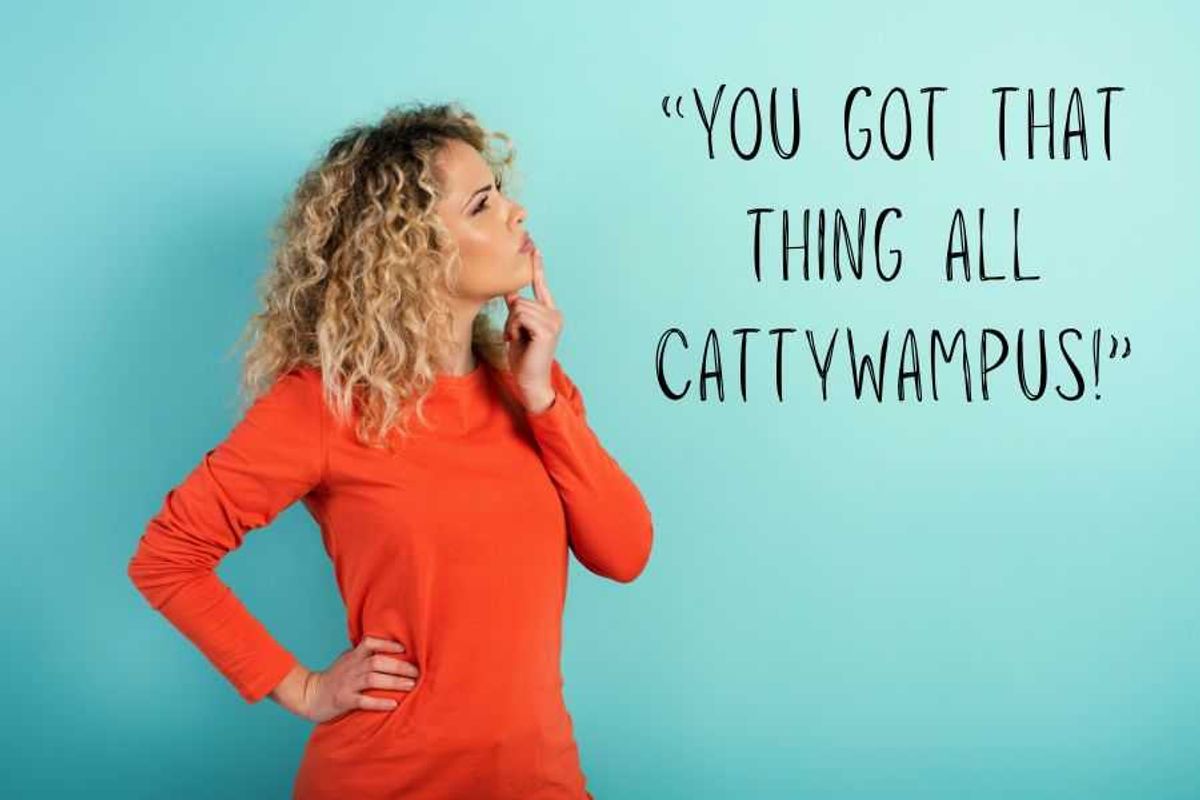
11. "Pull your dress down, everyone can see Christmas."
This feels self-explanatory, but it's something you might hear a friend say to another friend to address a wardrobe malfunction. You may also hear a parent telling their young daughter a version of this as they're learning how to properly sit in a dress. Also see, "Pull down that skirt! We can see clear to the promised land."
12. "They fell out of the ugly tree and hit every branch on the way down."
Also in the vein of calling someone unattractive, one might say, "He's so ugly he could make paint peel."
"Tight pants, revealing every curve and thought."Photo credit: Canva
13. "Pants are so tight you can see his thoughts."
Those are some really tight pants.
14. "She's just as loony as a Betsy Bug."
Until today, I had no idea what a Betsy Bug was, but apparently it's a type of beetle that eats decomposing wood. There doesn't seem to be an explanation for what makes the beetle loony, though.
15. "Well, aren't you as bright as a box of black crayons."
Have you ever seen a bright black crayon? If southerners are good at one thing, it's insults.
"Bright as a Box of Black Crayons" - a humorous twist on brightness.Photo credit: Canva
16. "That boy's so dumb he'd throw himself on the ground and miss."
See also: "He ain't got the good sense God gave a mule," and, "If he had an idea, it would die of loneliness."
Bonus sayings you don't want to miss
Clearly, southerners have a way with words, but there are a few more that can be fun to pull out for a party trick. A favorite is, "That really burns my biscuits," but a close second is, "I'm fuller than a tick on a dog's behind." If you want to get around the ears of nosey children while having a chat about an adult encounter, some people in the south will say, "He took me to church," "I was singing opera," or "We stayed in and played the piano."
Whenever you decide to pull out any of these phrases, just make sure it's not one that'll make someone "madder than a wet hen," and you'll be golden.
This article originally appeared last year.



 A Generation Jones teenager poses in her room.Image via Wikmedia Commons
 A van travels down the road.
  A person plays the guitar.
  A man smiles.
  A damaged vehicle sits on the side of a road.
 Welcome to North Carolina State Line!
 Smiling together: "The Lord Willing and the Creek Don’t Rise."
 Surprised cat faces an idiom shock!
 Feeling under the weather with a warm cup in hand.
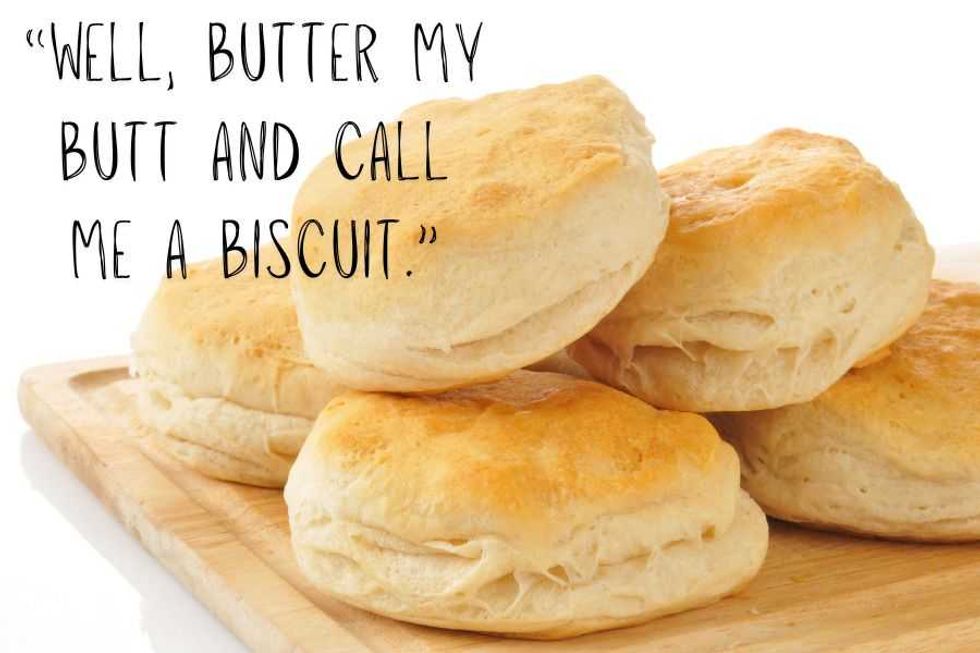 "Fluffy biscuits and a sassy Southern saying!"
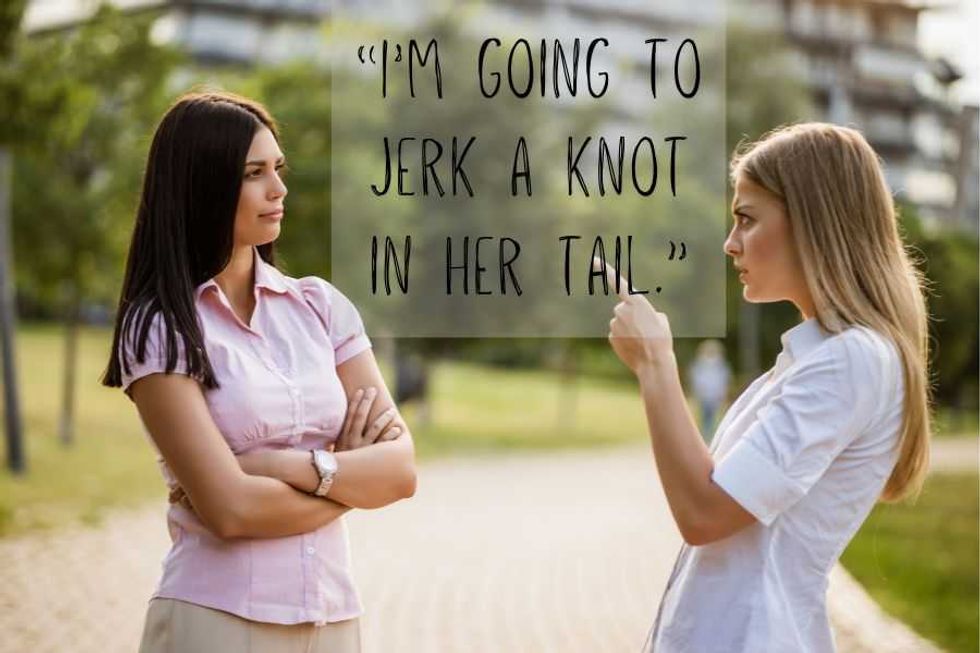 Two women in a park having a tense conversation.
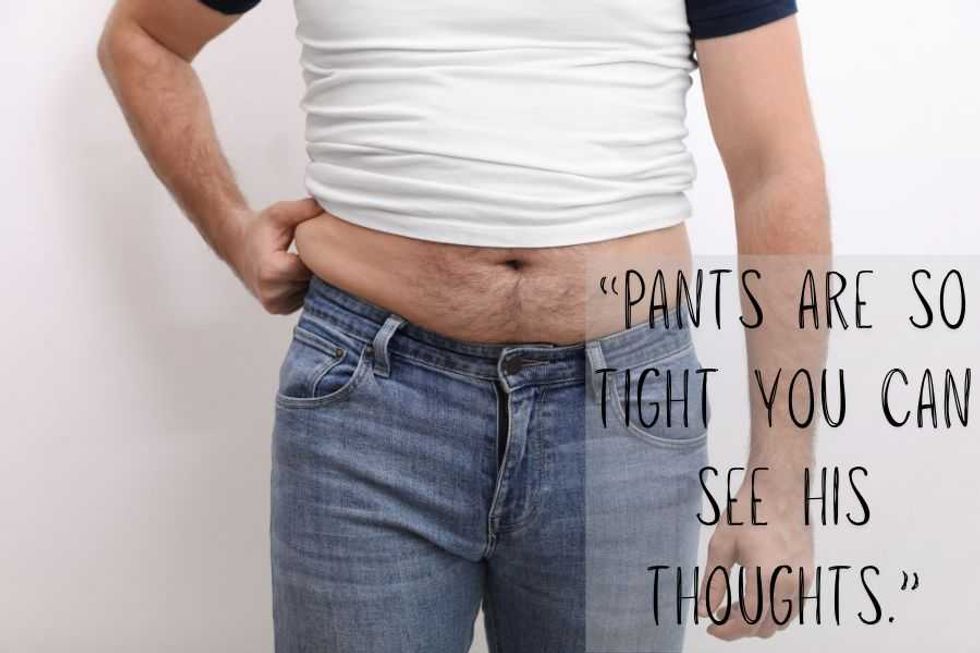 "Tight pants, revealing every curve and thought."
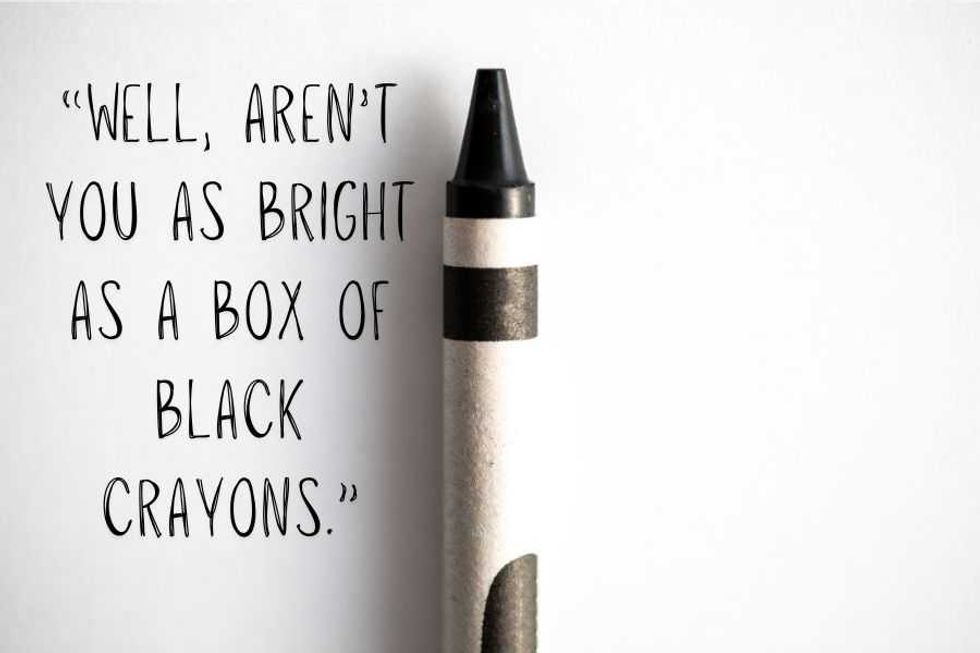 "Bright as a Box of Black Crayons" - a humorous twist on brightness.