upworthy
Add Upworthy to your Google News feed.
Google News Button
Education

9 of the most intriguing Christmas-time traditions from around the world

From the log that poops out Christmas presents in Catalonia to a towering cat that eats lazy children in Iceland, here are some fascinating holiday traditions that have emerged around the globe.

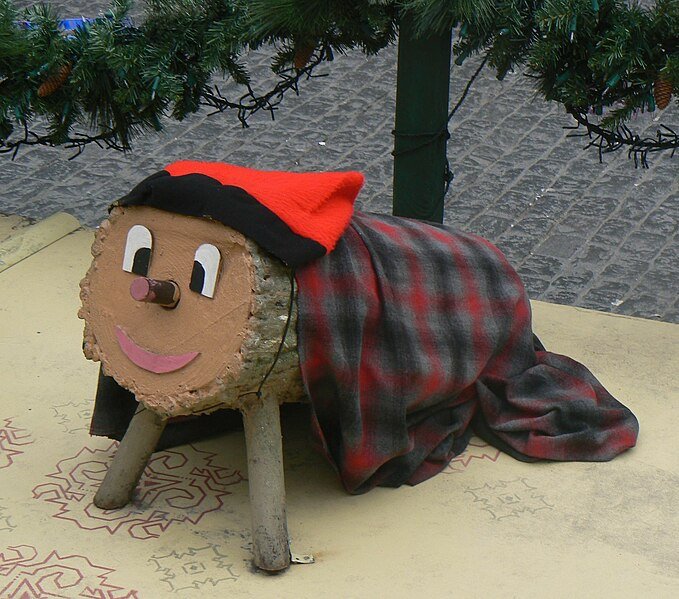
log with legs, a smiley face, a hat and a blenket

The Tió de Nadal eats food scraps and poos candy and presents.

Christmas is celebrated around the world, but it looks a bit different everywhere you go. While there are some fairly universal traditions, such as decorating a tree and giving gifts, there are some traditions specific to different cultures that are both unique and intriguing.

Check these out:

1. ITALY—La Befana: The Good Witch
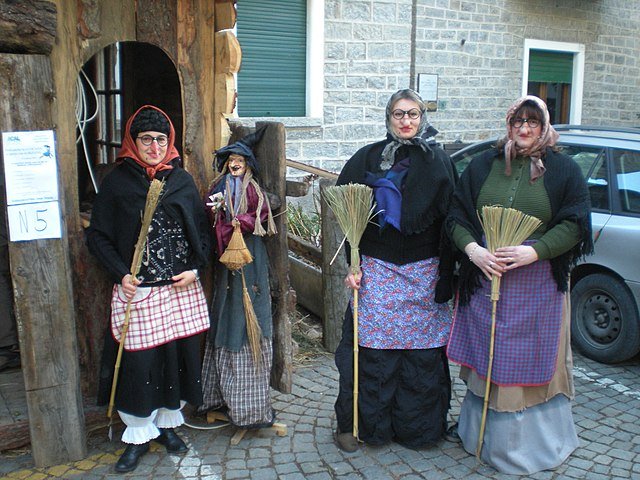
women in la befana costumes holding broomsticksWomen dressed up as La BefanaEleonora Gianinetto/Wikimedia Commons

In Italy, La Befana is a good witch who flies around on a broomstick on January 5th, the night before Epiphany. Children put their shoes out with a glass of wine and a piece of bread for La Befana, and fills their shoes with candy or small gifts—or chunks of coal, onions or garlic for the naughty ones

2. ICELAND—The Yule Lads

Iceland’s 13 Yule Lads are merry and mischievous troll-like figures, each with a different name and personality. They visit children one at a time during the 13 days leading up to Christmas, leaving gifts and playing tricks, including leaving rotten potatoes in the shoes of kids who don’t behave. According to the Smithsonian, the Yule Lads used to be a lot creepier, but in 1746, the country outlawed scaring children with monstrous tales about the 13 lads. (Would love to know what prompted that law!)

3. ALSO ICELAND—The Yule Cat

yule cat sculpture

Yule Cat on display in downtown Reykjavik, December 2022

ProcrastinatingHistorian/Wikimedia Commons

As if the Yule Lads weren’t enough, a towering, fearsome cat roams the Icelandic countryside around Christmastime, peeking into homes to spy on children’s presents. In Icelandic tradition, if kids get all of their chores done, they are gifted some new clothes. If the Yule Cat (aka Jólakötturinn) sees that a child wasn’t given clothes (in other words, a child was lazy), the cat proceeds to eats the child’s dinner and then moves on to eating the child. Yes, you read that right. It eats the child. Icelandic folklore doesn’t mess around.

4. PHILIPPINES—The Giant Lantern Festival

five colorful, lit up displays

Giant Lantern Festival 2012

Ramon FVelasquez/Wikimedia Commons

In the Philippines, the Giant Lantern Festival is held in San Fernando City (dubbed the Christmas capital of the Philippines) every year the week before Christmas Eve. According to Travel & Leisure, the lantern tradition is rooted in the history of Filipino Catholics building small, colorful lanterns to light up the procession to Christmas Eve mass. The giant parol lanterns for the festival, however, are huge—up to 20 feet tall—and it can take up to 10,000 light bulbs to illuminate them.

5. SPAIN (CATALONIA)—The Tió de Nadal (pooping log)
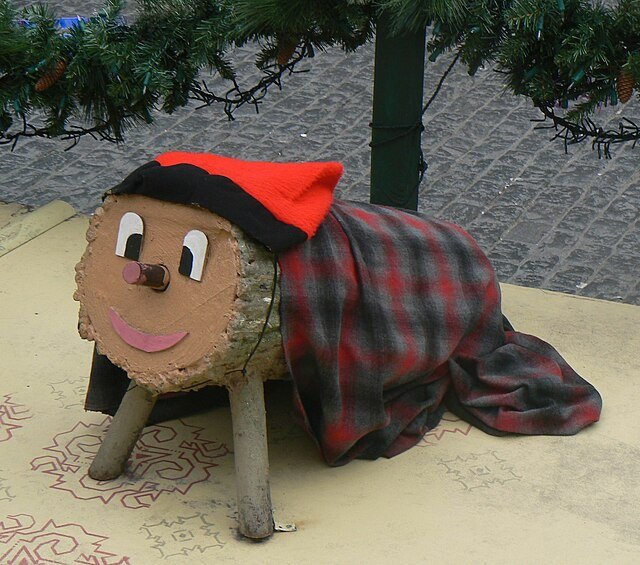
log with legs, a smiley face, a hat and a blenket

The Tió de Nadal is a Catalan Christmas tradition.

Public Domain/Wikimedia Commons

Some cultures have a yule log. Catalonia, Spain, has the Tió de Nadal—a log with a hat, a blanket, a smiley face and a penchant for pooping out presents. Children feed the smiling log scraps of food at night and it poop out presents on Christmas Day. There's even a song kids sing to the log, imploring it to not poop out salted herring (too salty), but nougats in instead, all while hitting the log with a stick. According to Catalan tradition, the eating of the scraps and the beating with the stick leads to Tió de Nadal pooping out presents and nougat on Christmas. And apparently, no one questions it.

6. BAVARIA—The Krampus

person wearing a scary looking horned mask

Krampus costume

Anita Martinz/Wikimedia Commons

In Bavaria (which includes Austria, Germany, Switzerland and some of the surrounding area), the Krampus is a centuries-old tradition that has been revived in modern times. The Krampus is a horned, hairy, hellish creature who follows St. Nick on his rounds to punish naughty children by scaring them (or tossing them in a sack and beating them). Many cities hold Krampus festivals each year, where people parade around in Krampus costumes like the one above.

7. VENEZUELA—Roller Skating to Christmas Mass

someone skating outside in pink roller skates

Venezuelans roller skate on Christmas

Photo by Daniel Lincoln on Unsplash

Most of us don't association Christmas with roller skating, but that's not the case for Venezuelans. Christmas is an all-night roller skating party, which includes singing Christmas songs and culminates with everyone rolling their way to Christmas Mass at dawn. Most interestingly, according to a Venezuelan woman's explanation in America Magazine, it's not even like Venezuelans are a big roller skating culture the rest of the year—it's just a Christmas thing.

8. JAPAN—A Finger Lickin' Good Tradition

people lined up outside a Kentucky Fried Chicken

KFCs are packed for Christmas in Japan

Photo by Stabel Webel on Unsplash

Japan doesn't have a long history with Christmas and thus no long-standing traditions associated with it. What they do have is 50 years of eating KFC for Christmas, thanks to a "Kentucky for Christmas" marketing campaign launched by the first KFC restaurant owner in Nagoya, Japan, in 1970. Somehow, it stuck and is now a beloved tradition for millions of Japanese families.

9. UKRAINE—Spider Webs on Christmas Trees
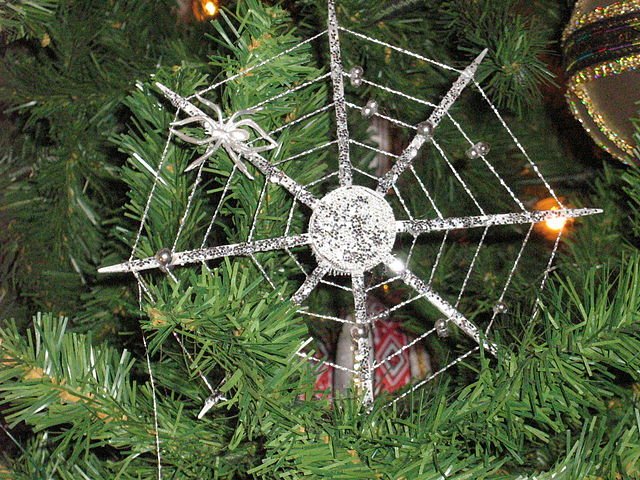
spider and spider web ornament in tree

Ukrainians celebrate spiders at Christmas.

Erika Smith/Wikimedia Commons

According to Ukrainian legend, an impoverished widow and her children grew a tree from a pinecone outside of their house, but they were too poor to decorate it for Christmas. The household spiders heard the children's sobs and spun their webs into decorations overnight. When the children awoke on Christmas morning, they cried out “Mother, mother wake up and see the tree. It is beautiful!” As the day went on and the sun's rays hit the delicate webs, they transformed into silver and gold and the widow never wanted for anything again. Today, Ukrainians decorate trees with spider webs for good luck and fortune in the new year.

Whatever your family or cultural holiday traditions are, let's celebrate the differences that make our world so interesting.
parenting, teens, raising teens, teen hangout, high school, game night for teens, activities for teens, parenthood

Amy White explains how her house became "the house" for her teens.

I grew up in "the house." In high school, my home was the designated place where my friends gathered, sometimes in big groups, sometimes just my small core squad. My three best friends spent the night there almost every Friday and/or Saturday night for four years straight. We devoured Totino's frozen pizzas by the dozen, inhaled soda, and laid waste to any snacks or leftovers that were brave enough to survive in the kitchen. Not only that, but my house was pretty small — four teenage boys took up a lot of space in the living room (the whole thing) and made a lot of noise playing video games deep into the night. It must have driven my parents and older brothers crazy. It's a wonder anyone put up with it.

Or so I thought when I was younger. When I became a parent myself, I started to understand a little more why my mom and dad were so willing to host and feed all my friends and me every single weekend. Why the outrageous grocery bill and constant chaos in the house were probably a small price to pay.


Mom explains how to make your house 'the house' where teenagers hang

One mom has perfectly encapsulated the value of turning your home into "the house" for your kids and their friends, and exactly how she did it for her family.

teens, teen house, teens hanging out, teens having fun, teenagers Teens hanging out in a living room.via Canva/Photos

Amy White shared a reel on Instagram showing her college-aged son hanging in her dining room with a group of friends playing cards. The text overlay reads "What makes your kids' high school friends want to come over, play cards & spend the night on their College Christmas Break." I think most parents can agree that we want our kids to keep coming home as long as possible! So how exactly did White pull this off?

Her explanation in the caption was spot-on.

First, White says that you have to start early. Become "the hang out house" in high school or even earlier. Then you have a better chance of holding onto the mantle into your kid's college years.


Next, be ready to stock the house with snacks and drinks, and don't make a fuss when your kid's friends have at it. "The kids knew we had food," she writes, "BUT they also knew I didn't care what they had. They knew they could eat anything in my pantry and fridge."

Third, and this is a big one, don't mistake being the "cool house" for being "the house." Some parents choose to allow their underage kids and friends to drink alcohol under their supervision, but you don't have to bend your morals and the law to lure the squad over to your place. Pizza and Coke is plenty to keep most teens happy. "We were not the house that served alcohol or even allowed the kids to bring alcohol to our house. And Guess What?? The kids still came and wanted to hang at our house!"

teens, teen house, teens hanging out, teens having fun, teenagers Teenagers eating pizza.via Canva/Photos

Fourth, always say Yes (as often as possible, anyway) when your kids want to have friends over. "They know my answer is 99% of the time YES," White writes. "You have to have your kids take the leadership of offering your home and if your home was 'open' to their friends in high school, they know it will be 'open' to their friends in college."

As a bonus tip, White pleas with parents not to worry about the mess having friends over makes. "I love a clean house and organization, BUT I would much rather have a crazy messy house for the kids where memories are made than a quiet house with nothing going on just to keep my house 'clean.'"

Should parents allow teens to drink at home?

There's an age-old debate over whether parents should allow teens to drink at home because it's better than if they do is unsupervised or keep their home dry as a bone. A recent study out of the University of Buffalo found that kids who grew up drinking at home had a greater chance of having addiction problems when they got older. "A robust relationship was found between parental permission to use alcohol during adolescence and increased alcohol use frequency and quantity, alcohol use disorder symptoms, and alcohol-related harms in young adulthood," the study says.

White writes, "It's worth being 'the house', so let go of control & get to know your kids friends." Commenters agreed.

White's video went viral to the tune of 8.5 million views and hundreds of comments. Parents shared their own experiences of what it's like being the default hang out house.

"Our house was the high school hangout for my son and friends... every weekend... I loved it!! Miss it now that they are all college graduates and have moved away. I love seeing them when they do come home for the holidays"

"A wise man once said don't be the house with the alcohol. Be the house with the food."

"Amy 1000% agree!!! My house is full of teenagers on the weekends and I love every bit of it. Even though I wake up to a kitchen that looked much different from when I left it"


teens, teen house, teens hanging out, teens having fun, teenagers Teenagers eating pizza.via Canva/Photos

"We never allowed alcohol, drugs, bad language, always respectful, and guess what, our house was always the house where the kids hung out. First my daughter, then my son. Through grade school, high school, then when my kids went out of state for college their college friends would come spend a couple weeks during the summer. I always thought of it this way, I loved knowing my kids friends and, who knows, maybe some of those kids, especially during the younger years, just maybe those kids just needed an adult to care. Anyway, it was always fun to have them here!"

"It used to crack me up when my daughter would bring over a bunch of her friends (girls and boys) in high school and instead of hanging out in the family room they all wanted to crowd into either the kitchen with me or our tiny office and happily share all the gossip with me."

Experts say that knowing your kids' friends, and their parents, can have huge benefits. Not only will it bring you the peace of mind of knowing where your kid is and who they're with when they get to those crucial high school years, it has been shown to tangibly improve kids ability to create positive relationships and problem-solve collaboratively. Plus, it can actually be really fun! Kids and teens are the funniest, silliest, most interesting people on the planet. Having a house full of them is messy and loud, but it's always a good time.

One caveat: "don’t feel bad if your house isn’t the chosen house," one commenter reminds us. "Just be happy your kid has a good group of friends and be thankful they have somewhere safe to hang out."

This article originally appeared last year.

babies, baby names, kids, parents, parenting, names, naming babies, moms, dads, motherhood, fatherhood, family

A couple laughing and a baby crying.

Naming your baby is a really special experience that can help shape who they become, honor the legacy of close friends and family members, and carry personal meaning through symbolism. It's a hard process to get just right, and unfortunately, there are a lot of horrible ways it can go wrong.

One couple with a rather unfortunate last name recently took to social media to playfully mourn all the names they "absolutely can't" use for their impending baby.


Quince and Zach have built a following of more than three million people across Instagram and TikTok, where they share relatable, funny content about life as young parents to a two-year-old daughter, with another baby on the way.

There's just one problem for Quince and Zach, and it's their last name: Cox.

There's nothing wrong with Cox on the surface; it's a perfectly normal and respectable last name. It wasn't until the couple started brainstorming names for their soon-to-be baby girl that they realized Cox was, let's say, problematic.

In a hilarious post on Instagram, the couple recently shared a lengthy, exhaustive list of names they immediately knew would be a no-go:

  • Holden Cox
  • Anita Cox
  • Harry Cox
  • Sawyer Cox
  • Sharon Cox

Check out the fantastic, tongue-in-cheek post here:

More than 400,000 people interacted with the viral post, including thousands of comments from people eager to share their own close calls with unfortunate baby names.

"Maiden name was Dix. I'm now a Cox. I wish I was joking," wrote Shenai Cox.

"My maiden last name is cox. Definitely couldn't hyphenate with my husband. His last name is Oancea (pronounced want-cha) want-cha cox? No thank you," another user wrote.

"My last name is Muncher soooo..." wrote Amber Muncher.

There were even a few people who could only wish their parents had shown the same foresight as Quince and Zach.

Harry Wang, a commenter, wrote, "Wish my parents though like that," before adding, "It's a part of me now, gotta wear it with pride."

In any case, the public service announcement was much appreciated by all:

"As a former cox (maiden name) more people need to be this aware some Cox’s are shockingly blase out here about what they are naming their kids," someone wrote.

In part two of the post, Quince added more names to the cross-off list and revealed why she couldn't hyphenate her last name after getting married.

"I mean we could always hyphenate my maiden name 'Pullen'" she joked in the caption before officially eliminating Hugh Cox, Olive Cox, and Ophelia Cox.

You may laugh, but variations of Olive are some of the most popular names in America.

A few labor and delivery nurses even chimed in on Quince's post to voice their support, saying they wished more parents would be mindful of names that could one day humiliate their children.

There are more ways a name can go wrong than just having phallic undertones. There could be easy rhymes, embarrassing abbreviations, or even an unfortunate "first initial, last name" combination that makes emailing an unpleasant experience for a child one day. Nurses who meet babies all day, every day have seen some horror stories:

@issabelvictoria_

Baby names are so fun🥰 #nicunurse #neonatalnurse #nursesoftiktok #newgradnurse #newgradnurses #nursetok #nursingschool #nursetiktok #nursing #fyp #nurse

While there are only a handful of names that are strictly illegal in the United States—depending on the state, you may have trouble naming your baby Hitler, Santa Claus, or King—parents are urged to take precautions against names that could make life difficult for their child.

Some helpful methods include saying the name out loud (both the full and shortened versions), spelling it out, checking the initials, and watching for embarrassing nicknames, to start.

robert frost, poet robert frost, robert frost poem, robert frost poems, writer robert frost
Images via Wikipedia

American poet Robert Frost as a young man in 1910 and again in 1949.

Poet Robert Frost created inspiring poems that are beloved around the world. Frost was known for his simple yet deep style of poetry, and, although he didn't publish his first book until he was 40, he went on to earn four Pulitzer Prizes.

He created a body of work that continues to touch people. Yet, like many great artists, Frost struggled with his mental health throughout his life. (Frost was born in 1874 and died in 1963.) William & Mary English Professor and Frost biographer Henry Hart found that many of Frost's relatives struggled with schizophrenia as well as depression.


"Throughout his life, he struggled to fit in. His education was irregular, routinely disrupted when Frost dropped out after suffering attacks of anxiety and depression that expressed themselves in various physical ailments," notes the National Endowment for the Humanities (NEH).

- YouTube www.youtube.com

Frost experienced many hardships during his life, beginning at a young age. His father William Prescott Frost, Jr., died when he was just 11 years old. His sister Jeanie would later suffer from mental illness, and died in a mental hospital.

Frost would go on to marry his high school girlfriend, Elinor White, in 1895. The couple had six children, a blessing that came with loads of tragedy.

"Four of Frost’s six children died before he did, including Carol, the son who committed suicide. Frost’s daughter Irma suffered mental problems that required hospitalization, and Elinor battled anxiety, too. She died of heart failure in 1938," according to the NEH. "Frost’s own bouts of depression brought physical and mental anguish. 'Cast your eye back over my family luck, and perhaps you will wonder if I haven’t had pretty near enough,' he lamented at one point."

- YouTube www.youtube.com

His wife Elinor was diagnosed with breast cancer in 1937, and died in 1938 from heart disease. "She had been the unspoken half of everything I ever wrote," Frost said. He would go on to live 26 more years without her.

Through these challenges, Frost developed resilience and perseverance. One of his most famous quotes describes his advice on how he pushed through:

"In three words I can sum up everything I've learned about life: it goes on."

The quote is reported to come from a September 1954 interview with journalist Ray Josephs for This Week Magazine. During the interview, Josephs asks Frost, "In all your years and all your travels, what do you think is the most important thing you’ve learned about life?"

- YouTube www.youtube.com

From there, Frost shared his wise insights.

"He paused a moment, then with the twinkle sparkling under those brambly eyebrows he replied: 'In three words, I can sum up everything I’ve learned about life. It goes on. In all the confusions of today, with all our troubles . . . with politicians and people slinging the word fear around, all of us become discouraged . . . tempted to say this is the end, the finish. But life — it goes on. It always has. It always will. Don’t forget that.'"

Frost died at age 88 in 1963 and was buried in Bennington, Vermont, next to his wife Elinor. Honest about life's struggles to the end, Frost's gravestone reads: "I had a lover's quarrel with the world."

abraham lincoln, president abraham lincoln, president lincoln, abraham lincoln quote, abraham lincoln quotes

President Abraham Lincoln'.

Abraham Lincoln, the 16th President of the United States, was full of wisdom. His pursuit of knowledge remained steadfast throughout his life.

"His ambition was a little engine that knew no rest," Lincoln's law partner said of him, according to the National Archives.


Although his life was infamously cut short by assassin John Wilkes Booth on Friday, April 14, 1865, his words continue to inspire people years after his death. One of Lincoln's most famous quotes about how he achieved success centers on his reliance on loyal friendship and is twinged with self deprecation:

- YouTube www.youtube.com

"I’m a success today because I had a friend who believed in me and I didn’t have the heart to let him down."

There has been some debate about whether Lincoln really said this—and there are no historical documents confirming he did. However, the attribution has stuck.

Showcasing Lincoln's humor, the quote represents how Lincoln relied on friends and the strength and encouragement he received from them during personal hardships and his political career to carry him through.

There are many examples from Lincoln's life that support the importance he placed on his friendships. One example came from Illinois businessman, G.S. Hubbard, who said about Lincoln: "We were thrown much together, our intimacy increasing. I never had a friend to whom I was more warmly attached. His character was nearly faultless. Possessing a warm, generous heart, genial, affable, honest, courteous to his opponents, persevering, industrious in research, never losing sight of the principal point under discussion."

abraham lincoln, abe lincoln, abraham lincoln photo, president lincoln, president abraham lincoln Abraham Lincoln portrait by Alexander Gardner in 1865.Photo credit: Canva

One of Lincoln's closest friendships was with a man named Joshua Speed, who befriended Lincoln long before his presidency back in Springfield, Illinois, in 1837. According to Smithsonian Magazine, Speed helped the future president make it through two "serious, suicidal bouts of depression."

Lincoln battled depression throughout his life, notably after the start of his political career in the mid 1830s, and in 1840 when he shockingly broke off his engagement to Mary Todd, with whom he would later marry in 1842 and welcome four sons.

By 1846, Lincoln was elected to the U.S. House of Representatives and was deemed one of the most successful attorneys in Illinois. However, "Lincoln still suffered from bouts of depression, sorrow over the death of his son Edward Baker Lincoln, and disappointment after two failed runs for the U.S. Senate," according to the National Park Service.

- YouTube www.youtube.com

However, Lincoln was also buoyed by friends, especially during his run for president. One in particular was David Davis, a circuit judge who met Lincoln in Illinois while he was still a practicing attorney.

"The two became close friends, and Davis worked diligently as Lincoln's campaign manager at the 1860 Republican nominating convention in Chicago. Along the way, Davis went from a circuit-riding lawyer to a U.S. Supreme Court Associate Justice and maintained a long-time friendship with Abraham Lincoln," according to Davis's website.

And it was Lincoln's sense of humor that helped him through his darkest times and drew friends to him. Lincoln's longtime friend from Illinois, lawyer Thomas W. S. Kidd, wrote of him: "He enjoyed a joke or good story, and possessing an inexhaustible fund of both, they were ever at hand or within reach when occasion required them for his own or the amusement of his friends. They certainly attracted to him more friends that stuck to him, whether on the calm or stormy side of life, than any other influence he could use to draw them."

Lincoln's quote on friendship highlighted the president's sense of humor and humility and shows that without friends and the support of others, his success may not have been possible.

Gen Z; Millennials; technology; cell phones; social media; teens and technology; teens social media

Gen Z is the first generation less cognitively capable than their parents. Denmark has the solution.

Nearly every parent hopes their child will be better off than they are: smarter, more secure, and more well-adjusted. Many parents see this as a stamp of successful parenting, but something has changed for children growing up today. While younger generations are known for their empathy, their cognitive capabilities seem to be lagging behind those of previous generations for the first time in history.

Dr. Jared Cooney Horvath, a teacher turned cognitive neuroscientist who focuses on human learning, appeared before Congress to discuss concerns about cognitive development in children. In his address to the members of Congress, he says, "A sad fact that our generation has to face is this: our kids are less cognitively capable than we were at their age. Since we've been standardizing and measuring cognitive development since the late 1800s, every generation has outperformed their parents, and that's exactly what we want. We want sharper kids."


kids, intelligence, sharp kids, generations, education, cognitive abilities Student smiling in a classroom, working on a laptop.Photo credit: Canva

Horvath explains that the reason this happens is that each generation has gone to school longer than the previous generation. Gen Z is no exception to the longer duration of time spent in school, but they're the first ones who aren't meeting this normal increase in cognitive development. According to the cognitive neuroscientist, the decline is due to the introduction of screens in the classroom, which started around 2010.

"Across 80 countries, as Jean was just saying, if you look at the data, once countries adopt digital technology widely in schools, performance goes down significantly. To the point where kids who use computers about five hours per day in school for learning purposes will score over two-thirds of a standard deviation less than kids who rarely or never touch tech at school," Horvath reveals.

In most cases, the decline in performance doesn't result in better strategies. The neuroscientist shares that the standardized testing has been adjusted to accommodate lower expectations and shorter attention spans. This is an approach that educators, scientists, and researchers went to Capitol Hill to express wasn't working. But not every country is taking the approach of lowering standards to meet lowered cognitive ability. Denmark went in the opposite direction when it realized their students were slipping behind.

France24 recently interviewed educators in Denmark following their seemingly novel approach to students struggling with cognitive development. Since the beginning of the 2025/2026 school year, Denmark has not only been having students turn in their cellphones, but they've also taken tablets, laptops, and computers out of the classroom. No more digital learning for the majority of the school day. Danes went old school by bringing back physical textbooks, workbooks, and writing assignments. The results have been undeniable. Even the students can't seem to deny the success of the countrywide shift in educational approach.

"I think the biggest issue has been that, because we kind of got rid of the books and started using screens instead, that we've noticed that a lot of the kids have trouble concentrating, so it's pretty easy to swipe with three fingers over to a different screen and have a video game going, for example, in class," Copenhagen English teacher, Islam Dijab tells France24.

Now, instead of computers being part of every lesson, Denmark uses computers very sparingly and with strict supervision. One student says that it has been nice not having screen time at school because she loves to read and write. But it wasn't just the lack of attention span children were developing, they were also developing low self-esteem and poor mental health due to the amount of time spent on devices.

kids, intelligence, sharp kids, generations, education, cognitive abilities Students focused and ready to learn in the classroom.Photo credit: Canva

The data showing the negative impact of screens on teens' brains has prompted a nationwide change in Denmark that extends outside of the classroom. Afterschool activities are eliminating or extremely limiting electronic use. There is also a national No Phone Day that encourages everyone to put away their devices for the day, and Imran Rashid, a physician and digital health expert, is petitioning parliament to ban social media use for children under the age of 15. The no phone movement in Denmark is a nationwide effort that hopes to right the ship before another generation feels the effects.