upworthy
Add Upworthy to your Google News feed.
Google News Button
More

8 simple words to say when someone you love is grieving.

I'm listening to a man tell a story. A woman he knows was in a devastating car accident, and now she lives in a state of near-permanent pain; a paraplegic, many of her hopes stolen.

I've heard it a million times before, but it never stops shocking me: He tells her that he thinks the tragedy had led to positive changes in her life. He utters the words that are nothing less than emotional, spiritual, and psychological violence:


"Everything happens for a reason."

He tells her that this was something that had to happen in order for her to grow. But that's the kind of bullshit that destroys lives. And it's categorically untrue.

After all these years working with people in pain as an advisor and adversity strategist, it still amazes me that these myths persist despite the fact that they're nothing more than platitudes cloaked as sophistication. And worst of all, they keep us from doing the one thing we must do when our lives are turned upside down: grieve.

Here's the reality: As my mentor Megan Devine has so beautifully said: 'Some things in life cannot be fixed. They can only be carried.'

Grief is brutally painful. Grief does not only occur when someone dies. When relationships fall apart, you grieve. When opportunities are shattered, you grieve. When illnesses wreck you, you grieve.

Losing a child cannot be fixed. Being diagnosed with a debilitating illness cannot be fixed. Facing the betrayal of your closest confidante cannot be fixed. These things can only be carried.

Let me be clear: If you've faced a tragedy and someone tells you in any way that your tragedy was meant to be, happened for a reason, will make you a better person, or that taking responsibility for it will fix it, you have every right to remove them from your life.

Yes, devastation can lead to growth, but it often doesn't. It often destroys lives — in part because we've replaced grieving with advice. With platitudes.

I now live an extraordinary life. I've been deeply blessed by the opportunities I've had and the radically unconventional life I've built for myself.

But loss has not in and of itself made me a better person. In fact, in some ways it's hardened me.

While loss has made me acutely aware and empathetic of the pains of others, it's also made me more inclined to hide. I have a more cynical view of human nature and a greater impatience with people who are unfamiliar with what loss does to people.

By unleashing platitudes and "fixes" on those we claim to love, we deny them the right to grieve.

Above all, I've been left with a pervasive survivor's guilt that has haunted me all my life. In short, my pain has never gone away, I've just learned to channel it into my work with others. But to say that my losses somehow had to happen in order for my gifts to grow would be to trample on the memories of all those I lost too young, all those who suffered needlessly, and all those who faced the same trials I did but who did not make it.

I'm simply not going to do that. I'm not going to assume that God ordained me for life instead of all the others, just so that I could do what I do now. And I'm certainly not going to pretend that I've made it simply because I was strong enough, that I became "successful" because I "took responsibility."

I think people tell others to take responsibility when they don't want to understand.

Understanding is harder than posturing. Telling someone to “take responsibility" for their loss is a form of benevolent masturbation. It's the inverse of inspirational porn: It's sanctimonious porn.

Personal responsibility implies that there's something to take responsibility for. You don't take responsibility for being raped or losing your child. You take responsibility for how you choose to live in the wake of the horrors that confront you, but you don't choose whether you grieve. We're not that smart or powerful. When hell visits us, we don't get to escape grieving.

This is why all the platitudes and focus on “fixes" are so dangerous: by unleashing them on those we claim to love, we deny them the right to grieve.

In so doing, we deny them the right to be human. We steal a bit of their freedom precisely when they're standing at the intersection of their greatest fragility and despair.

The irony is that the only thing that even can be "responsible" amid loss is grieving.

I've grieved many times in my life. I've been overwhelmed with shame so strong it nearly killed me. The ones who helped — the only ones who helped — were those who were simply there.

I am here — I have lived — because they chose to love me. They loved me in their silence, in their willingness to suffer with me and alongside me. They loved me in their desire to be as uncomfortable, as destroyed, as I was, if only for a week, an hour, even just a few minutes. Most people have no idea how utterly powerful this is.

Healing and transformation can occur. But not if you're not allowed to grieve. Because grief itself is not an obstacle.

Healing and transformation can occur. But not if you're not allowed to grieve. Because grief itself is not an obstacle.

The obstacles come later. The choices as to how to live, how to carry what we have lost, how to weave a new mosaic for ourselves? Those come in the wake of grief.

Yet our culture treats grief like a problem to be solved or an illness to be healed. We've done everything we can to avoid, ignore, or transform grief. So that now, when you're faced with tragedy, you usually find that you're no longer surrounded by people — you're surrounded by platitudes.

So what do we offer instead of "everything happens for a reason"?

The last thing a person devastated by grief needs is advice. Their world has been shattered. Inviting someone — anyone — into their world is an act of great risk. To try to fix, rationalize, or wash away their pain only deepens their terror.

Instead, the most powerful thing you can do is acknowledge. To literally say the words:

I acknowledge your pain. I'm here with you.

Note that I said with you, not for you. For implies that you're going to do something. That's not for you to enact. But to stand with your loved one, to suffer with them, to do everything but something is incredibly powerful.

There is no greater act for others than acknowledgment.

And that requires no training, no special skills — just the willingness to be present and to stay present, as long as is necessary.

Be there. Only be there. Don't leave when you feel uncomfortable or when you feel like you're not doing anything. In fact, it's when you feel uncomfortable and like you're not doing anything that you must stay.

I acknowledge your pain. I'm here with you.

Because it's in those places — in the shadows of horror we rarely allow ourselves to enter — where the beginnings of healing are found. This healing is found when we have others who are willing to enter that space alongside us. Every grieving person on earth needs these people.

I beg you, be one of these people.

You are more needed than you will ever know. And when you find yourself in need of those people, find them. I guarantee they are there.

Everyone else can go.
1970s, '70s, generations, food, meals

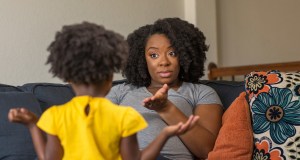
Kids in the 1970s pretending to cook

"What's for dinner?" has been asked by kids for millennia, probably, and the most common answers depend on both where and at what time in history it was asked. In ancient times, people were limited to what they could hunt or gather. Medieval recipes look different than what people ate in the 19th century. And what our grandparents ate when they were children was different from what our kids eat today.

Obviously, people couldn't DoorDash Chipotle in the '70s, but when someone on Reddit asked people born before 1970 what they ate for dinner most weeks, there were some standard meals a lot of Americans clearly ate regularly growing up. Lots of meatloaf and beef stroganoff. Pork chops and chop suey. Convenient assistance from Shake n' Bake, Hamburger Helper and TV dinners. Canned fruits and veggies. So much Jell-O.


Here are some of the most popular responses:

"Overcooked pork chop, minute rice, canned green beans, canned fruit cocktail

Spaghetti with ground beef and sauce made from a packet (Durkee?)

Pot roast (whatever cut of meat was on sale) cooked with Lipton onion soup mix. Frozen peas. Canned peaches.

Meatloaf with mashed potatoes and canned green beans. Canned pears

Shake n bake chicken and scalloped potatoes from a box. Canned fruit of some kind.

On awesome days Chef Boyardee pizza mix from a box.

I liked LaChoy chop suey.

Always with a jug of milk on the table."

1970s, '70s, generations, meals, meatloaf Meatloaf was a staple dinner.Photo credit: Canva

"So I think many of our moms went to the same home ec classes. Our house also had on rotation:

Goulash: It wasn’t what I have come to understand is Hungarian Goulash, but ground beef/spices/tomatoes.

Chicken Diane: Way overcooked chicken with rosemary, thyme and other seasonings.

Meatloaf: Yes, ketchup on top.

And the ever-present rice. Dad bought an aluminum rice cooker from his time in Japan and we had rice (he added soy sauce on top) 3x per week. The other side was baked potatoes.

The big treat!!!??? Chef Boy Ar Dee pizza from a tube on Friday once per month. Mom had a round aluminum baking pan and make dough, spread the included sauce on the dough, add the Parmesan Cheese (in the included packet). That was the biggest treat - and in all honesty I would go back to that day cause I miss my mom. Best pizza ever."

- YouTube www.youtube.com

"Hamburger patty or braised round steak, green salad, canned vegetable (peas, beans, corn, beets). Occasionally a baked potato. Sometimes my mom would toss chicken in a flour/seasoning mix and bake it and we'd have oven fried chicken--maybe once every couple of weeks. We got beef from a cousin so it was cheap, and chicken was expensive.

Mom also made spaghetti with ground beef, and beef stew with the tougher cuts of the cow. Oh--and liver--God how I hated liver night.

We always had cheap grocery store 'ice milk' in the freezer for dessert."

1970s, '70s, generations, food, meals, spaghetti Spaghetti is still a classic.Photo credit: Canva

"Sunday - Spaghetti/macaroni and homemade spaghetti sauce and a salad.

Monday - Roast chicken, a side (potatoes, Rice-a-Roni), and a veg.

Tuesday - Pork chops, a side (potatoes, Rice-a-Roni), and a veg.

Wednesday - Spaghetti/macaroni and homemade spaghetti sauce and a salad.

Thursday - Rump or sirloin steak, a side (potatoes, Rice-a-Roni), and a veg.

Friday - breaded and fried fish (ugh--haddock, halibut, or cod if the latter was on sale), a side (potatoes, Rice-a-Roni), and a veg.

Saturday - Rump or sirloin steak, a side (potatoes, Rice-a-Roni), and a veg.

Dessert would be supermarket ice cream (carton, usually Neopolitan), Jello chocolate pudding, Table Talk pie (usually apple)."

1970s, '70s, generations, food, meals, pork chops Why were pork chops so popular?Photo credit: Canva

"Typical meals: stroganoff made with ground beef and egg noodles. Pot roast. Swiss steak. Chicken cacciatore. Fried chicken. This was in California, but my parents were from the Midwest so pretty meat-and-potatoes. There was always a side vegetable and a starch. Rarely bread or rolls. Occasionally salad but not always until the 1980s. No formal/planned dessert except for special occasions like birthdays and holidays, but sometimes there was ice cream in the freezer or there were cookies (store bought; my mom wasn't a baker). In the late 70s my mom loved Julia Child and started to be more adventurous with cooking; later she took Asian cooking classes too."

"Beef stroganoff, fried bologna, weiners wrapped in bacon and then broiled, baked beans, (from scratch) liver.

Jello 1-2-3 (so space age!) Bundt cake, canned fruit salad, canned pears, canned peaches."

- YouTube www.youtube.com

"When we had some money (early in the pay period):

Spaghetti with sausages and homemade sauce

Liver and onions

Chop suey

Spare ribs and sauerkraut

Pork chops with mashed potatoes and gravy

Beef stew

Boeuf bourguignon

Beef stroganoff

When we were short on money:

Spam & scrambled eggs

Homemade macaroni & cheese

Cold cereal

That’s all I can think of right now.

We very rarely ever had dessert and almost never ate out. We never had fast food, the only fast food chain in town was Burger King, and McDonald’s was a town away and only open about six months of the year."

Here's to all the meals that nourished us in every era of our lives.

Friendship

Comedian Tig Notaro eloquently opens up about love and grief in Upworthy exclusive

"The very last thing Andrea said to me at their bedside was: 'Tig, I loved being your friend.'"

Tig, Tig Notaro, grief, loss, Andrea Gibson, Anderson Cooper
Photo Credit: Used with permission from Tig Notaro

Tig Notaro snuggles her cat.

Tig Notaro truly contains multitudes. She has the ability to keep people howling by charmingly re-framing the world in an absurd, yet hilariously joyous way. And this same brilliant mind that brings uproarious laughter, also delivers vulnerable depth in equal measure.

After the death of her close friend, poet Andrea Gibson, Notaro appeared on CNN's All There Is with Anderson Cooper podcast to discuss grief. (Gibson, who used they/them pronouns, and their wife Megan Falley documented their love and mortality in the gut-wrenching—and also beautifully funny—documentary Come See Me in the Good Light, directed by Ryan White.)


Cooper, who has also often been open about his struggle to make sense of death and pain, was ready to jump right in.

Their conversation was heartbreaking, beautiful, and even hilarious.

Notaro is asked about her friendship with Gibson, who passed in 2025, and what it was like to be there in the moment. "I don't even know how to explain what I was just a part of and what I just witnessed. It really, really resonated on a deep level. The humanity was on overdrive."

After Cooper shares that witnessing the death of someone so close is incredibly moving, Notaro adds, "It's really making me re-think a lot of things in my life. I think I want a new normal. I'm not holding onto anything that's not real. I don't know if it's right to say make friends with that idea of dying, but it really should be more in conversation. I don't want my death to sneak up on my kids. Although I've had a lot of health issues, so I don't know if it's gonna sneak up on anyone! But I really have such a new…" Notaro pauses for a moment for some clarity. "Not that I'm gonna abandon comedy and become a death doula."

They seemingly half-jokingly discuss the idea of becoming duel death doulas, with Notaro suggesting they have business cards made up. "Anderson and Tig's death doula. Sir. Let's do this! I think people would freak out if we were who showed up in the final moments of their life."

Returning to the initial conversation, Notaro shares "But this experience with Andrea really made me understand the importance of really talking about death. Rather than live my life fearing death and trying to kick it away at every possible move I'm making. Cuz it's coming."

In an exclusive with Upworthy, Notaro was willing to leave no stone unturned. (I've known her since our 20s, and she has always been quick to make a room explode with laughter, while always game to go deep at anytime.)

Upworthy: I know you've experienced so much grief, and I'd imagine fear, caused by your own health issues over the years. What do you think it was about Andrea passing, in particular, that made you feel like you were really ready to talk about it?

Notaro: "Yeah, I’ve had a lot of practice with grief: losing love, loved ones, body parts, and health in general. It's humbling. With Andrea, I think it wasn’t just the loss, it was the clarity. Andrea had already been speaking so openly about mortality and love, that when they died, it felt like the conversation didn’t stop, it just shifted. When I was personally diagnosed with cancer in 2012, I didn’t process it in a poetic way like Andrea did. I was more like: 'Okay, this is happening. Also, I have a show tonight.' I think that’s how I survived things before: I kept moving until my body or heart said: 'Nope. Sit down.' Andrea’s death made me sit down. It made me realize I wasn’t trying to be brave, I was just ready to be honest with myself and make changes that would make things feel more congruent in my life."

Upworthy: If you did become a death doula (and I'd like to hire you if so), what are some of the important things you'd discuss with a person who was dying? What would you say to their families/loved ones to help ease the pain?

Notaro: "To the person dying, I’d probably say very little. I’d listen. And when I did talk, it would be more about comfort: do you need a blanket? We're all here. You are so loved—which was basically what we were all telling Andrea in those final days. To families and loved ones, I’d say: 'There’s no correct way to be present, you don’t have to say the perfect thing, you showed up and that counts more than anything you could possibly say—it's massive.'"

Upworthy: I had a friend who died a few years ago and I swear I felt him in my room just a few days later. I know not everyone believes in such things, and maybe it's our brain trying to make sense of stuff, but have you experienced anything like that?

Notaro: "I'm sorry for the loss of your friend. I think it's so nice to know you feel/felt them in whatever capacity. I don’t walk around having clear, cinematic experiences of people visiting me from the other side, but I wish I did. But I have had moments where someone felt very near, whatever that means. And whether that’s spiritual or neurological or emotional or all of it mashed together, I'm just going with it. If something brings comfort and doesn’t hurt anyone, I’m not interested in debunking it. I’m tired. Let people feel things."

Upworthy: Is there anything else you'd like to share about your friendship with Andrea?

Notaro: "Well, Andrea was one of those people who made you feel more honest just by being around them. They were really, deeply funny and deeply gentle in a way that wasn’t fragile. I miss their literal voice. And their words. They didn’t waste any of them. The very last thing Andrea said to me at their bedside was: 'Tig, I loved being your friend.' So simple but so beautiful. I will also always really, really miss the way Andrea's smile lifted the lines on their cheeks. It was one of my favorite things to see, but it also usually meant Andrea was laughing, which was always a joy to hear—that deep, deep belly laughter will forever be missed."

party, chatting, likable, drinks small talk, men and women

A woman speaking with two men at a party.

When we think of someone likable, we often imagine a person with a big personality who's the life of the party. We conjure up images of social butterflies and people who keep everyone at the dinner party glued to their every word when they tell a story. The funny thing is, according to research, that's not really the case.

Studies show that the easiest way to make someone like you is to show interest by asking questions during the conversation and making it clear that you like them. People also really love those who come off as genuine.


Michael Gendler, a co-founder of Ultraspeaking, a platform that helps people master the art of public speaking, recently shared three "magic" phrases that make you more likable, all of which align with what science tells us.

Three phrases that make you more likable

Phrase 1: "Here's what really scares me..."

This phrase resonates with people because it shows you're genuine by admitting your vulnerability. "Man, talk about your feats, real fears, not like 'Oh, I'm scared I'm going to be too successful.' Tell us about something that actually scares you. Don't be guarded. Be open, and other people will appreciate that," Gendler says.

Phrase 2: "You know what I really like about you?"

This phrase makes people like you because it counters a psychological phenomenon known as signal amplification bias, which suggests we tend to overestimate how clearly we express our feelings to others. This means that, many times, when we think others know we like them, they may not be so sure. So a little assurance goes a long way toward showing them the feeling is mutual. "People love being complimented as long as it is genuine," Gendler says.


Phrase 3: "Tell me more"

As Dale Carnegie wrote in How to Make Friends and Influence People, the key to interacting with others is focusing on being interested in them rather than trying to impress them by being interesting. "Be interested, not interesting," Carnegie writes.

A Harvard study supports this, showing that when you first start speaking with someone, you should follow your first question with two more. People who do this are rated as much more likable than those who, after one question, shift the conversation to themselves. "People love feeling like what they're saying is interesting. So invite them to speak more," Gendler continues.


Don't forget to be genuine

Ultraspeaking's post is a breath of fresh air for those who aren't comfortable trying to impress others at parties, on dates, or in the office. The video shows that if you make people feel important, they're much more likely to like you in return. The key is that it has to come from the heart.

"Remember, don't just use these phrases and expect them to work," Gendler says. "They have to be genuine and open. That's what makes people likable."

initials, names, bad names, embarrassing, unfortunate

A woman who is frustrated with her name.

Accidents happen, of course, but it’s fair to blame parents if they give their child a name and the initials spell out something unseemly or embarrassing. They should have considered this before naming the child. However, you can’t blame someone with funny initials after getting married, because no one will reject the love of their life for having a last name that starts with the wrong letter.

A woman shared that she can’t stand her initials because she can’t wear monogrammed clothing. "[My initials] are the bane of my existence, and I can never have traditional monogramming (first, last, middle) without it being a sandwich." Yes, her initials, in the traditional monogram form, are BLT. They are a tasty option for lunch, but probably not something you’d want on a fancy necklace or bathrobe. She also refuses to eat the sandwich. "Raw tomatoes are disgusting to me personally,” she adds.


What is traditional monogram form?

Why is it that in traditional monogram form, a married woman’s initials are different than if she was writing them first, middle, and last? “A monogrammed gift for a woman should include her first, middle, and last initial or, if she is married, her first, maiden name, and married name initials. Traditionally, a woman's monogram is presented in first, last, and middle initial order,” The Monogram Merchant writes.

For example, Jacqueline Bouvier Kennedy would have a traditional monogram of JKB.

jackie o, the kennedys, jaqueline kennedy, white house, camelot First Lady Jacqueline Kennedy greets guests before a reception for the Wives of American Society of Newspaper Editors Members.via The U.S. National Archives/Wikimedia Commons

To make the woman feel better, some commenters shared their initials, and many were worse than BLT.

"My friend's is AIDS, so dont worry, i remember in secondary school having to sew our initials on pillows for home economics. I felt bad for her."

"I’m D.M.B. - all I’m missing is the U."

"Mine are TB.... just as unappealing haha."

"My initials are BS, so don't feel bad. I get cracked on all the time."

"Hubs initials are ET. Cue 'ET phone home,' circa the '80s, from all his so-called friends at work."


My initials are RAD, lol."

"I knew a girl with the initials PMS, I think food is better than that."

"Mine happen to spell 'ELF', and I hated it as a kid. Now I embrace it, lol."

"My brother’s are R.A.T. He kinda embraced it, an animal lover and all."

"I'm APE lol."


ape, gorilla, wild gorilla, knuckle-walking, gorilla stare A gorilla walking on its knuckles. via Canva/Photos

"Upon reflection, I should have considered this more when naming my daughter, her initials are - AHO. If we had hyphenated then, AHOG."

"My brothers are R.A.T. He kinda embraced it, an animal lover and all."

"After I get married next year, my initials will be the biggest white supremacy group in the US, so it could always be worse."

"MGM, I am a company."


Are unfortunate initials bad for your health?

It was once believed that having unfortunate initials meant more than suffering the occasional embarrassment—they could take years off your life. In 1999, a study found that men with positive initials, such as WOW or JOY, lived 4.5 years longer than those with neutral initials, while those with negative initials, such as DIE or ROT, died 2.8 years later.

The idea was that people with negative initials subconsciously think less of themselves, which could lead to an unhealthy lifestyle compared to someone with positive initials. However, six years later, that study was debunked by a subsequent study that found there is “no persuasive biological theory of how longevity should be significantly affected by initials."

Pamela Redmond Satran, author of Baby Names Now, says we should still consider initials when naming children.

"Every conventional naming book gives the guideline, 'Don't forget to look at the initials,'" Satran said, according to CBS News. "Even if the second study contradicts the first, and having bad initials is not going to shorten your life span, it could make what there is of your life less pleasant. And who wants to foist that on innocent children?"

This article originally appeared last year. It has been updated.

frugal living, frugality, saving money, money saving tips, frugal hacks

The older generations had some good money-saving habits we can draw on.

Today's adults often lament the economic turmoil of the 21st century, from the Great Recession of 2008 to the financial upheaval of the COVID-19 pandemic of the early 2020s to very real struggles with unaffordable housing and education. A lot has transpired to drive up the cost of everyday living without a corresponding rise in wages.

With a major upheaval of the U.S. government unfolding in early 2025, uncertainty was even more solidified as the theme of the day. When financial instability hits, it's time to take measures to mitigate it however we can, and thankfully, we can learn a thing or two from our elders who lived through the money struggles of two world wars and the Great Depression. Frugality was a way of life for our grandparents and great-grandparents, and though times have changed—a lot—many of those wise ways to save money still stand. And the good news is that many of them are good for the environment and our health as well as our wallet, so


Here are some of the easiest, best frugal living habits we can take from previous generations:

cooking at home, home cooked meals, cooking from scratch, eating out, saving money Cooking at home is almost always cheaper than eating out, and often significantly so.Photo credit: Canva

Cook from scratch

Even with the cost of groceries being higher than they were, it's almost always significantly cheaper to eat at home than it is to eat out. Learning to cook is a useful and enjoyable (for many) hobby that can also save you money, as long as you're not trying to cook something overly fancy. Cooking doesn't have to be complicated, and it's never been easier to find simple recipes. There are even sites that will come up with a menu and recipes for you based on what you already have in your pantry. Stock up on basic ingredients, keep it simple, and find some favorite meals that you can whip up quickly and easily.

Less meat, more beans

Meat is pricey—especially good quality meat—and with animal-borne diseases becoming more of a concern, animal products in general are getting more expensive. Perhaps now would be a good time to transition to more of a plant-based lifestyle, making more use of cheaper protein sources like beans. Canned beans are generally quite affordable, but dried beans are even cheaper if you don't mind taking the time to soak and cook them. If you have an Instant Pot, it's super easy to batch cook dry beans, which you can then store cooked in the freezer for quick reheating.

herbs, spices, bulk foods, buying in bulk, saving money Bulk spices often cost a fraction of what they cost in jars.Photo credit: Canva

Buy herbs and spices in bulk

Spices in jars are stupidly expensive sometimes, and you might assume that's just what they cost. But if you've never shopped in the bulk spice section at a store—even at an expensive health food store—you might be surprised by how much cheaper it is. Leafy herbs like oregano, thyme, basil, and sage weigh almost nothing, so even if they cost $20/lb, a jar's worth is often pennies to the dollar cheaper than buying them already packaged. (Just beware heavier spices, as sometimes those can be just as expensive as jarred. Definitely worth comparing, though.)

Borrow and barter

When times are tough, getting by becomes a community effort, but there's no reason we have to wait for an actual economic depression to help one another out or scratch one another's backs. We all have things that sit around not being used much of the time that others might like to borrow, from tools to books. Trading services can be an excellent way to save money in a win-win way.

gardening, growing your own food, growing vegetables, home garden, saving money Growing your own food can save you money.Photo credit: Canva

Grow a garden

During the pandemic, many people started growing WWII-style "victory gardens" simply because they could, but gardening can be a great way to save on produce and herbs. If you can start early in the spring and grow from seed, even better. Though learning to keep a garden thriving can be a little trickier than it looks, the savings can be impressive. For instance, one tomato plant can harvest 10 to 20 pounds of tomatoes, so even if you spend $5 on a starter plant, you can save a ton compared to produce section prices at the store. No yard? Gardening in containers works, too.

Clean with vinegar and baking soda

It may seem like a small thing, but lots of small things like cleaning products add up. Buying vinegar in bulk and diluting it 50/50 with water makes a great basic cleaner, and baking soda in bulk can help you scour surfaces as well. Vinegar smell doesn't last long, but you can always add a little essential oil to the mix to add some scent. You might need a stronger disinfectant for certain cleaning jobs, but for a basic cleanser, vinegar gets the job done.

bike commute, bicycle, drive less, environment, saving money Biking is free.Photo credit: Canva

Drive less

Americans love to drive and many of us do it far more often than we need to, spending more on gas than necessary. And even though gas prices have come down most places, it still isn't cheap. Combining trips or making a once a week "errand day" can help us cut down on driving. So can carpooling or biking or walking more.

Buy used

Thrift store shopping can save a ton of money, especially if you shop around to various thrift shops to find the ones that actually have good stuff at low prices. Clothes especially can be a much better deal used than new, and no one will ever know the difference. Furniture is also a fraction of the cost used vs. new, and often older furniture is better quality anyway. Check Facebook Marketplace, Craigslist and other online markets for used items before running to the store or buying something new online.

library, public library, borrowing books, read for free, saving money Public libraries are treasure troves of free items to borrow.Photo credit: Canva

Utilize your public library

Public libraries are treasure troves of free stuff, and not enough people take full advantage of them. Not only can you get books, but many libraries have huge collections of movies or other entertainment. Some have art collections you can check out, others have tools and household items you can borrow. There are also free book clubs, lectures, classes and other activities that can add to your social calendar without spending anything.

Make do with what you have

This might sound like a no-brainer, but many of us have gotten into the habit of buying whatever we think we need simply because it's convenient. Amazon has created some habitual buying habits that we might want to rethink if we're trying to save money. Do you really need a new jacket or is the one you have still perfectly usable? Is there still some life left in that pair of shoes? Even holding off on buying things for a month or two and making do with what you have can help you save money and see that you don't need as much as you might think.

Lots of small savings can add up, so don't assume that a few cents or a dollar here and there don't matter. Once you get into these habits, you may even find that frugal living to be a preferred way of life, regardless of your financial situation. It certainly can't hurt to try it.

This article originally appeared in March.