Have you ever had a secret trick that you didn’t want to share with anyone? Some families have recipes they are sworn never to share with outsiders. Other folks have tricks they use at work that give them a competitive advantage that could be used against them if they let it out of the bag. Other people use secret techniques to be likable but fear being seen as manipulative if they share them.
Everyone has their own “secret sauce” that makes them unique. A couple of hundred of them were very kind and shared those secret life hacks on a recent social media post where someone asked, “What’s a life hack so good you almost don’t want to share it?” They received over 3500 responses, and we culled the best from them to make our readers’ lives easier.
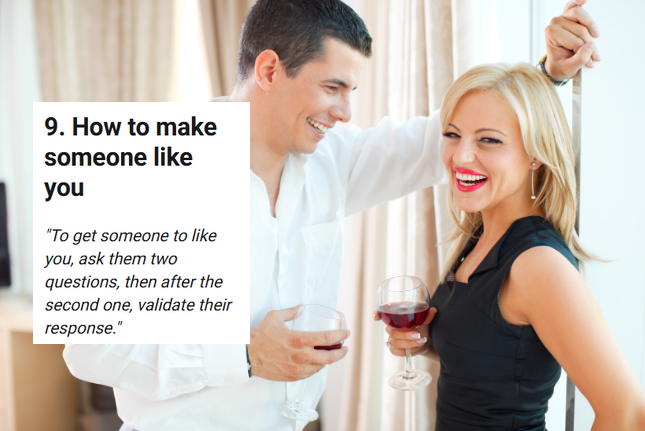
The advice covers everything from how to win an argument to finding precious metals at your local second-hand store. The life hacks that are “so good” also include ways to prevent potentially aggravating people from getting in your face and the power of learning how to smile.
In March 2023, after months of preparation and paperwork, Anita Omary arrived in the United States from her native Afghanistan to build a better life. Once she arrived in Connecticut, however, the experience was anything but easy.
“When I first arrived, everything felt so strange—the weather, the environment, the people,” Omary recalled. Omary had not only left behind her extended family and friends in Afghanistan, she left her career managing child protective cases and supporting refugee communities behind as well. Even more challenging, Anita was five months pregnant at the time, and because her husband was unable to obtain a travel visa, she found herself having to navigate a new language, a different culture, and an unfamiliar country entirely on her own.
“I went through a period of deep disappointment and depression, where I wasn’t able to do much for myself,” Omary said.
Then something incredible happened: Omary met a woman who would become her close friend, offering support that would change her experience as a refugee—and ultimately the trajectory of her entire life.
Understanding the journey
Like Anita Omary, tens of thousands of people come to the United States each year seeking safety from war, political violence, religious persecution, and other threats. Yet escaping danger, unfortunately, is only the first challenge. Once here, immigrant and refugee families must deal with the loss of displacement, while at the same time facing language barriers, adapting to a new culture, and sometimes even facing social stigma and anti-immigrant biases.
Welcoming immigrant and refugee neighbors strengthens the nation and benefits everyone—and according to Anita Omary, small, simple acts of human kindness can make the greatest difference in helping them feel safe, valued, and truly at home.
A warm welcome
Dee and Omary's son, Osman
Anita Omary was receiving prenatal checkups at a woman’s health center in West Haven when she met Dee, a nurse.
“She immediately recognized that I was new, and that I was struggling,” Omary said. “From that moment on, she became my support system.”
Dee started checking in on Omary throughout her pregnancy, both inside the clinic and out.
“She would call me and ask am I okay, am I eating, am I healthy,” Omary said. “She helped me with things I didn’t even realize I needed, like getting an air conditioner for my small, hot room.”
Soon, Dee was helping Omary apply for jobs and taking her on driving lessons every weekend. With her help, Omary landed a job, passed her road test on the first attempt, and even enrolled at the University of New Haven to pursue her master’s degree. Dee and Omary became like family. After Omary’s son, Osman, was born, Dee spent five days in the hospital at her side, bringing her halal food and brushing her hair in the same way Omary’s mother used to. When Omary’s postpartum pain became too great for her to lift Osman’s car seat, Dee accompanied her to his doctor’s appointments and carried the baby for her.
“Her support truly changed my life,” Omary said. “Her motivation, compassion, and support gave me hope. It gave me a sense of stability and confidence. I didn’t feel alone, because of her.”
More than that, the experience gave Omary a new resolve to help other people.
“That experience has deeply shaped the way I give back,” she said. “I want to be that source of encouragement and support for others that my friend was for me.”
Extending the welcome
Omary and Dee at the Martin Luther King, Jr. Vision Awards ceremony at the University of New Haven.
Omary is now flourishing. She currently works as a career development specialist as she continues her Master’s degree. She also, as a member of the Refugee Storytellers Collective, helps advocate for refugee and immigrant families by connecting them with resources—and teaches local communities how to best welcome newcomers.
“Welcoming new families today has many challenges,” Omary said. “One major barrier is access to English classes. Many newcomers, especially those who have just arrived, often put their names on long wait lists and for months there are no available spots.” For women with children, the lack of available childcare makes attending English classes, or working outside the home, especially difficult.
Omary stresses that sometimes small, everyday acts of kindness can make the biggest difference to immigrant and refugee families.
“Welcome is not about big gestures, but about small, consistent acts of care that remind you that you belong,” Omary said. Receiving a compliment on her dress or her son from a stranger in the grocery store was incredibly uplifting during her early days as a newcomer, and Omary remembers how even the smallest gestures of kindness gave her hope that she could thrive and build a new life here.
“I built my new life, but I didn’t do it alone,” Omary said. “Community and kindness were my greatest strengths.”
Are you in? Click here to join the Refugee Advocacy Lab and sign the #WeWillWelcome pledge and complete one small act of welcome in your community. Together, with small, meaningful steps, we can build communities where everyone feels safe.
This article is part of Upworthy’s “The Threads Between U.S.” series that highlights what we have in common thanks to the generous support from the Levi Strauss Foundation, whose grantmaking is committed to creating a culture of belonging.
Getting a first job is undoubtedly one of the most drastic steps that teenagers make into full-blown adulthood. It can be a shock to the system doing hard work outside of a school environment, having a boss instead of a teacher, and having real money on the line. However, one thing all adults remember fondly is the time they opened their very first paycheck, and all that hard work (at least for a moment) felt worth it.
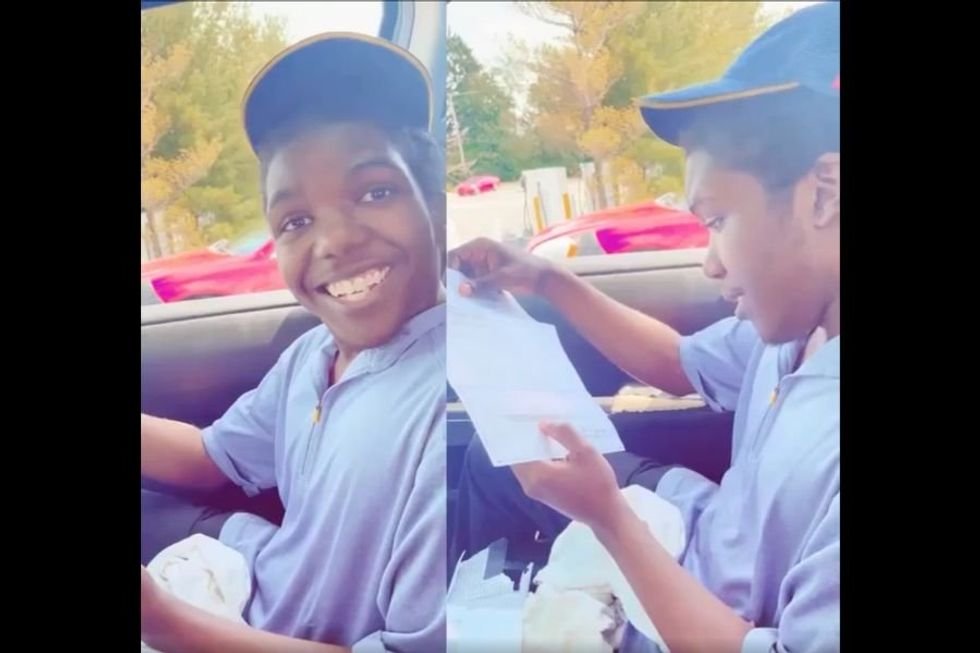
One mom recently captured one of those moments on video as her teen son opened his first paycheck from his job at McDonald’s. The video shared on Reddit shows a teen in a McDonald’s hat sitting in the passenger seat of a car opening an envelope that contained his paycheck.
His mom said it should be “200-and something” dollars, and after a hilariously long struggle to open the envelope (Gen Z have rarely, if ever, snail mailed, so no judgment), he looks over the check stub to get the full picture.
“That’s $283,” he says in astonishment. To his credit, he asks “After tax, what’s that?” not realizing that the amount of the check is the after-tax take home amount. It may not sound like much to adults, but it’s likely the most money this teenager has ever truly been able to call his. And he earned every penny. His smile and laughter says it all.
“Let’s take it to the bank, then!” Heck yeah, kid.
People in the comments are fondly remembering their own first paychecks
Many viral videos of first paycheck reveals include complaints about how much is taken out in taxes, so it’s refreshing to see this young man’s joy at his after-tax pay. It was a beautiful moment to capture on film, as most of us remember that feeling of empowerment that came with our own first real paychecks.
People in the comments are feeling the nostalgia:
“I remember that feeling – pretty sweet to see money you earned yourself. Feels good earning your own cash.”
“God that first paycheck felt so unreal. I will never forget you ace hardware.”
“I remember my first paycheck was for like $300 after two weeks of being a counselor and I felt RICH. I immediately spent it all on a guitar that I still have 20 years later.”
“I remember mine – from my first proper job. £64.29 in a little brown packet with holes in it to see the cash inside. 1980. “
“My first “paycheck” was like $65, I was so proud. I took my mom to pizzeria to treat her and she was very very touched.”
“Man… I remember my first paycheck… 23 years ago now. For two weeks of what limited hours I could work being 14 years old… that baby was $96.19! HO-LY smokes was I on cloud 9. Cashed it right there at work and bought myself a bag of Skittles. It was a good day.”
“No matter how much we earn later in life, that very first pay check is everything!”
“Man, I swear I had to watch this video like 20 times. There is hope for the future of America, love this kid!!!!
Ah, to be young and unencumbered by adult expenses. Part of what makes this endearing is the innocence of it. As a teen, he’s not worried about affording a mortgage or groceries or diapers or retirement savings. His elation over making $283 is adorable because he’s just starting down the path of adulthood. Soon enough, that paycheck will seem small, but he’s not there yet.
Such is the “first paycheck joy,” that TikTok is rife with adorable videos of young people opening their first paychecks after working their first real jobs.
When you’re a kid, money is kind of an abstract concept. Maybe you get a small allowance or get paid a few bucks for odd jobs, and opening a birthday card with some cash in it is exciting. It’s not until you’re fully into the working world for a while that the regular flow of money and what it means for your life really sinks in.
It’s not until you’re a fully independent adult that you really grasp how relative your feelings about your paycheck can be. There’s a big difference between being a 16-year-old getting your first paycheck and being a 30-year-old trying to raise a family on wages that don’t cover all your needs. Things like cost-of-living and inflation start to actually mean something as you get older and experience their impact. You might find that you can make a lot more money and yet feel poorer than ever as expenses pile up into adulthood.
Don’t we all wish we could go back to the hopeful, happy days of making our first real chunk of money before all of those grown-up concerns arose? That simple sense of pride in having worked hard and earned something. The excitement of being able to pay for something you want yourself. The sense of freedom that comes with those early earnings. We see and feel all of that in this teen’s bright smile, and it’s glorious.
He’ll have plenty of time to learn, in the very near future, the importance of budgeting, saving, and smart spending. And luckily, he’ll have plenty of resources in the modern media and social media landscape to learn from; far more than his parents ever had:
He may not realize how different he might feel opening his paychecks down the road, but there’s no need to tell him yet. He’ll find out soon enough, as we all have, so let’s just let him enjoy this moment of bliss. He’s earned it.
This article originally appeared two years ago. It has been updated.
Side hustles are becoming more and more common (and necessary) in the United States. According to a recent study by Bankrate, nearly one in four Americans have a side hustle to earn extra income each month.
Finding a lucrative side job on top of a 9-to-5 can be challenging. However, there are definitely ways to drum up side hustles that make sense with your lifestyle, that draw on your own interests, skills, and values, and truly add to your life, whether they be through acts of service, reselling items online, or creating new items (be they artistic or practical).
While some may not be bringing in that much cash, many people explained that their side hustles still add hundreds of dollars to their bank accounts. From private baseball coaching and flipping furniture, these are some successful side gig ideas to consider.
24 side hustle ideas
Sales
“I sell rare house plants on the side. “
“If I want some money for a spa or date night, I’ll just chop and propagate some plants for an easy $300-$500…Rare alocasias, monsteras, and anthuriums. There are a ton of people who collect, trade, etc. It’s my hobby, which has made it so easy to turn into a side hustle. Best part is it’s all cash.”
“I used to flip furniture on Craigslist and Facebook Marketplace.
“I did have to invest in a small trailer and a good cleaner. But I would get free or cheap furniture. Clean it and spruce it up. Sell it for a couple hundred bucks. Mostly couches.”
Creative arts
“I make cosplay props for people.”
“I use my personal social media, and I have a commissions page on Ko-Fi. People will see what I usually make and ask me if I am able to make a certain prop. I will then make an agreement with the customer before starting the work.”
“I used to sell my artwork online, it was a good $15,000 to $20,000 a year.”
“I work freelance in the arts.”
“I’ve done a decent job advertising my own business and have developed a side hustle doing social media marketing for other small businesses. Writing posts, finding imagery, and scheduling the posts in advance. The amount of actual work varies from month to month, but the retainer fee does not, and it’s made my life much easier and more predictable.”
“During the winter, I sell 3D-printed ornaments and make between $100 and $300 a week for the first two to three weeks of December.”
“I specifically target the last-minute crowd and get most of my work through word of mouth. Production cost per ornament is $1.04. It takes me under an hour to make/edit the model, and then it takes 5-8 hours to print, but that can be done while I’m sleeping. I charge between $15 and $25 for an ornament. Last year, I also started selling name ornaments for $5 a pop, but they take under two hours to edit and print, so they’re easy to make in large batches. These customers also tend to message me throughout the year, so I make around $600 during the Christmas season and $20-$100 other months. So kinda $20 here and there with a big yearly payout.”
“Real estate Photography.”
“It’s usually $150 per house, $300 if it’s a large property, and I need to use a drone. It takes about an hour to shoot and less than an hour to edit. I usually do two to three houses throughout the week. I’ll stop on my way home from work, then on Saturday, I can group appointments by location. My busiest Saturday was seven houses. It’s really easy. You just need a camera capable of HDR and a lens with a wide angle. I use a Nikon 16-24mm and a tripod.”
Manual labor
“I put up and take down Christmas lights on weekends and evenings from October to January.”
“$24k a season is very doable, but you gotta be able to haul and carry ladders, confidently and safely climb up and down ladders, and be OK with working in the wind and rain in the coldest part of the year. It isn’t glamorous, but it can be a nice chunk of extra money.”
“If you’re even a little handy, you can make good money as a handyman in elderly neighborhoods.”
“My dad started out just helping neighbors with hanging curtains, painting bathrooms, etc… after about a year he was busy enough to quit his full time job and just work for himself. You don’t need a lot of tools or an expensive truck, but if you can operate a drill, swing a brush, and are good with old people – there’s good paying work out there for you.”
“I work as an ad model.”
“All kinds of ads. Internet, TV, print. Work is sporadic and irregular, which means you’d better have solid income from a main source. But a little $500-$800 check from time to time sure comes in handy. Generally, one can set up an account for a small annual fee on places like castingnetworks.com or actorsaccess.com. Specifically, it would be better if you would connect with a local talent/modeling agency. They will also ask you to sign up for a talent website, and you’re going to need professional photos. Spend money on THAT, for sure. Good photos are critical!”
“Landscaping.”
“Cash under the table, you dictate how many jobs you want to take on, and you can focus on one specific neighborhood to limit gas mileage. A mower, trimmer, blower, and small trailer will all pay themselves off in three weeks. It’ll beat you up a little, but it’s rewarding work. It’s also extremely straightforward. As long as you do what you’re supposed to do, the customer will be happy. Don’t target people with complex yards. Drive through the neighborhood and find someone who’s obviously over a month behind on mowing their lawn. Knock and offer to do it for $40. Tell them you’ll come back every two weeks if that works for them. Get to a point where you’ve got 10 or so yards on rotation and you can knock them out in a day. $400 for a day’s work every two weeks, under the table. Do more or less depending on how much or little you want to make.”
“I started a cleaning business.”
“It was very easy, and I did it on Saturday afternoons. I just posted my contact info, services, and prices to local online communities. I worked for a young, wealthy couple cleaning a condo two to three times a month. I got around $600 extra per month for just a general cleaning. I also now include move-out cleans, which can get me $400-$600 per job. It’s not huge cash, but it helped me kick a car note down from $24k to $16k. And that was with one client.”
“I do side work car repairs.”
“And by repairs I mean mostly just brakes. To get 4 brakes and rotors done at a shop today is typically around $1000 or more, because they up-charge parts and labor. I am able to do it for people for around $600. I charge $300-400 in labor (for 2 hours of work), and the parts just cost what they cost. So I save people a few hundred dollars and I make a few hundred myself. Sometimes I do one of these a month. Sometimes I do a few of them. I would like to get one a week, cause then I could legit get an extra $300 a week.”
“I did Rover for three years, boarding dogs in my home.”
“I made $11k a year consistently. Month to month could vary widely, $0-$2k, but I always finished the year the same. But you really should have some experience and be an actual responsible person, because dogs are living beings and deserve proper care. You also need to account for things like Rover fees (20%), taxes, insurance, supplies, and licensing laws. You will end up working all holidays because that’s the busiest season for dog sitting, and you’ll need to commit your schedule months in advance.”
“Deliver pizza for a local place under the table.”
“You can do pretty good Friday night through Sunday.”
“I host bar trivia.”
“It’s usually three hours a night, and it makes me about $150 a night (plus tips). I’m actually trying to make this my full-time job; I enjoy it so much. It’s not hard to buy trivia games or hook up with an existing company. I am independent and write my own games that I try to sell on the side.”
“I started a YouTube channel a few years ago, and now it’s actually pulling in between $1,500 and $3,000 a month!”
“It’s nuts!!! It was just a hobby. I talk about tech stuff. I review computers, network-attached storage systems, and occasionally a tech company I follow pretty closely. My channel name is the same as my Reddit name. It did take several years before money started flowing, but now it’s a pretty great side hustle because it’s something I would do for free anyway.”
“I make about $120/hr coaching baseball lessons.”
“I’ll spend a weekend with 10 lessons coaching middle school to college athletes. I also charge $75/month to program throwing/pitching training. This can be 10-30 pitchers a session, ranging from high school to professional. It’s about 5-15 extra hours a week.”
“Election work.”
“Literally in 14 days this year, I’ll gross $6,900. Long days, easy peasy work.”
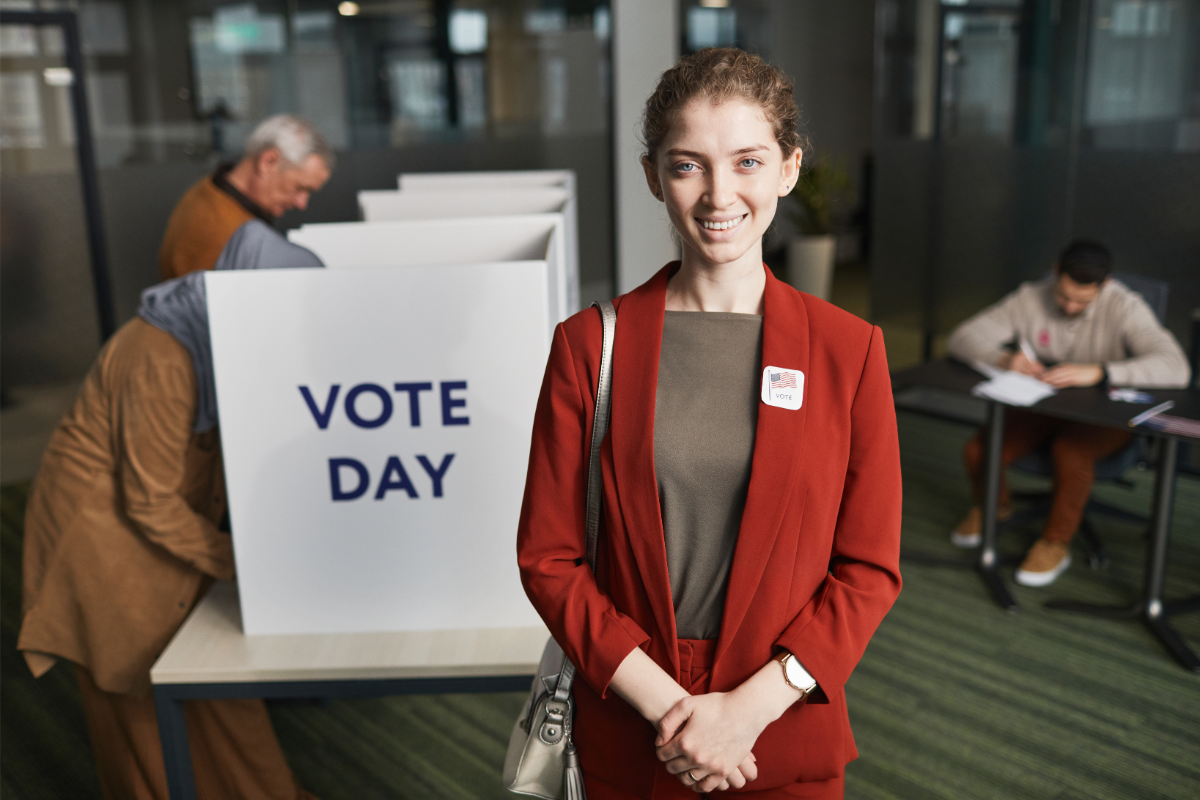
Working the polls or assisting with elections is a great side hustle. Photo credit: Canva
Food
Over ten years ago I started my own hummus business.”
“Took a bit to get started but once I was accepted to different farmer’s markets, I made pretty good dough. But omg setting up a tent and tables at 5:30am on weekends was not fun after a couple of years. It was called Bean There, Done That and I had tons of creative flavors (and punny names).”
“I have a kettle corn pop-up.”
“I do fairs, festivals, pumpkin patches, and can turn $300 of product and space rent into $6k+ sales in a day. Some states require [a food or vendor license] but in my popcorn is exempt from licensing because of its very low risk for foodborne illness.”
“None of these enterprises have made me two thousand a month individually, but all of them combined have equaled that over many months of production.”
“Edible mushrooms. Microgreens. Composting worms. Compost. Vegetable plant starts. Cloned fruit trees. I’ve been doing these for years, and I sell directly to consumers, no restaurants or middlemen.”
Science
“I participate in focus groups and research studies.”
“They’re a pretty cool way to spend a couple of hours, and they usually pay $150-$250 a pop. I do this with several research companies in my area because most of them only let you participate once every few months. So, if you keep filling out questionnaires and screeners with various research companies, you can rotate through them and get picked more often. Using this method, I participate in one or two studies per month. I’ve actually been grinding hard on applying for research studies for the last few months to pay off my credit card debt. Been making some pretty good progress!”
“My very first month of donating plasma, I made $900.”
“Paid for my three-and-a-half week road trip last summer to Canada. I only do it once a week now because the center closest to me changed their hours, so I get $40 a week instead of my usual $100, but that’s still an extra $160 a month I put back into savings that doesn’t have to come out of my normal paychecks, it’s just extra. So that’s nice. I do miss the $400 months, though.”
This article originally appeared last year. It has been updated.
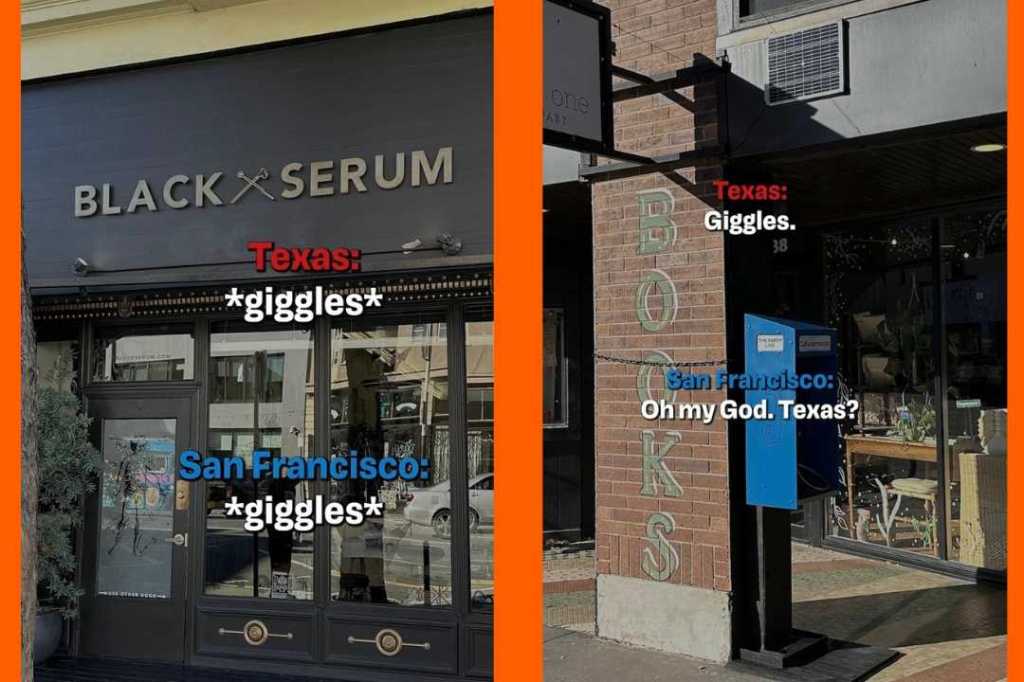
Two payphones set up in Abilene, Texas and San Francisco, California let complete strangers chat. – Photo credit: Photo Credit: Canva, Matter Neuroscience, Instagram
Imagine you’re walking by a payphone in Abilene, Texas, when it unexpectedly rings. You pick up, only to hear that a total stranger over 1500 miles away in San Francisco is on the other end of the line. Do you argue, as so many social media algorithms would have people do? Or do you dig into your primal human instinct, the one that makes evolution possible, and find yourself connecting?
The biotech company Matter Neuroscience had this thought. What if they chose one of the most conservative and most liberal cities in the U.S. and installed free payphone-looking devices in each one? The idea is to bridge the gap between the great divide many are currently experiencing. Whether due to politics, religion, or different lifestyles, many are seemingly forgetting that we’re all just human beings searching for contentment.
On their Instagram page, Matter Neuroscience (@Matterneuroscience) explains that it’s about people connecting from all walks of life. “The goal of this project is to create space for friendly, human-to-human conversations. We believe that a few different opinions (even on important political topics) should not block us from having a truly positive, maybe even fun conversation with other humans.”
How it works
As explained on the initial Instagram Reel, “When one phone is picked up, it automatically calls the other.” In a video, we see one of the Matter Neuroscience teammates, Logan Ivey, setting up an old payphone that was bought on Facebook Marketplace for $300.00. Ivey jimmies it open to put a modem inside, with a Verizon SIM card inserted. In essence, it’s a cell phone inside of a payphone.
On the side, the words “The Party Line” are painted to entice people walking by to give it a shot. At the top of the “payphone” in San Francisco, they’ve written “Call a Republican.” (In Texas, it says “Call a Democrat.”) There’s an extra plaque at the top that says, “This payphone is a social experiment. Right now you’re in San Francisco, the most liberal city in America. When you pick up this phone, it will automatically connect you to another payphone in Abilene, Texas, the most conservative city in America.”
They continue their mission statement, writing, “The goal for this project is to have people from different places have meaningful conversations. Because hostile political discourse increases our brain’s cortisol levels and suppresses our happiness. But positive conversations do the opposite. We are recording the conversations so that we can highlight positive ones on our social media account, though any personal names shared will be bleeped out, as we treasure your anonymity. Have fun and enjoy!”
People are already taking the “have fun” part to heart. In one conversation, the phone rings in Texas and a young woman answers. After some giggly pleasantries, they each establish the cities they’re in and the current weather. The adorably pure laughter continues as they realize what a cool thing they’re taking part in. The Texan shares, “I’ve been to San Francisco before. You have those cool little streets and stuff.”
The Californian is, unfortunately, late for a meeting, but noted, “I was like I had to pick up.” The Texan is glad she did, gushing, “Oh my goodness. We picked up at the same time. I’ll probably never see you again. But Jesus loves you and I hope you have a good life.”
The Californian agrees. “Oh yeah, you too. Sending you all the best. All the blessings.”
Another conversation has a Texas woman and a California guy connecting nearly immediately. He admits, “I was running down the street and I heard the phone ring. Wait a second, I know that phone!”
They laugh and once again pleasantly discuss the weather. He then asks, “What else do you want to talk about?”
She answers honestly, saying, “I don’t know! We just wanted to call and make some friends.” He replies, “Oh fantastic! Well, I’m going to meet a bunch of friends out. We’re a group called Moto Chug. It’s not really a group, but it’s the group text name. And we’re all friends who ride motorcycles together.” He tells her a bit about their group, to which she replies in earnest, “You are so cool. I hope that you know that. And I hope that you go and tell your friends that this random college kid from Abilene, Texas thinks that you guys are so cool.”
He sweetly responds, “Awww, awesome! Right on! Well, it’s great to talk to Texas, man. Hang in there. I’ve got good family in Texas and they’re all great people. Hella love going from San Francisco to Abilene, Texas right now.”
They then exchange names before he tells her, “We need to make more connections to make this a better place.”
The comment section is delighted. One writes, “I’m grinning from ear to ear — just pure joy on what’s going on here! Can’t wait for the next call.”
Another adds, in part, “The type of discourse we really need in this country.”
Upworthy had the chance to chat with Ben Goldhirsh, who co-founded Matter Neuroscience, alongside neuroscientist Axel Bouchon. (Small world! Goldhirsh incidentally was also one of the co-founders of GOOD Worldwide, the umbrella company of Upworthy.) He explained that in all of his research, he has found that if people only understood how the brain worked, it could make a real difference. “It’s interesting how culture sort of focuses you on certain areas. The reality is that your biology requires this rainbow of activity.”
He also notes that everyone should benefit from happiness research, not just depression and anxiety patients. Their team decided, “We should create something that is useful to everyone. So, we basically opened up the ‘Emotional Fitness Club‘ (an app.) Everyone should understand the science of happiness. We all have this incredible organ, and we’re trying every day to teach people about this stuff.”
The payphone experiment wanted to test how people, when stripped to just two voices across the country, would react to one another. “One of the topics that a lot of people in our community were talking about is how stressful things feel right now. And so cortisol is this fascinating and super valuable chemical in the brain that is popped out when we experience conflict or a fight-or-flight response.”
The question posed was: “Are we in a state of fight or flight actually? Or are we actually just misconstruing things and feeling like we’re in conflict? If we put a phone booth in the most liberal city and the most conservative city based on voting blocks, will people choose conflict? Because in a way, that’s what the media would make you think people would choose. Or will people choose to connect and find common ground, which releases all these positive emotions, or chemicals, in the brain? Will they choose cortisol and conflict? Or will people choose cannabinoids and finding common ground?”
Turns out, at least so far, that 100 percent of the people in these conversations have chosen common ground. “I get to listen to all of this. It’s this amazing break from the funny mirror that we’re constantly looking in.”
Additionally, Goldhirsh shares that people are just looking to connect. “People don’t want to be seen as stereotypes. People look to connect on human stuff. Like ‘Oh, I’m on a date.’ Or ‘Gosh, this sandwich is so expensive.’ Humans are awesome, and if given the chance to connect, it brings out our humanity. And it’s really nice to see how we biologically evolved to connect with each other directly. And when we have those opportunities, it turns out the best parts of us.”
There are a few stereotypical traits we might associate with high intelligence. Someone who’s arrogant, longwinded, or perhaps a bit socially awkward. We might expect them to constantly show off their smarts with rants and speeches and lectures and make a big show of how much more intelligent they are than others.
The truth is far more complicated. The smartest people, those who are truly brilliant, are usually delightful to be around. In fact, they may come across totally “normal.” But there are still strong signs of their intelligence lurking beneath the surface; you just have to know what to look for.
A Redditor recently asked people on the AskReddit forum to share the “non-obvious signs” that people are intelligent. Many of their responses centered on highly intelligent people being open-minded, curious, and not wasting their time arguing with others.
Brilliant people are confident in what they know, consider other people’s opinions, and readily admit when they don’t know the answer.
What are 15 ‘non-obvious’ signs that someone is really smart?
1. They know what they don’t know
“They acknowledge areas where they lack knowledge.”
“‘Never pretend to know something when you don’t’ is something I always teach. It covers lying and ignorance.”
Pretending to know everything is a sign of arrogance and ego. Truly intelligent people are always willing to learn.
2. They consider other people’s ideas
“They’ll listen to the other’s facts and points and take them into account when giving an objection.”
“One of the best developers at my last job and manager of a project I was at is an extremely intelligent person. … One thing I noticed is how he would take everyone’s opinion into account. He would take my opinions into consideration even if I’m not a smarter person or know less about development.”
3. They make you feel smart
“Talking to a dumb person will make you feel smart. Talking to a smart person will make you feel dumb. Talking to a very smart person will make you feel smart.”
4. They see patterns
“Part of the reason smart people throughout history are well-known is because they discovered something new and figured out how to maximize its potential. Darwin was a guy who discovered a bunch of islands with slightly different animals. He then collected and analyzed that data to come up with the theory of evolution, which was largely correct. Einstein’s theory of relativity was based off of his observation that physics acted on everything equally. He figured out that “exceptions” were because of the way high-speed objects interact with the universe’s speed limit (the speed of light). He recognized these exceptions by gathering them and recognizing the pattern between them all, then created his theory of relativity based on that.”
“They realize not everyone is smart the same way. Your ‘stupid hick neighbor’ might have dropped out of school in 8th grade, but he can drive your car once and tell you exactly what’s wrong, then fix it. That a**hole in school that had no empathy for anyone and showed no emotion made that sci-fi sh*t you thought would never be real. Yeah, she’s dingy and her worldview is tiny, but she’s the best teacher you’ve ever met and inspires tons of kids to go on and do great things with themselves. There’s no one-size-fits-all answer here, really.”
People who are super bright are probably familiar with Howard Gardner’s theory of multiple intelligences. The theory suggests that people have more than just one type of just one type of intelligence, like being good at mathematics. Gardener says there are several, including musical, spatial, linguistic, interpersonal, intrapersonal, and kinesthetic intelligence. This theory allows people to appreciate different forms of intelligence that may not be of the academic variety.
6. They choose their battles
“When another person is not able to process something and, therefore, sticks with his opinion, after a few tries, the smart person just gives up. There is no use in trying to make someone understand something while they already have an uneducated opinion.”
7. They speak to their audience
“They know how to explain concepts on just about any level, tailoring that level to their intended audience, and without coming across as condescending in any way.”
“I heard a saying that went ‘you have to be an expert to explain it simply.’”
“Not constantly bragging about their intelligence. If they truly are smart, people can figure that out pretty quickly without them doing anything to show it.”
“You generally only brag about things you’re insecure about because you seek validation. If you are very comfortable with your intelligence, then you may not care if someone misinterprets you and makes you look dumb or something. You have nothing to prove. That’s not just for intelligence but for anything.”
9. They’re funny
“I think the smart people are even more funny than stupid people because smart people understand the complexity behind humor and can make their jokes reflect that.”
Scientific studies show that funny people, especially those with a dark sense of humor, are more intelligent than their not-so-funny peers. Researchers argue that it takes cognitive and emotional ability to make people laugh, and analysis shows that funny people have higher verbal and non-verbal intelligence.
10. They mind their own business
“This is a big one. They keep to themselves and deal with their own drama.”
Truly smart people generally aren’t entertained with drama and gossip.
11. They aren’t necessarily great students
“Believe it or not ‘average’ or ‘above average’ students are often smarter than those with straight A’s on the report cards. They do enough to pass well and get what they want but don’t let the academic system control them. Life isn’t all about booksmarts. This shows they are independent thinkers and don’t get wrapped up in designed systems. Not all, but many. Many kids who are forced to always be exceptional in school can end up the worst off and can develop deeper issues.”
12. They are good listeners
“They actually listen to who they are talking to as opposed to waiting for their turn to talk.”
13. Curiosity
“It really does seem to be one of the single greatest differentiators between average and smart.”
A meta-analysis of over 50,000 students from around 200 separate studies found that students who are curious do better in their school work over those who are not. Why is curiosity so important when it comes to IQ? “Curiosity is basically a hunger for exploration. If you’re intellectually curious, you’ll go home, you’ll read the books,” Dr Sophie von Stumm, the study’s first author, said. “If you’re perceptually curious, you might go traveling to foreign countries and try different foods.”
“Being comfortable enough to allow a moment of complete silence while you think when the natural instinct of most is to immediately start replying tells me that you are, at the very least, mindful of what you want to say.”
15. Unattached to their opinions
“Most of the smart people I know are not pushy with their opinions; by contrast, most of the opinionated people I know are flaming morons. I don’t know if there’s a correlation there, but my anecdotal experience has always been that the more eager someone is to state their opinion, the less that opinion is probably worth.”
This article originally appeared two years ago. It has been updated.
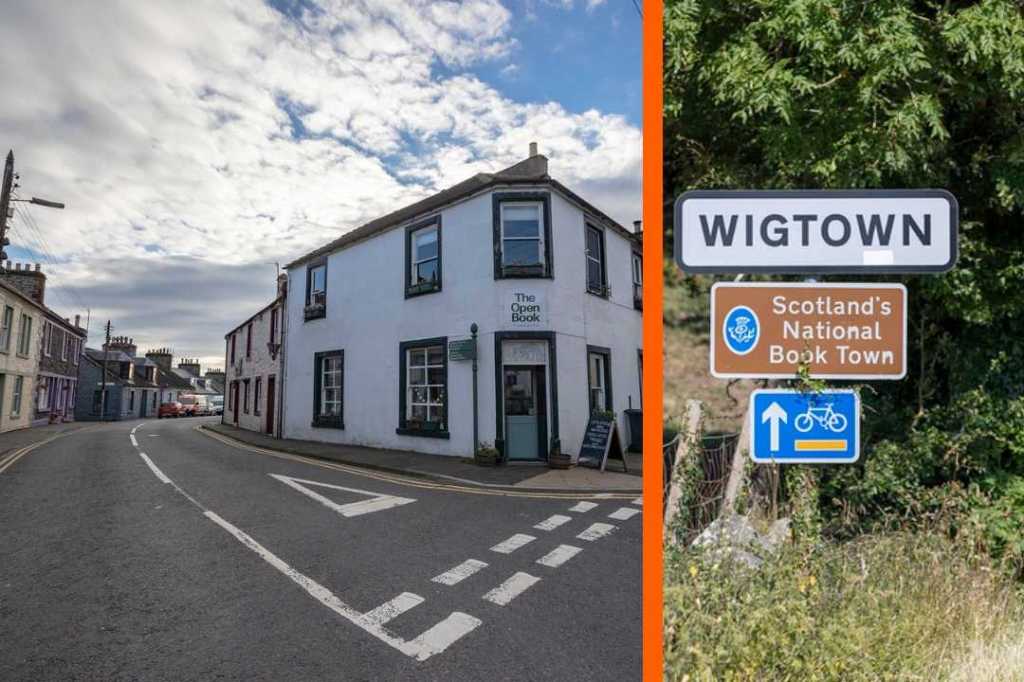
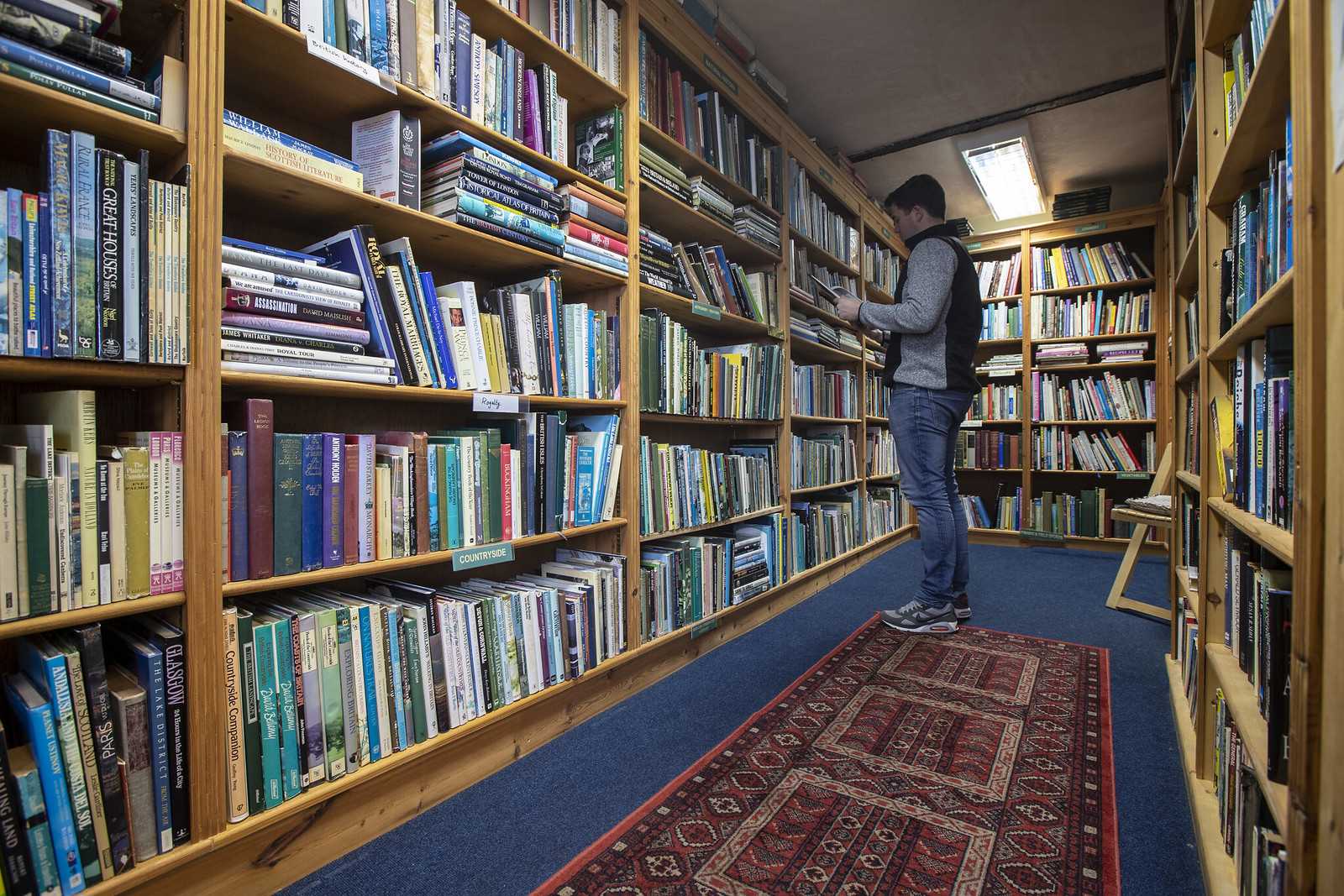
Burrowed in the green Dumfries and Galloway county of Scotland, is a cozy bookstore. But this isn’t just any bookstore. Sure, it has plastic-covered hardback books lining old wooden shelves. Yes, it has the occasional stool for sitting and reading a chapter or two. But what makes this particular bookstore stand out is one can actually rent and live in it, and help sell books.
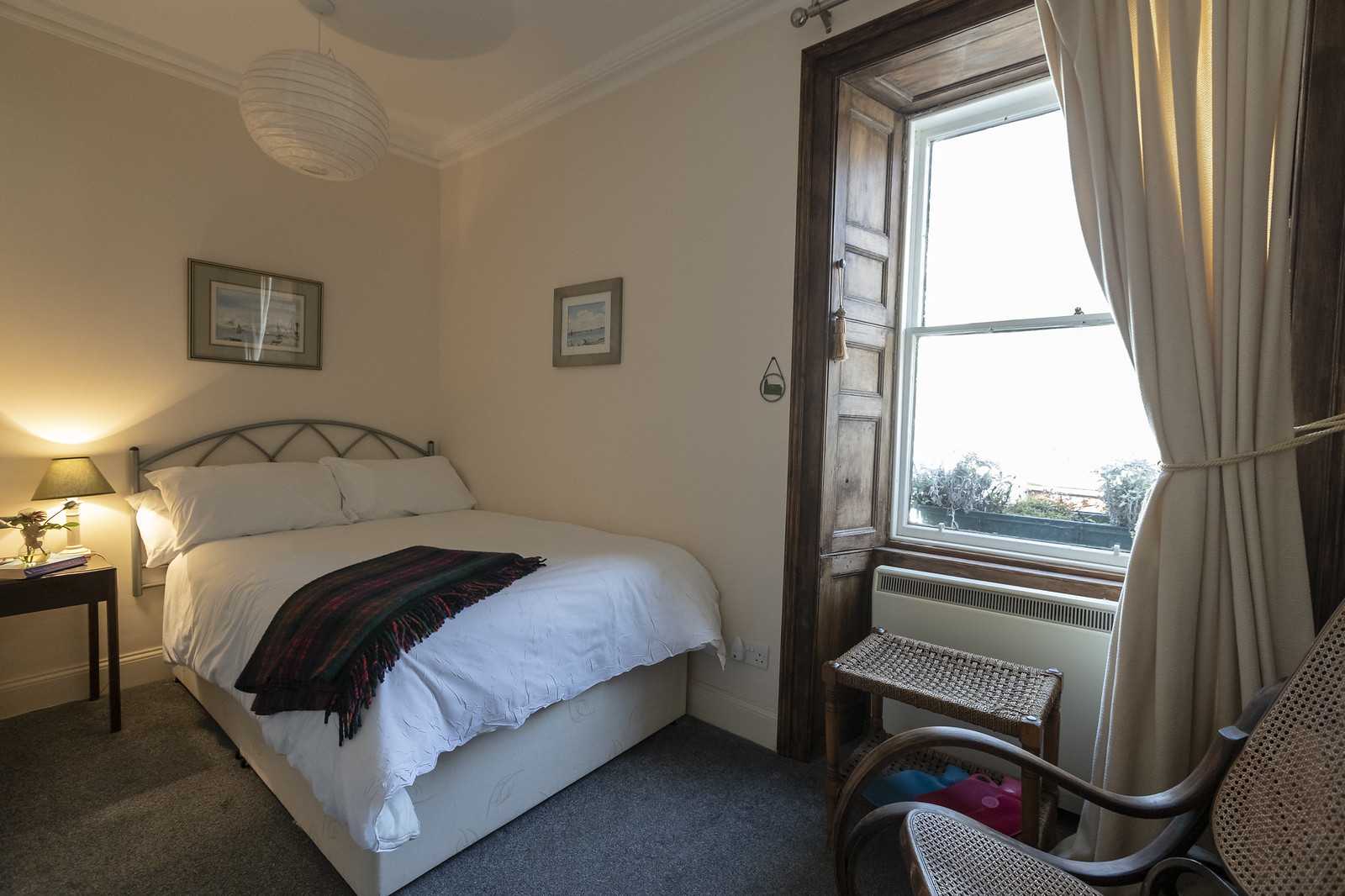
It’s called “The Open Book,” and it’s a bookshop with a warm, cheery flat upstairs. A person can rent it out for a snippet of time using Airbnb, and work at the store downstairs in whatever capacity they choose. Chris Lawlor (self-described Scotland promoter) shared a clip on his Instagram breaking down the whole genius operation.
Over various photos of the unique spot, a voiceover of Lawler asks, “Did you know that in Scotland, there’s a bookshop you can actually live in and run yourself for a week? It’s part of a unique experience where you’re handed the keys before heading up the stairs to relax and sleep. Then waking up and opening the doors to live out a dream job of running a cozy bookshop called The Open Book in Wigtown.”
The street is riddled with other bookstores Lawler shares: “With eight bookshops on your doorstep…the money collected during your stay goes toward the town’s annual book festival.”
While versions of this Reel have been posted by others, Lawlor’s clip has well over half a million likes and thousands of comments from enthusiastic travelers. Some are just in disbelief. “What? I just watched this 3 times to make sure I wasn’t dreaming. I can live in and run a bookshop? Dreams do come true! Holy smokes. I’m shook. This is the coziest, dreamiest, most brilliant idea ever!” wrote one.
A person browses at The Open Book in Scotland. u200bPhoto Credit: Colin Tennant, Flickr
A few note the ingenious business model, with one writing, “Cracking business idea. Free staff!”
And though some point out that the waitlist is rather long, they’re adding it to their “to do” lists. One writes, “As a retired librarian, this would be a dream vacation–wait, I visit Scotland every year for the last 11 years. Why haven’t I done this already? Lol OK, new item on my bucket list.”
Having begun in the 1990s, the Wigtown Book Festival is quite the event. On a page of their website they explain, “Booked through Airbnb, paying guests live in the self-catering apartment upstairs and run the bookshop below it for the duration of their stay. During their stay, guests are free to change displays, price books, re-categorise them, and make inventive use of the blackboard that entices visitors in to browse or chat. Some guests are happy to quietly run the bookshop, while others come with firmer plans and creative ideas!”
The bedroom for rent above The Open Book in Scotland. u200bPhoto Credit: Colin Tennant, Flickr
Writer Freya Parr documented her experience at the shop in 2019 for The Guardian. After explaining it was the “brainchild” of Jessica Fox, she shares that she and her boyfriend had a wonderful time. ” If we weren’t being entertained by the customers, it was the other booksellers, who welcomed us like old friends. We became as much of a tourist attraction for the locals as the place was for us, and the conversations we had were worlds away from those back home. Nobody cared what our jobs were–they were more interested in what had brought us here.”
On the Airbnb site, they add how it works: “The first ever bookshop holiday / residency experience, Scotland’s National Book Town welcomes you to play-bookshop for a week or two. We’ll give you your very own apartment and bookshop below, supported by a team of friendly volunteers to make your trip as lovely as possible. Set up by The Wigtown Festival Company, The Open Book’s aim is to celebrate books, independent bookshops, and welcome people around the world to Scotland’s National Book Town.”
The reviews from people who have taken part in this unique experience as recently as last month are stellar. One writes, in part, “Running The Open Book bookshop for a week was utmost fun! We met lots of travelling booknerds who popped in and many of the friendly Wigtown locals. It’s a charming little town surrounded by beautiful nature. We got home yesterday and I miss being in the bookshop already.”
Have you ever had a sight, sound, or smell trigger a strong memory? With the right prompts, waves of nostalgia can knock us off our feet, tapping into parts of our brain that take us right back to a specific time and place. Not only do we remember it, but for a fleeting moment, we can actually experience the feelings of being there.
A Reddit user posed a simple question that dredged up countless memories and experiences that many had long forgotten, asking, “What’s something you can bring up right now to unlock some childhood nostalgia for the rest of us?” The question evoked specific sensory experiences as well as memories of past pop culture staples that are now long gone, and it was a serious trip down nostalgia lane.
“An eraser that looks and smells like a very fake strawberry.” — zazzlekdazzle
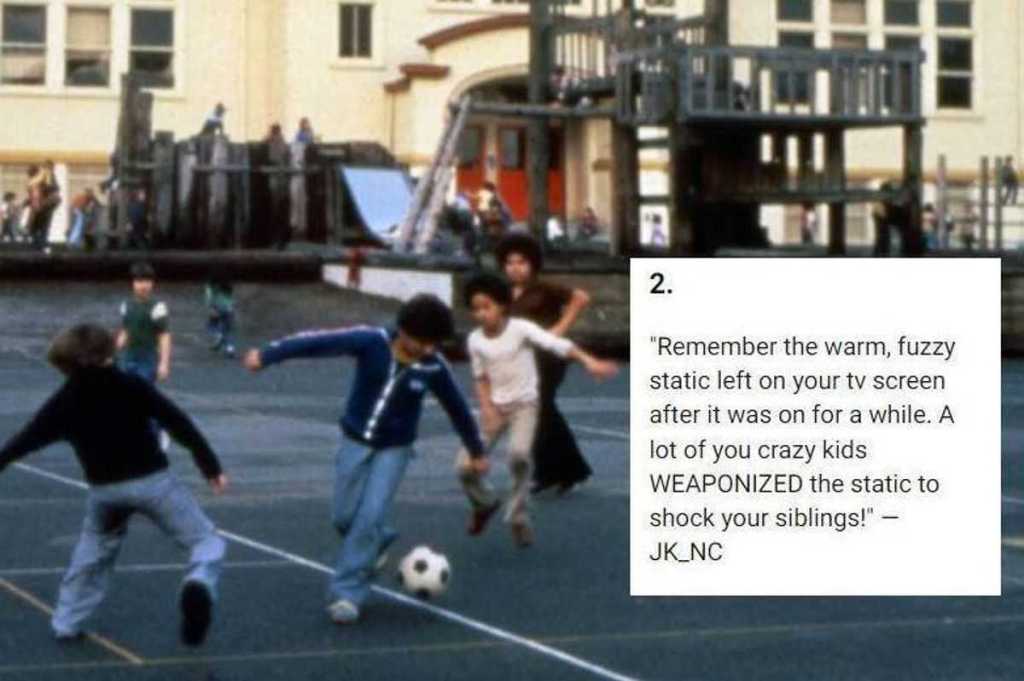
2. TV static
“Remember the warm, fuzzy static left on your tv screen after it was on for a while. A lot of you crazy kids WEAPONIZED the static to shock your siblings!” — JK_NC
3. Saturday morning cartoons
“Waking up super early on Saturday morning before the rest of the family to watch cartoons.” — helltothenoyo
4. Freezy Pops
“Eating one of those plastic-wrapped ice pop things after a long day of playing outside in your backyard with your friends.” — onyourleft___
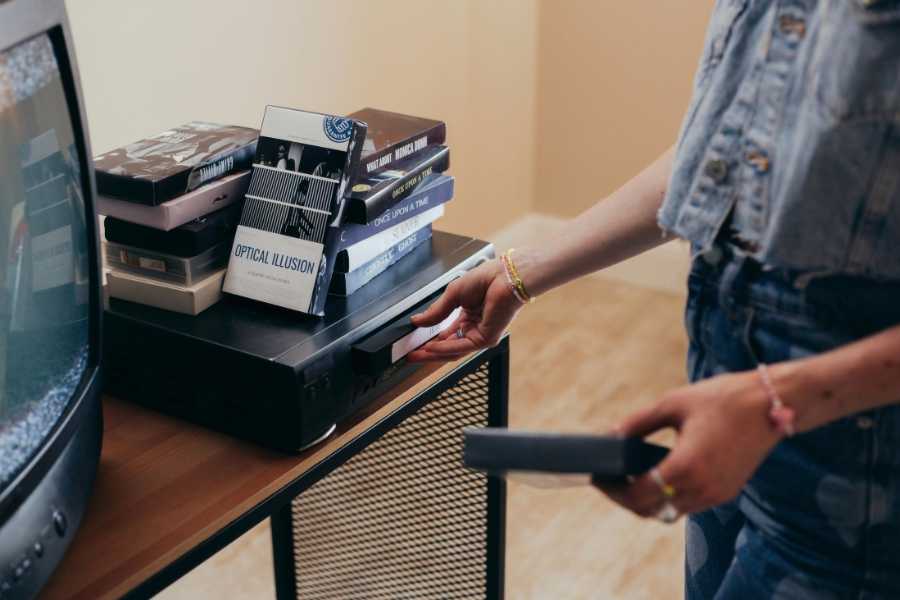
“When you’d watch a vhs and it would say ‘and now your feature presentation.’” — Mickthemmouse
6. Everyone’s favorite day at school
“Scholastic book fairs.” — zazzlekdazzle
“The distinctive newspaper-y feel of those catalogues, the smell of them. Heaven. I would agonize over what books to get, lying on my living room floor, circling my options in different colored gel pens, narrowing it down to 2-4 from a dozen in an intense battle royale between slightly blurry one-line summaries. I know my mom’s secret now. She would’ve bought me the whole damn catalogue. But she made me make my choices so that I really valued the books. I’d read them all immediately, reading all night if I had to, hiding in a tent under my covers with a flashlight I stole from the kitchen. I thought I was getting away with something. As an adult, I notice, now, that the flashlight never ran out of batteries.” — IAlbatross
7. Everyone’s favorite weekday TV show
“Watching ‘The Price Is Right’ when you were sick at home.” — mayhemy11
“That feeling of limitless freedom on the first day of summer vacation. That feeling of dreaded anticipation on the last day of summer vacation.” —_my_poor_brain_
9. The old video store
“Blockbuster.” — justabll71
10. The worst best noise in the world
“The noise when picking up the phone when someone was surfing the web.” — OhAce
11. The TV Guide channel
“The TV Guide channel. You had to sit through and watch as the channels slowly went by so we could see what was on. It blew getting distracted by the infomercial in the corner and then realizing you barely just missed what you were waiting for so had to wait for it to start all over.” — GroundbreakingOil
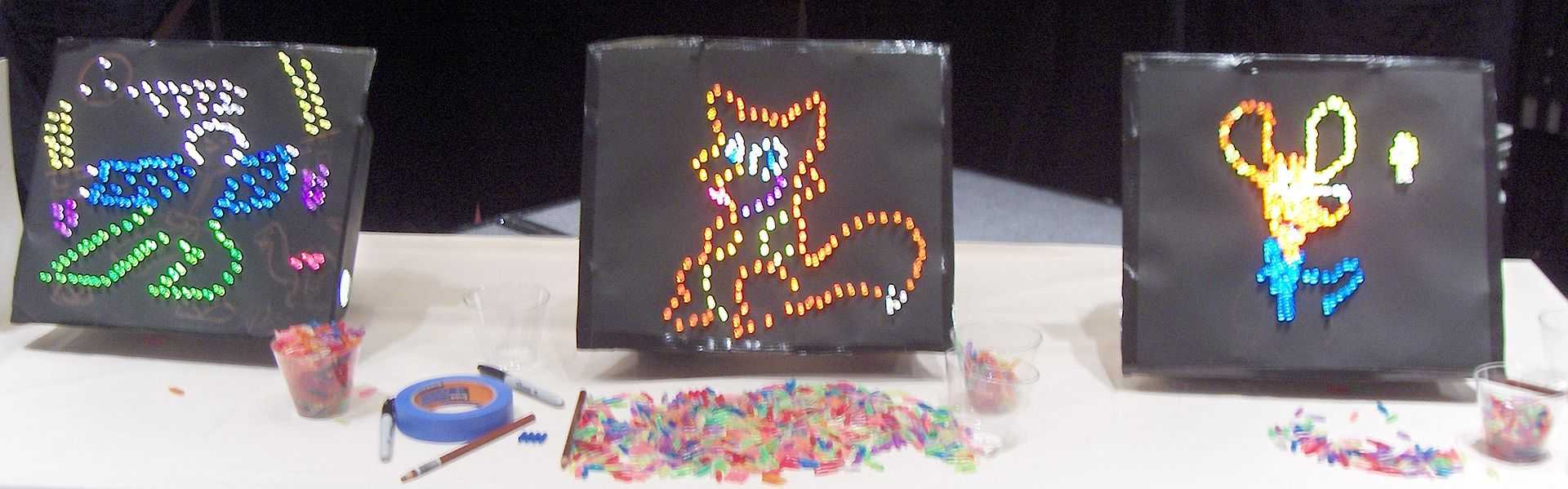
“Light Bright [sic]. I barely remember it myself but you’d take a charcoal-black board and poke different colored pegs through it. You plug it in to the electrical outlet and all the pegs light up creating whatever shape you made in lights.” — 90sTrapperKeeper
13. Parachute day in gym class
“You knew it was gonna be a good day when you walk into PE class and see that huge colorful parachute.” — brunettemountainlion
14. A very specific part of school recess
“Ripping handfuls of grass at recess and putting them on your friend.” — boo_boo_technician
15. Anything involving Mr. T
“In 1972, a crack commando unit was sent to prison by a military court for a crime they didn’t commit. These men promptly escaped from a maximum-security stockade to the Los Angeles underground. Today, still wanted by the government they survive as soldiers of fortune. If you have a problem if no one else can help, and if you can find them….maybe you can hire The A-Team.” — Azuras_Star8
16. Watching the best human being who’s ever lived
“Watching ‘Mister Rogers’ Neighborhood.’ There was something so special about the intro where he would sing Won’t You Be My Neighbor while he changed his jacket and shoes. I loved every second of it, and would watch in utter content and fascination each time as if I’d never before seen him zip his cardigan up and back down to the right spot and change his shoes with the little toss of a shoe from one hand to the other.” — Avendashar
17. The surefire way to fix any video game
“Somewhere between blowing on some cartridges and pressing the cartridge down and up in the NES to get it to play.” — autovices
18. Reckless behavior on the swingset
“That feeling when you are going as high as you can go on the swings. Power? Freedom? Hard to describe.” — zazzlekadazzle
19. When toy guns were a thing
“Cap guns. But smashing the entire roll of caps at once with a hammer.” — SoulKahn90
The 80s and 90s were really a special time, right on the cusp of major technological breakthroughs, but before the internet and smartphones took over everyday life. Things were modern but simple. Of course, every generation can’t help but crave “the way things used to be.” Kids today will one day look back at the quaintness of TikTok, or they’ll fondly remember a world before everything was AI-generated.
There’s nothing wrong with taking a brief look back every once in a while and soaking in the nostalgia. Just remember to keep looking forward as well.
This article originally appeared four years ago. It has been updated.
Not everyone wants to get married, but for those who do, marriage is considered one big “final” step in a relationship. It’s something that people think about from the time they can grasp the concept of relationships. When you factor that in with the high divorce rate, it makes sense that people want to ensure they’re getting it right before taking the leap.
Typically, people ask their close inner circle for relationship advice. They lean on and learn from people like their parents, siblings, or friends who have been married to fill in the gaps of knowledge. However, with the world becoming smaller than ever due to social media, it takes little effort to gather collective knowledge from thousands of people within your target audience.
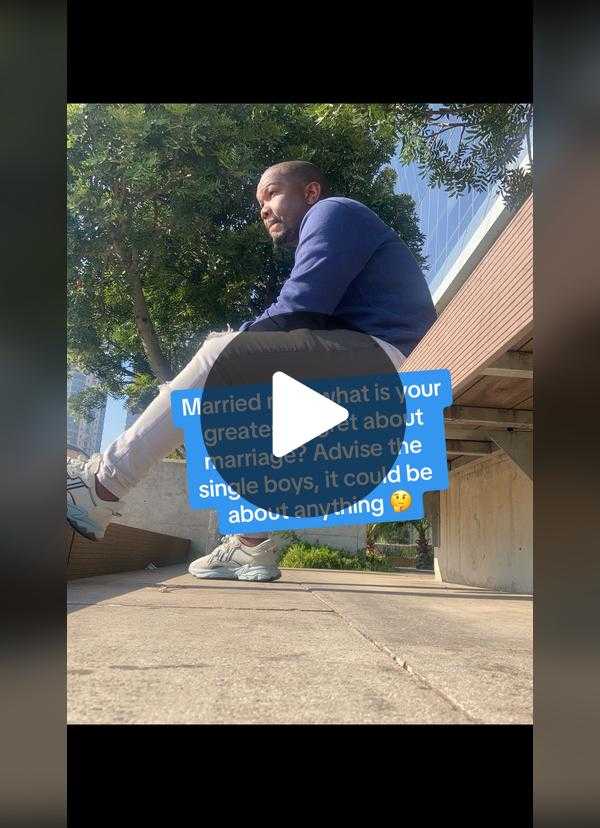
Surprisingly, people are pretty forthcoming to strangers on the Internet looking for support and help. In 2024, one man who goes by the name King Boiza on TikTok decided to ask his Internet advisors, “Married men, what is your greatest regret about marriage? Advise the single boys. It could be about anything.” The married men didn’t hesitate to answer the call in the most genuinely wholesome way.
Gleaning collective wisdom from those with more experience is a common practice, but being able to do it in such a significant way is relatively new. Different life experiences lead to different perspectives that can be invaluable to someone still learning.
“Your wife becomes the words you speak upon her, I regret not speaking life and good upon her,” one man shares.
“In times of trouble, remember…It’s not you against her but the both of you, against the problem…” someone writes.
“Listen when she speaks from the heart, once she feels unheard, she will be closed off for a long time if not forever,” another advises.
“Not all women age gracefully with all their good looks and physique. Marry her for more reasons beyond her body and beauty. Seek a FOREVER,” one commenter says.
“The grass is NEVER greener on the other side. NEVER,” a man wrote.
“Don’t let the family you come from destroy the family you create,” a commenter added.
“Be the partner you’re looking for!” a man wrote.
“The goal in marriage is not to think alike, but to think together,” a married man wrote.
“Remember that you are not married to your idea of your wife but to who your wife is. Love her for who is she is not who you want her to be,” one man commented.
“No regrets, just advice I’ve adhered to for 15+years of marriage. Lead by example. Create the emotional space for her that you want mirrored. Set boundaries and always keep your word above all else!” a commenter wrote.
“Sometimes all you have to do is listen to her,” a man wrote.
In 2024, Forbes reported that 43% of first marriages end in divorce with the number significantly increasing with each subsequent marriage. And according to Census.gov in December 2025, “Newly released estimates from the U.S. Census Bureau’s historical America’s Families and Living Arrangements tables found that fewer than half (47%) of U.S. households in 2025 were married couples—a significant shift from 50 years earlier, when nearly two-thirds (66%) were.” This shows people are less inclined to marry before they cohabitate, if they marry at all, meaning that those who do choose to marry do so with intention. Finding out the regrets, struggles, and triumphs of other marriages, then, may help them feel more prepared to commit to marriage by providing a type of roadmap for success.
It’s clear from the comments under the post that marriage takes work, and while some of the men admittedly misstepped, they seem eager to share with others so they avoid the same mistakes.
“My biggest regret in marriage was to cheat, and I’m telling you…my wife was never the same…so my advice is never cheat, never ever,” one guy confesses.
“We tend to take our spouse for granted once we get married. Continue to invest your time in her. You won’t regret it and she’ll know that you really see her,” one man shares.
But it wasn’t only men who dropped by the comment section. Women stopped to share their appreciation for the wisdom left for all to see.
“After reading this comment section, my faith in the institution of marriage is restored. Relationships are not perfect, but we gotta try with people who want to try,” one woman writes.
“I don’t know why I’m crying…I guess I never knew men like these existed…Your wives must be blessed,” another woman shares.
If you need a dose of healthy masculinity and wholesome advice for lasting partnerships, look no further than that comment section. They’re saving some future couple from heartache by simply showing up to answer a stranger’s question with heartfelt sincerity.
This article originally appeared two years ago. It has been updated.
Our love for the ocean runs deep. Does yours? Enter here!
This Valentine’s Day, we’re bringing back our favorite giveaway with Ocean Wise. You have the chance to win the ultimate ocean-friendly date. Our recommendation? Celebrate love for all your people this Valentine’s Day! Treat your mom friends to a relaxing spa trip, take your best friend to an incredible concert, or enjoy a beach adventure with your sibling! Whether you’re savoring a romantic seafood dinner or enjoying a movie night in, your next date could be on us!
Here’s how to enter:
Go to upworthy.com/oceandate and complete the quick form for a chance to win – it’s as easy as that.
P.S. If you follow @oceanwise or donate after entering, you’ll get extra entries!
She’s up before the sun and still going at bedtime. She’s the calendar keeper, the lunch packer, the one who remembers everything so no one else has to. Moms are always creating magic for us. This Valentine’s Day, we’re all in for her. Win an eco-friendly spa day near you, plus a stash of All In snack bars—because she deserves a treat that’s as real as she is. Good for her, kinder to the ocean. That’s the kind of love we can all get behind.
Special thanks to our friends at All In who are all in on helping moms!
Grab your favorite person and get some much-needed ocean time. Did you know research on “blue spaces” suggests that being near water is linked with better mental health and well-being, including feeling calmer and less stressed? We’ll treat you to a beach adventure like a surfing or sailing class, plus ocean-friendly bags from GOT Bag and blankets from Sand Cloud so your day by the water feels good for you and a little gentler on the ocean too.
Special thanks to our friends at GOT Bag. They make saving the ocean look stylish and fun!
Love nights in as much as you love a date night out? We’ve got you. Have friends over for a movie night or make it a cozy night in with your favorite person. You’ll get a Disney+ and Hulu subscription so you can watch Nat Geo ocean content, plus a curated list of ocean-friendly documentaries and a movie-night basket of snacks. Easy, comfy, and you’ll probably come out of it loving the ocean even more.
Soak up the sun and catch a full weekend of live music at BeachLife Festival in Redondo Beach, May 1–3, 2026, featuring Duran Duran, The Offspring, James Taylor and His All-Star Band, The Chainsmokers, My Morning Jacket, Slightly Stoopid, and Sheryl Crow. The perfect date to bring your favorite person on!
We also love that BeachLife puts real energy into protecting the coastline it’s built on by spotlighting ocean and beach-focused nonprofit partners and hosting community events like beach cleanups.
Date includes two (2) three-day GA tickets. Does not include accommodation, travel, or flights.
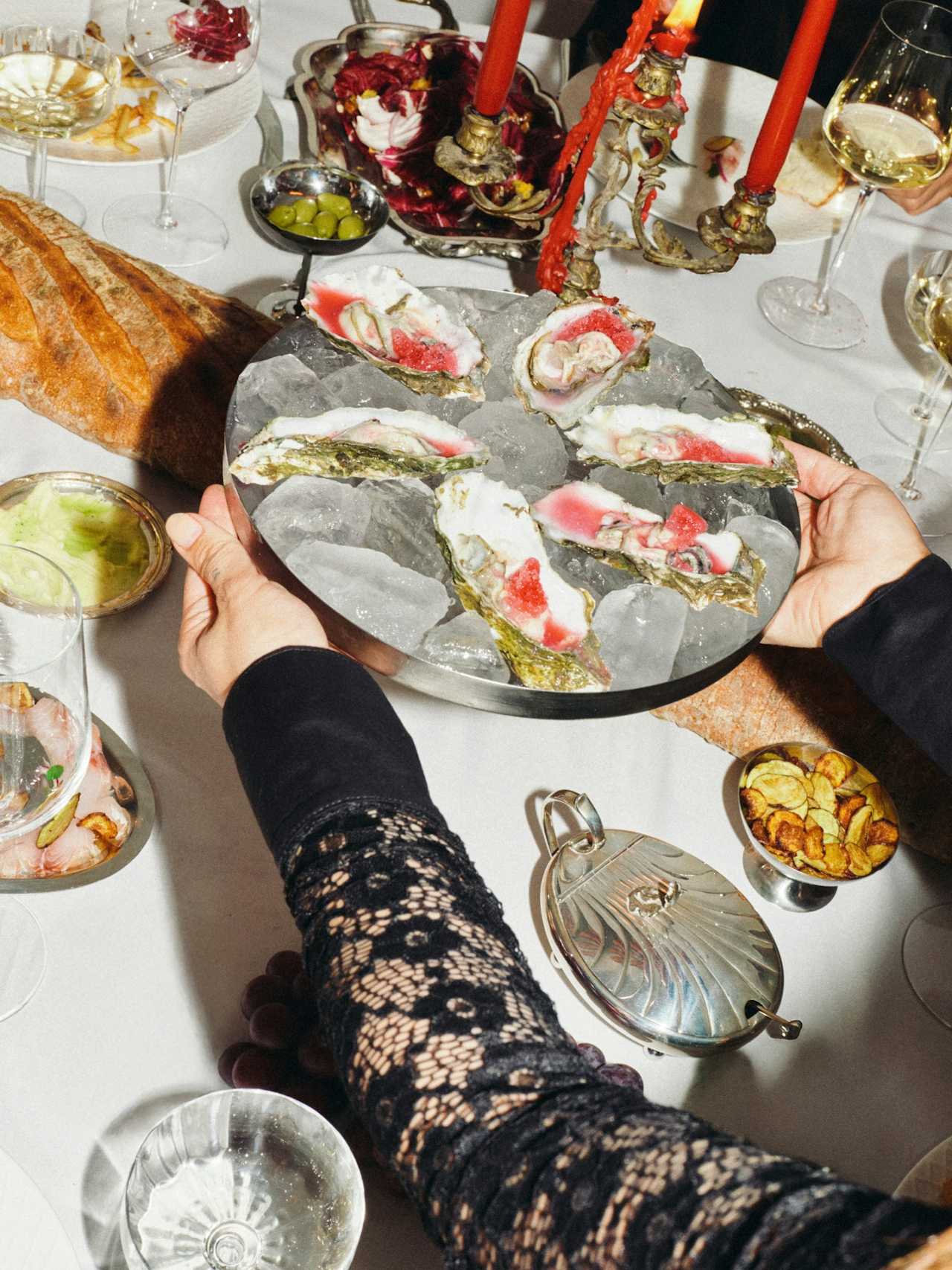
Stay in and cook something delicious with someone you love. We’ll hook you up with sustainable seafood ingredients and some additional goodies for a dinner for two, so you can eat well and feel good knowing your meal supports healthier oceans and more responsible fishing.
Giveaway ends 2/15/26 at 11:59pm PT. Winners will be selected at random and contacted via email from the Upworthy. No purchase necessary. Open to residents of the U.S. and specific Canadian provinces that have reached age of majority in their state/province/territory of residence at the time. Please see terms and conditions for specific instructions. Giveaway not affiliated with Instagram. More details at upworthy.com/oceandate























.jpg)


