upworthy
Add Upworthy to your Google News feed.
Google News Button
Popular

102-year-old woman discovers that she's a surviving member of special WWII unit

Crescensia Garcia is getting the recognition she deserves.

army, 102-year-old woman, twitter, crescensia garcia
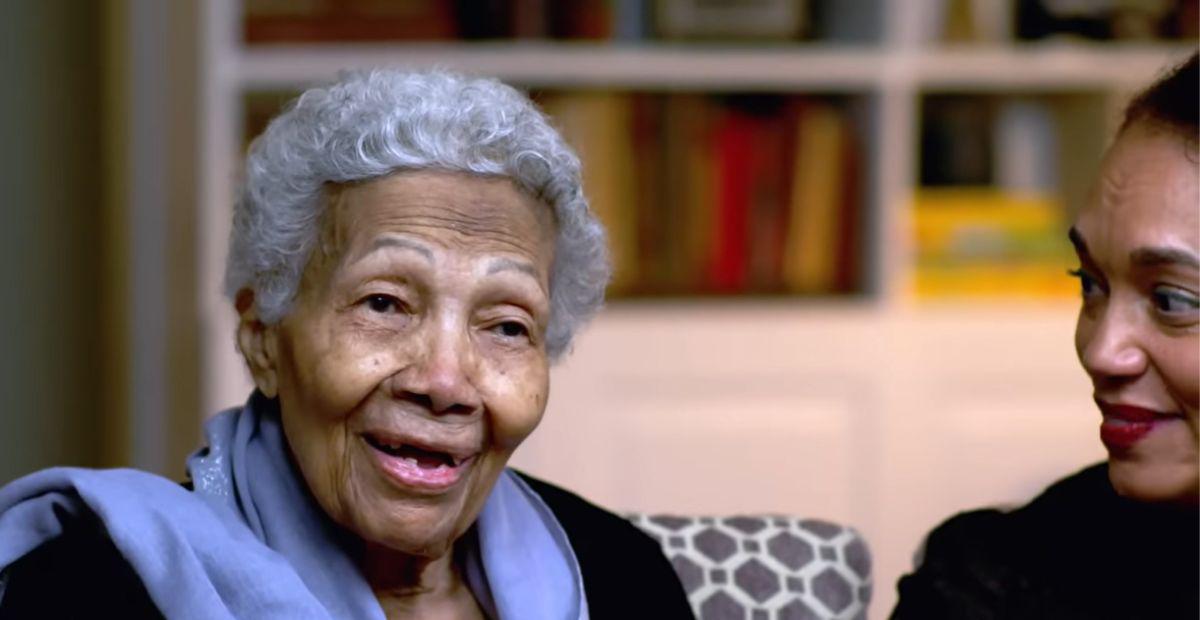
CBS Mornings/YouTube

A 102-year-old woman's family learned something about her past military service thanks to Twitter.

You never know when you have a legend in your family. Two years ago, a woman named Tara Garcia reached out to "CBS Mornings" correspondent David Begnaud to share a story. Her grandmother, Crescensia Garcia, had just turned 100 and had recently survived COVID-19, only having to briefly use oxygen. Begnaud shared the story of the elder Ms. Garcia with his followers on Twitter, including some pictures Tara had sent him. Little did they know, a bigger story was about to unfold.


Edna Cummings, a retired Army colonel, saw Begnaud's tweet. One of the pictures Tara had sent him was of her grandmother in her military uniform. Cummings told "CBS Mornings" that seeing the photo of Crescensia "was like being in a casino and hitting the jackpot." Why? Turns out Crescensia was part of a very special military unit during World War II.

Cummings needed to know Crescensia's dog tag numbers to confirm her suspicions, so she reached out to Tara. After receiving them, Cummings was able to confirm that Crescensia was part of a burn unit located near Birmingham, England, which treated wounded soldiers due to a shortage of people in the area who could perform those procedures. She may not have thought much of it at the time (it was her military duty after all), but Crescensia Garcia was part of something special.

The SixTripleEight was an 855-member unit that was all Black and all women. Of course, the unit was segregated, but that didn't stop the members from serving their country. Crescensia Garcia, who is now 102 years old, is one of only six surviving members of the unit. And her family had no idea.

"They're the only military women's unit to receive a congressional gold medal," Cummings told "CBS Mornings." "They are part of an elite group of less than 200 recipients. The first being General George Washington." In addition to receiving the congressional gold medal, the family learned that Crescensia's name is on a World War II monument along with other veterans, in Fort Leavenworth, Kansas.

When Tara Garcia found out this information, "I looked at my parents and said, 'I think we just opened Pandora's box here,'" she said. The revelation certainly led to some very cool opportunities, including meeting first lady Dr. Jill Biden.

Both Crescensia and Tara Garcia sat down with David Begnaud on "CBS Mornings" to talk about their family and it was truly the sweetest thing. Although she's beginning to show signs of her age, Crescensia is still pretty sharp and a truly beautiful soul.

Crescensia was born in Puerto Rico in April 1920, before women even had the right to vote. At that time, a loaf of bread was less than 20 cents! She moved to New York City in her youth, and at the age of 24 she enlisted in the Army because the bombing of Pearl Harbor made her so enraged that she felt it was her civic duty to serve and protect. She was immediately put in an all-Black unit for her basic training in Texas.

"They put me in the Black section and there is a White section. That's America to you. See? That's America to you and it's very sad, very sad," she told Begnaud. After the segment, he explained to the news desk that the reason she was able to become a medic was due to her light skin color. She was able to "pass" as white, which earned her privilege.

Social media post helps woman discover her grandmother's World War II past

Much like others who have served in war, Crescensia doesn't seem to think her time in the Army was anything special. She told Begnaud that she was "just" a medic and was only doing her job tending to the injured.

"I am proud to be an American," she said.

After the war, she went back to New York City, settling in the Bronx and getting married and having three children. She became a seamstress, working in Manhattan's Garment District. Now, she is living her best life and sharing her story with the world.

During their interview, Begnaud explained that he had a surprise for both women. He had gotten in touch with the White House and arranged for Dr. Jill Biden to call and FaceTime with them.

"You are one incredible woman and I can't thank you enough for all your service to our country," Dr. Biden said warmly.

"And I salute you. Keep it up. Keep up the good work," Crescensia said, raising her hand to salute the first lady.

At 102, her memory isn't what it used to be, but, according to Tara, her presence of mind during the interview and conversation with the first lady is something neither of them will forget.

"The fact that she knew who that was. Yeah, and she felt that acknowledgment just now. That's all I needed. That's all I needed. I just want her to remember, that's all," Tara said.

We salute Crescensia Garcia and thank her for being who she is.

Gen Z; Millennials; technology; cell phones; social media; teens and technology; teens social media

Gen Z is the first generation less cognitively capable than their parents. Denmark has the solution.

Nearly every parent hopes their child will be better off than they are: smarter, more secure, and more well-adjusted. Many parents see this as a stamp of successful parenting, but something has changed for children growing up today. While younger generations are known for their empathy, their cognitive capabilities seem to be lagging behind those of previous generations for the first time in history.

Dr. Jared Cooney Horvath, a teacher turned cognitive neuroscientist who focuses on human learning, appeared before Congress to discuss concerns about cognitive development in children. In his address to the members of Congress, he says, "A sad fact that our generation has to face is this: our kids are less cognitively capable than we were at their age. Since we've been standardizing and measuring cognitive development since the late 1800s, every generation has outperformed their parents, and that's exactly what we want. We want sharper kids."


kids, intelligence, sharp kids, generations, education, cognitive abilities Student smiling in a classroom, working on a laptop.Photo credit: Canva

Horvath explains that the reason this happens is that each generation has gone to school longer than the previous generation. Gen Z is no exception to the longer duration of time spent in school, but they're the first ones who aren't meeting this normal increase in cognitive development. According to the cognitive neuroscientist, the decline is due to the introduction of screens in the classroom, which started around 2010.

"Across 80 countries, as Jean was just saying, if you look at the data, once countries adopt digital technology widely in schools, performance goes down significantly. To the point where kids who use computers about five hours per day in school for learning purposes will score over two-thirds of a standard deviation less than kids who rarely or never touch tech at school," Horvath reveals.

In most cases, the decline in performance doesn't result in better strategies. The neuroscientist shares that the standardized testing has been adjusted to accommodate lower expectations and shorter attention spans. This is an approach that educators, scientists, and researchers went to Capitol Hill to express wasn't working. But not every country is taking the approach of lowering standards to meet lowered cognitive ability. Denmark went in the opposite direction when it realized their students were slipping behind.

France24 recently interviewed educators in Denmark following their seemingly novel approach to students struggling with cognitive development. Since the beginning of the 2025/2026 school year, Denmark has not only been having students turn in their cellphones, but they've also taken tablets, laptops, and computers out of the classroom. No more digital learning for the majority of the school day. Danes went old school by bringing back physical textbooks, workbooks, and writing assignments. The results have been undeniable. Even the students can't seem to deny the success of the countrywide shift in educational approach.

"I think the biggest issue has been that, because we kind of got rid of the books and started using screens instead, that we've noticed that a lot of the kids have trouble concentrating, so it's pretty easy to swipe with three fingers over to a different screen and have a video game going, for example, in class," Copenhagen English teacher, Islam Dijab tells France24.

Now, instead of computers being part of every lesson, Denmark uses computers very sparingly and with strict supervision. One student says that it has been nice not having screen time at school because she loves to read and write. But it wasn't just the lack of attention span children were developing, they were also developing low self-esteem and poor mental health due to the amount of time spent on devices.

kids, intelligence, sharp kids, generations, education, cognitive abilities Students focused and ready to learn in the classroom.Photo credit: Canva

The data showing the negative impact of screens on teens' brains has prompted a nationwide change in Denmark that extends outside of the classroom. Afterschool activities are eliminating or extremely limiting electronic use. There is also a national No Phone Day that encourages everyone to put away their devices for the day, and Imran Rashid, a physician and digital health expert, is petitioning parliament to ban social media use for children under the age of 15. The no phone movement in Denmark is a nationwide effort that hopes to right the ship before another generation feels the effects.

80s game show, Just Like Mom, Fergie Olver, viral video, bodily autonomy, cringey tv, saying no, retro tv, uncomfortable moments, child empowerment
YouTube Screenshot

The 1980s gameshow "Just Like Mom" has become famous for jaw-droppingly inappropriate moments involving children.

For some of us, the 80s don't seem that long ago. But in the context of how rapidly technology and culture have changed, the decade might as well have been another universe. Look no further than popular media. Things people deemed acceptable or were just part of everyday expectations for television back in the 60s through well into the 90s would get stars blacklisted today. But there was one game show in the 80s that had moments so cringy that even for the times may have raised some eyebrows though everyone seemed to go along with it, except one brave little girl.

The Canadian show, Just Like Mom, ran from 1980-1985 even with plenty of uncomfortable moments between the game show host and young girls. The girls who were aged 7-12 would appear on the show with their mother answering questions about each other and competing in bake-offs to see which pair knew each other best. Just Like Mom was created by Catherine Swing, the wife of the show's host Fergie Olver, who would often stand uncomfortably close to the girls and elicit kisses.


Recently a since-deleted compilation video of the game show host behaving in a manner people might consider questionable is going viral.


80s game show, Just Like Mom, Fergie Olver, viral video, bodily autonomy, cringey tv, saying no, retro tv, uncomfortable moments, child empowerment A game show host from the 80s was famous for making girls uncomfortable under the bright lights of the stage. Photo by ooneiroslyl on Unsplash

In the video the Olver stands near the girls, often putting his hand on their backs, placing his face close to theirs to ask questions. The very first clip shows 11-year-old Lee Ann, Olver hovers over her asking what color her eyes are.

"What color are your eyes?" Olver asks before the child tells him they're blue, to which he responds, "they're not blue, now don't tell me that. Look at me a little closer." Just as the girl leans in slightly, appearing hesitant to do so, Olver quickly kisses the child on the side of her mouth and declares, "they're green."

The audience sounds as if they didn't know how to react to the bizarre moment. Some people loudly gasp, others uncomfortably chuckle, while a few seem to let out a high pitched surprised squeal. The girl also laughs uneasily while the host remains extremely close.

Video clip after video clip shows similar interactions where the host tries to either kiss the girls or have them kiss him but one little girl named Alison refused. While it appeared that she was nervous to do so in front of a live audience, on television and refusing a directive from an adult, she stood her ground.

80s game show, Just Like Mom, Fergie Olver, viral video, bodily autonomy, cringey tv, saying no, retro tv, uncomfortable moments, child empowerment Still from the 1980s gameshow "Just Like Mom" YouTube Screenshot

This was a moment where parents can see in real time the benefit of teaching body autonomy and the power of teaching children that no is a complete sentence. Olver originally didn't accept the young girl's "no," attempting to coerce her into kissing him when she was clearly uncomfortable and uninterested in the request.

The host perches himself up close to the young girl and says, "you look like a girl who likes to give out hugs and kisses," to which the girl laughs with discomfort before saying, "not really." That didn't stop him, Olver continued, "not really? can I have a hug and a kiss?" This time the girl gives a very direct answer through nerves by shaking her head no while saying "uh-uh." She's clearly uncomfortable as she bites her fingernail trying to assert authority over her body against someone much older.

At this point the child has been clear. She immediately told the host she didn't give out hugs and kisses and when that didn't work she mustered the courage to say no more directly. Olver was still not accepting of the child's boundaries and continued to apply pressure by questioning her decision, "I can't have one?" Again the child shakes her head and says no but he persists, saying "even if I say...whisper in your ear that Alison you're going to win the show? I still can't have a hug and a kiss?" Alison sticks to her answer so Olver changes tactics, telling the child, "Well I guess you can't win the show then if I don't get a hug and a kiss."

Alison stayed firm in her no but the host's behavior resulted in the child's mother calling him a dirty old man. In the end the host appears to have moved on and told the girl she did a good job answering one of the questions, but to top the praise Olver attempts to sneak a kiss. The little girl didn't let that deter her as she quickly dodged his advance.

In other clips, Olver is shown making lude comments to the kids, including asking one extremely young girl what she likes to do with her "boyfriend" when they're alone, to the shock of commenters. Olver's behavior didn't widely draw criticism until much later. Even after the game show ended, he got steady work as a play-by-play announcer for the Toronto Blue Jays, though he and his wife divorced after the show was cancelled.

@zygogakii

⭐️Disturbing TV Show⭐️ #OLAFLEX #justlikemom #children #DoritosDareToBeBurned #tvshow #gameshow #zygogaki #zygogakii #disturbing #holdup #pause #grooming #repent #seekjesus #jesus #entertainment #hugs

A popular component of modern parenting is teaching kids about bodily autonomy, which often means saying "No" to well-meaning friends and relatives who want a hug. It's a controversial sticking point with some grandparents, but this interaction proves exactly why it's necessary.

Children who don't feel empowered to protect their own body, even against authority figures or "trusted" people, are vulnerable to this kind of predatory behavior. Rady Children's Health writes that even something as innocuous as forcing your child to give grandma a hug "tells them that their body is not under their control and that they must yield it to an adult if told to do so. Wow — that is a heavy realization."

- YouTube www.youtube.com

It seems apparent that Alison's parents instilled the idea of bodily autonomy in her giving her full permission to say no to adults and anyone else who dares to get in her space without consent. While the experience was probably not one that she would've ever wanted to have, that moment likely gave permission to other young girls watching to tell the host and other like him no. And no is a complete sentence, especially when it comes to someone's body. There's no further explanation needed. No further clarification. The answer is simply no. Well done Alison. Well done.

This article originally appeared earlier last year. It has been updated.

Science

Helicopters dump 6,000 logs into rivers in the Pacific Northwest, fixing a decades-old mistake

Forty years ago, restoration workers thought logs were the problem. They were wrong.

river restoration, washington, river fish, restoration, Yakama Nation, indigenous land, indigenoues tribes, salmon, trout, pacific northwest

Restoration workers now see how "critical" wood is to the natural habitat.

For decades, river restoration in the Northwestern United States followed a simple rule: if you saw logs in the water, take them out. Clean streams were seen as healthy streams, fast-moving water was seen as optimal, and wood was treated like a "barrier" to natural processes, particularly those of the local fish.

Now, helicopters are flying thousands of tree trunks back into rivers to undo that thinking.


In central Washington, one of the largest river restoration efforts ever attempted in the region is underway. More than 6,000 logs are being placed along roughly 38 kilometers, or 24 miles, of rivers and streams across the Yakama Reservation and surrounding ceded lands.

Nearly 40 years ago, Scott Nicolai was doing the opposite kind of work, all in the name of restoration.

"(Back then) the fish heads — what I call the fisheries folks — we stood on the banks, and we looked at the stream," Nicolai, a Yakama Nation habitat biologist, told Oregon Public Broadcasting. "If we saw a big log jam, we thought, 'Oh, that's a barrier to fish. We want the stream to flow.'"

river restoration, washington, river fish, restoration, Yakama Nation, indigenous land, indigenoues tribes, salmon, trout, pacific northwest Fish find shelter for spawning in the nooks and crannies of wood. Photo credit: Canva

At the time, logs were removed in an effort to simplify the habitat. However, it soon became clear that wood provided vital "complexity," creating sheltered pockets for salmon and bull trout to spawn and supporting algae that feed aquatic insects. Logs also slow water, spread it across floodplains, and allow it to soak into the groundwater. That water is then slowly released back into streams, helping keep them flowing and cooler during hot, dry periods.

The consequences of removing this "critical part of the system" (in addition to overgrazing, railroad construction, and splash dam logging) were made all too clear over the years as the rivers dried up and wildlife populations declined.

"We're trying to learn from our mistakes and find a better way to manage," said Phil Rigdon, director of the Yakama Nation Department of Natural Resources.

That's why Nicolai is now helping lead a project for the Yakama Nation aimed at rebuilding river complexity by returning logs to their rightful place. Many of these streams are now unreachable by road, which is why helicopters are used. Logs are flown from staging areas and carefully placed at precise drop locations marked with pink and blue flagging tape.

river restoration, washington, river fish, restoration, Yakama Nation, indigenous land, indigenoues tribes, salmon, trout, pacific northwest Many of these streams are now unreachable by road, which is why helicopters are used.Photo credit: Canva

The wood comes from forest-thinning projects led by The Nature Conservancy and includes species such as Douglas fir, grand fir, and cedar. Although some of the timber could have been sold, it is instead being used as river infrastructure.

For tribal leaders, the work carries even deeper meaning. During the helicopter flights, they gathered along the Little Naches River for a ceremony and prayer.

river restoration, washington, river fish, restoration, Yakama Nation, indigenous land, indigenoues tribes, salmon, trout, pacific northwest Tribal leaders gathered by the Little Naches River for a ceremony and prayer.Photo credit: Canva

"It was very simple: to bring what was rightfully part of this land back to us," said former tribal chairman Jerry Meninick.

The aftermath of the original restoration project illustrates how human concepts, such as the belief in the superiority of "cleanliness," can be limited and sometimes cause more harm than good. The miracle of nature, however, is that when left to her own devices, she can heal herself.

Destiny Smith, Jim friendship, TikTok story, viral kindness, senior care, car accident story, good news, seen TV, unexpected friendship, fender bender, heartwarming TikTok, caregiving, viral compassion, elder support, human connection, TikTok viral video, friendship story, kindness wins, social media story, helping seniors

Destiny Smith and Jim, then 97, became friends after he crashed into her car.

Fender benders rarely turn into positive things, but for Destiny Smith and 97-year-old Jim, a minor car accident between them began a beautiful friendship.

In a compilation video shared by Seen.TV of TikTok videos shared on Smith's account (@Iamdonshay), she explains that back in September 2024, Jim rear-ended her car while she was leaving church. After talking with him, it was clear to Smith that Jim was struggling.


heartwarming TikTok, caregiving, viral compassion, elder support, human connection, TikTok viral video, friendship story, kindness wins, social media story, helping seniors It's an odd way for a friendship to begin.Photo credit: Canva

A small accident that sparked something big

It was a minor accident, and she learned that he had no insurance or driver's license. She also learned that he was 97 years old. "But honestly I was just really worried because he was swerving everywhere. And then after he hit me I got out and asked him if he was okay," she shared. Jim told her he was, and that he was just trying to go home.

After talking more, the two realized they lived just minutes away from each other. Smith vowed to Jim that she would "come check up on" him. As the video continues, Smith asks more about Jim's living situation. She learns that he lives alone, and that he doesn't have any kids or relatives nearby.

Destiny knew Jim needed more than just a ride home

"Who helps you?" Smith asks him, and he replies, "Nobody." It's an answer that didn't sit well with Smith. "I'm so sorry," she tells him. Smith sought advice on how to help Jim from her social media followers, who she thanks for their insight.

@iamdonshay

Replying to @Nicole I am so thankful to everyone who donated to Jim registry. Now he has a mattress topper that is more comfortable for his back and lots of other essentials ♥️

With help from social media, Jim gets the care he needs

"He is now going to have aides. I spoke with a social worker. It's all just gonna work out," she says in the video. "It's all gonna work out for Jim, and I'm so excited, because he's not gonna be alone anymore." Specifically, Smith shared in another video that she was able to get Jim assistance from the county, and that nurses will come to his home to help care for him.

Since then, Smith has remained a steady part of Jim's life. She visits him often, checks up on him, takes him out to meals, and they celebrated his birthday together.

In a more in-depth video, Smith told her followers more about Jim's story. "He's 97. He's outlived a lot of his family members. His brother and his wife recently passed away, and they never had children," she says. "He's really sweet."

@iamdonshay

Yall asked to see Jim when he was younger… here he is 😇😇

Smith's followers have praised her for her care and concern for Jim. One viewer commented, "Both of you were definitely meant to cross paths. This is so beautiful of you 🥺," and Smith replied, "Thank you so much! 🥰 thanks to God we did! I was very determined to get him help♥️."

Another added, "you're his new granddaughter." And one more wrote, "you are such a kind person 🥺❤️this has me tearing up." An especially touched viewer added, "You are literally heaven sent 🙏thank you for watching out for him & his wellbeing."

A friendship that keeps growing

Viewers are also obsessed with their unique friendship: "I just love how y’all formed a relationship he needed you🫶🏾🙏🏽," one viewer wrote, and Smith replied, "I love him 🥰🥰🥰."

Another viewer commented, "Dynamic Duo."

In July 2025, Smith uploaded a video of her telling Jim some "big news." In it, Smith is let into Jim's home where the older man, honestly, seems to be in a hurry. She tells him she wanted to check on him after he didn't return her call from a week prior, to which Jim apologizes. "It's okay! I was just worried," she says. She then follows up with an excited, "Guess what?" to which Jim hilariously replies, 'Ok, I have to go to sleep now..." Smith assures Jim she'll let him sleep after she quickly shares her big news: "I moved up the street, so now I'm only two minutes away from you!" Jim immediately breaks into a smile and the two laugh together. "Isn't that great?" Smith adds. But Jim simply and patiently replies, "Okay...some other time!" Taking the hint, Smith bids Jim goodbye and the two exchange "I love yous."

Viewers found the exchange hilarious and wholesome, with one writing, "he's so unintentionally funny 🤣🫶🏼."

Watch the sweet video below:


@iamdonshay

I think he’s happy 🤣♥️

However, as of December 2025, Smith updated her followers with a video sharing that Jim has since been moved into a nursing home. Though she's currently unable to visit, she shared that she visits with Jim's sister-in-law frequently, who keeps her updated on how Jim is doing. They're hopeful Jim will be able to move back to his own home soon, and the Internet can't wait for the besties to be reunited.


@iamdonshay

She misses him very much and she's the sweetest lady ❤️ I try to visit her at least once a week to check on her. We believe Jim will be home soon! 🥰

This article originally appeared last year. It has been updated.

mispronounced words, commonly mispronounced words, pronunciation fails, word mispronunciations, mispronouncing words
Photo credit: Canva
People share commonly mispronounced words that annoy them.

Using words incorrectly is part of being an English speaker. Differentiating the use for "their, "there" and "they're" can trip up even the most devoted grammar lover. And another tricky thing about the English language is properly pronouncing words.

There's something about hearing mispronounced words that gets the gears grinding. And some words are more commonly mispronounced more than others—somehow becoming commonplace in our everyday language.


Mispronouncing words or phrases irks many people, and in a popular online forum, member @Wonderful-Economy762 posed this question about mispronounced words: "What is one word that people wrongly pronounce that makes your brain just wanna jump a cliff?" And its fellow members did not hold back.

- YouTube www.youtube.com

Everyone has that one word that drives them nuts

Many shared their feelings about how it feels when they hear people mispronouncing them:

"My rage bubbled up faster than expected reading this," one wrote.

Another added, "Oh man, nails on a chalkboard. I instantly make unfair assumptions about the person who says this."

And another quipped, "Does it count if I do it on purpose to be obnoxious sometimes?"

These are 40 words that are commonly mispronounced that received a passionate mention–with many pointing out how to properly pronounce them.

40 mispronounced words people just can’t stand

"Supposably. When a grown adult says 'Supposably' to mean 'supposedly', they sound like a petulant infant who just threw their broccoli off of their high chair onto the ground." —@s7o0a0p

"Lie-berry." —@DixonHerbox

"Exspecially." —@iamhere-2

"eXpresso." —@Turbulent_Gene7017

"On accident. (You don’t say you did something on accident. You did something by accident." —@Throwaway7219017, @_incredigirl_

@justintimberlake

#stitch with @umgabi It’s gonna be…

"'I could care less.' It's "I couldn't care less" which means you could NOT care less which means you DON'T CARE LOL." —@EmergencyPharmacy53

"Real-la-tor instead of real-tor." —@jajabibi67

"When people say Valentine’s Day as 'Valentimes day' 😭." —@Glittering_Pea5599

"Nuclear pronounced as 'New-queue-lur. Drives me bonkers!" —@Maleficent-Yam-5196

"Could of / should of / etc." —@Traditional_Goal6971

"Eggcetera." —@ufficient_Space8484

"Across. People here say 'acrost'. And I know it’s now accepted but it throws me when I hear people say 'axin' instead of 'asking'." —@UtahUtopia

mispronounce, mispronounced words, mispronouncing words, hearing words mispronounced, listening to words mispronounced Hearing people mispronounce words can be a pet peeve.Photo credit: Canva

"Irregardless." —@fineline3061

"For all INTENTS AND purposes." —@Doc308

"Mischievous. Miss-Chev-Us. But EVERYONE says Miss-Chee—VEE-us. I said it wrong for decades too." —@fleshvessel

"Amblance instead of Ambulance." —@katmcflame

"Pellow. Melk. Fustrated." —@KimboSliceChestHair

"Punkin instead of pumpkin." —@Geester43

"Italian. It's not Eyetalian." —@hairyairyolas

@indiagants

Replying to @BetweenTwoOars Some more words that are often misspelled or misprounounced :) #grammar #mispronounce #englishgrammar

"Hot take…When did we start pronouncing the 'T' in 'often?' I was taught in school it was silent :)" —@SilentConstant2114

"Pacifically instead of specifically." —@PepsiMaxHoe

"Pitcher for picture." —@shnarfmaster3000

"'FentaNAHL'. It’s fentanyl." —@daveindo

"I’m going to expose my middle-class here but it’s KEE-NWAH, not KIH-NOAH. And it’s ‘Champing at the bit’, not ‘chomping’." —@creator_chronicles

"Where people say 'seen' instead of 'saw'. 'I seen this car coming down the street...' My brain melts every time." —@Direct_Disaster9299

"Kindygarten, kiddygarden." —@NeverDidLearn

'Take for granite' u sound so dumb. Its GRANTED people." —@silly_creation650

"'Oh look! A strawbrery!'" —@WafflesTalbot

"'verbiage' as 'verb-uj'." —@valentinakontrabida

"Anyways. There is no 'S' in this." —@Zealousideal-Cook104

"Writing 'ect.' instead of 'etc.' and pronouncing it wrongly - 'eccetera' instead of 'et cetera'." —@KiwiFruit404

mispronouncing, mispronounced, mispronounced words, saying words wrong, saying words incorrectly Mispronouncing words are hard to hear. www.upworthy.com

"Foyer. It's Foy-yay, not Foy-yer." —@hoosiergirl1962

"There so many. Here are but a few. 'Burfday'. It’s birthday, damn it! 'Alls I know'. I want to rip my ears off. 'Ax' instead of 'ask'." —@mbc072558

"Poinsettia, people say it as pointsetta, it has irked me for years." —@dararie

"When people say 'pitcher' for 'picture'." —@Desperate_Holiday_78

Did your language pet peeve make the list?

Whether you're team "expresso" or ready to throw your coffee over "supposably", these everyday slip-ups clearly strike a nerve. Language is always evolving, but that doesn’t mean we have to suffer through "irregardless". What would you add?

This article originally appeared last year.