A Reddit user asked an innocent question about the future and it exposed a lot of the issues that people worry about today. It also highlighted the things we should appreciate while they are still around.
Klausbrusselssprouts asked the AskReddit forum, “In 50 years, what will people be nostalgic for?” and the responses went two ways. Some people mentioned the things they fear will get a lot worse in the future such as the role that technology plays in our lives and climate change.
Others saw the question as a way of appreciating the things we have now that may not survive over the next few decades.
As the old saying goes, you don’t know what you’ve got till it’s gone, so it’s hard to predict the things that we have today that people will feel nostalgic for in the future.
Back in the late ’80s and early ’90s, nobody would have ever guessed that people would feel nostalgic for everyday experiences such as going to Blockbuster video or the sound of an old dial-up modem.
But a lot of people get a warm, fuzzy feeling when they think about them today.
It’s safe to say that in 50 years, a lot of the real experiences we enjoy today will be replaced by digital technology. So take time to appreciate face-to-face interactions with other people, technology that isn’t implanted into your brain and attending events in person.
Here are 17 of the best responses to the question, “In 50 years, what will people be nostalgic for?”
1.
“Owning something you don’t pay a subscription for.” — JohnnyNumbskull
Switchplayerclassic added:
“THIS is exactly what I hate rn about everything.”
2.
“Drinking water from the tap.” — Credible cactus
3.
“Grandparents will say to their grandkids, ‘When I was your age, I had to get off the screen and actually GO to school.’” — Truck_Stop_Sushi
4.
“Privacy. Even babies are overexposed today.” — birdiewings
5.
”Being able to do basic maintenance on your car without needing a shop manual and a years salary worth of special tools.” — kilroy-was-here-2543
6.
“Keys. Even more specific vehicle keys.” — UpMan
7.
“Social media. Not because it’s good, but because whatever comes next will probably suck more.” — RockoTDF
8.
“The number of wild animals that exist and can be seen. They are already on the decline.” — SpikedBubbles
9.
“Wired earbuds with an actual headphone jack. Not USB version 93 delta.” — Rodeo6a
10.
“The abundance and availability of power, water, and food.” — wrath__
11.
“Retail shopping. There will be these cutesy, extremely expensive retro shops selling things you’d find at the convenience store.” — shay1990plus
12.
“I’d say people will miss being uncontactable. Like back in the day, you could just go to your bedroom, and block the rest of the world away for a couple of hours. Now we’ve got video calls, phone calls, texts, emails. Urgh.” — mr_wernderful
13.
“Having sex with someone who isn’t a robot.” — Clarenceworley480
14.
“Probably movie theaters.” — rsvredditacct
15.
”Life before covid.” — ButterflyGirlie
16.
“Human made art and music without the use of AI. Or even just knowing it was made without the use of AI tools like DALL-E 2 or similar. Kind of like how before autotune you knew for certain a singer could sing that way.” — ConfidentlyNuerotic
In March 2023, after months of preparation and paperwork, Anita Omary arrived in the United States from her native Afghanistan to build a better life. Once she arrived in Connecticut, however, the experience was anything but easy.
“When I first arrived, everything felt so strange—the weather, the environment, the people,” Omary recalled. Omary had not only left behind her extended family and friends in Afghanistan, she left her career managing child protective cases and supporting refugee communities behind as well. Even more challenging, Anita was five months pregnant at the time, and because her husband was unable to obtain a travel visa, she found herself having to navigate a new language, a different culture, and an unfamiliar country entirely on her own.
“I went through a period of deep disappointment and depression, where I wasn’t able to do much for myself,” Omary said.
Then something incredible happened: Omary met a woman who would become her close friend, offering support that would change her experience as a refugee—and ultimately the trajectory of her entire life.
Understanding the journey
Like Anita Omary, tens of thousands of people come to the United States each year seeking safety from war, political violence, religious persecution, and other threats. Yet escaping danger, unfortunately, is only the first challenge. Once here, immigrant and refugee families must deal with the loss of displacement, while at the same time facing language barriers, adapting to a new culture, and sometimes even facing social stigma and anti-immigrant biases.
Welcoming immigrant and refugee neighbors strengthens the nation and benefits everyone—and according to Anita Omary, small, simple acts of human kindness can make the greatest difference in helping them feel safe, valued, and truly at home.
A warm welcome
Dee and Omary's son, Osman
Anita Omary was receiving prenatal checkups at a woman’s health center in West Haven when she met Dee, a nurse.
“She immediately recognized that I was new, and that I was struggling,” Omary said. “From that moment on, she became my support system.”
Dee started checking in on Omary throughout her pregnancy, both inside the clinic and out.
“She would call me and ask am I okay, am I eating, am I healthy,” Omary said. “She helped me with things I didn’t even realize I needed, like getting an air conditioner for my small, hot room.”
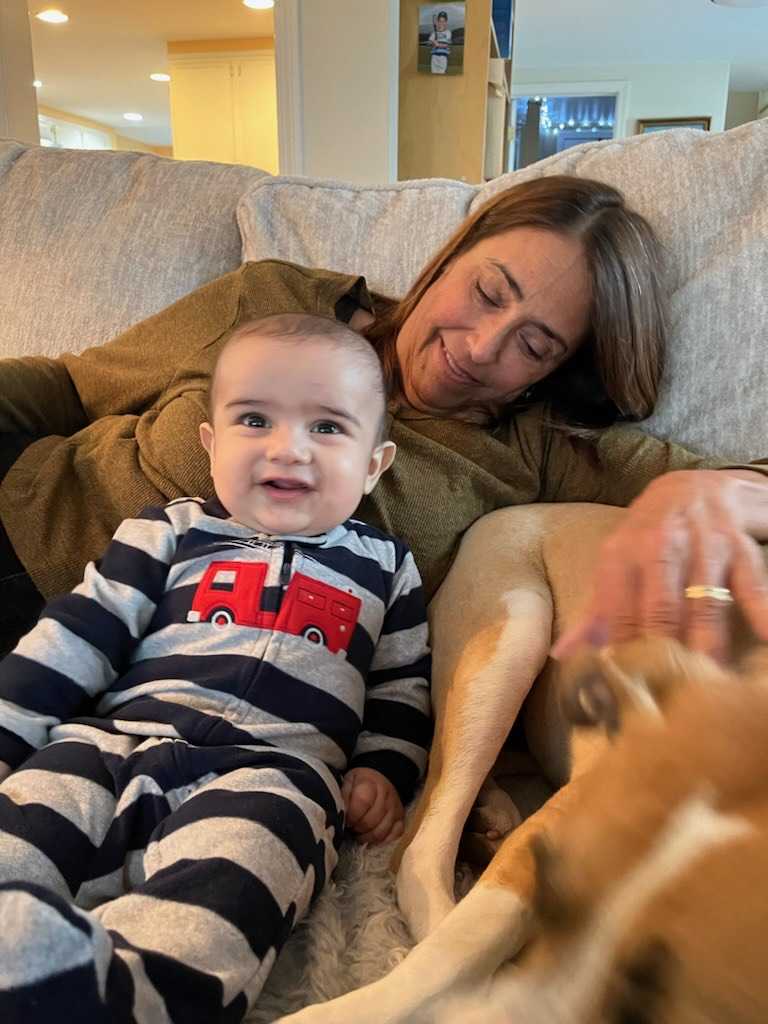
Soon, Dee was helping Omary apply for jobs and taking her on driving lessons every weekend. With her help, Omary landed a job, passed her road test on the first attempt, and even enrolled at the University of New Haven to pursue her master’s degree. Dee and Omary became like family. After Omary’s son, Osman, was born, Dee spent five days in the hospital at her side, bringing her halal food and brushing her hair in the same way Omary’s mother used to. When Omary’s postpartum pain became too great for her to lift Osman’s car seat, Dee accompanied her to his doctor’s appointments and carried the baby for her.
“Her support truly changed my life,” Omary said. “Her motivation, compassion, and support gave me hope. It gave me a sense of stability and confidence. I didn’t feel alone, because of her.”
More than that, the experience gave Omary a new resolve to help other people.
“That experience has deeply shaped the way I give back,” she said. “I want to be that source of encouragement and support for others that my friend was for me.”
Extending the welcome
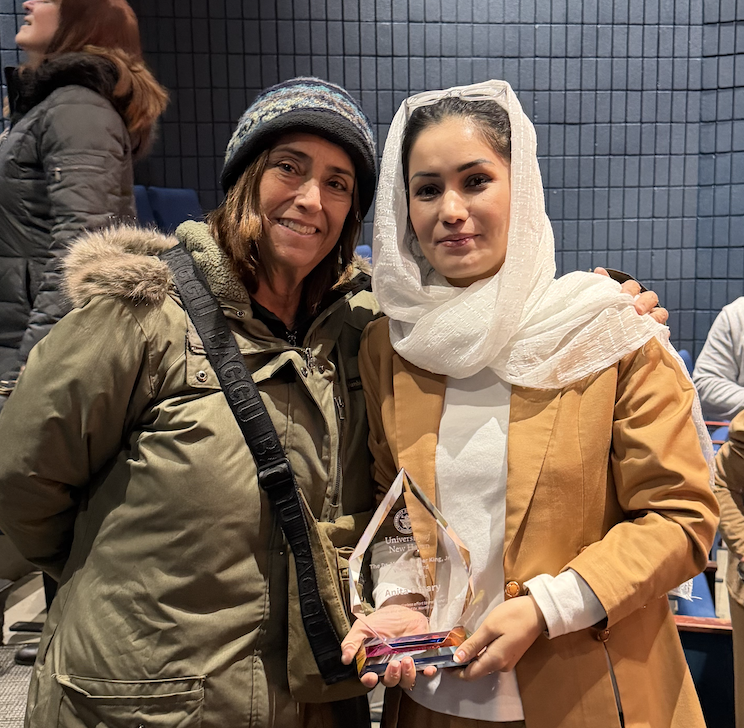
Omary and Dee at the Martin Luther King, Jr. Vision Awards ceremony at the University of New Haven.
Omary is now flourishing. She currently works as a career development specialist as she continues her Master’s degree. She also, as a member of the Refugee Storytellers Collective, helps advocate for refugee and immigrant families by connecting them with resources—and teaches local communities how to best welcome newcomers.
“Welcoming new families today has many challenges,” Omary said. “One major barrier is access to English classes. Many newcomers, especially those who have just arrived, often put their names on long wait lists and for months there are no available spots.” For women with children, the lack of available childcare makes attending English classes, or working outside the home, especially difficult.
Omary stresses that sometimes small, everyday acts of kindness can make the biggest difference to immigrant and refugee families.
“Welcome is not about big gestures, but about small, consistent acts of care that remind you that you belong,” Omary said. Receiving a compliment on her dress or her son from a stranger in the grocery store was incredibly uplifting during her early days as a newcomer, and Omary remembers how even the smallest gestures of kindness gave her hope that she could thrive and build a new life here.
“I built my new life, but I didn’t do it alone,” Omary said. “Community and kindness were my greatest strengths.”
Are you in? Click here to join the Refugee Advocacy Lab and sign the #WeWillWelcome pledge and complete one small act of welcome in your community. Together, with small, meaningful steps, we can build communities where everyone feels safe.
This article is part of Upworthy’s “The Threads Between U.S.” series that highlights what we have in common thanks to the generous support from the Levi Strauss Foundation, whose grantmaking is committed to creating a culture of belonging.
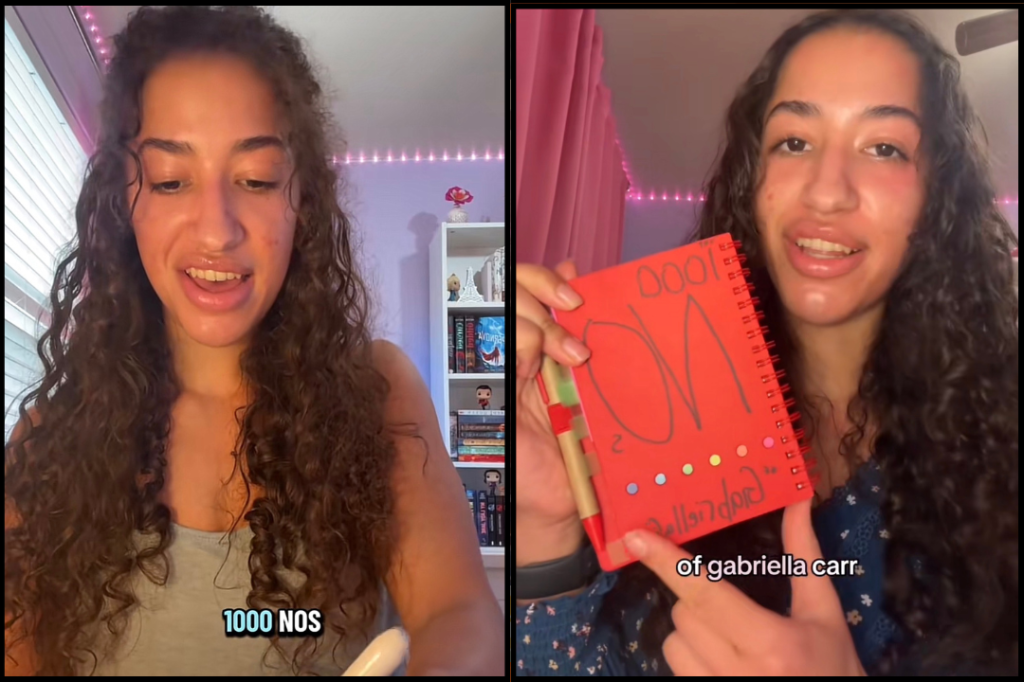
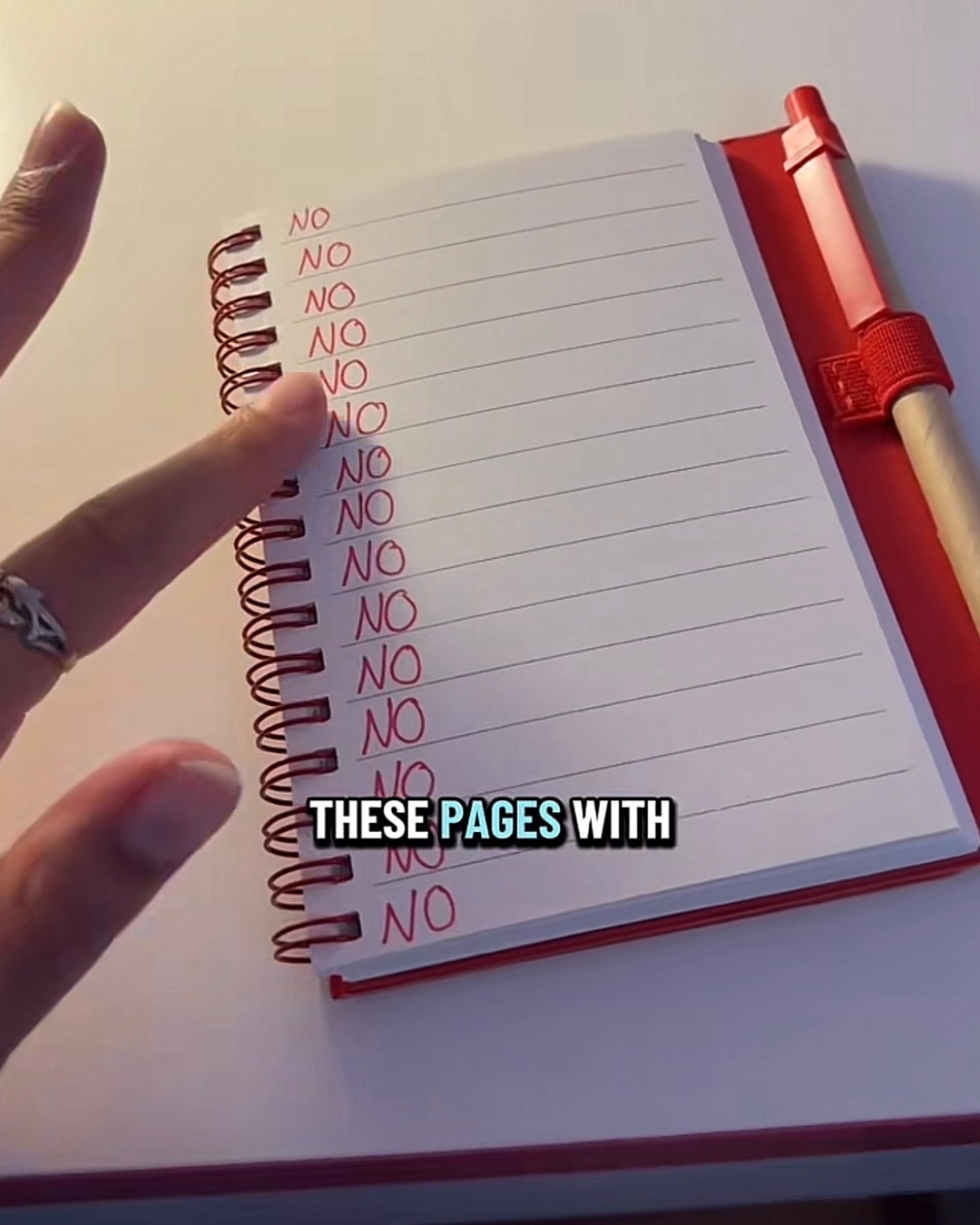
If you opened Gabriella Carr’s red notebook, you might expect to find a diary, a grocery list, or her homework. Instead, you’d find an organized, numbered list of failures.
That’s one way to see it. Gabriella views it differently, though. To her, every entry in that notebook is a victory.
Gabriella, a content creator and actor, is embarking on a fascinating experiment she calls “The 1,000 No’s.” Her goal: to face rejection 1,000 times in a year. While the rest of us spend our days avoiding the word “no,” Gabriella is hunting for it. She asks for opportunities she feels unqualified for. She puts herself in situations where rejection is likely.
Something unexpected happened on her quest for failure: she started to succeed.
In seeking “no’s,” Gabriella stumbled upon a life filled with unexpected “yeses.” Her journey offers a fresh perspective on risk and rejection, and she’s not alone in discovering the surprising power of failure.
The notebook that changed everything
Gabriella began her challenge in September 2025. As a creative, the sting of rejection was familiar. Casting directors passed on her self-tape auditions. Brand partners left her emails unread. The constant silence and dismissal started to take a toll on her self-worth.
She switched up her approach. Instead of striving for a “yes” and dreading denials, she set “no” as the goal.
When Gabriella shared her rejection journey on TikTok, it resonated with hundreds of thousands of people. They recognized their own fears in her red book.
“My daughter shared your account with me, and it inspired me to apply for my dream job! I haven’t heard back yet, but yes or no, it felt good to be so daring!” read one comment. “I need to get an internship for spring, and I’m so scared,” shared another. One viewer said that Gabriella’s courage inspired them to apply for a federal job.
Users across the Internet are following her lead. TikTok user @theplanistobefamous tracks his outrageous haggling on Facebook Marketplace. Others record similar experiments—renegotiating lease agreements, asking strangers for fashion advice, pitching themselves to major brands for sponsorships.
Gabriella’s experiment has led her to a powerful realization: what holds us back from our greatest dreams isn’t a lack of talent or opportunity—it’s the fear of asking.
Embracing the “no”
Gabriella follows in the footsteps of innovators who saw fear as their sole obstacle.
Jason Comely, a freelance IT specialist, first developed the concept of “Rejection Therapy” in 2009. After his wife left him, Jason felt isolated and hesitant to socialize. His fear of rejection had morphed into a psychological barrier, a self-imposed mental prison that prevented him from forming meaningful connections and living a free life. He recognized the trap he was in—and knew he needed to find a way to confront and overcome his fears.
To toughen up, he modeled his training after Russian special forces. He created a game with one rule: get rejected at least once a day. Accepted requests didn’t count—he had to continue until he got a “no.” This simple but powerful game became more than a personal experiment, resonating with people worldwide and blossoming into a global movement.
Jia Jiang took the challenge publicly as well. After a difficult rejection from an investor, he decided to try Jason Comely’s “Rejection Therapy” experiment for 100 days. Jiang began recording his quest for no’s, expecting to document a long string of awkward failures.
On day three, he strolled into a Krispy Kreme and asked an employee to make him doughnuts shaped like Olympic rings.
Jiang braced for laughter and a curt “no,” but the employee caught him off guard as she began to sketch a design. Fifteen minutes later, she handed him a box of Olympic ring-shaped doughnuts, free of charge. This encounter went viral, touching millions with its heartwarming display of unexpected kindness.
In 2017, Jiang gave a TED Talk titled “What I Learned from 100 Days of Rejection,” which garnered over six million views—one of the most popular lectures released that year.
Why rejection hurts (and how to overcome it)
If these experiments yield such positive results, why do we remain terrified of putting ourselves out there?
The answer lies in our biology. Psychologists have discovered that social rejection lights up the same areas of the brain as physical pain. In other words, hearing “no” triggers a reaction in your brain—the same one that activates when you slam a finger in the door or douse yourself with freezing water by accident.
Social rejection feels just like physical pain to the brain. Photo credit: Canva
From an evolutionary perspective, this makes perfect sense. In the beginning, our ancestors relied on social groups for survival. Being a part of the tribe meant access to shared resources, protection from predators, and aid in child-rearing. Outcasts faced starvation and predators solo. Although we no longer live in small, nomadic tribes, your brain is still wired with that ancient software. It perceives modern rejections, like an unanswered text or a chilly response during a job interview, with the same primal panic as banishment from the group thousands of years ago.
This is why Gabriella’s challenge works—it’s a form of exposure therapy.
Exposure therapy is a well-established psychological method used to help people overcome phobias. The core idea is to gradually expose someone to the object of their fears in a safe and controlled way. For instance, if you have an intense fear of spiders, a good therapist won’t place you in a room full of tarantulas. They’ll ease you into it. The process might begin with something as simple as looking at a cartoon drawing of a spider. Once you’re comfortable with that, you might move on to realistic photos, then to a video of a spider. By the end, you could end up in the same room as one or hold a harmless spider in your hands. This logical, step-by-step approach teaches your brain that what you fear isn’t a real threat.
Gabriella’s experiment works in a similar fashion. By seeking out small, manageable rejections—like requesting a song on the radio—she began to retrain her brain. With each mini-rejection, Gabriella’s fear of hearing “no” faded, making it easier for her to take bigger risks, like signing up for that pageant.
Gen Z and the gamification of failure
This trend has seen a major resurgence with Gen Z viewers at the forefront. It’s no surprise given today’s challenges. Data shows Gen Z may be the “most rejected generation” in history. By February 2025, the average job posting received 244 applications. Young people sent out hundreds of resumes—and faced a wall of silence or boilerplate automatic rejections.
When life feels out of control, turning challenges into a game can help you regain a sense of agency. Instead of passively waiting and dreading rejections, people like Gabriella are making “no’s” the goal. This shifts everything. This powerful reframing tool protects your self-esteem and spins a helpless situation into a conquerable hurdle—you can win the game by participating in life.
Ready to start your own rejection challenge?
You don’t need to aim for 1,000 rejections or a “no” every day to benefit. If you want to strengthen your own “rejection muscle,” here are some simple strategies to get started.
Begin by asking for something minuscule, like the time from a stranger. The goal is to feel that jolt of anxiety—then realize you’re okay.
Know when to stop
Pushing your comfort zone is healthy, but remember to stay safe. As psychologist Dr. Elisabeth Morray explains, forcing yourself into situations that feel unsafe can yield traumatic outcomes. Know your limits—the goal is growth, not distress.
Track your data
Take a cue from Gabriella and use a pen and paper to record your rejections. Writing them down by hand helps externalize the experience, turning an uncomfortable memory into banal data entry.
Reframe the outcome
Remember what Jia Jiang learned: the worst thing someone can say isn’t “no.” It’s that you never even asked. When you stay silent, you reject yourself by default. Keep in mind that with every brave request, you open the door for the universe to say “yes.”
The beautiful truth about “no”
We spend an obscene amount of time trying to be perfect and dodging the embarrassment of disapproval. But people like Gabriella Carr, Jia Jiang, and Jason Comely show us the vibrant, exhilarating world that awaits on the flip side of fear. Rejection is an inevitable part of being human, but there’s no shame in asking.
Every “no” in Gabriella’s notebook marks an act of courage—an opportunity to embrace possibility over comfort. Within those possible 1,000 rejections lie the “yeses” that will shape her life: the plays, the pageants, and the moments she would have missed if she’d chosen to stay silent.
Buy your red notebook. Approach a neighbor with the favor that’s been on your mind. Apply for the job that seems out of your league. The worst outcome? “No.” And as Gabriella has shown, hearing a “no” isn’t the end of the world—it’s proof that you were courageous enough to take the leap and try. Each attempt, no matter how disastrous, is a step forward. You’re proving to yourself that you are willing to endure uncertainty to pursue what matters to you.
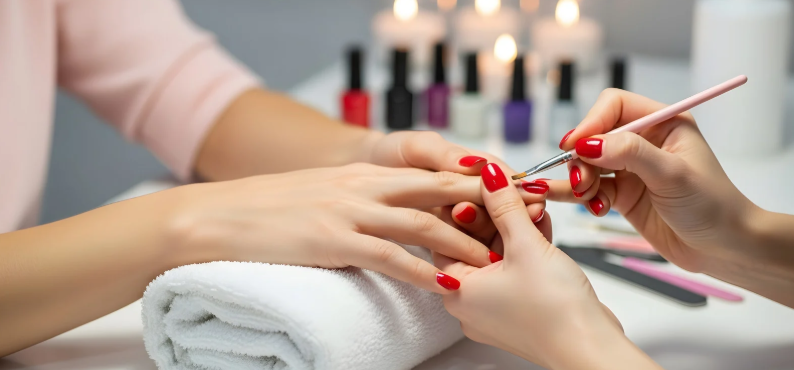
There are a lot of nail salons out there, and without word-of-mouth recommendations from people you trust, it can be impossible to know which salon to visit. Thanks to social media, many businesses can advertise their services without spending much on traditional marketing like television, billboards, and radio. Using pictures and videos of their amazing work to market can help maintain a steady flow of customers, but one Canadian nail salon is taking a slightly different approach.
Henry Pro Nails which started in Toronto, Canada, is leaving the Internet in stitches after creating a viral ad for his nail salon. The video uses the beginnings of several viral clips, but instead of the expected ending, Henry pops in to complete the viral moment in hilarious, unexpected ways.
HenryProNails takes viral videos and turns them into funny marketing
It opens with a familiar viral video of a man on a stretcher being pulled by EMS when the stretcher overturns, flopping the man onto the ground. But instead of it ending with the injured man on the ground, Henry seamlessly appears, lying out on the floor of his salon and delivers his first line, “Come to my nail salon. Your nails will look beautiful.”
In another clip, a man holds his leg straight up and somehow flips himself into a split. When the camera cuts back to Henry, he’s in the splits on the floor of his nail salon promoting loyalty discounts. The ad is insanely creative, and people in the comments can’t get enough. Some are even planning a trip to Toronto just to get their nails done by the now Internet-famous top nail artist in Canada. This isn’t Henry’s first rodeo making creative ads, but this one is, without a doubt, his most popular—and effective.
People love Henry’s videos
“I will fly to Canada to get my nails done here just because of this hilarious video. You win this trend for sure,” one woman says.
“Get yourself a passport and make a road trip! My bf and I are legit getting ours, and it’s only a 4 hr drive from where we are in Pennsylvania. Their prices are a lot better than other places I’ve been too,” another person says while convincing a fellow American citizen to make the trip.
“Omg, where are you located? I would fly to get my nails done by you,” one person writes.
“The pedicure I had at Henry’s was the best I have ever had. Unfortunately, it made all other places disappointing, and I don’t live close enough for Henry’s to be my regular spot,” someone else shares.
In another hilarious video, Henry urges a woman not to divorce her husband for not cooking her dinner, but instead to come get her nails done so she’ll feel a lot better.
It just goes to show that creative advertising can get people to go just about anywhere, but great service is what keeps them coming back. If you’re ever in Canada and find yourself needing an emergency manicure, Henry’s Pro Nails is apparently the place to be.
This article originally appeared two years ago. It has been updated.
We can all be sure that as society evolves, many things that seem normal today will be cringeworthy to people in the future, whether it’s our fashion, politics, civility, or our treatment of the environment.
If we look back just 30 years ago, same-sex marriage was illegal, people routinely smoked in bars and restaurants, and it was fashionable and cool to vogue.
So, when we look back on the world of the 2020s, there are bound to be many things that we’ll be embarrassed about in 30 years, especially when we are forced to live with the repercussions of the decisions we make today. On a lighter note, we’ll all also have clouds full of photos of ourselves wearing hairstyles and clothes that look utterly ridiculous in hindsight.
In the summer of 2024, we asked the Upworthy community to share their thoughts by asking a big question on Facebook: “What’s something that’s accepted now that we’ll be embarrassed about in the future?” Our readers responded with funny takes on current fashion and concerns about technology use and how we treat our fellow human beings.
Here are 21 things we accept today that we’ll probably be embarrassed about in the future
More than a few current fashion trends will look silly in the coming years
“Yoga pants. I love them to death, but I can easily see them as the parachute pants of tomorrow.” — Deborah
“Barn doors in your house.” — Joyce
“Tattoos all over the body.” — Vicki
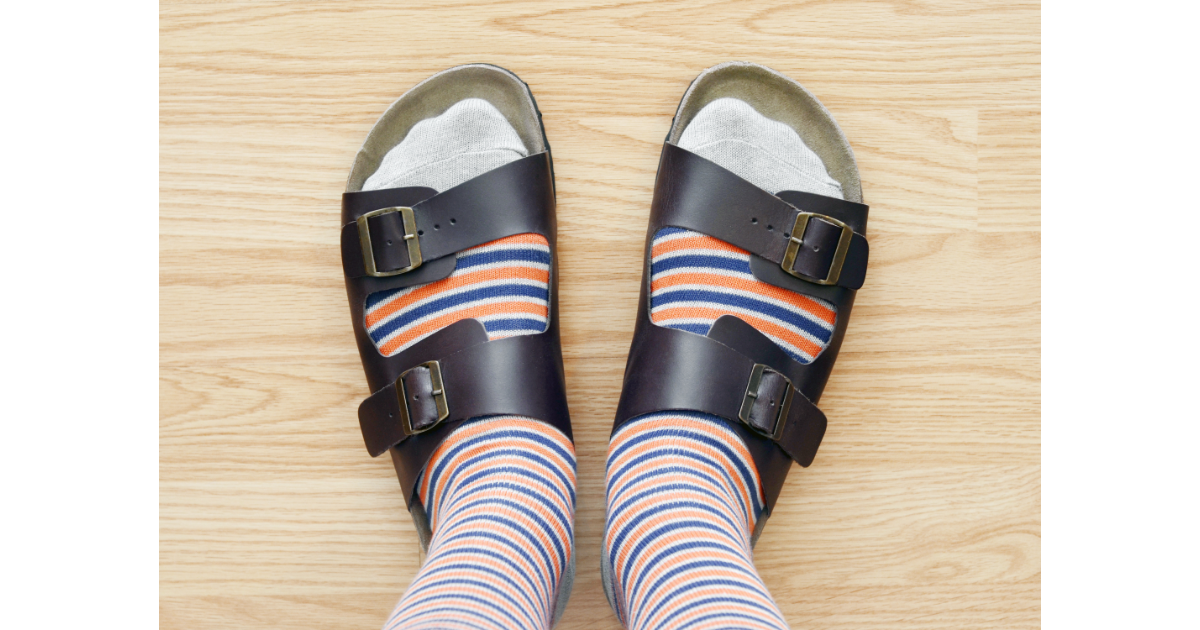
“People wearing socks and sandals.” — Jeremy
“Wearing pajamas in public.” — Ivy
“Huge, over-sized false eyelashes.” — Patricia
Hopefully, people in the future will be more considerate when using technology than we are today.
“Walking around with your eyes locked on your phone. Or eating at a table with 4 people looking at their phone. One day, we will either fall off a cliff or realize life is what is happening off the screen.” — Elise.
“Texting in the presence of another person.” — Kate
Three women on their phones not paying attention to each other. Canva Photos
We can also hope that in the near future, we will be able to solve many of today’s pressing public policy issues so that the next generation will live happier and healthier lives.
“Lack of healthcare for everyone.” — Sharon
“Making the planet unlivable for human beings.” — Karen
“Spending hundreds of millions of dollars of taxpayer’s money to build a sports arena for a billionaire. Then charging the taxpayers outrageous amounts to attend events there.” — Stacy
“How the US is systematically clawing back women’s rights to decide what they do with their bodies. It’s beyond shameful.” — Jason.
Some people are concerned about the way students and their parents behave in modern-day America.
“Parents trying to run schools: yelling at teachers for their child’s poor performance, yelling at principals when their child gets in trouble, book banning based on an individual’s religious ideologies, etc.” — Beth.
“Entitled children talking back to their parents and teachers.” — Connie
“Cry rooms at universities where students can go and work out their anxiety and cry and be upset if their professor uses words that are too difficult for them. Universities are institutes of higher learning, not institutes of babysitting. That will be an embarrassment in the future, as it is an embarrassment to me and many others now.” — Della
In 30 years, we may be embarrassed to look back on the level of general civility in 2024.
“Panic buying of toilet paper during the pandemic.” — Tony
“Ageism. It’s everywhere, all the time, and no one seems to mind. No one is defined by the amount of time they’ve spent on the planet but it’s used as an identity and as a weapon (ask any teenager, 40-year-old woman, or retiree…). I can only hope that one day it will be a source of embarrassment that we were all so dismissive and judgmental.” — Rosy.
While this list may seem like a litany of complaints people have about living in the modern world, it should give us hope. If we’ve overcome past embarrassments, today’s can be fixed as well.
This article originally appeared two years ago. It has been updated.
A good commentator can make all the difference when watching sports, even when an event goes smoothly. But it’s when something goes wrong that great announcers rise to the top. There’s no better example of a great announcer in a surprise moment than when French skier Yannick Bertrand took a gate to the groin in a 2007 super-G race.
Competitive skiers fly down runs at incredible speeds, often exceeding 60 mph. Hitting something hard at that speed would definitely hurt, but hitting something hard with a particularly sensitive part of your body would be excruciating. So when Bertrand slammed right into a gate family-jewels-first, his high-pitched scream was unsurprising. What was surprising was the perfect commentary that immediately followed.
This is a clip you really just have to see and hear to fully appreciate:
It’s unclear who the announcer is, even after multiple Google inquiries, which is unfortunate because that gentleman deserves a medal. The commentary gets better with each repeated viewing, with highlights like:
“The gate the groin for Yannick Bertrand, and you could hear it. And if you’re a man, you could feel it.”
“Oh, the Frenchman. Oh-ho, monsieurrrrrr.”
“The boys took a beating on that one.”
“That guy needs a hug.”
“Those are the moments that change your life if you’re a man, I tell you what.”
“When you crash through a gate, when you do it at high rate of speed, it’s gonna hurt and it’s going to leave a mark in most cases. And in this particular case, not the area where you want to leave a mark.”
It’s not the Winter Olympics without watching this clip (sound on) at least a hundred times
Imagine watching a man take a hit to the privates at 60 mph and having to make impromptu commentary straddling the line between professionalism and acknowledging the universal reality of what just happened. There are certain things you can’t say on network television that you might feel compelled to say. There’s a visceral element to this scenario that could easily be taken too far in the commentary, and the inherent humor element could be seen as insensitive and offensive if not handled just right.
The announcer nailed it. 10/10. No notes.
The clip frequently resurfaces during the Winter Olympic Games, though the incident didn’t happen during an Olympic event. Yannick Bertrand was competing at the FIS World Cup super-G race in Kvitfjell, Norway in 2007, when the unfortunate accident occurred. Bertrand had competed at the Turin Olympics the year before, however, coming in 24th in the downhill and super-G events.
As painful as the gate to the groin clearly as, Bertrand did not appear to suffer any damage that kept him from the sport. In fact, he continued competing in international downhill and super-G races until 2014.
According to a 2018 study, Alpine skiing is a notoriously dangerous sport with a reported injury rate of 36.7 per 100 World Cup athletes per season. Of course, it’s the knees and not the coin purse that are the most common casualty of ski racing, which we saw clearly in U.S. skier Lindsey Vonn’s harrowing experiences at the 2026 Olympics. Vonn was competing with a torn ACL and ended up being helicoptered off of the mountain after an ugly crash that did additional damage to her legs, requiring multiple surgeries (though what caused the crash was reportedly unrelated to her ACL tear). Still, she says she has no regrets.
As Bertrand’s return to the slopes shows, the risk of injury doesn’t stop those who live for the thrill of victory, even when the agony of defeat hits them right in the rocks.
Most of us have things we want to do in life, goals we want to achieve, but find that all kinds of obstacles get in our way. Sometimes those obstacles are external things we can’t control, and sometimes they are internal things we aren’t consciously aware of that are holding us back.
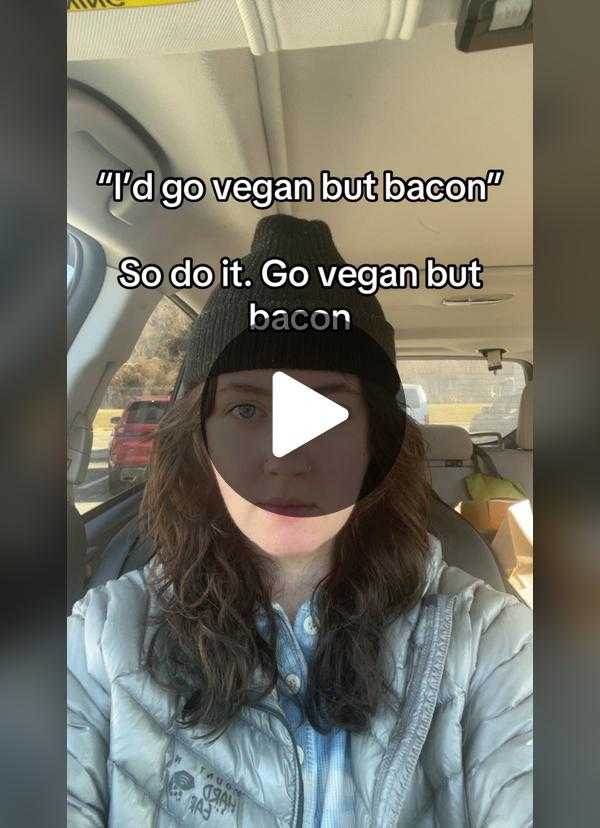
For instance, certain mindsets can keep us from making progress, from negative thinking to creating rules for ourselves that don’t actually exist. One example of the latter was brilliantly challenged by a vegan content creator named Liz, who had someone tell her that they’d go vegan if it weren’t for their love of bacon. Her response was powerfully simple: “So do it. Go vegan but bacon.”
The video was viewed nearly 3 million times, topped only by her similar video that said the same thing, but with cheese instead of bacon. Lots of people in the comments of both videos shared that they eat vegan 95% of the time, or that they eat vegan only at home but not at other people’s houses, or that they have one specific non-vegan food they eat but plant-based foods otherwise. As Liz says, “Harm reduction is harm reduction,” and most people do things a step at a time, not all at once.
The idea that you don’t have to take an all-or-nothing approach to a certain diet or lifestyle was a revolutionary one for people who struggle with perfectionism. And as another creator pointed out, this theory can apply to lots of areas of our lives.
“Stop making arbitrary rules for yourself, wrote Addie the Optimist, “it prevents you from actually reaching your goals.” She said if you don’t have 100% of your energy to put in at the gym, go to the gym anyway and give 50%. It doesn’t have to be all or nothing.
https://www.tiktok.com/t/ZTh9yVcmm/
The truth is, there are very few actual rules in life. Aside from laws of the land and whatever spiritual laws someone might feel are obligatory, the “rules” we tend to live by are generally optional and largely arbitrary. Three meals a day? Totally made up. Wearing workout clothes to exercise? Genuinely optional. You can just do things. You rarely have to do them any particular way, and you rarely have to do them all the way.
Giving yourself permission to do something imperfectly is incredibly freeing, and may actually lead to greater progress than perfectionism, as many people shared in the comments:
“I was like ‘I need to go the gym but I only like cardio’ then I realized I can do just the cardio and no one will come arrest me.”
“Sometimes washing most of the dishes is washing enough.”
“Half-assing is the stepping stone to whole-assing. ↕️”
“If you only have 10% to give and you give 10% you have just given 100%.”
“Sloppy success beats perfect failure!”
“Perfect is the enemy of done.”
“Once you get out of the all or nothing mindset the possibilities are endless.”
You don't have to take an all or nothing approach to change. Photo credit: Canva
As Addie said in her video, “You don’t have to be imprisoned by your own rules.” Easier said than done for some of us, perhaps, but seeing a mindset shift demonstrated like this can sometimes help us snap out of our own self-limiting thoughts. Additionally, having a short slogan to remind ourselves to ditch all-or-nothing thinking can also be helpful. So next time you find yourself feeling like you have to do something all the way or not at all, just tell yourself “vegan but bacon,” and give yourself permission to follow your own rules.
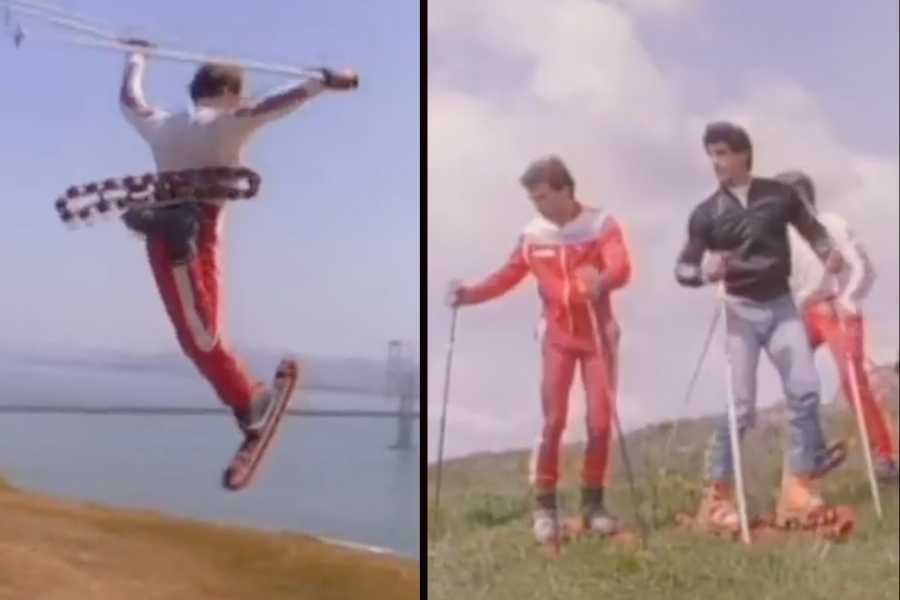
The video absolutely screams “1980s”: A group of young men walk up a grassy hill, with some kind of equipment on their backs, as the outfits cut from short shorts to loud-looking wind breakers. But then something weird happens: As retro synthesizers blare in the background, they strap on what look like tricked-out roller skates and start gliding down a grassy hill. They perform gleeful mid-air splits, leap over tree trunks, and enjoy the editing benefits of super-cool slow-mo. What exactly is happening here?
The video, which appears to be compiled from a 1984 skiing documentary, went viral in January 2026 through an X post, with the user writing, “In the 1980s many were certain summer skiing would become a thing.” People responded with a blend of confusion and nostalgia—wondering if the video was even real, pointing out how dangerous this sport looked, and asking why they’d never even heard of grass skiing to begin with.
“LOL! The body english on the jumps is peak 80s. I wanna go back, go back, and do it all over but I can’t go back I know….”
“Yep Still have mine but wouldn’t dare nowadays.”
“Guessing the broken arms, legs, backs, and necks convinced people it was not a great idea. Snow is far more forgiving.”
“Where does one find a grassy hillside like this?”
“Wait…… HOW IS THIS NOT A THING?!!!! Somebody make them now!!!!! I swear I’ll buy the first pair!!!!”
“Looks fun until you faceplant right into dirt”
“80s seemed like so much fun. I’m a 90s kid and that was fun too but 80s feels like it was more raw”
“Fun fact: crashing hurts less and causes less damage in the snow.”
“Well, why didn’t it catch on?”
The history of grass skiing
If you’re like most people in the comments, you’d probably never seen this footage, which appears to be taken from the Warren Miller documentary Ski Country. According to The Ski Journal, that film “marked the height of grass skiing in the United States,” 21 years after the sport was invented by Josef Kaiser in Germany. They note an average pair of these skis “consist of 192 rolls and some 1,500 individual pieces,” with variations depending on the discipline and application.
And this ultra niche design, The Ski Journalwrites, is part of the activity’s “downfall” in the U.S. “The skis are made to be carved, and so snow-plowing and hockey-stopping aren’t possible,” they note, “meaning options for stopping are limited to falling or running out of momentum at the bottom of the hill.” Nonetheless, the activity did have a brief moment in the sun—it’s reportedly been Stateside since 1966, when it first hit Bryce Mountain Resort in Virginia, and SnowTrex notes that competitions are still held in Europe.
To be human is to navigate a complex world of pretense and subterfuge. You gotta fake it ’til you make it. You have to look the part and play the role. You tell white lies to help others save face and to adhere to rigid cultural norms that are too ingrained to bother challenging.
That’s not to say it’s all bad. Culture is always evolving, and some behaviors and attitudes that are completely “normal” in one period are seen as completely backward just a few years later. Just 40 years ago, corporal punishment of children was normal, mental health issues were seen as personal weakness, and sexual harassment in the workplace was rampant.
Things do get better, but first we have to point them out. Recently, a Redditor asked, “What’s a social norm that you think is absolutely ridiculous?” to highlight today’s cultural norms that people find absurd. Many commenters pointed out the excuses and white lies we tell in our social lives to avoid making our friends (and ourselves) uncomfortable. Others called out rigid gender roles we take for granted but deserve questioning.
Here are 15 social norms that people find “absolutely ridiculous”
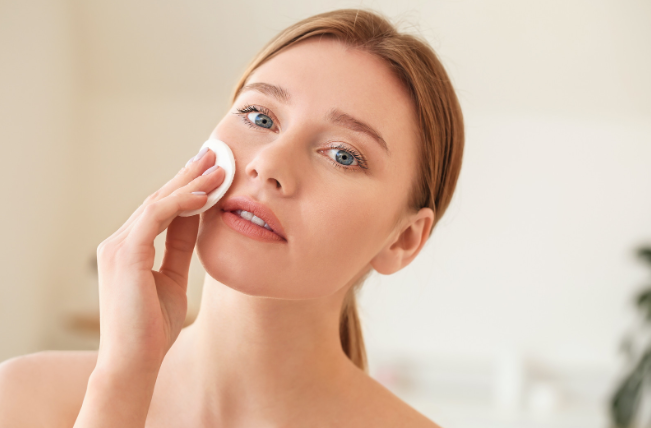
1. The expectation that women have to wear makeup
“The expectation that women must wear makeup to look professional. A clean, washed face should be professional enough for any job i think.”
“And being asked if you are sick or tired just because you aren’t wearing a full face of makeup.”
“Pretending to be passionate about jobs in interviews when everyone knows it’s just to pay bills.”
“I applied to McDonald’s in college and they asked me why I wanted the job. I said, very calmly, ‘I need money and you need people, I don’t understand the question.’ Recruiter almost fell under the table laughing, I don’t think he expected a blunt answer like that.”
3. Having to justify turning down an invite
“People often feel they can’t just decline an invitation or request with a simple I can’t make it or ‘that doesn’t work for me instead there’s this pressure to provide a detailed justification or excuse that proves you have a ‘legitimate’ reason. And if your reason is just ‘I don’t want to’ or I need time to myself that’s often not considered acceptable.”
“‘Don’t make excuses. Your friends don’t need them, and your enemies won’t believe them,’ — unknown.”
4. Why we can’t judge the dead
“Acting like someone was wonderful just because they’re dead. There are absolutely some people that get and deserve a good riddance.”
“It really rubs me the wrong way when a person who did or said terrible things died and suddenly all is forgot and they’re a hero.”
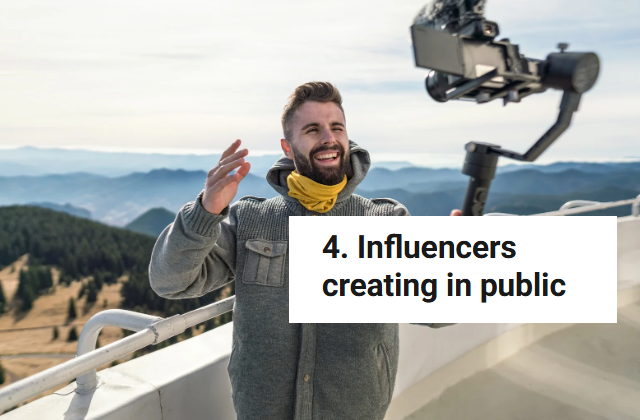
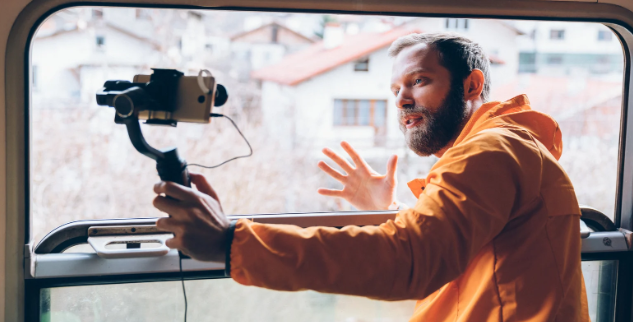
5. Influencers creating in public
“Turning public spaces into personal film studios for content creation and then getting mad when the public does public things and interrupts said content creation.”
“This is not a norm. It’s rude and should be treated as such. We were at the Louvre last year, and some influencer was trying to get people to move away from ‘Liberty Leading the People’ so she could film herself contemplating it. Lady, it’s the size of a pickleball court. No one gets that much space to themselves there. She was so angry that other people kept looking at the art.”
“Probably the whole ‘always be reachable’ thing. Like, if you don’t reply to a message within 10 minutes, people assume something’s wrong, or you’re mad. Sometimes I’m just eating or staring at a wall, man. I think phones have blurred the line between urgent and not urgent, and now everyone feels low-key on call all the time. Would be nice if slower replies were normal again.”
7. Oversharing on social media
“Everyone posting every aspect of their lives on social media for all to see.”
“We should all know less about each other.”
Why do some people overshare? In a 2022 study, researchers identified three main reasons. First, people tend to overvalue the positives and undervalue the risks when posting online. They overestimate the benefits and underestimate the downsides of oversharing. Second, oversharing has been linked to anxiety, with some people posting as a way to cope with difficult feelings. Finally, because people often feel relatively anonymous online, even when their name and face are attached to a post, they may feel freer to overshare.
A woman taking a photo of herself in her bedroom. via Canva/Photos
8. Elbows on the table being considered rude
“That was a social rule from the medieval age – tavern ‘tables’ were planks of wood laid on top of stumps. If someone put their elbows on that plank, the whole table would see-saw and chuck everyone’s refreshments across the room.”
“I was taught that it’s because it seems like you’re guarding your food, like an animal.”
It’s believed that the “elbows on the table” rule dates back to the Middle Ages, when feasts and festivals were jam-packed affairs and people were crammed around tables. Placing your elbows on the table, like spreading your legs on the subway, meant your neighbor had less room. You might even knock an elbow into their blackbird pie.
9. The need to be intoxicated
“The need to have alcohol at social events otherwise they are not fun or worth it to go to. Peer pressuring folks for not wanting to drink and making them out to seem boring or unfun. Having drug usage/alcohol as a personality trait.”
“I tell people I’m straight edge, and they look at me like I’m some kind of monster. I once got told, to my face, someone who has never drank or smoked or done a drug is not a trustworthy person.”
“Acting like periods are something to be ashamed of. Never understood as a teenager why people would smuggle their pads into the toilet or whisper about their period or peel back the wrappers really quietly so no one else could hear it. It’s completely natural and nothing to be ashamed of. I make an effort as an adult to openly carry pads and talk about it openly. We need to stop acting like it’s a big taboo!”
11. Taking the man’s last name
“Women and children taking the man’s last name by default.”
“I think you should have to smoosh the names together to make a new surname, and if you get remarried, you keep smooshing names.”
12. Men have to propose
“Believing the male partner in a straight relationship must be the one to propose marriage.”
“Or believing that a proposal has to be a grand gesture. My husband proposed to me on his front porch with, ‘Hey, you don’t happen to want to marry me or anything, do you?’ Was it romantic? No. But he did manage to get the point across. This summer we’ll be married 38 years.”
13. Wearing a tie
“’Humans are the only species that start the day with a noose around their necks,’ Source : unknown.”
“I still wish we adopted the double necktie as seen in Back to the Future Part II in the far distant future of 2015.”
“I’ve seeing a lot of waiting rooms lately, and I’m trying to just sit there without looking at my phone, and I’m realizing how captivating it is. Everyone is plugged in.”
“I agree it’s great. As an introvert, to look up and realise NO ONE IS LOOKING AT YOU is like being king of that little space.”
15. Saying you’re “fine” when you’re not
“Being expected to say ‘fine’ when someone asks how you are, no matter how not fine you feel. Also apologizing when someone else bumps into you, and pretending emails need fake pleasantries instead of just getting to the point.”
“Some days when life isn’t fine, and someone asks me how life’s going, I tell them it’s certainly going, they should get the message at that point.”
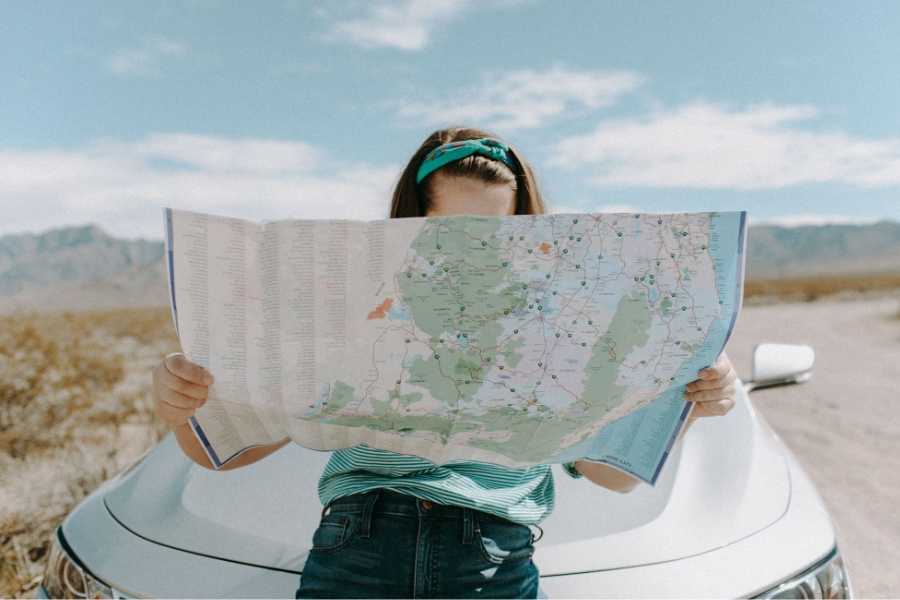
Those of us who lived life on Earth before the internet and GPS have memories that today’s young people will never have. Stopping at a gas station to pick up a local road map. Keeping a road atlas the size of a textbook under the passenger seat. The agony of having to try to refold a map in the clunky confines of your car.
It’s easy to forget what life was like before cell phones fit in your pocket and Google Maps took you from point A to point B in real-time. But Gen Z, whose oldest members haven’t even reached 30 yet, has never lived that struggle, so they have no frame of reference for what their elders had to do to find their way around.
One self-proclaimed Gen Zer named Aneisha took to social media to ask the question that has been burning on her mind–how did people travel before GPS?
Aneisha asks in her video, “Okay, serious question. How did people get around before the GPS? Like, did you guys actually pull a map and like draw lines to your destination? But then how does that work when you’re driving by yourself, trying to hold up the map and drive? I know it’s Gen Z of me, but I kind of want to know.”
Even when most Millennials were starting to drive, they had some form of internet to download turn-by-turn directions, so it makes sense that the cohort between Gen Z and Gen X would direct Aneisha to Mapquest — a primitive early ancestor of Google Maps.
“We’d have to print step-by-step directions from MapQuest and hope for the best,” one commenter wrote.
It’s true, you’re not really a Millennial if you’ve never driven around with a stack of loose MapQuest pages floating around your car. If you were lucky, you had a passenger to read them off to you. “Drive half a mile and turn left on Elm Street!” It was a stressful time, for sure. God help you if the pages got mixed up or if you went off track somewhere. Even with a printed map and directions, there was no guidance for finding your way back to the proper route.
But there was a time before imaginary tiny pirates lived inside of computer screens to point you in the right direction, and tales from those times are reserved for Gen X.
MapQuest, by some standards, was an incredible luxury made possible by the internet. So the generation known for practically raising themselves chimed in, not only to sarcastically tell Millennials to sit down but to set the record straight on what travel was like before the invention of the internet. Someone clearly unamused by younger folks’ suggestion shares, “The people saying MapQuest. There was a time before the internet kids.”
Others are a little more helpful, like one person who writes, “You mentally note landmarks, intersections. Pretty easy actually,” they continue. “stop at a gas station, open map in the store, ($4.99), put it back (free).”
“Believe it or not, yes we did use maps back then. We look at it before we leave, then take small glances to see what exits to take,” someone says, which leaves Aneisha in disbelief, replying, “That’s crazy, I can’t even read a map.”
It’s a good idea to keep a local map in your car, even today! In case of emergency, you never know when it might come in handy. Learning how to read it, however, might take a little time for folks who didn’t grow up using non-digital maps. (Many young people are confident in their ability to read maps based on their heavy GPS usage, but something tells me those skills won’t translate to the big according-style paper maps.)
Some users added that you could often call your destination (or friend or family member) and write down careful directions before you left. If you’ve ever visited a venue or business’s website and seen general directions depending on which direction you’re traveling from, you get the idea.
“Pulled over and asked the guy at the gas station,” one person writes as another chimes in under the comment, “and then ask the guy down the street to make sure you told me right.”
Imagine being a gas station attendant in the ’90s while also being directionally challenged. Was that part of the hiring process, memorizing directions for when customers came in angry or crying because they were lost? Not knowing where you were going before the invention of the internet was also a bit of a brain exercise laced with exposure therapy for those with anxiety. There were no cell phones, so if you were lost, no one who cared about you would know until you could find a payphone to check in. Imagine that!
The world is so connected today that the idea of not being able to simply share your location with loved ones and “Ask Siri” when you’ve gotten turned around on your route seems dystopian.
But in actuality, if you took a few teens from 1993 and plopped them into 2024, they’d think they were living in a sci-fi movie waiting for aliens to invade.
Technology has made our lives infinitely easier and nearly unrecognizable from the future most could’ve imagined before the year 2000, so it’s not Gen Z’s fault that they’re unaware of how the “before times” were. They’re simply a product of their generation.
Some would say that having a rough geographical understanding of your local area, aka being able to navigate around without GPS, is a lost art that kept our brains and wits sharper. On the other hand, using Google Maps even for simple trips to everyday stops helps us avoid accidents and traffic and give people our near-exact ETA. It also delivers crucial real-time information about wildfires, natural disasters, and more. Who’s to say if one way is really better or worse?
This article originally appeared two years ago. It has been updated.